Wednesday, November 11, 2026 · UX & UI Design
Sabrina Carpenter and Damien Chazelle Give Johnnie Walker’s Ad a French New Wave Spin
Noted by Tom May · 427 reads
Handheld movement, warm mid-century colour and Carpenter’s knowing screen presence turn a whisky ad into a loose, jazz-led party scene.
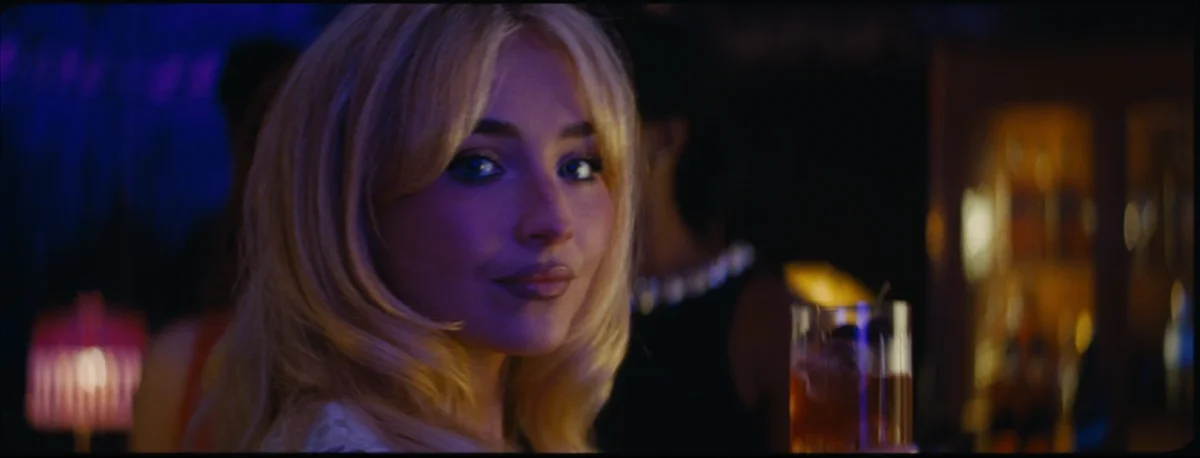
Johnnie Walker’s new film with Sabrina Carpenter makes a distinctive choice for a drinks ad: it trades the polished product close-up for a party that feels a little unpredictable. Directed by Damien Chazelle, the film draws on the energy of French New Wave cinema, using loose camera movement, jazz and Carpenter’s playful presence to build atmosphere around the brand.
That reference is a useful way to think about the film’s design. French New Wave directors such as Jean-Luc Godard and François Truffaut pushed against the slick studio look of mid-century cinema. Their work often used location shooting, natural light, handheld cameras and abrupt edits. Chazelle’s ad doesn’t try to recreate those films literally. It borrows their willingness to let a scene feel spontaneous and slightly off balance.
A party built around movement
The camera introduces the space as Carpenter enters a bar, swinging casually while live jazz sets an unhurried pace. That movement gives the scene a social, observed quality: the viewer isn’t presented with a fixed showcase of bottles and glassware, but drawn into a room where people are already gathering. Carpenter’s glance toward the camera briefly breaks the scene’s spell, turning her awareness of the viewer into part of the performance.
Then she slips into the crowd. The camera searches for her, its attention becoming more animated as the room takes over. It’s a simple shift in action, but it gives the film a small narrative arc: arrival, recognition, disappearance, pursuit. The looseness makes the setting feel occupied rather than arranged for a product shot.
The palette helps hold that movement together. Warm, hazy tones and mid-century styling establish a period mood, while neon-tinted lighting adds a little strangeness to the darker corners. The result isn’t a monochrome historical pastiche; it uses colour to make the room feel inviting and theatrical at once. The costumes and bar setting carry the period cues, while the camera and editing keep the film from feeling like a static retro tableau.
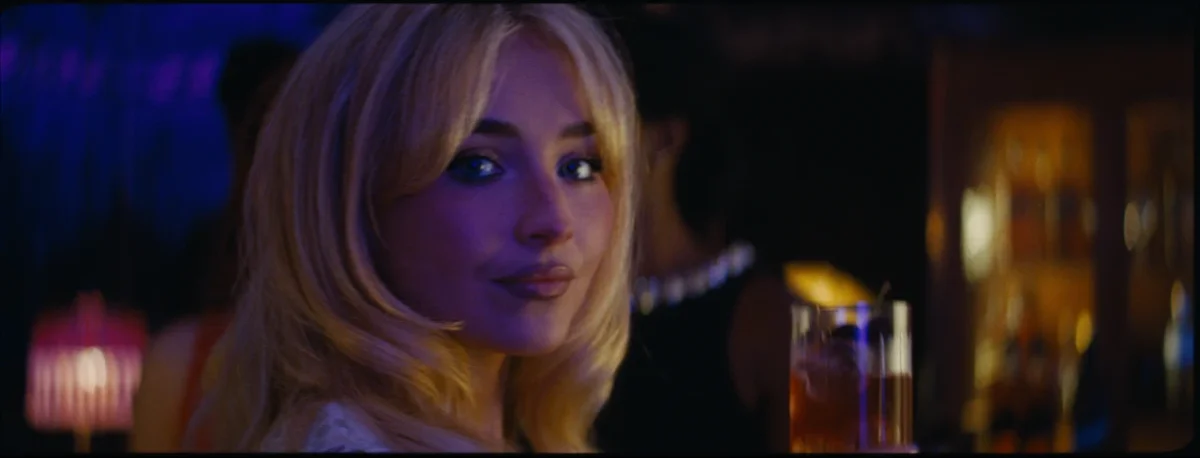
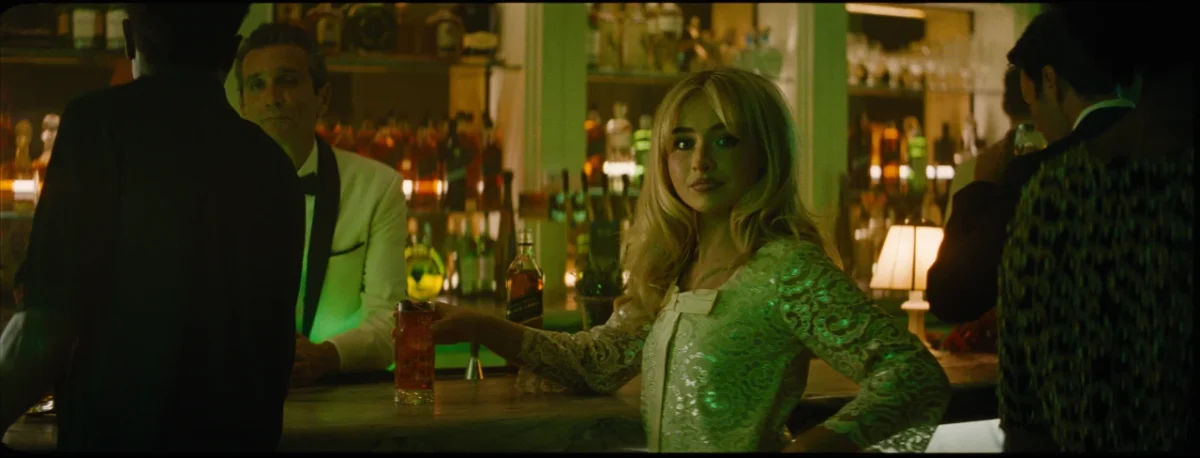
Not much happens in conventional plot terms. That restraint is part of the appeal. Rather than spelling out a story, the film makes the party itself the experience: music, glances, movement, and the promise that something might happen just beyond the frame. For a brand, that kind of atmosphere can make the product feel connected to a social occasion without making every shot revolve around the bottle.
Carpenter’s persona is part of the visual language
Chazelle’s films include La La Land, Whiplash, First Man and Babylon, and his work often gives creative ambition a strong visual presence. Carpenter brings a different but complementary quality here: confident, knowing and comfortable with the joke. Her screen presence gives the period styling a contemporary spark, so the result feels like a performance rather than an exercise in nostalgia.
That fit matters in celebrity-led advertising. A familiar face can attract attention, but the design still needs to give that person something specific to do. Here, Carpenter’s brief looks and disappearing act are built into the film’s structure. The audience isn’t simply asked to associate her with a drink; it gets a small character moment that suits her playful public persona.
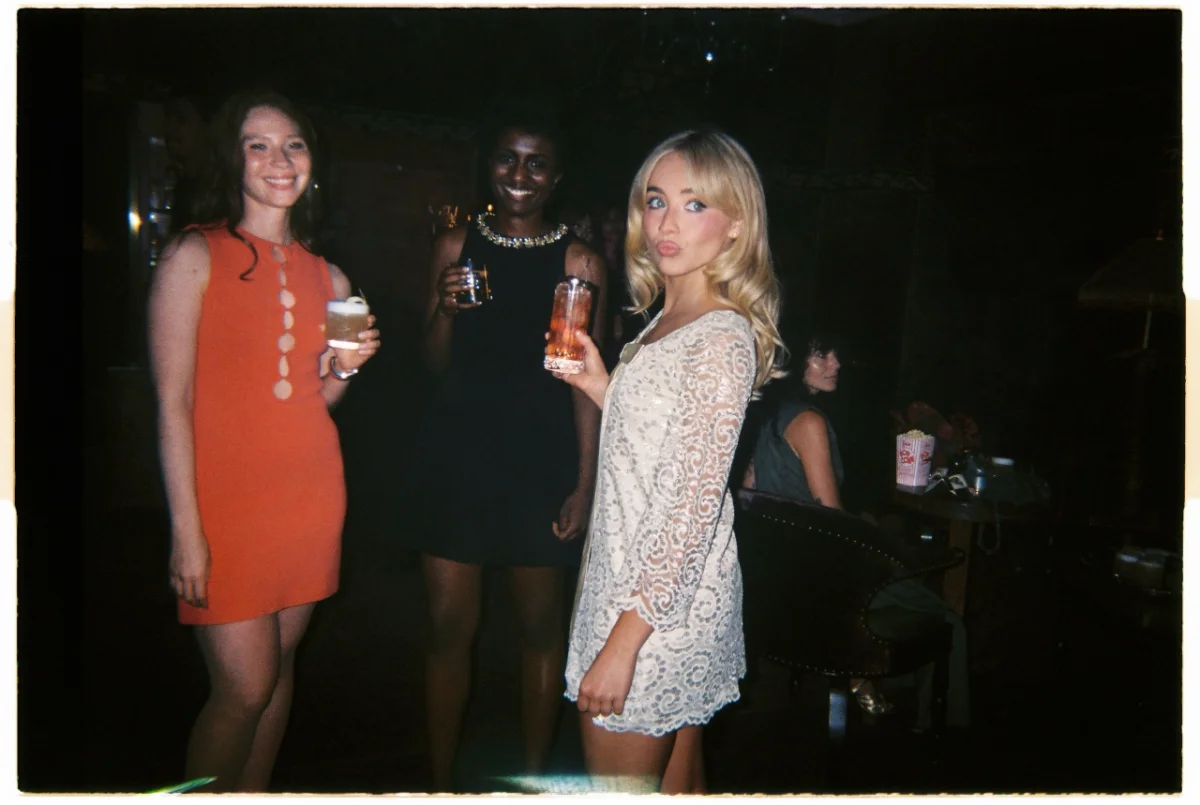
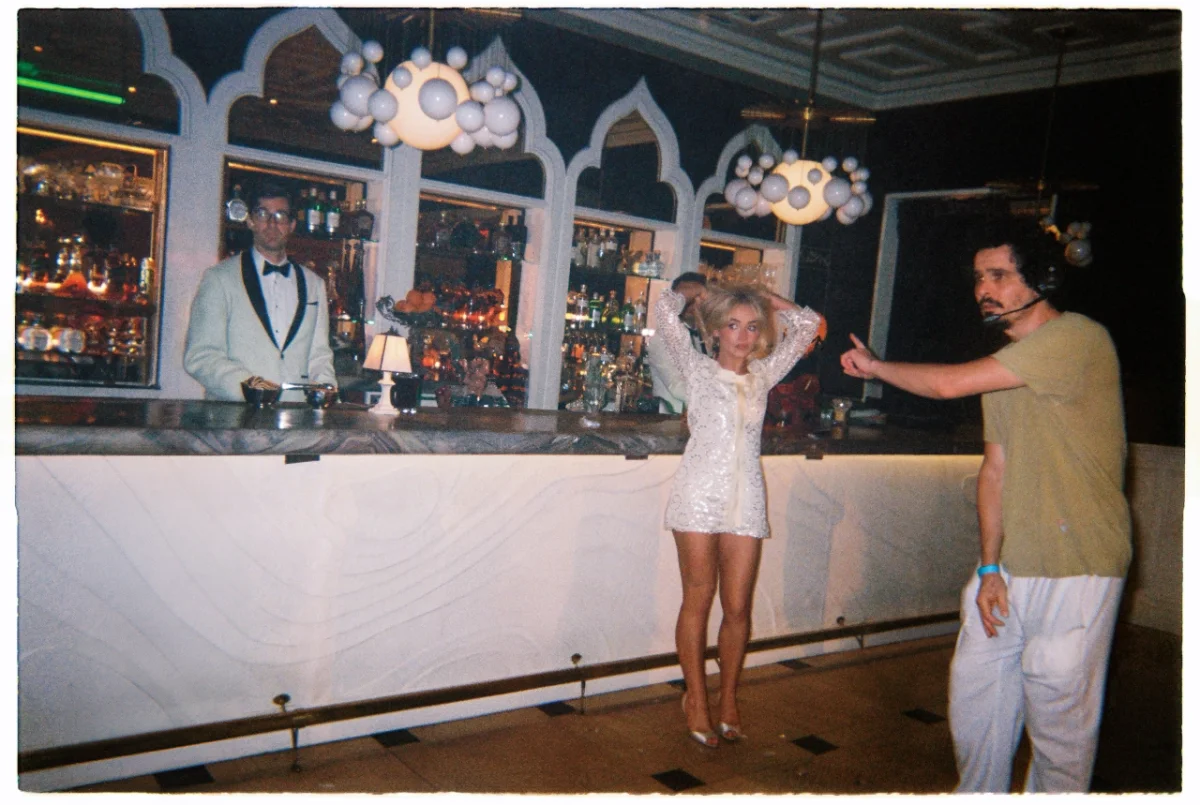
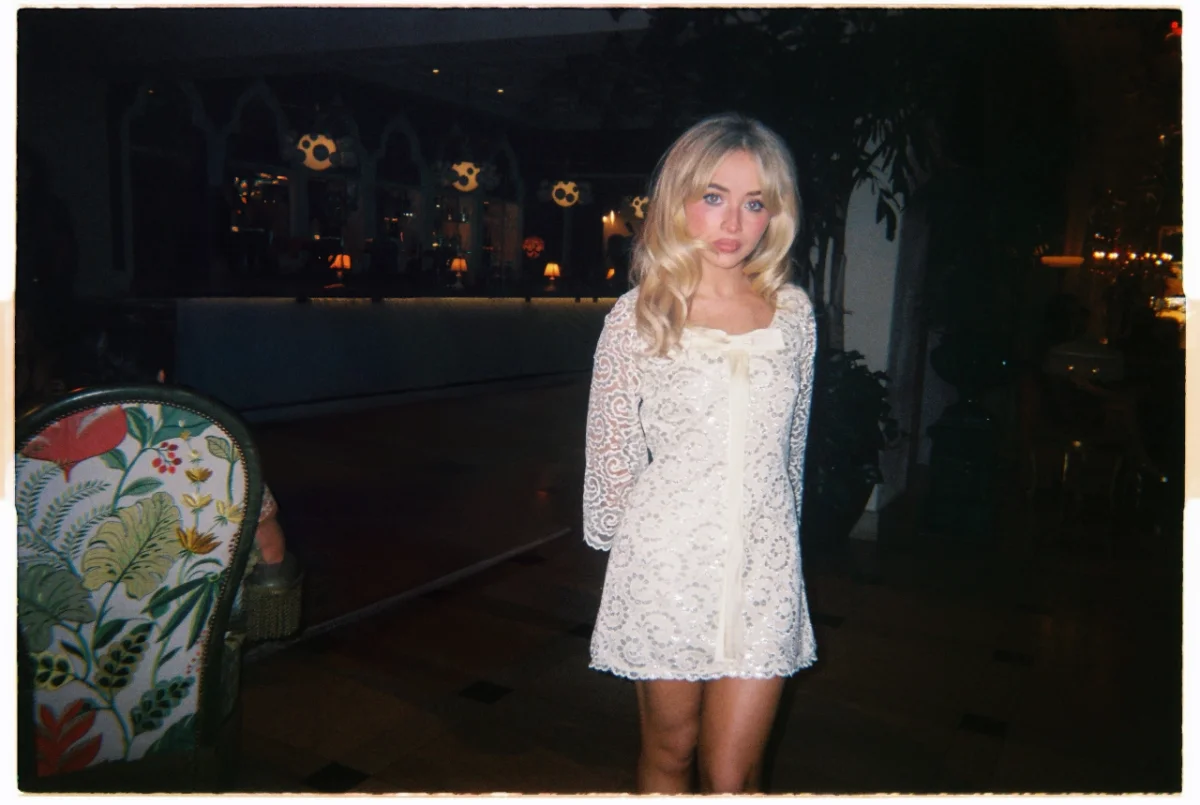
Behind-the-scenes photographs reinforce the informal mood. Their disposable-camera look feels loose beside the carefully composed film, extending its sense of a lively set. Carpenter described making it with Chazelle and Johnnie Walker as “such a creative adventure.” She said the team wanted a “playful, unexpected” cinematic experience, and called the film a way to express the brand’s “Keep Walking” story and its next chapter.
From film to serve
The film supports the launch of Carpenter’s signature Go Go Highball and a limited-edition Johnnie Walker Black Label bottle inspired by her style. Both are rolling out across Europe, Australia and North America, with more markets expected to follow in the coming months. The product details connect the cinematic setting to something concrete: the highball belongs in the social world the film creates, while the bottle carries the collaboration’s visual identity beyond the screen.
Johnnie Walker describes the work as part of its wider music activity, which aims to champion artists with their own cultural perspective. The creative choice gives that ambition a visible form. Jazz, a period-inspired bar and an unhurried camera make the film feel less like a standard product demonstration and more like an invitation into Carpenter’s on-screen world.
The practical lesson for creative teams is that a familiar cultural reference works best when it shapes the craft, not just the styling. Here, the New Wave influence appears in how the camera moves, how the scene unfolds and how little the film explains. That gives Carpenter room to perform, and gives the drink a believable place in the scene. The party’s loose rhythm is the part most likely to linger after the final frame.