Wednesday, November 11, 2026 · Graphic Design
Hawazin’s Hazy Gulf Portraits Blend Childhood Memory with Video Game Atmospheres
Noted by Ayla Angelos · 351 reads
Saudi artist Hawazin pairs blurred faces, vivid colour and familiar Gulf objects to explore memory, self-representation and belonging.
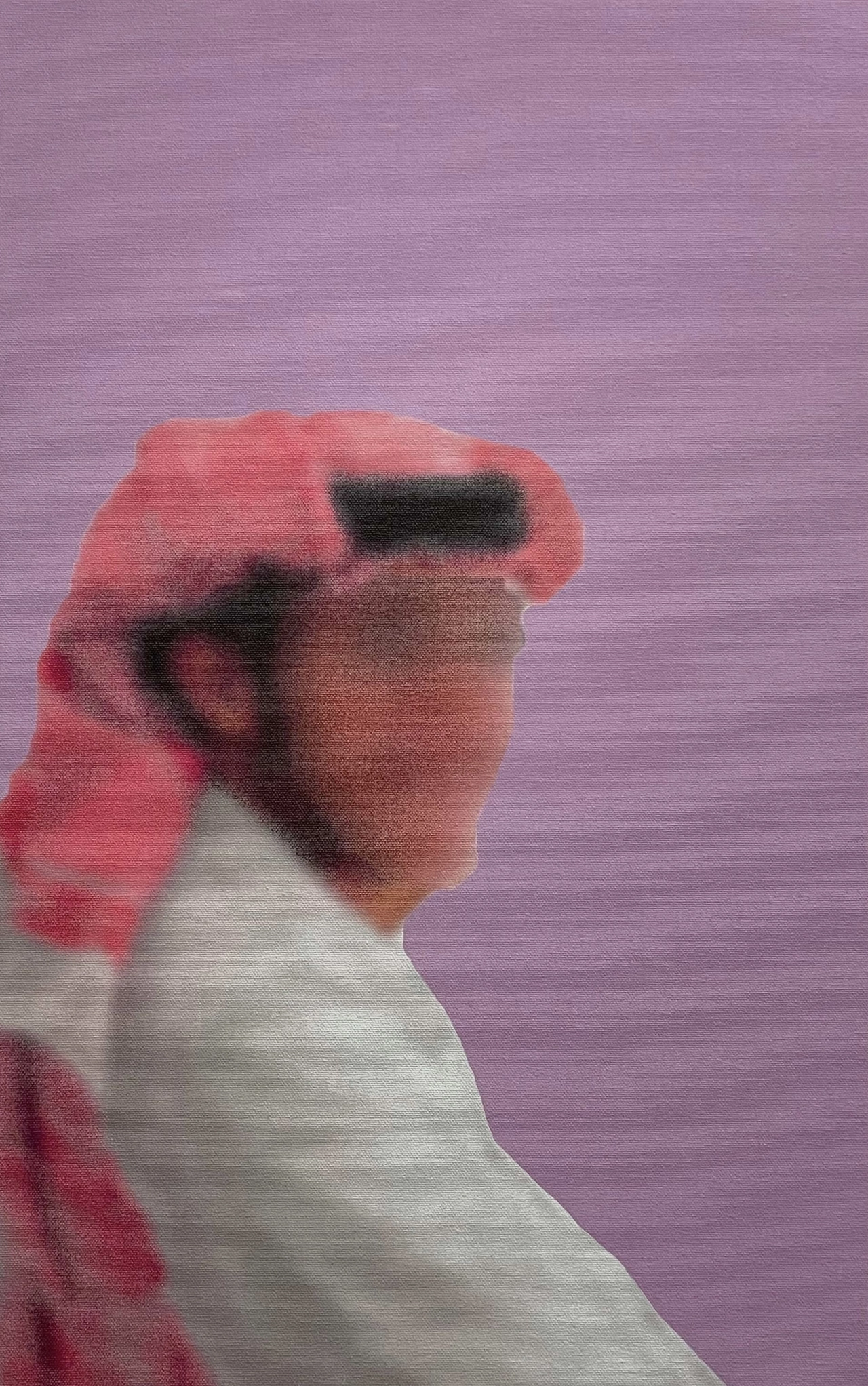
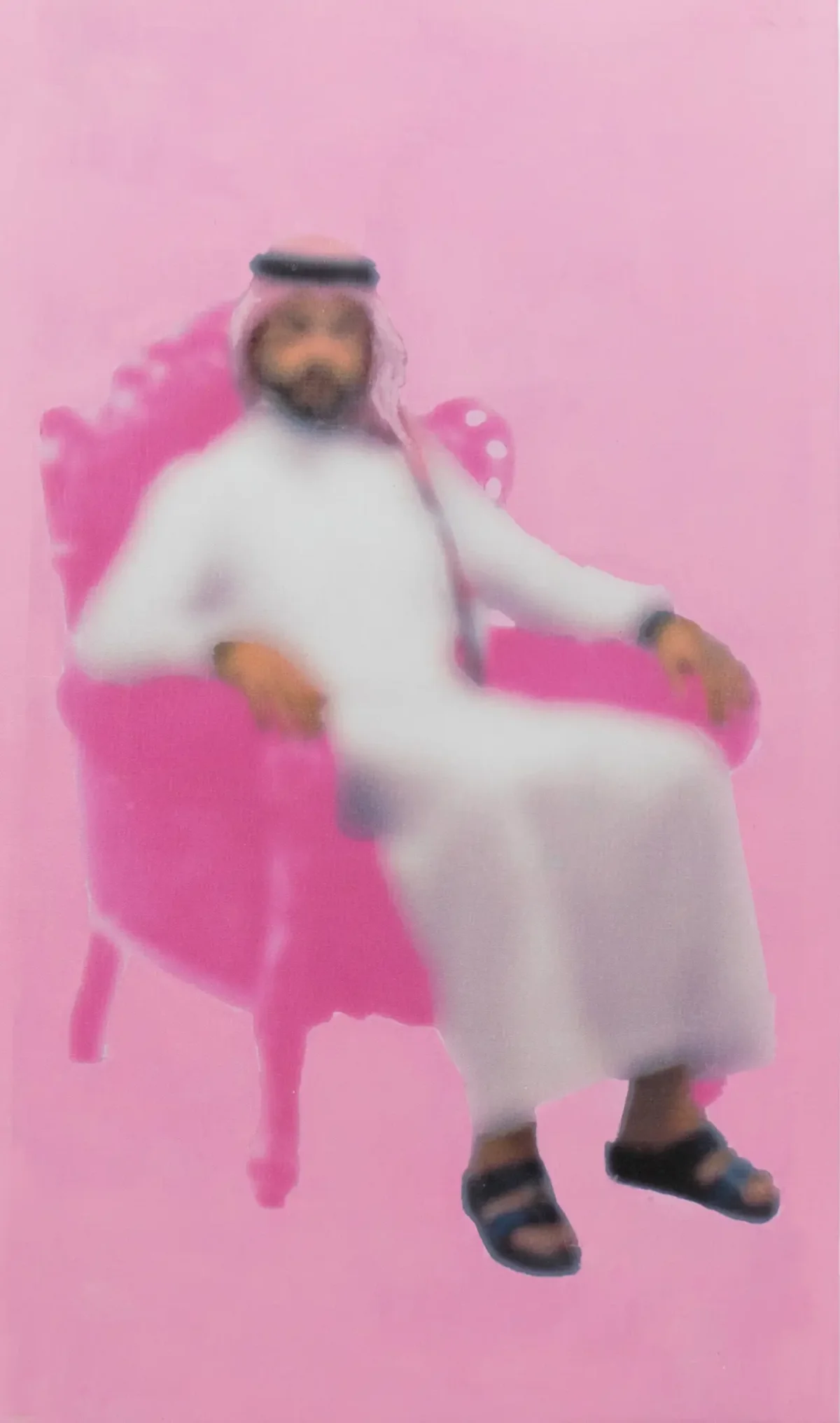
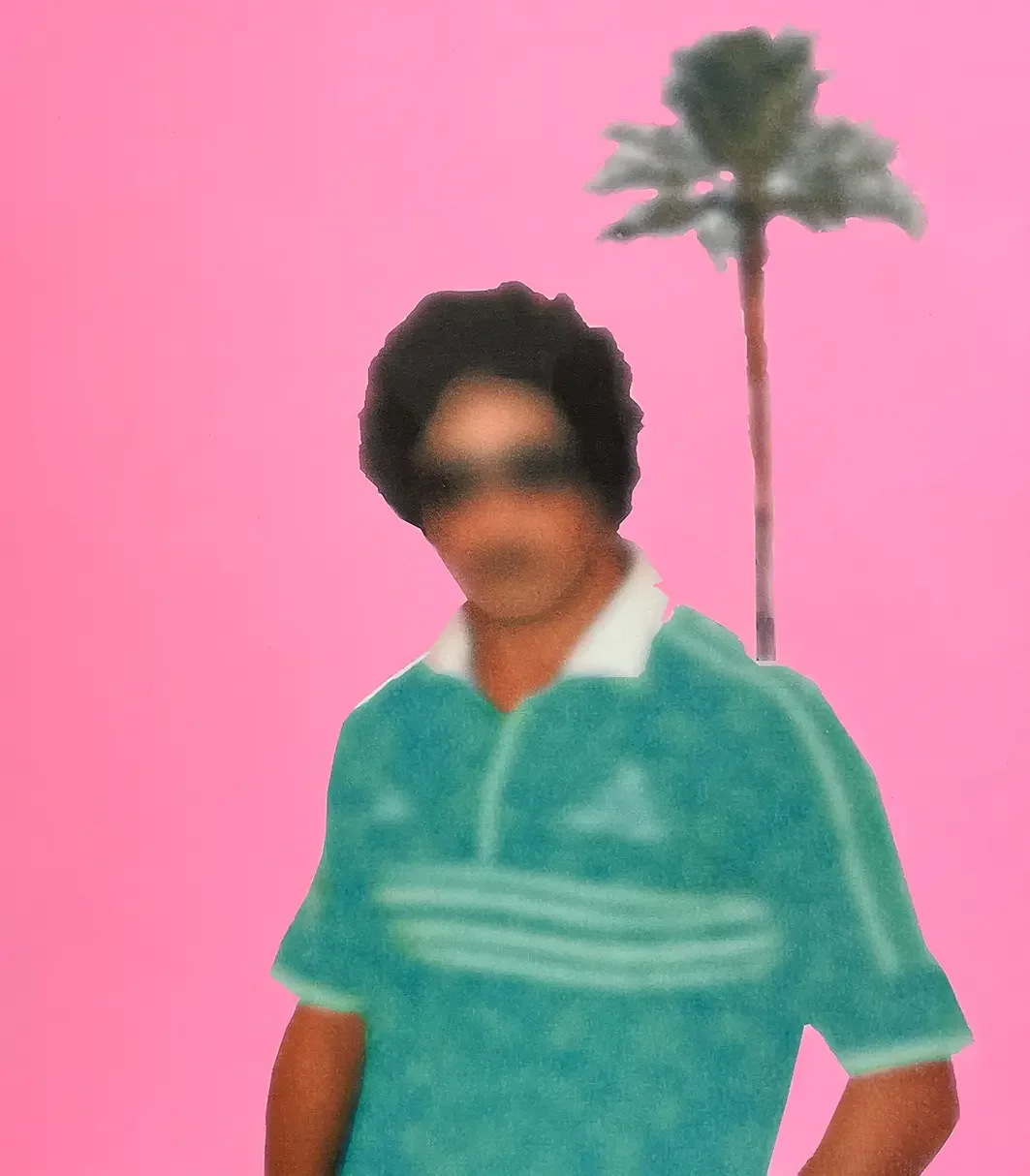
Hawazin’s paintings make the familiar feel slightly out of reach. Figures in white thobes and ghutras stand among flowers or sit in ornate chairs, their features softened until their faces seem to hover between recognition and anonymity. Hot pinks, bright blues and hazy edges give these carefully composed scenes the sheen of a digital image, while their subjects and objects draw on everyday life in the Gulf.
That tension gives the work its pull: the paintings look dreamlike, but their details are personal and specific. Roses might seem like stickers pasted onto a flat backdrop; a blurred face might recall a low-resolution image. Yet Hawazin makes the work by hand. She paints from a studio in Brixton, DJs and performs her own music, and is completing a second MA, in Curating at Goldsmiths, University of London.
Blur as atmosphere and distance
Hawazin’s interest in hazy imagery connects to films, anime and video games as much as to painting. She says she rarely looks at paintings for inspiration. More recently, Silent Hill and Resident Evil have occupied her imagination, after friends encouraged her to play them. She is drawn to moving through places that feel emptied out, piecing together where she is. In Silent Hill 2, she says, the landscape can feel like a physical expression of a psychological state.
That mood offers a useful way into Hawazin’s own visual language. The fog and uncertainty of a game environment find an echo in her dissolved facial features, while pink skies and glowing fields of colour suggest the polished surfaces of rendered worlds. The connection isn’t a matter of copying a game’s look. It’s an interest in how a made-up place can feel convincing enough to occupy: Hawazin says she wants her paintings to carry some of that sense of possibility.
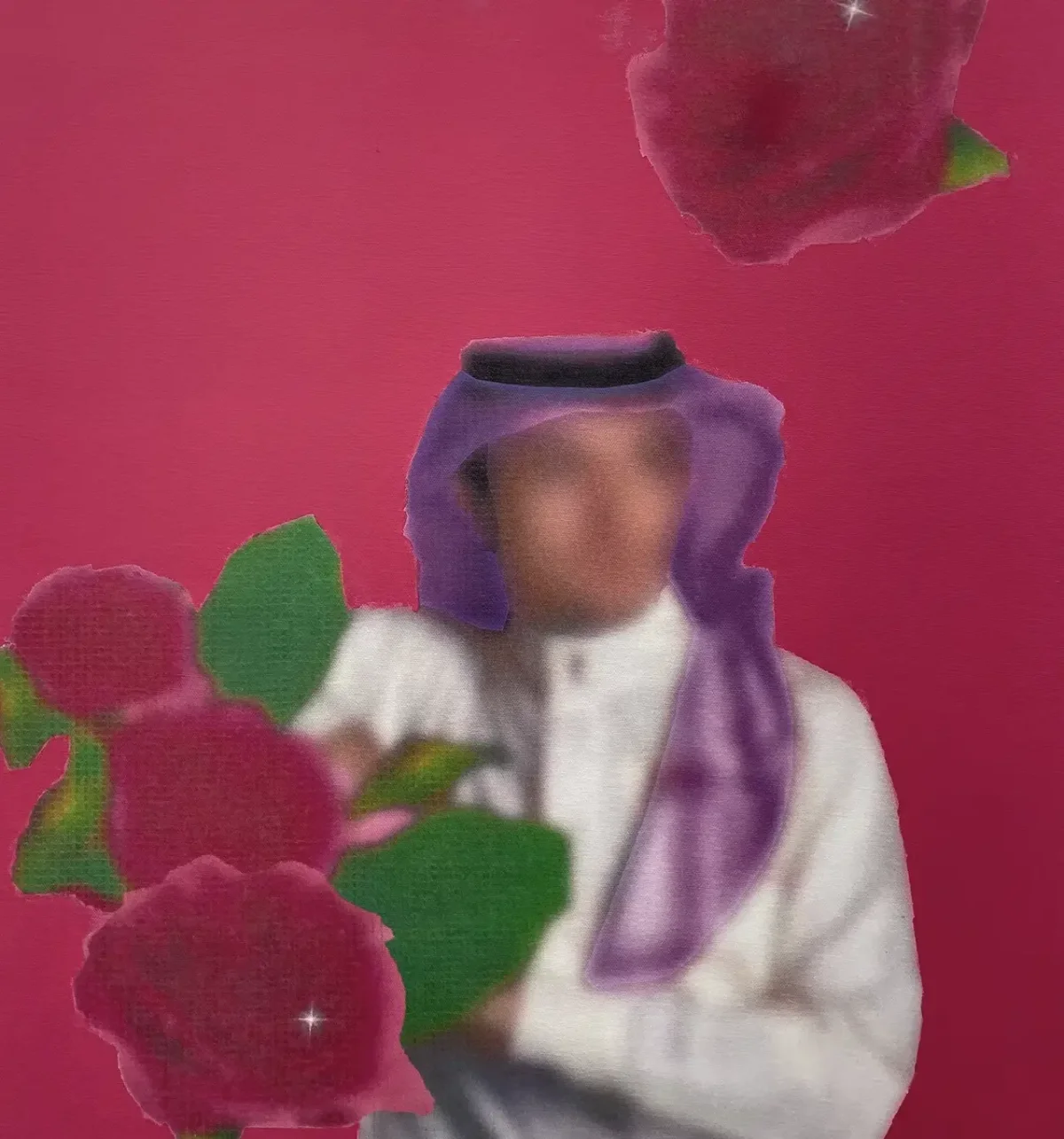
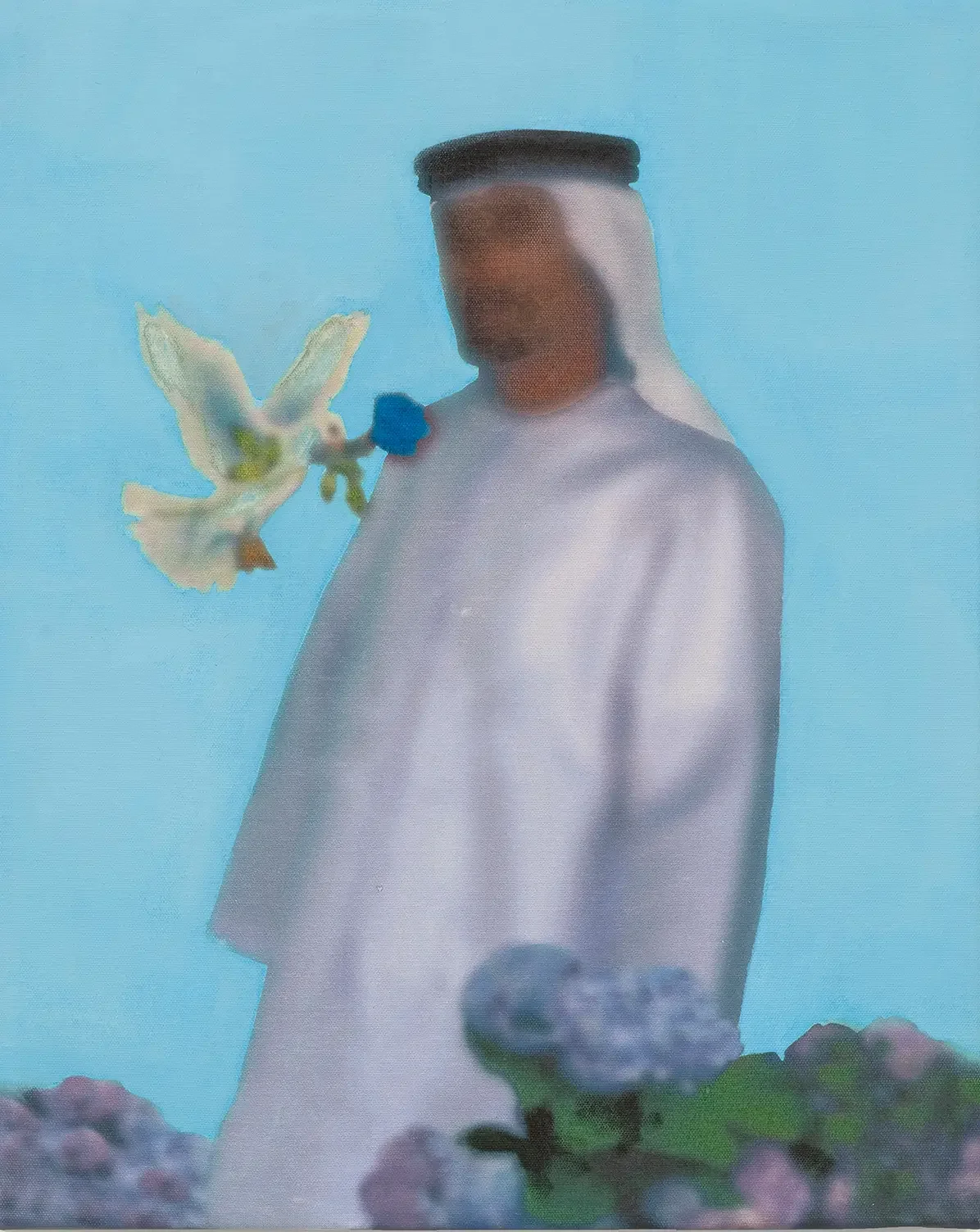
The contrast between clear cultural markers and obscured faces keeps the pictures open to more than one reading. A thobe, ghutra, chair or flower establishes a scene, but the viewer can’t use facial expression to settle who the figure is or what they feel. That softness shifts attention toward posture, colour, setting and the associations carried by ordinary objects.
Making room for uncertainty
Some of Hawazin’s ideas arrive in transit: during a long journey on the Tube, a train or a plane. She records passing thoughts in the Notes app on her phone, then follows them in the studio. Her process is deliberately self-invented. Rather than pausing to look up how a technique is done, she tries things out, even when the results get messy. That open approach, she says, can lead somewhere she wouldn’t have found by following a set method.
Enjoyment is part of the working method. Hawazin keeps a game controller in the studio and reminds herself to protect the freedom and uncertainty that help her make things. For designers and artists, there’s a practical point here: a loose process can be useful when the aim is to find an image or mood rather than reproduce a known result. Notes gathered away from the studio give her raw material; experimentation helps turn it into a visual language.
Everyday objects, layered meanings
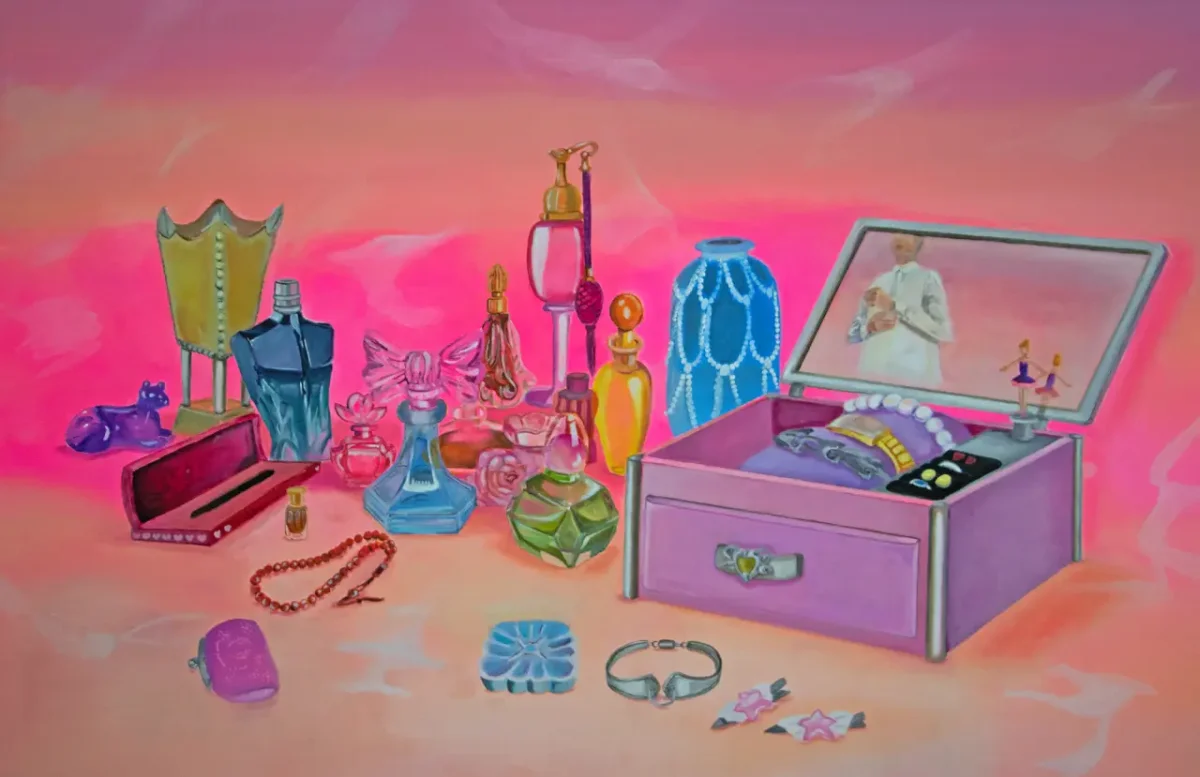
Scent of My Reflection brings this approach to a collection of objects associated with a Gulf woman’s dresser: perfume bottles, a jewellery box, prayer beads and a small mirror, arranged in a hot-pink dreamscape. Hawazin describes the setup as familiar and ordinary, while also carrying multiple associations. Fragrance, in her account, belongs to rituals and hospitality, but also to self-image, nostalgia and the feeling of comfort in a space.
Perfume is especially suited to the painting’s mix of the visible and the unseen. A bottle can be pictured; scent itself can’t. Hawazin sees fragrance as deeply personal, almost an extension of the wearer. That invisible quality sits naturally beside her blurred faces: both invite viewers to imagine what isn’t fully shown. The dresser becomes more than a still life, holding traces of habit, memory and how someone presents themselves.
Across her work, Hawazin explores self-representation and gender through the social structures she grew up around. She hopes a viewer might connect the paintings to their own memories, upbringing or the forces that have shaped their sense of identity. The imagery offers no single explanation; familiar objects and settings provide points of entry, while the softened faces leave room for viewers to bring their own histories.
From the studio to new work
Hawazin was born in the United States and spent her formative years between there and Saudi Arabia. She moved to London to study more than a decade ago, earning a BA in Painting from Camberwell College of Arts and an MA from the Royal College of Art. After graduating in 2021, she stayed in London, where she felt at home in the art community she had come to know. That year, she held her first solo show with Incubator; subsequent group and solo exhibitions took her work to venues across the UK, Berlin, Paris and New York.
After submitting her final research paper, Hawazin is working on her first album and plans to perform it at Cairo Jazz Cafe in Cairo next month. She is also developing a curatorial project with friends and trying new paintings for a possible show next year. The next work may take a different shape, but her process offers a clear thread to follow: collect impressions, make space to experiment, and let familiar details carry more than one story.