Friday, November 6, 2026 · UX & UI Design
Peter Davis’s Gig Pose Paintings Turn Concert Phone Use Into Social Portraiture
Noted by Katy Cowan · 731 reads
Peter Davis pairs raised phones with iconic band tees to examine how concertgoers document live music and signal identity.
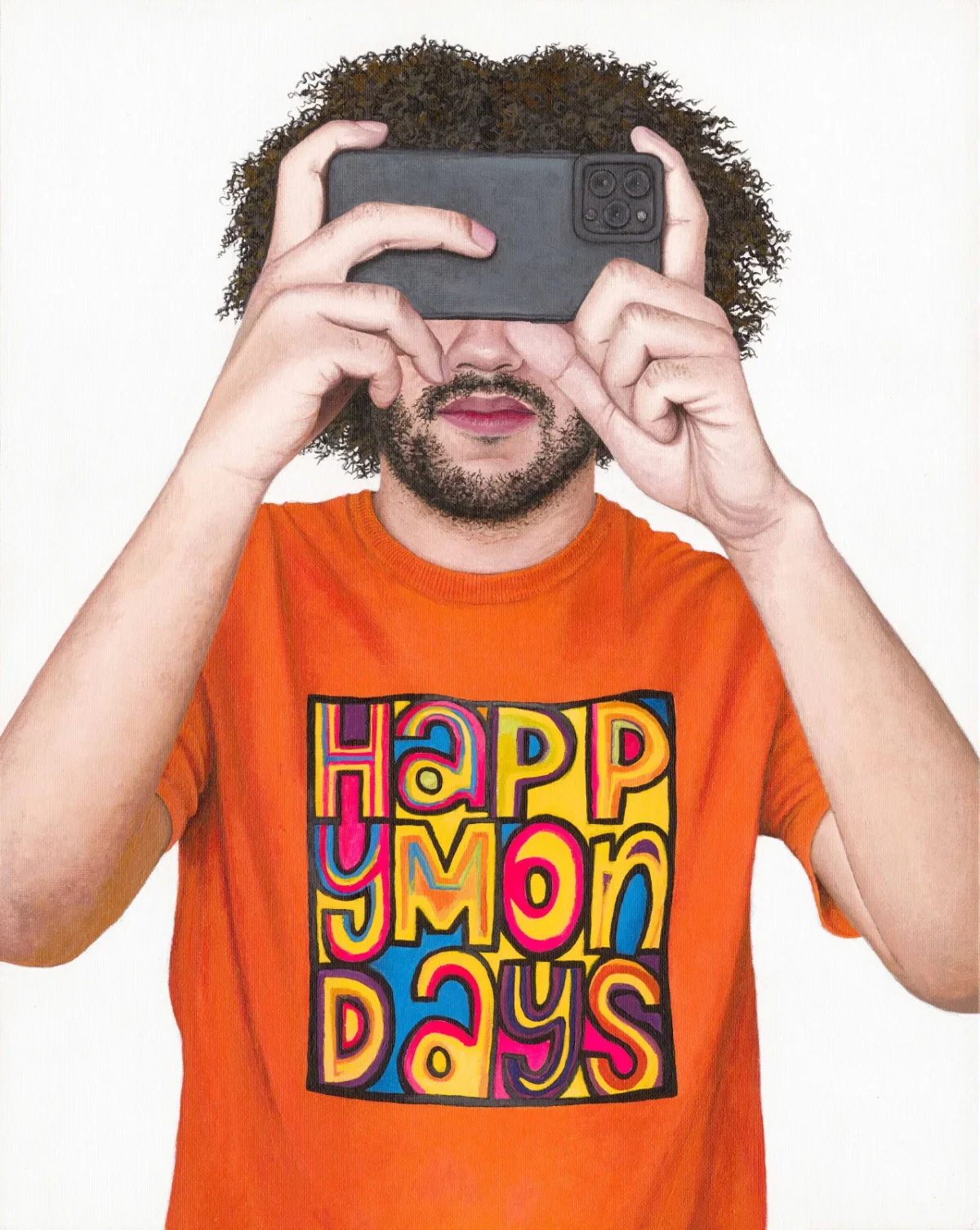
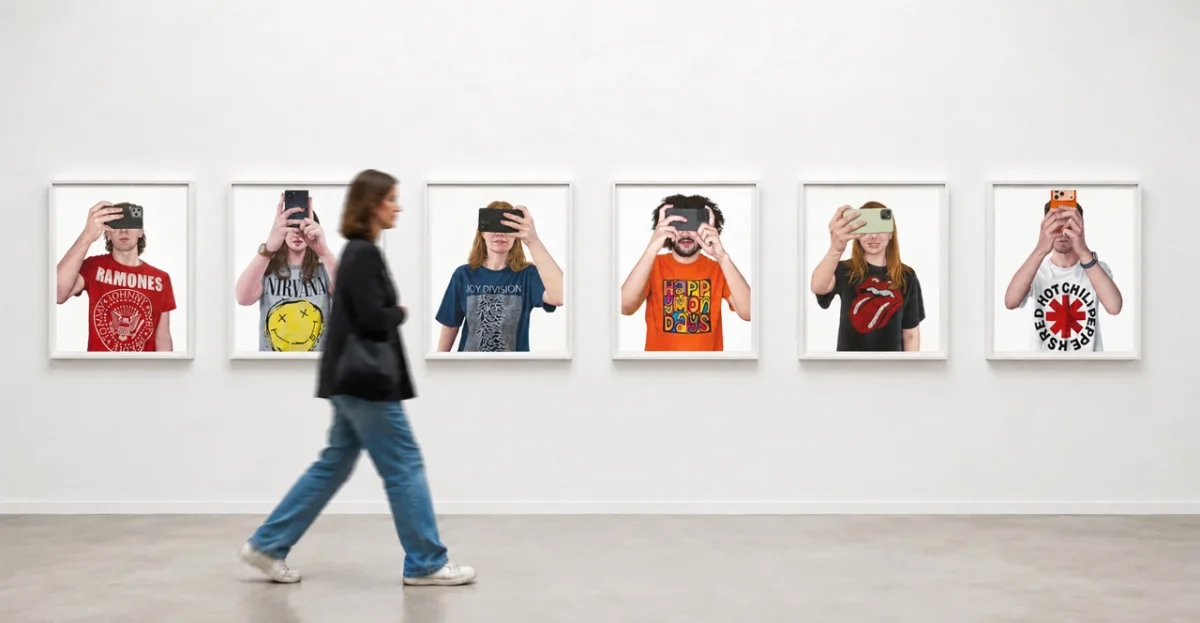
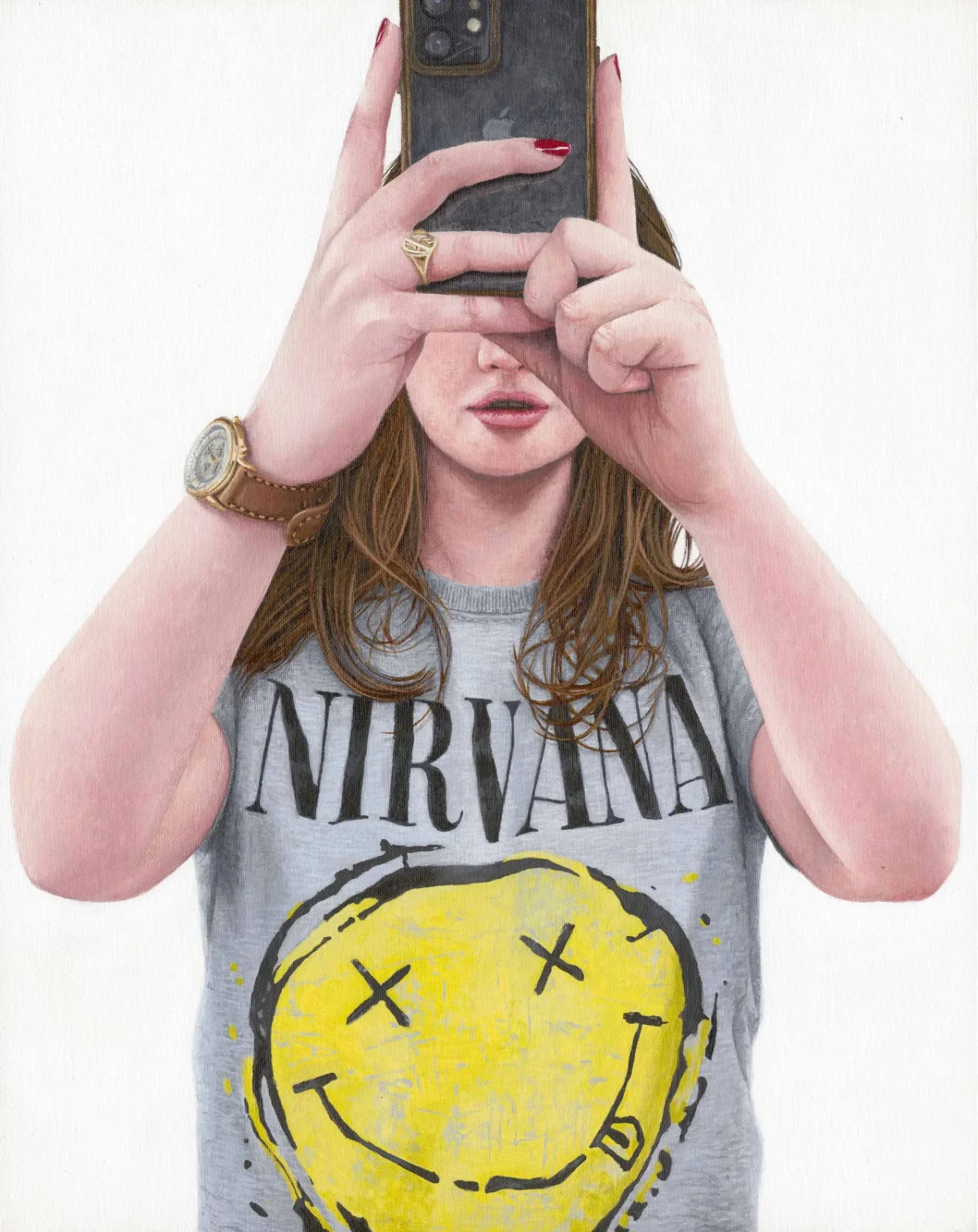
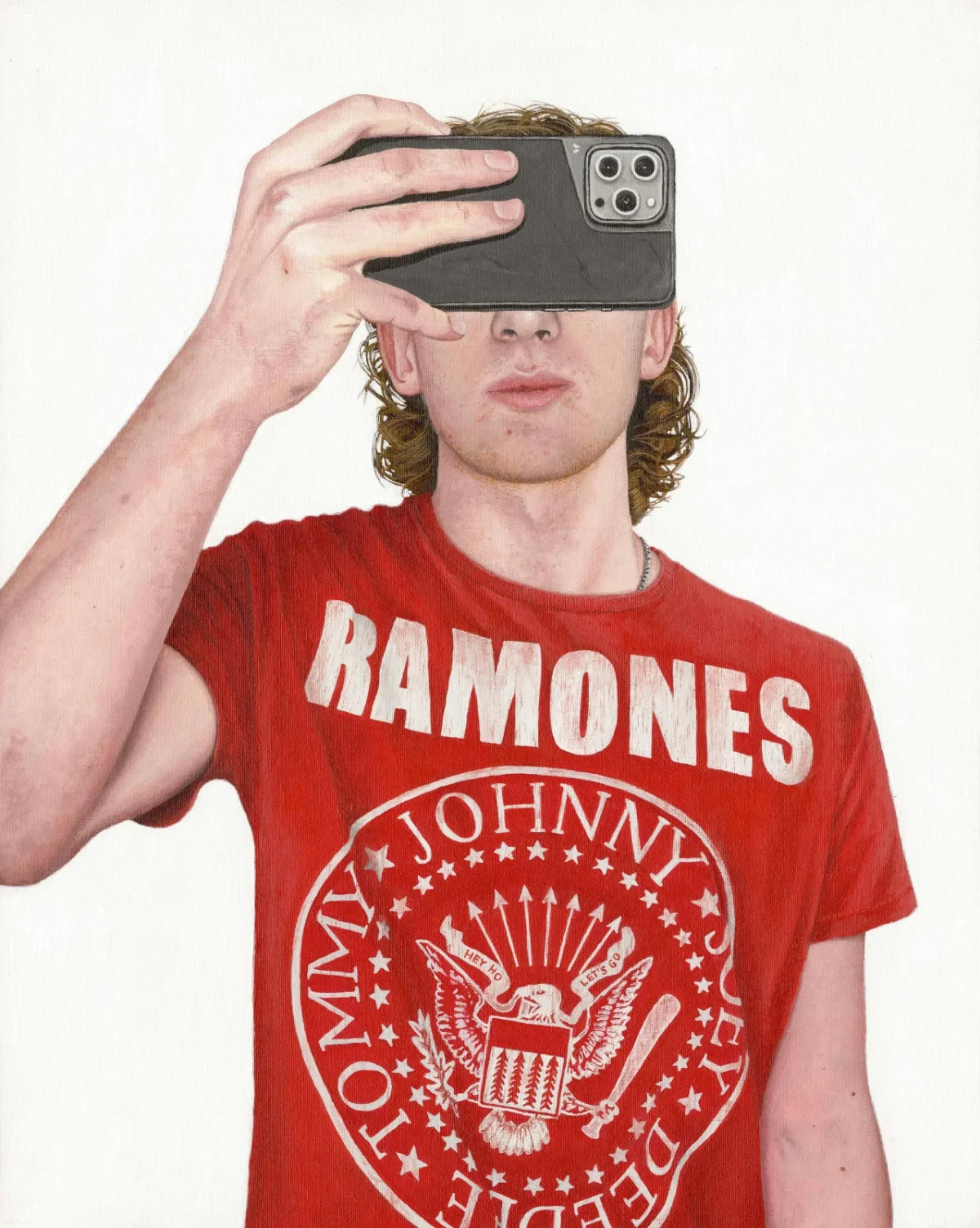
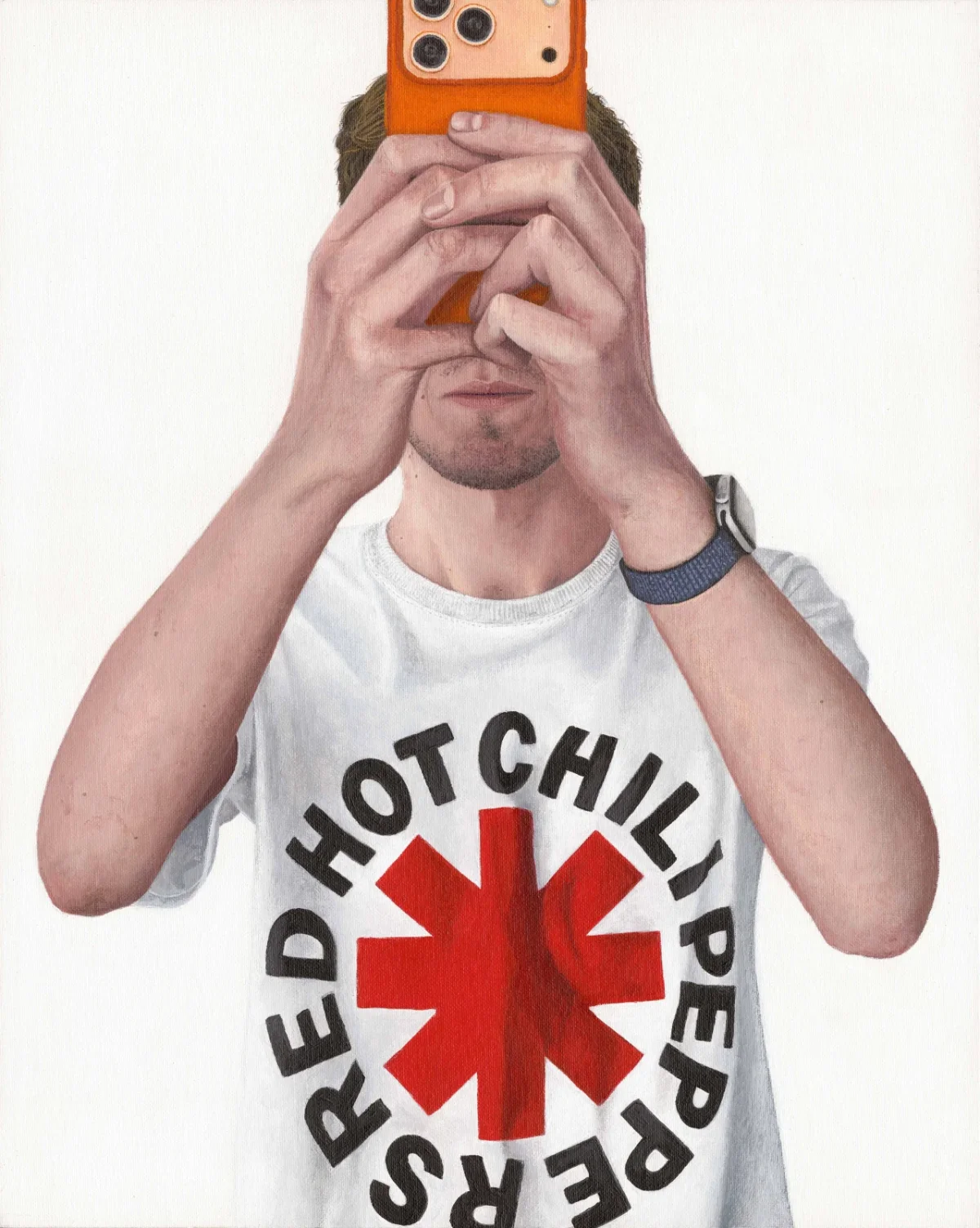
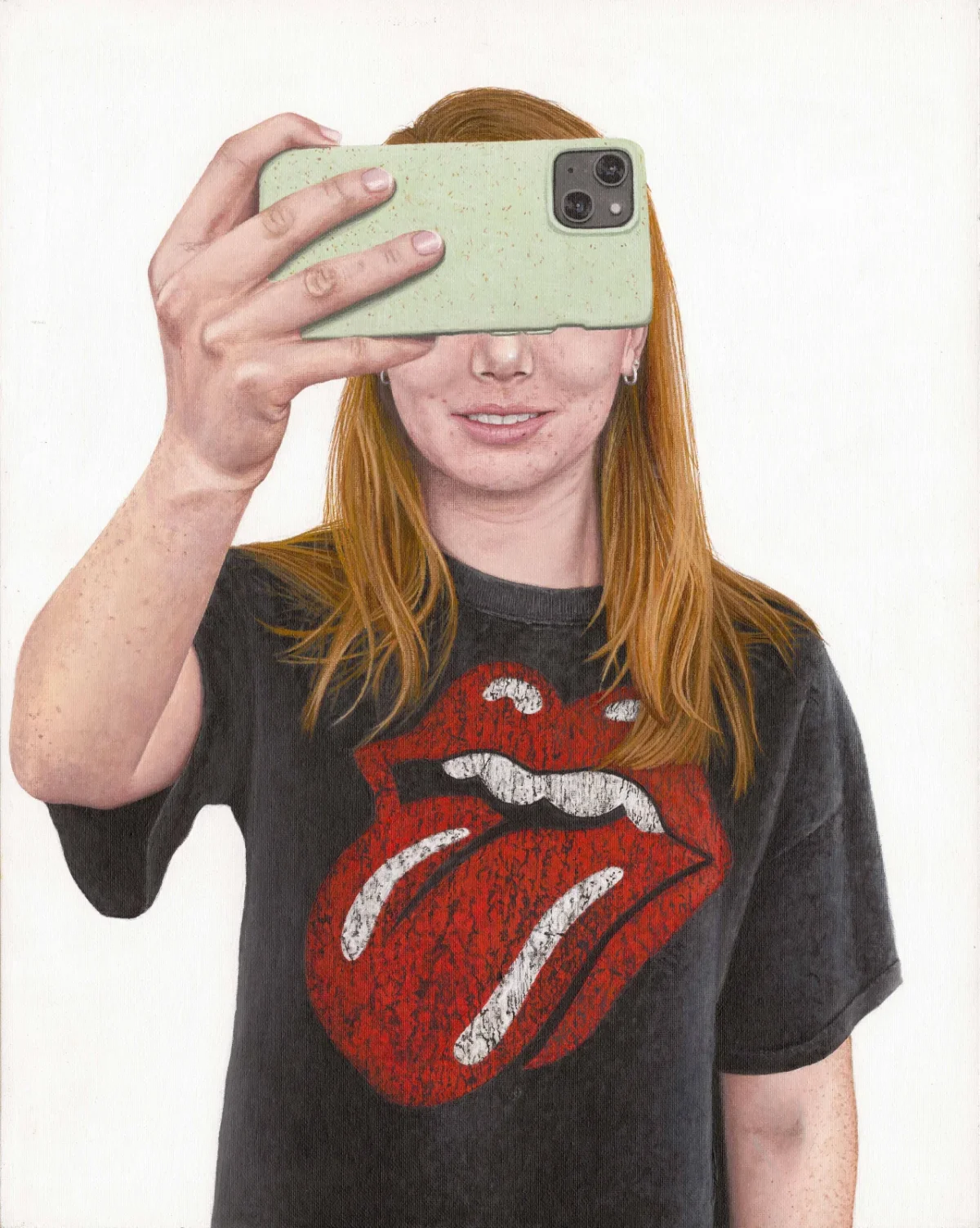
Peter Davis’s Gig Pose paintings make a familiar concert sight do two jobs at once: a raised phone blocks the wearer’s face, while a band T-shirt offers a clue to how they present themselves. The series extends Davis’s portraits of people absorbed by screens, shifting the setting to live music and drawing fashion into his observations of digital life.
Davis has painted people using devices for more than a decade. He says the work began after he saw a major change in how people related to technology. In 2017, he described the bowed head and illuminated screen as “the most ubiquitous pose on the planet.” His view now is that the habit has endured, and may have intensified.
“My paintings tell stories about our time,” Davis says. “I’ve been painting portraits of people on their devices for over a decade now, and they all began in response to me seeing a seismic shift in our technology addiction.” With Gig Pose, that ongoing subject meets the visual codes of gigs: the crowd, the phone held overhead, and the familiar graphics of music merchandise.
A concert becomes a portrait of attention
The phone is more than a prop in these images. By covering the face, it makes recording the most visible action in the scene, while leaving the person’s expression and gaze unavailable. That visual choice gives the series its central tension: the concert is a shared physical event, yet the attendee appears to be looking at it through a device.
Davis connects that image to a wider interest in the gap between wanting to be present and feeling compelled to document an experience. “There’s a lot of talk at the moment about analogue escapism and the importance of experiencing real-world moments,” he says. But, in his view, online life has become closely bound to how people understand themselves. Even at live shows, he says, phones can act as intermediaries between the audience and the music.
He points to Eventbrite research reporting that nearly two-thirds of gig-goers felt phone use made them miss part of the live experience. The source also cites Harry Styles and Madonna as performers who have encouraged audiences to pay more attention to the show, through phone-free performances or reminders about audience etiquette. Those examples place Davis’s paintings within a conversation about concert habits without turning the work into a set of instructions.
That restraint matters. Davis says he films performances himself at times, and is interested in the contradiction rather than in assigning blame. “We talk about wanting to be present, and most of us deny being addicted to our phones, but we’re also compelled to record and share everything. I think that’s a fascinating tension.” The paintings register that behaviour as an ordinary part of contemporary life, including the artist’s own participation in it.
Band T-shirts carry their own signals
The clothing gives the series a second subject. Davis is interested in the “semiotics of clothing”: what a shirt communicates through its image, its history, and its place in fashion. He names Nirvana’s yellow smiley-face T-shirt as one of the world’s best-selling band shirts, and observes that classic designs are now mass-produced as fast fashion. People may wear them for the graphic appeal without a strong connection to the band’s music.
That shift doesn’t make the shirts meaningless. Davis sees fashion as an ongoing exchange with music and popular culture, and says he isn’t simply condemning the borrowing. A Ramones shirt, for example, can call up a vinyl-centred, pre-digital past for someone who didn’t experience it directly. In these paintings, the clothing can suggest musical history and nostalgia even as the phone points toward contemporary habits.
Putting those references together creates a compact visual contrast: the screen-lit present sits alongside graphics associated with earlier music scenes. The wearer’s face is hidden, but the shirt remains legible. It becomes the most direct sign of identity in the composition, though Davis leaves open what that sign means to the person wearing it.
Traditional materials for a digital subject
The paintings use close, graphic compositions built from reference photographs that Davis works from in his studio. He describes the detail as a product of that process, and says he prefers to make the work with paint, brushes, and canvas. That choice sets the making of the pictures against their subject: a traditional studio practice records people whose attention is caught by digital devices.
“There’s a nice dichotomy too that my paintings, which are documenting our digital story, are painted traditionally,” Davis says. The contrast gives the series a material dimension beyond its imagery. A phone screen is designed to capture and circulate a moment; the painted canvas turns that moment into a carefully observed, physical image.
Davis is clear that the work isn’t meant to tell audiences how to behave. He calls the paintings observations of the world around him. Their value lies in holding several readings together: the irritation of a phone blocking someone else’s view, the urge to save a memory, the fashion life of band graphics, and the nostalgia those designs can carry.
Gig Pose will be shown at The Manchester Contemporary at Manchester Central from 19 to 22 November 2026. Davis is also exhibiting with Bury Art Museum. For viewers, the practical detail to watch is how each painting balances the obscured face, the raised device, and the shirt graphic. Those elements turn a fleeting crowd gesture into a portrait of how people look at music—and how they choose to remember it.
===