Monday, November 9, 2026 · UX & UI Design
B2B Sales Content in 2026: Deck Volume, Rework and AI Readiness
Noted by Orana Velarde · 349 reads
A survey of 164 B2B leaders finds heavy deck production, frequent rework and clear conditions for useful AI: business context, accurate data and brand fit.
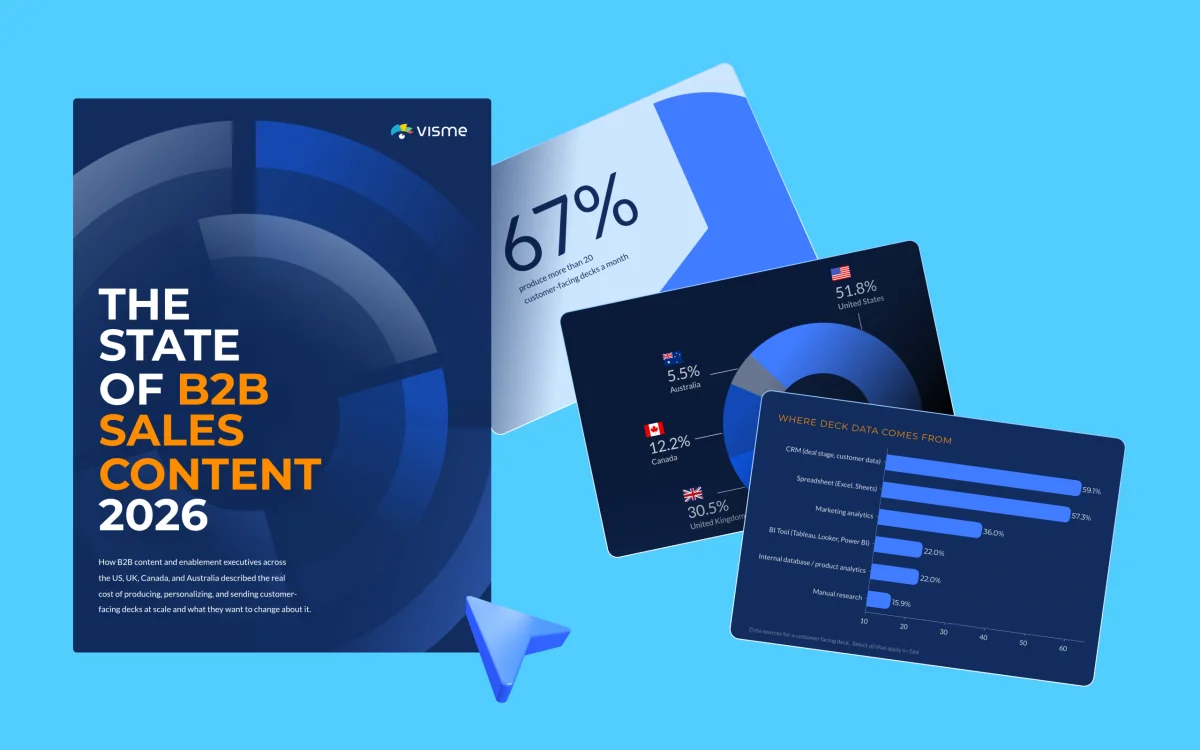
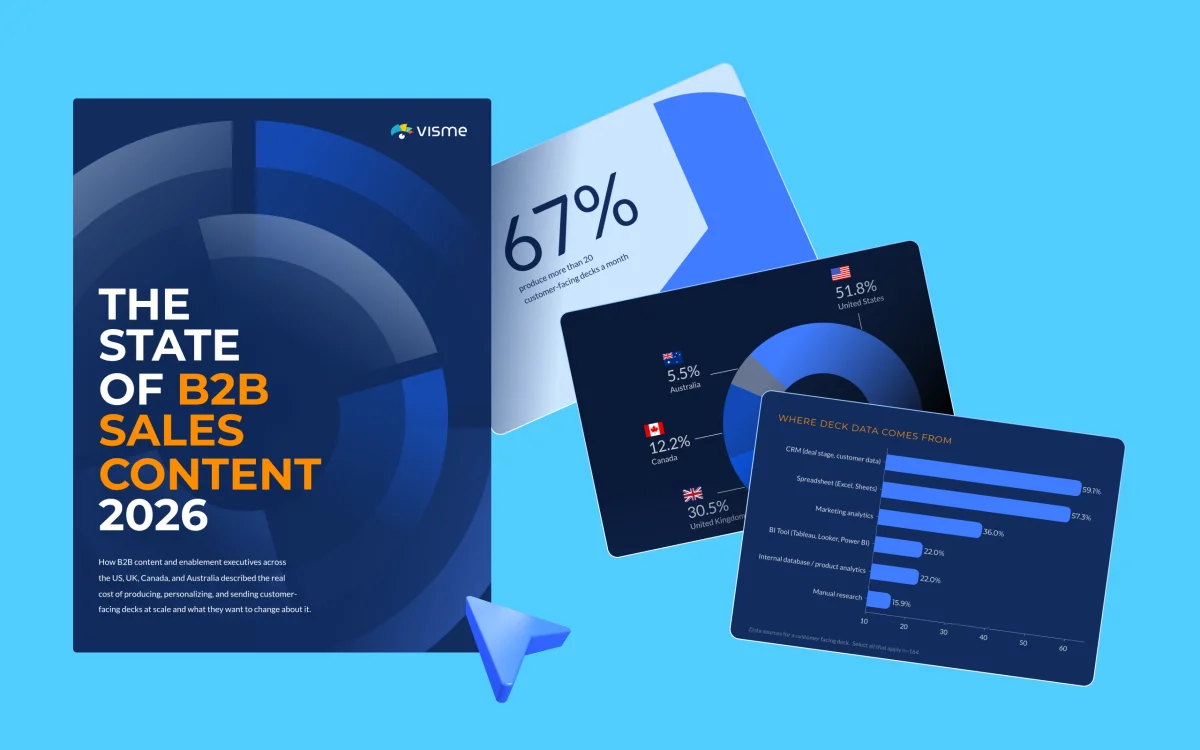
B2B sales content has a production problem hiding inside its volume: teams make decks quickly and repeatedly, then spend substantial time fixing them. Visme’s 2026 survey found that 67% of teams produce more than 20 customer-facing decks each month, while 85.4% spend between 10% and 50% of their working week on rework. The pattern points to a workflow challenge as much as a writing or design challenge: content draws on scattered data, passes through several contributors and often gets revised under deadline pressure.
The findings come from The State of B2B Sales Content 2026, a survey of 164 B2B managers, directors and senior executives responsible for customer-facing content. Other research cited below adds context on marketing output, sales capacity, buyer research and AI use. Together, the numbers suggest a practical priority for design and sales teams: make approved information easier to reuse, tailor and check after it leaves the team.
Production volume makes repeatable design matter
Most surveyed teams produce a steady stream of familiar deliverables. Sales pitch decks are the most common format, made by 59.1% of B2B teams; 53.7% produce quarterly business reviews (QBRs). About one in five teams produce more than 50 customer-facing decks in a month. At that pace, building each presentation as a fresh design project is difficult to sustain.
There’s a strong case for reusable structures: 92.7% of teams say at least half of their output follows the same format each time. Yet repeatability doesn’t remove the need to adapt the content to a customer. Some 81.7% of teams frequently or always personalize customer-facing deliverables. A useful system has to support both needs: stable layouts and brand elements, with room to change details for the audience.
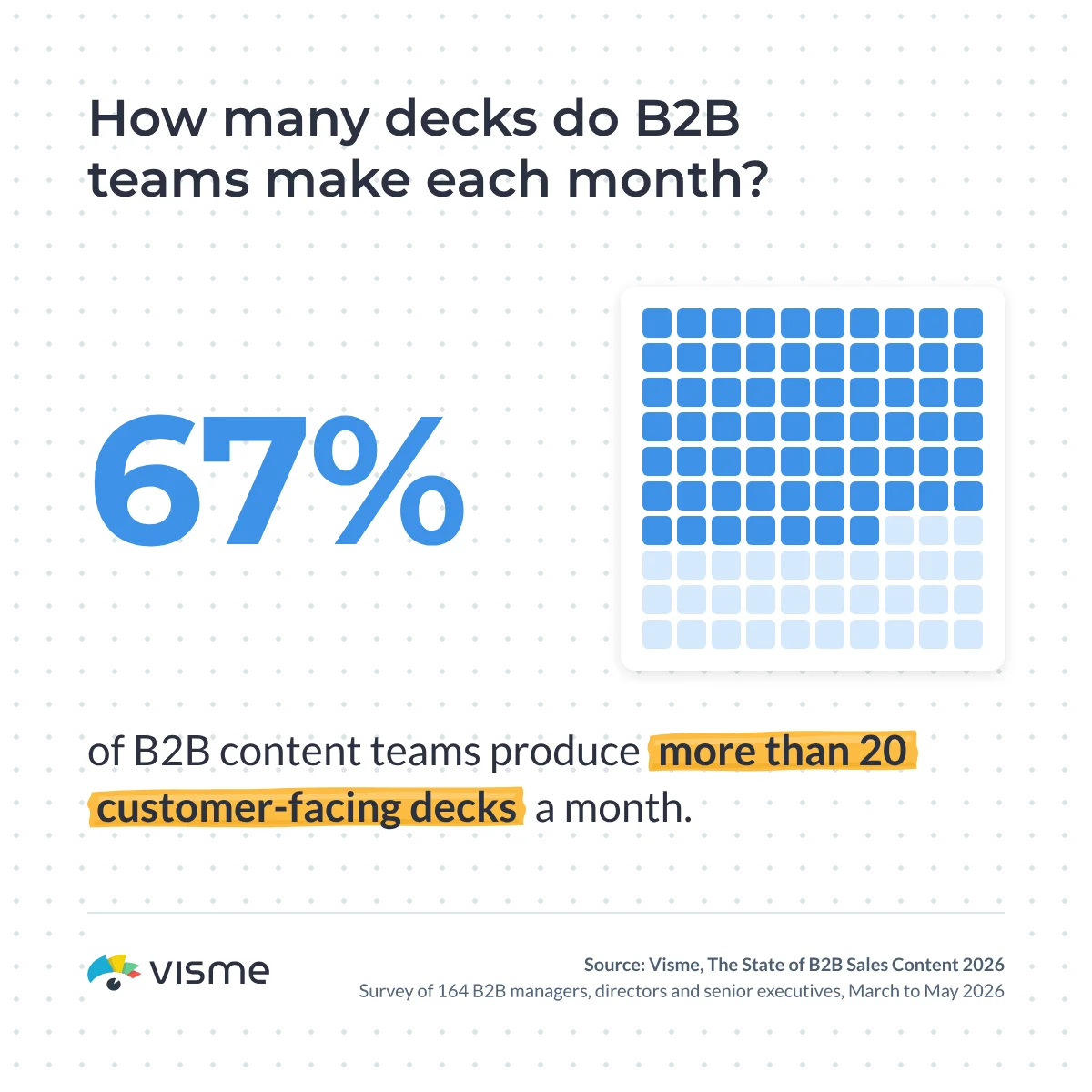
- 67% produce more than 20 customer-facing decks monthly.
- About one in five produce more than 50.
- 59.1% make sales pitch decks; 53.7% make QBRs.
- 92.7% say at least half their content follows a recurring format.
- 81.7% frequently or always personalize deliverables.
Production expectations are rising beyond sales teams, too. HubSpot’s 2026 State of Marketing report says 83.5% of marketers are expected to produce more content, and 35.7% expect “much more.” In the 2026 State of Content Report from Clutch and Conductor, 87% of content marketers plan to raise content budgets, while more than 55% expect to increase output. That makes a repeatable content workflow increasingly relevant to teams designing for sales.
Deadlines, handoffs and the cost of rework
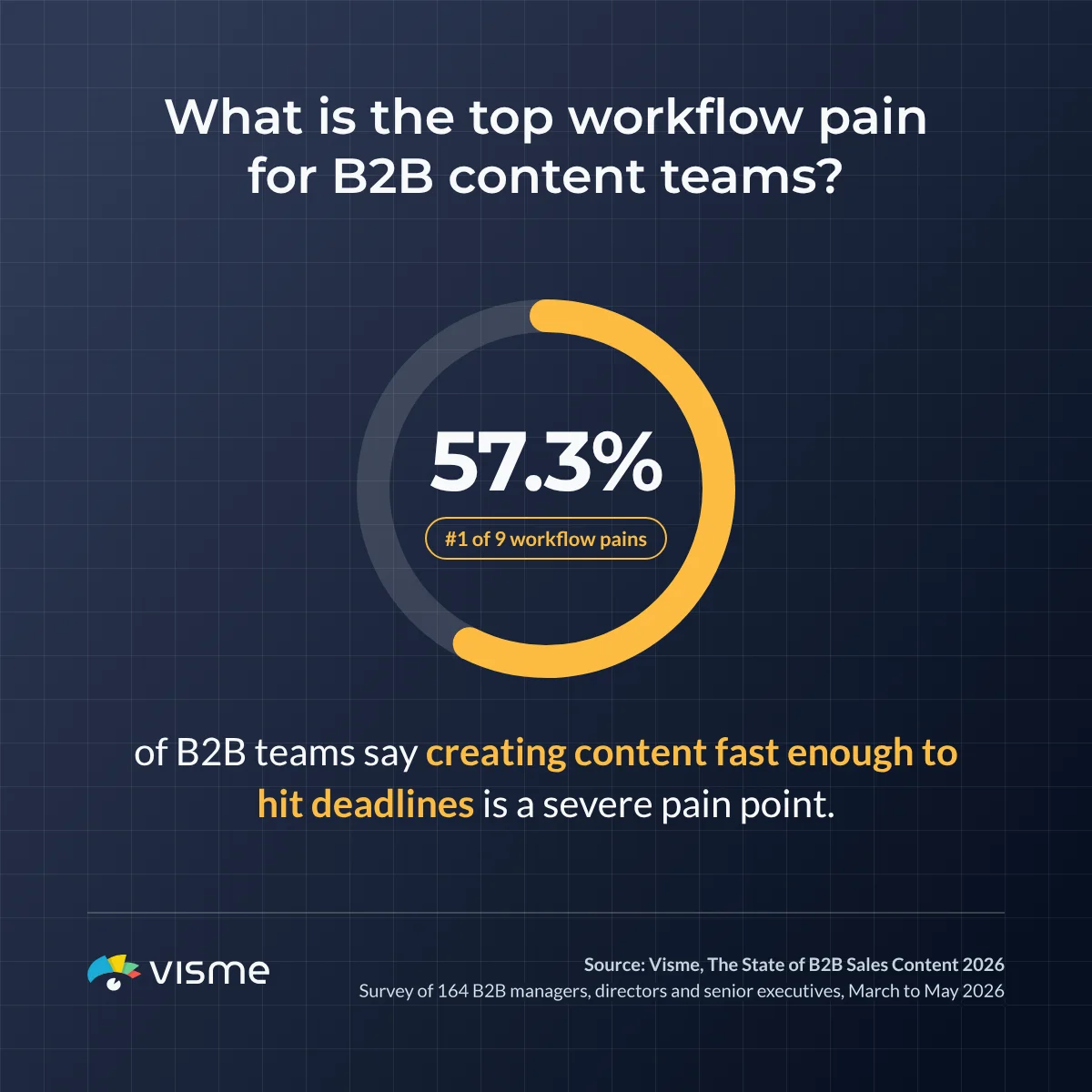
Speed is the most severe workflow pain named in Visme’s survey: 57.3% of respondents struggle to create content fast enough to meet deadlines. Brand consistency and getting current CRM data into content tie next, each cited as a severe problem by 54.3%. Across nine common workflow pains, between 42% and 57% of teams rated each one severe. The breadth of the result suggests that teams aren’t dealing with a single isolated bottleneck.
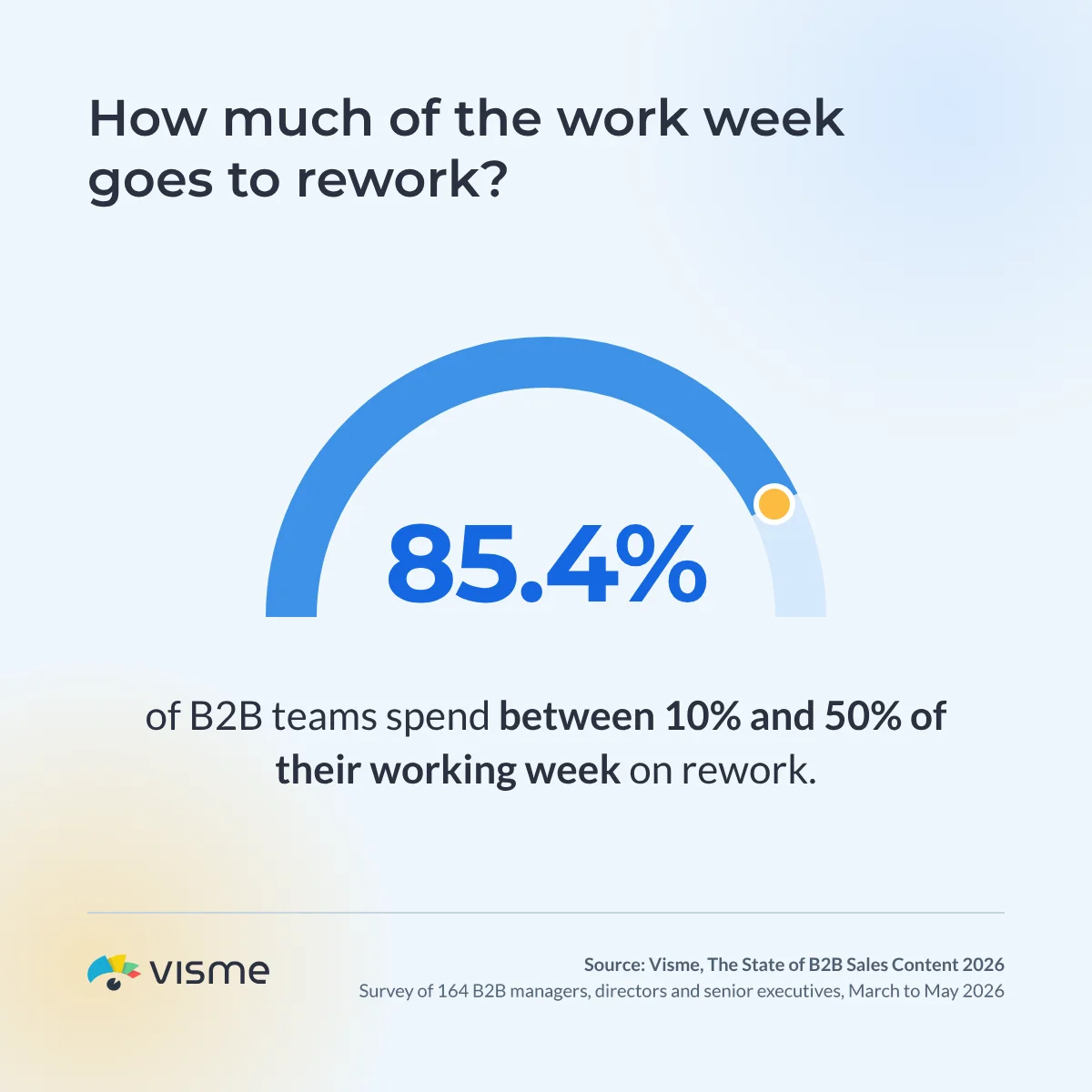
Individual deliverables take time even before corrections enter the picture. Three quarters of teams spend between an hour and a full day creating one customer-facing piece, and about one in five spend longer than a day. Then comes the second pass: 85.4% spend between 10% and 50% of their working week on rework, with nearly a third spending more than a quarter of the week redoing completed content.
The pressure extends to selling time. Salesforce’s State of Sales 2026 report, based on 4,050 sales professionals in 22 countries, found that the average seller spends 40% of their time selling. An Optimizely study of 2,003 B2B marketing leaders found that 76% spend at least three hours weekly editing, fact-checking and repairing AI output. Rework can affect both human-made and AI-assisted content, especially when checking and updating are treated as late-stage cleanup.
Alex Zani, Corporate Partnership Strategy at Los Angeles Football Club (LAFC), described an earlier approach in which staff copied old slides and sometimes carried outdated data forward. He said a shared slide library helped keep those materials updated. The design lesson is straightforward: a library can reduce repeated layout work, but it also needs a reliable way to keep facts current.
Data accuracy and brand control travel together
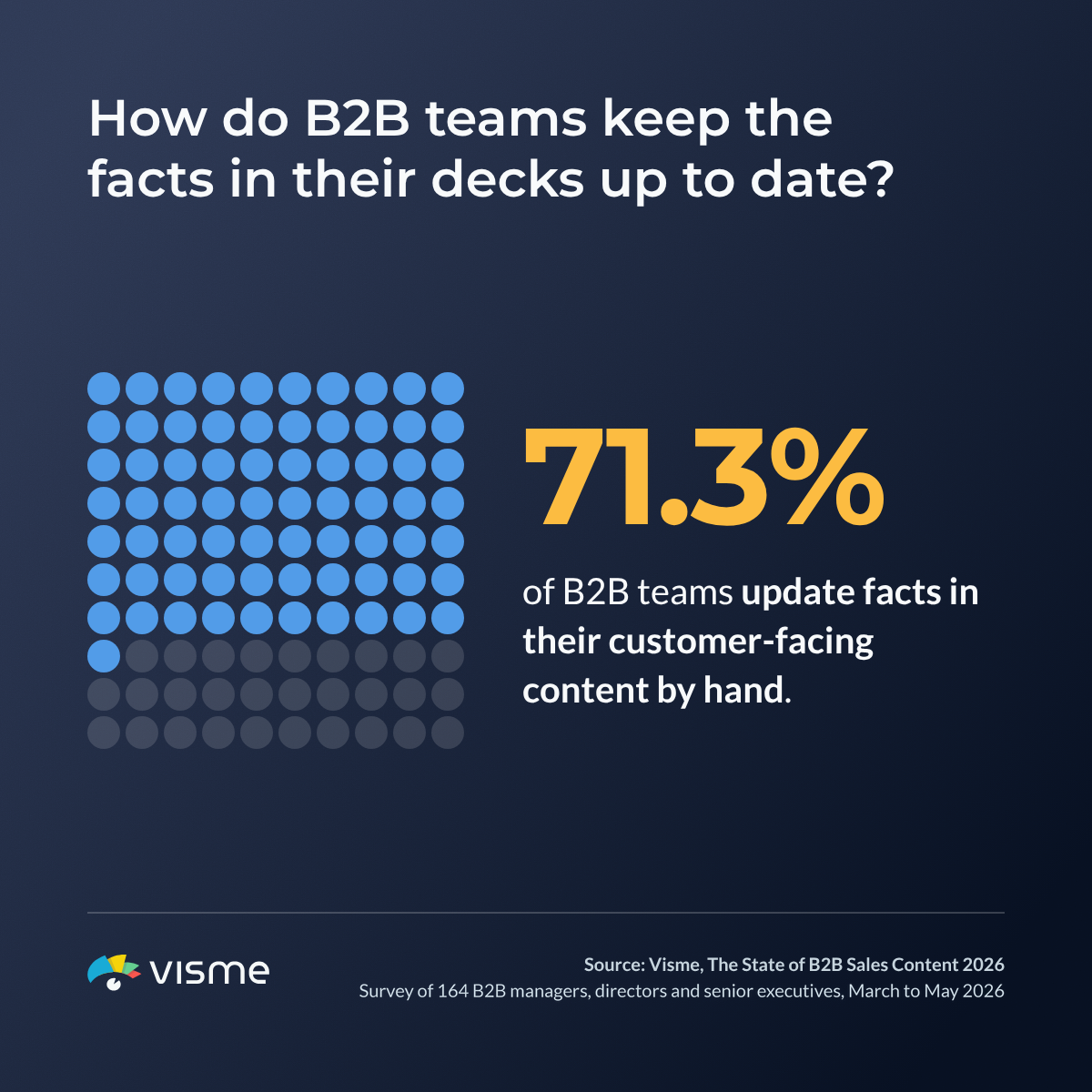
Sales content often draws from several systems. In the Visme survey, 59.1% of teams pull deck data from a CRM and 57.3% use spreadsheets. Yet 71.3% update facts in customer-facing content by hand. That manual bridge between source data and presentation is a predictable place for errors, stale figures and extra review work to appear.
A sales manager at a UK B2B company described the effort of extracting data into a usable format for pitches and presentations as “far longer than it should be,” adding that the process remained very manual. Salesforce’s 2026 report points to a related systems issue: 51% of sales leaders using AI say disconnected systems slow their AI initiatives, while 74% of sales professionals are focusing on data cleansing.
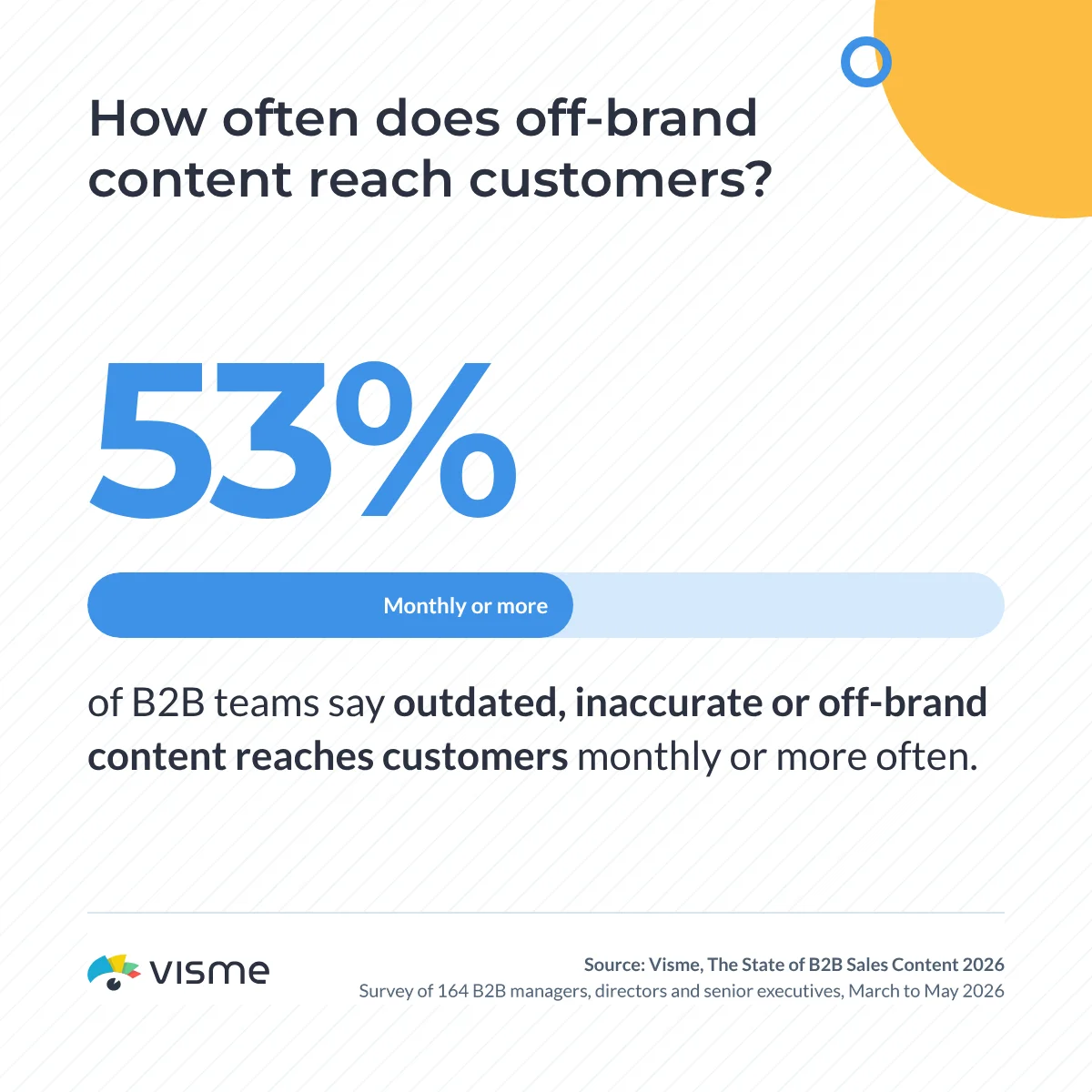
Accuracy is especially hard to protect when many people touch a file. In 94.5% of teams, customer-facing deliverables involve more than one contributor. Nearly four in five teams (79.9%) say sales reps change an approved deck at least sometimes before it goes out. And 53% say outdated, inaccurate or off-brand content reaches customers monthly or more often.
Optimizely’s 2026 study adds a warning about deadline-driven AI use: about one in four B2B marketing leaders admit to publishing AI content they know isn’t on-brand when time is tight. In the US, the figure is one in three. The study also found that 66% have some concern that AI could make brand voices converge, while 30% say their own brand voice is unmistakable.
Kalyn Lewis, Visme’s VP of Sales and Customer Success, argues that teams don’t need to prevent reps from personalizing decks. The important part, in her view, is helping approved facts travel with the content as it changes hands. That frames brand control as a design and workflow question: give people useful components and current information, then make it easier to adapt the material responsibly.
Content needs a feedback loop
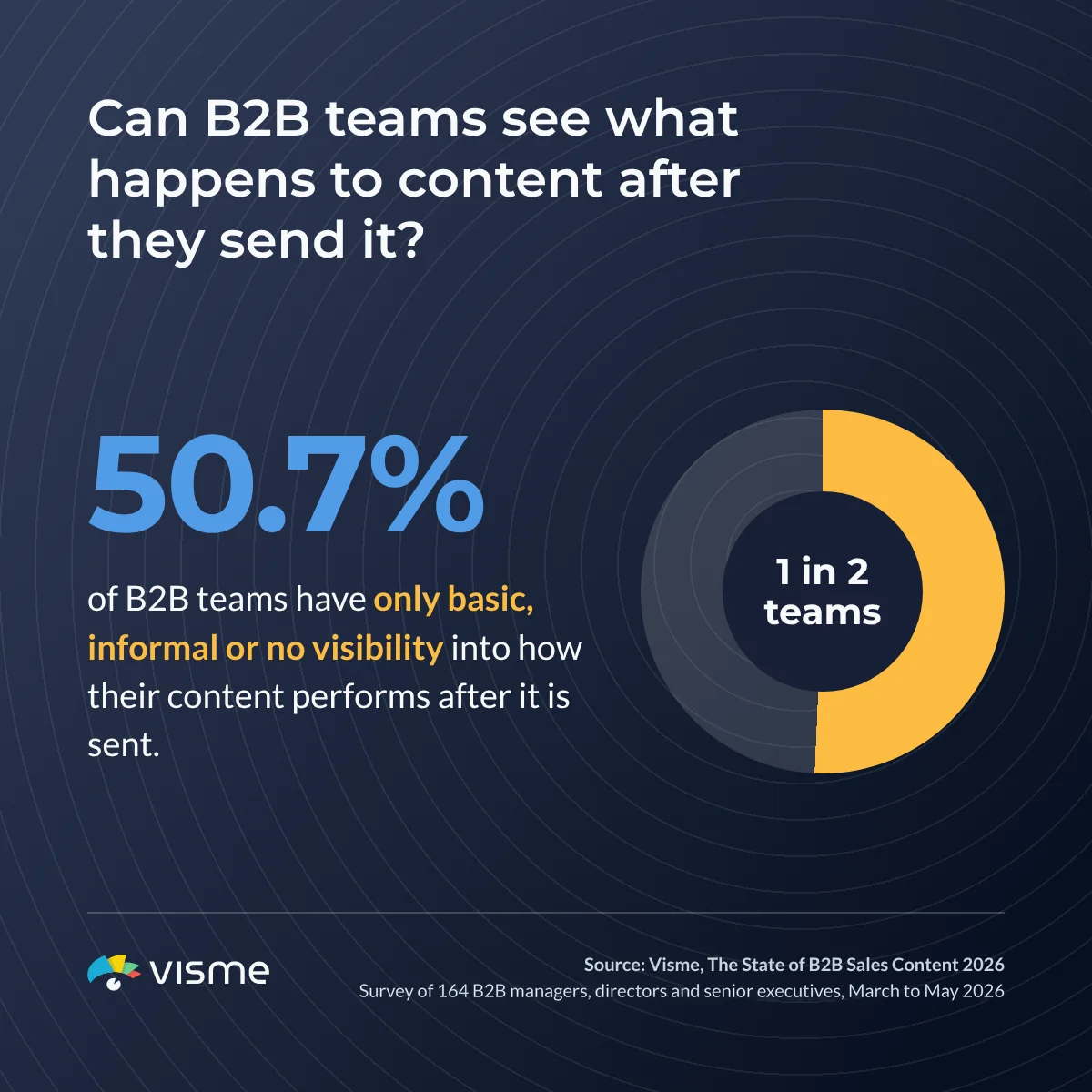
Sending a deck is not the end of the work, but many teams have limited insight into what happens next. Visme found that 50.7% have only basic, informal or no visibility into content performance after sending it. By comparison, 49.4% track detailed engagement. Without that feedback, teams have less evidence about which sections held attention or what information buyers returned to.
Buyer behavior makes that gap more consequential. Gartner’s March 2026 survey of 646 B2B buyers found that 67% prefer an experience without a sales representative. A separate May 2026 Gartner survey found that 69% prefer to validate AI-generated insights with sales representatives; buyers used an average of seven information sources during a recent purchase. Forrester’s State of Business Buying, 2026 says a typical buying decision includes 13 internal stakeholders and nine external influencers.
These findings describe a buyer journey with substantial independent research and many people involved. A sales deck may need to make sense when it is passed around without a presenter, while engagement information can help teams understand how it is being used. Tracking is most useful when teams connect it to decisions about content structure, clarity and follow-up.
AI adoption depends on context and review
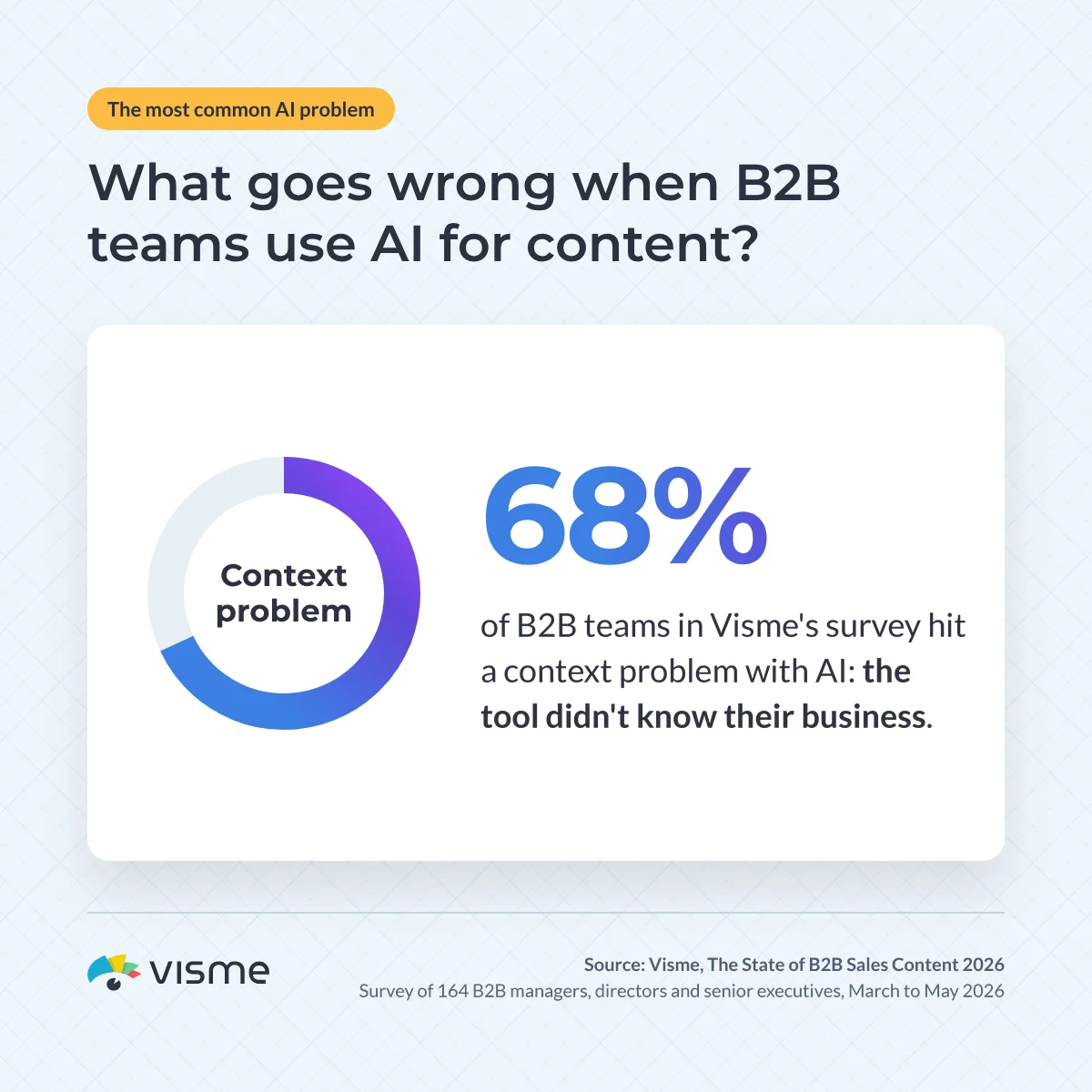
Most teams have tried AI for sales content, but the leading complaint is that the tool lacks business context. Visme found that 68% encountered this problem. Another 33.5% said generated content needed too much cleanup, 31.1% called it generic, 20.7% said the tools couldn’t use their own data, and 19.5% said the output didn’t match their brand.
Broader research shows adoption is common, though review remains part of the process. Ahrefs’ 2026 State of AI in Content Marketing survey of 301 marketers found that 93% use AI to create or help create content, up from 87% the previous year. Two thirds trust AI-generated content only after a person reviews it; just 2.7% trust it without review. In Optimizely’s study, 54% of B2B marketing leaders said senior leadership underestimates the human effort AI requires.
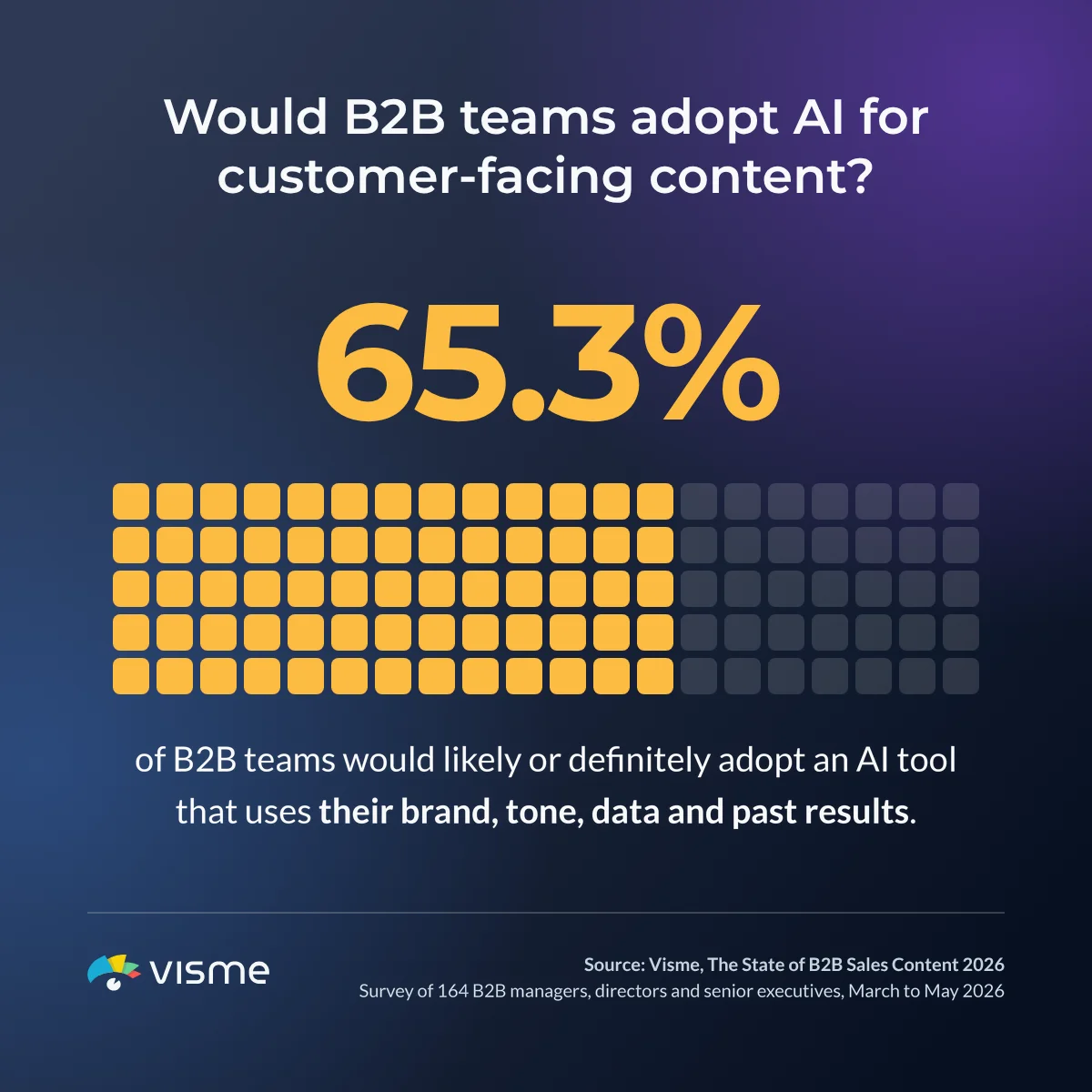
Teams’ willingness to adopt AI for customer-facing materials depends on the output’s usefulness. Some 70.1% would use AI if it required only minimal edits or less work than starting from scratch. Another 65.3% would likely or definitely adopt a tool that draws on their brand, tone, data and past results. Only 10.4% rule out AI for customer-facing content entirely.
A US B2B manager responsible for customer-facing content said a practical tool would need to produce accurate, brand-consistent material with minimal editing and fit existing workflows and collaboration tools. That aligns with the survey’s broader finding: teams appear open to assistance when it cuts production effort without adding a new layer of checking.
Sales organizations are already using these tools. Salesforce’s State of Sales 2026 found that 87% use some form of AI, and 54% of sellers say they have used AI agents. For content teams, the design task is to make outputs reviewable and grounded in approved information. The useful test is not whether AI can generate a slide, but whether the team can verify its facts, voice and fit for the customer quickly.
What the survey can tell teams
Visme surveyed 164 managers, directors and senior executives responsible for customer-facing content at B2B companies in the US (51.8%), UK (30.5%), Canada (12.2%) and Australia (5.5%). None were Visme users. The survey ran on UserTesting from March to May 2026. Its stated margin of error is about 7.7% at 95% confidence, so the figures are best read as directional indicators of workflow pressure.
The numbers point to a connected set of design decisions: establish reusable formats for recurring deliverables, keep approved data accessible, preserve room for personalization, and build review into the workflow. Teams can then use engagement signals to refine materials after sending. That combination addresses the actual friction in the findings: volume alone is manageable when the source content, visual system and checking process work together.
See the full findings, charts and recommendations in The State of B2B Sales Content 2026. The other research cited includes HubSpot’s 2026 State of Marketing; Clutch and Conductor’s 2026 State of Content Report; Salesforce’s State of Sales 2026; Optimizely’s 2026 Global Study; Gartner’s March and May 2026 buyer surveys (March, May); Forrester’s The State of Business Buying, 2026; and Ahrefs’ 2026 State of AI in Content Marketing.