Tuesday, November 17, 2026 · Graphic Design
Ines Launay’s Playful Illustration Starts With Small Drawings and Graphic Wandering
Noted by Ayla Angelos · 754 reads
French illustrator Ines Launay builds tactile, story-rich images from separate pencil sketches, travel notes and everyday observations.
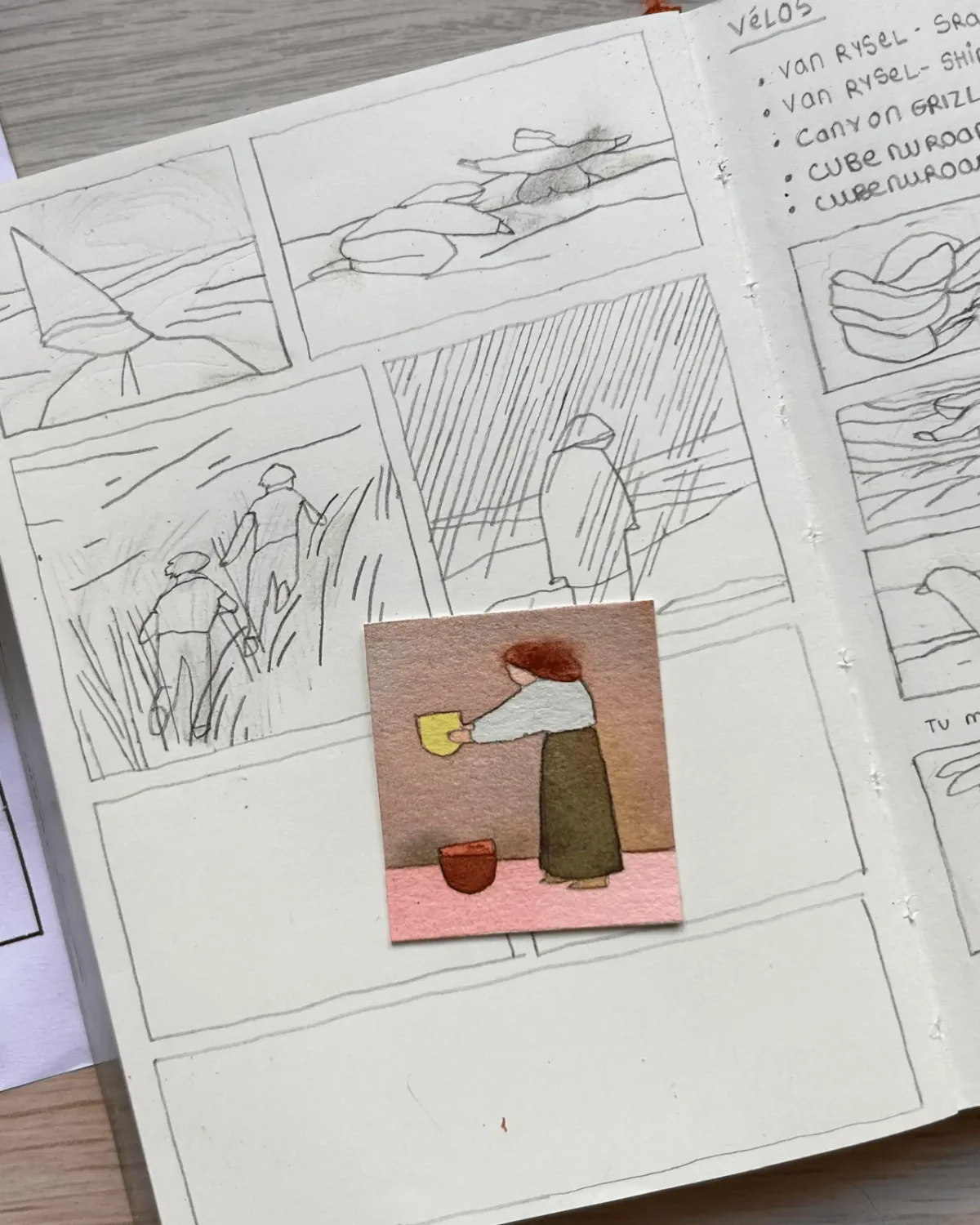
Ines Launay’s illustrations take shape through accumulation: a pencil sketch here, a handwritten note there, then a digital arrangement that lets the pieces find their place. The French illustrator’s pages can bring together tiny figures, landscapes, speech bubbles and passing details, with the loose energy of a travel diary and the pacing of a comic. Her process gives the work room to wander before it settles into a composition.
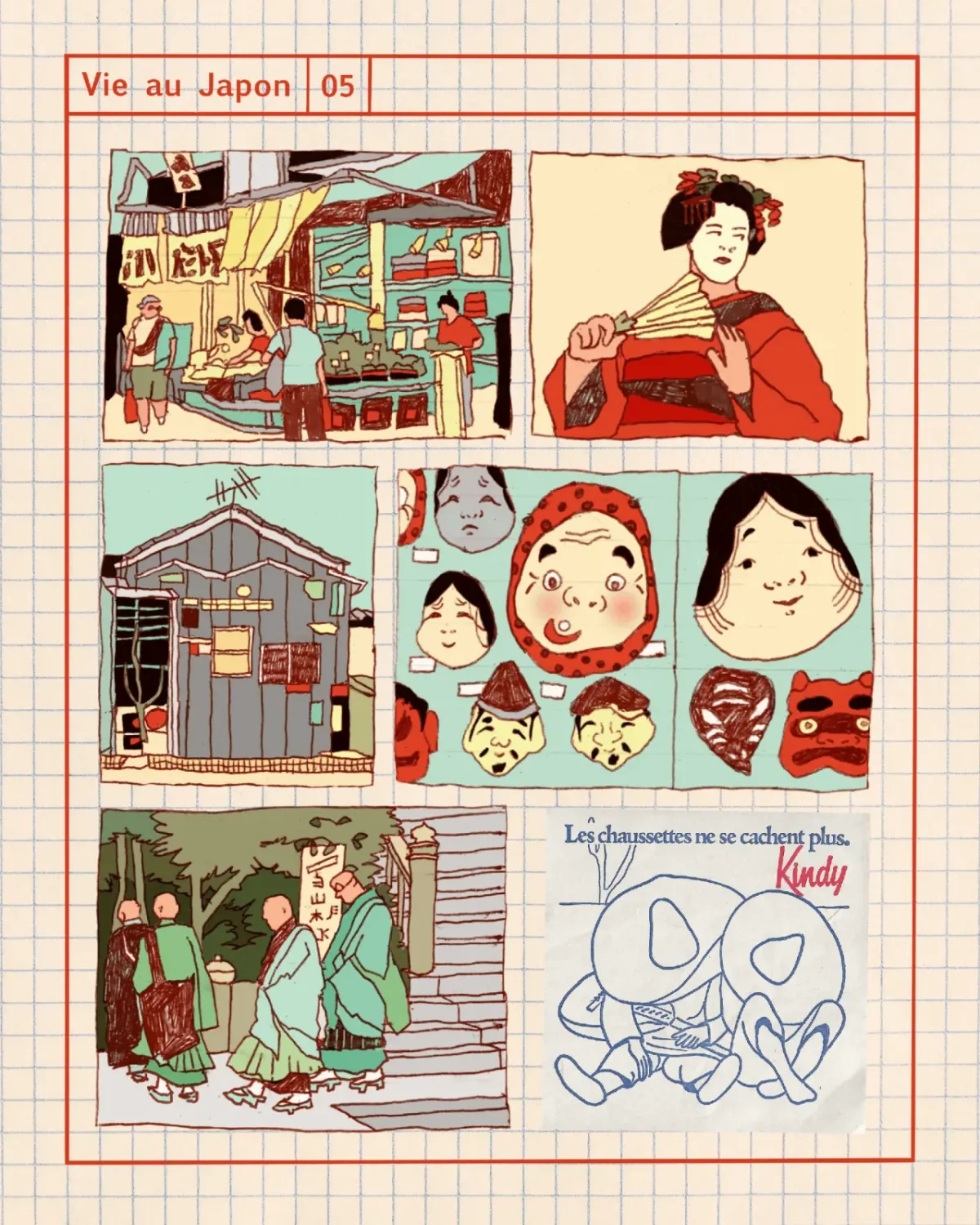
Launay’s recurring interests include sheep, wooden toys, polka dots, foam, textile crafts, costumes and the occasional absurdity. These aren’t motifs laid over a fixed style so much as material for a visual way of thinking. Across her portfolio, loose pencil marks and wonky characters meet coloured pencil and inky brushwork, giving the images a distinctly handmade feel. A scene of people outside a Japanese shopfront, for instance, draws attention through its bicycles, signs and small surrounding details. The pleasure lies partly in looking around the scene rather than reading it at a glance.
A practice built from everyday looking
Drawing has been part of Launay’s life since childhood. She grew up in a small town in central France, where her grandparents introduced her to art; both painted, and her grandmother also ran small modelling workshops. Launay took drawing classes for several years, but remembers the experience less as formal instruction than as afternoons spent drawing with friends. “Like many children, I loved drawing,” she says. “For me, it was a way to exist, and I never really stopped. Today, drawing is part of my daily life, part of who I am, and part of how I see the world.”
After three years studying illustration in Paris, she graduated in 2024. She now fits her creative work around a full-time job, which currently pays the bills. Sport is another regular part of her life: trail running, hiking and cycling take her through places that later find their way into her drawings. Those activities also give her time to think. A route, a passing encounter or a detail noticed along the way can become material for a page.
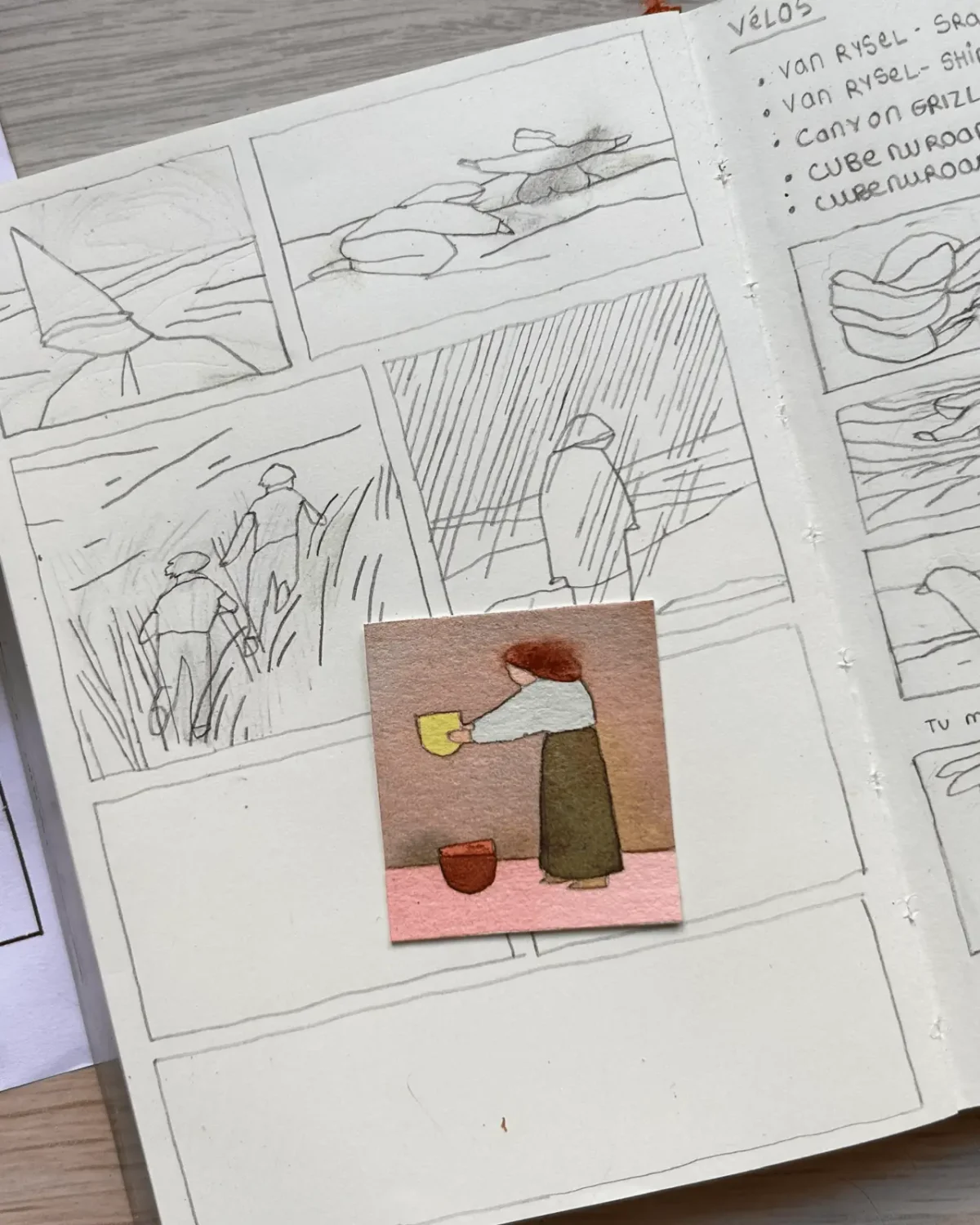
With limited time to make work, Launay starts small. She draws separate elements in pencil, then assembles them digitally, allowing the composition to emerge after the initial sketches. That sequence suits a practice grounded in observation: instead of deciding the whole image at the outset, she gathers fragments and considers how they might speak to one another. “The final piece is often just the result of a graphic wandering,” she explains. “I find it very hard to imagine one image as a whole, something complete on its own. That’s also why I draw small separate pieces first, and only afterwards I think about what to do with them.”
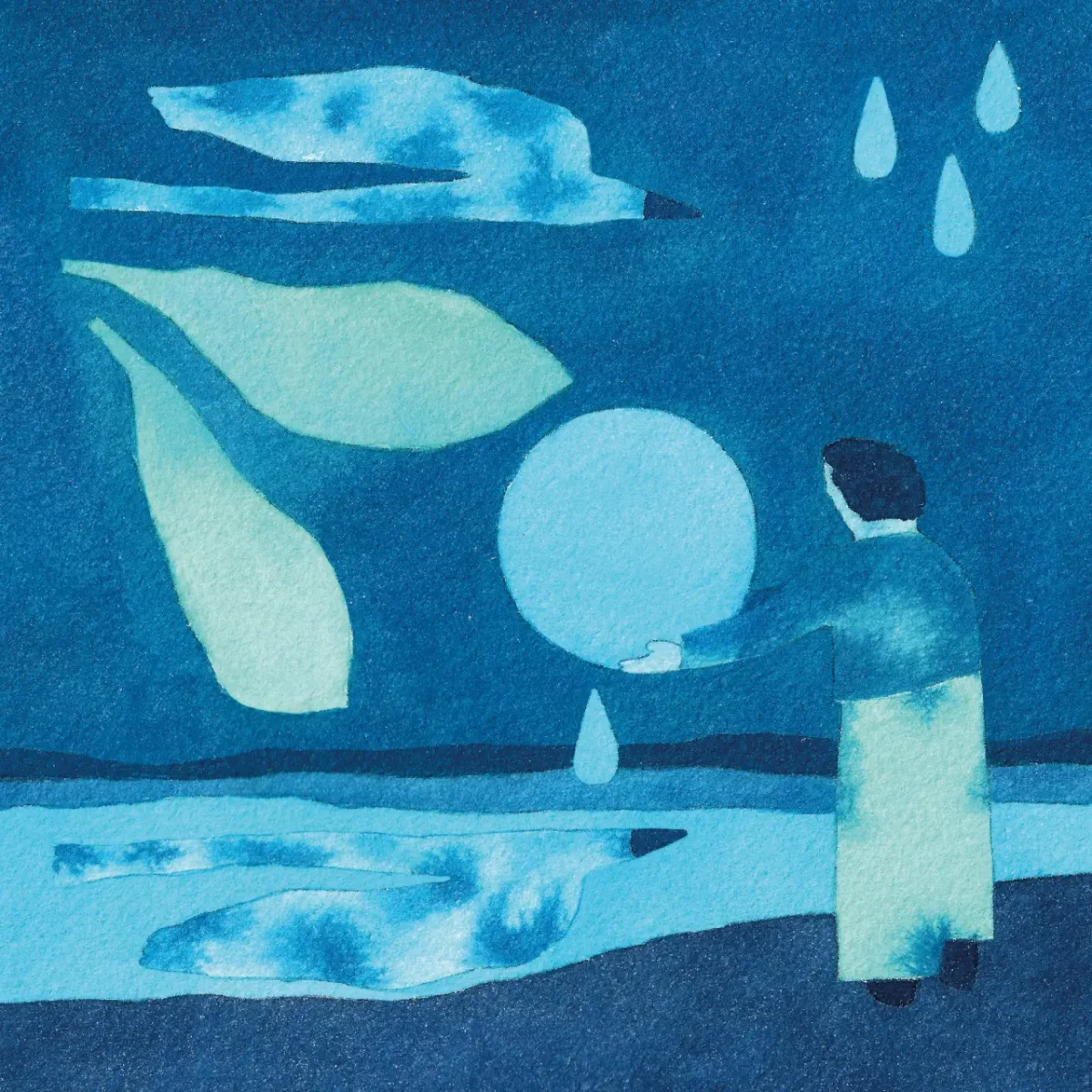
The method leaves the relationship between parts open for longer. A character, a shape or a handwritten fragment can shift in meaning as the surrounding elements change. The final arrangement still has graphic intent, but it doesn’t need to begin as a fully mapped image. For designers working with dense illustrated pages, this offers a practical way to manage complexity: collect material in manageable pieces, then use scale, spacing and grouping to build a reading path.
Graphic storytelling across formats
Two artists have helped Launay think about that relationship between image and sequence: Paul Cox and Sammy Stein. She returns to their work when she feels creatively lost. Stein’s observation that comics are “in part, graphic design” connects with Launay’s interest in how separate drawings occupy a page. In her work, composition doesn’t simply frame a story; the arrangement itself helps tell it.
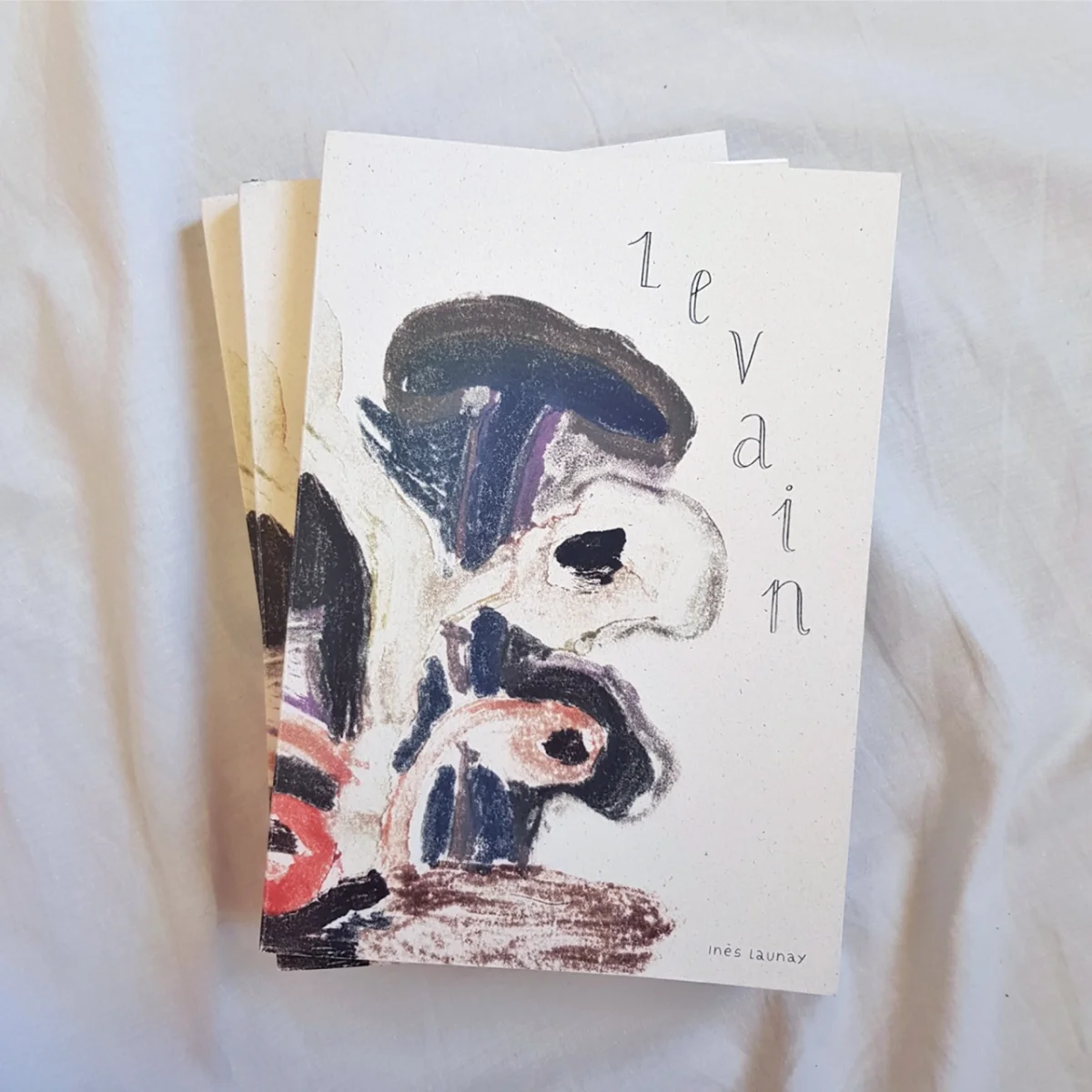
That approach comes through in Levain, Launay’s 2024 graduation project. The graphic novel follows three friends experimenting with different ways of living and inhabiting the world. Small figures, landscapes and colourful graphic arrangements carry the story, giving the pages a sense of exploration rather than a single, fixed visual register. A stack of illustrated cards from the project uses an abstract figure and the word “levain”, set vertically, as a compact example of how text and image can share the same visual space.
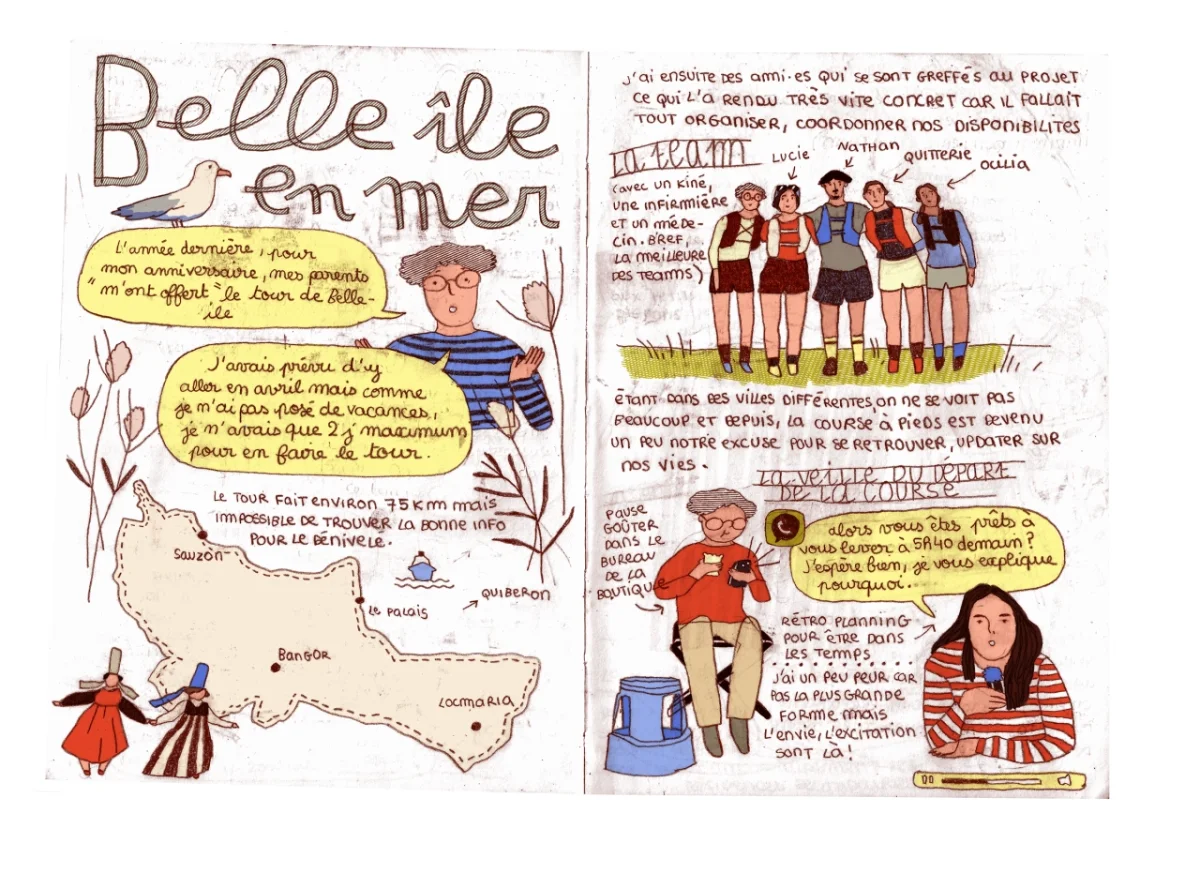
Launay’s other project, Sur les pas d’Ella Maillart, takes the form of an illustrated travel notebook. It follows a journey through Switzerland in the footsteps of adventurer and travel writer Ella Maillart. Launay made the project with Louane Carmona and Coline Balfroid, who created an accompanying video documentary. The notebook gathers delicate pencil drawings, handwritten observations and scenes from the trip, retaining the informal quality of pages made along the way.
Launay describes two complementary directions in this work: the travel-notebook format, where she records adventures such as trips and races, and the more experiential approach of Levain, which holds her preoccupations and questions. She is candid about the limits of the notebook pages, saying they have “plenty of flaws,” but also that the process taught her a lot. Making a finished object, she adds, is rewarding in a way that sharing an image on a screen can’t quite replace.
Making space for curiosity
Launay also questions the purpose of making art when the world feels overwhelming. “With everything happening in the world, everything quickly feels pointless,” she says. Still, other people’s work can bring back “that little spark of curiosity, that boost of motivation, that feeling of joy and pleasure that I need every day.” That response sits close to the spirit of her own pages: they invite attention through small discoveries, lively arrangements and signs of a person thinking with a pencil.
For creative teams, the useful lesson is in how the work gets made. Launay leaves room for fragments to accumulate, then uses their visual relationships to shape a page and its story. Her drawings show how an image can stay exploratory while still feeling composed: start with what catches the eye, let the pieces gather, and see what the arrangement begins to say.