Wednesday, November 18, 2026 · UX & UI Design
Eeny, Meeny, Miny, Moe! Turns Minoan Art into a Story of Difference and Belonging
Noted by Jesse Rylander · 772 reads
Andrea Szelesová’s 2D short pairs Minoan-inspired design with a tactile sun-headed hero learning how to connect without dimming his light.
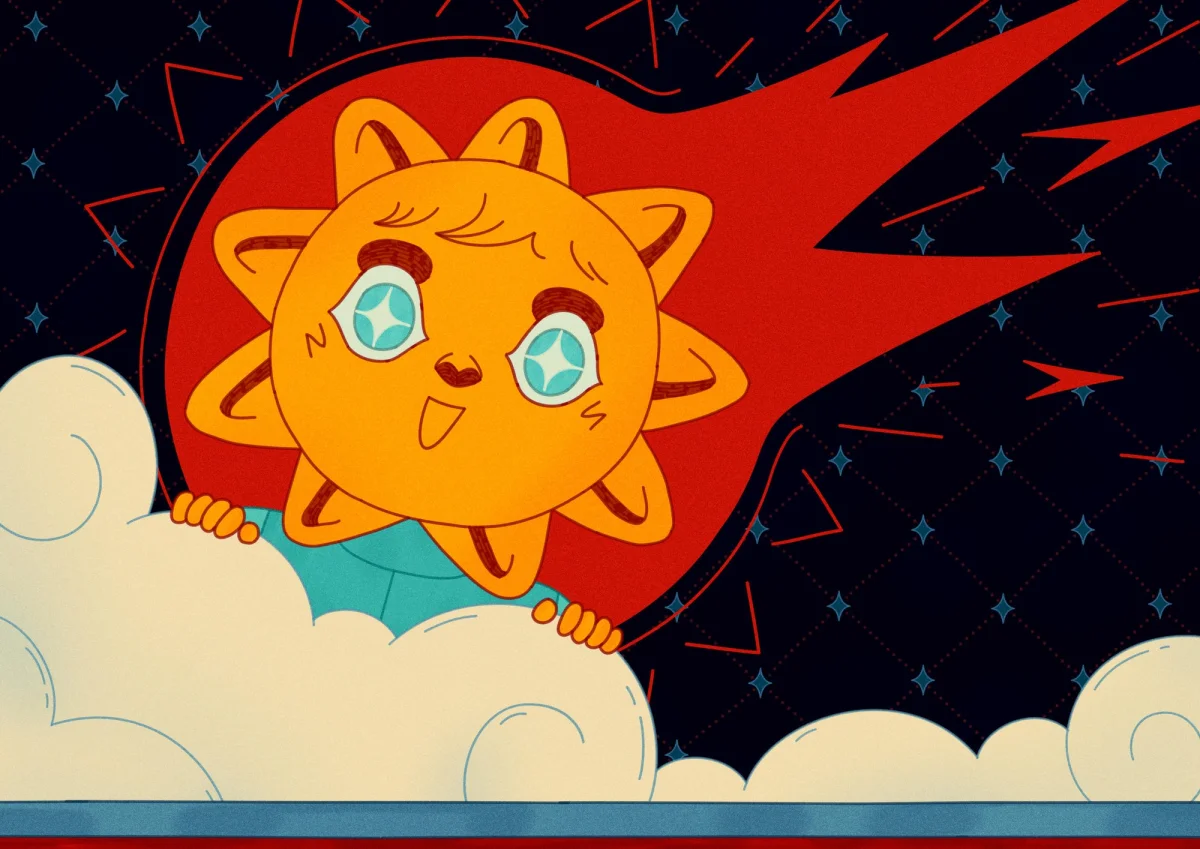
A sun that tears through paper buildings gives Eeny, Meeny, Miny, Moe! its central design idea: Yios’s emotional intensity is visible, physical and impossible to ignore. Andrea Szelesová’s 13-minute, dialogue-free short builds a world where that brightness causes real distance, then asks what connection can look like when nobody has to become someone else.
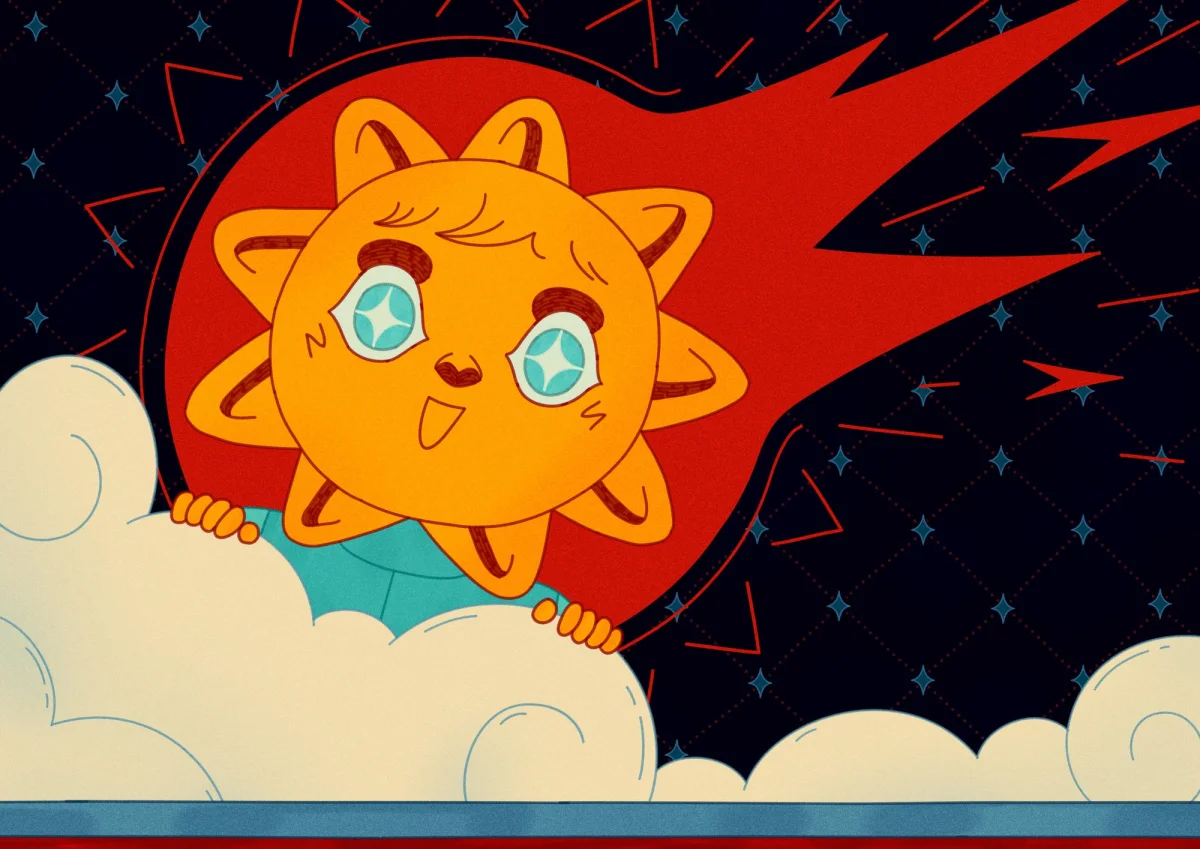
Written and directed by Szelesová, the Czech and Slovak coproduction from Pure Shore, ANSZE and Cinepoint premiered in the Generation Kplus competition at the 2026 Berlinale. It later made its North American premiere in Tribeca’s Wonderful World of Animation program, where it received a Special Jury Mention for Animated Short. Producer Kristina Husová and Szelesová shaped the film around a playground game’s simple question: who gets chosen, and what happens to the child left outside the circle?
A playground ritual becomes the story’s frame
The title, Eeny, Meeny, Miny, Moe!—originally En, ten, týky!—comes from a counting rhyme used to select someone in a children’s game. The team considered how difficult the phrase might be to translate, but Szelesová held onto it because selection and attention sit at the heart of the film. Attention can feel like welcome; it can also mark someone out.
“It’s such a central idea of the film: who is chosen, who gets attention, and whether that attention is good or not. It’s a double-edged sword.”
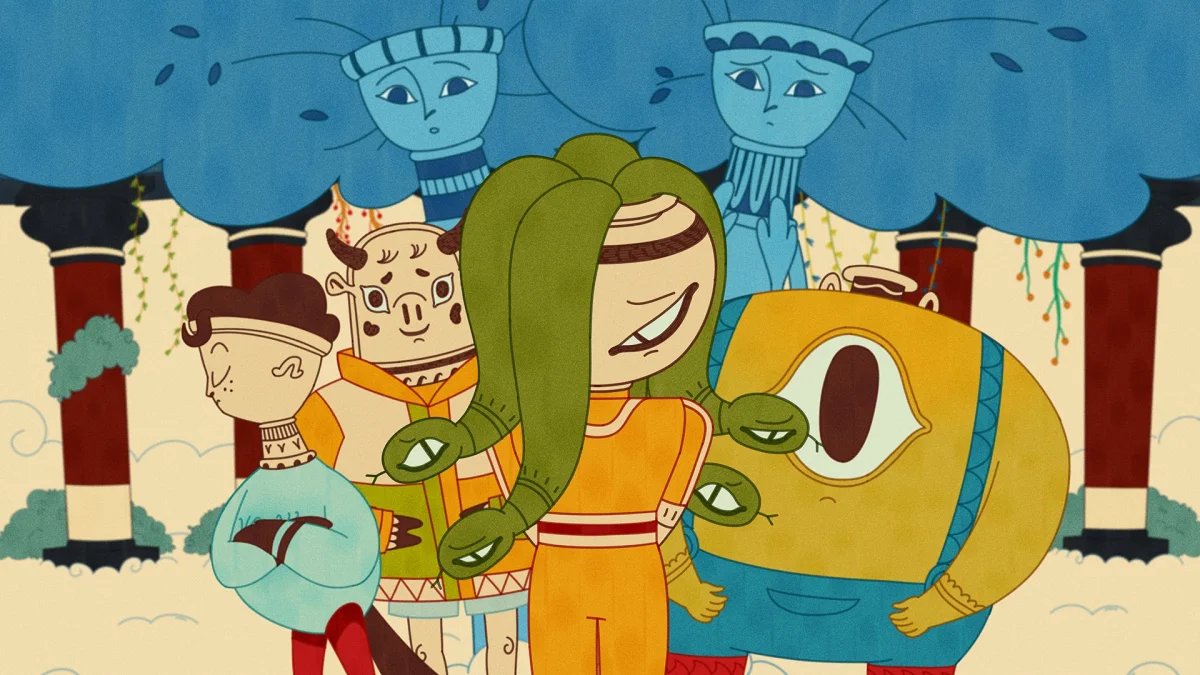
The song draws on English, Slovak, Czech and Hungarian versions of the rhyme. That mix fits a story designed to communicate across languages without dialogue. Its visual world does the explaining: children of Greek gods and monsters play above the clouds, each marked by an unusual feature, while Yios’s sun-shaped head makes his difference especially difficult to ignore.
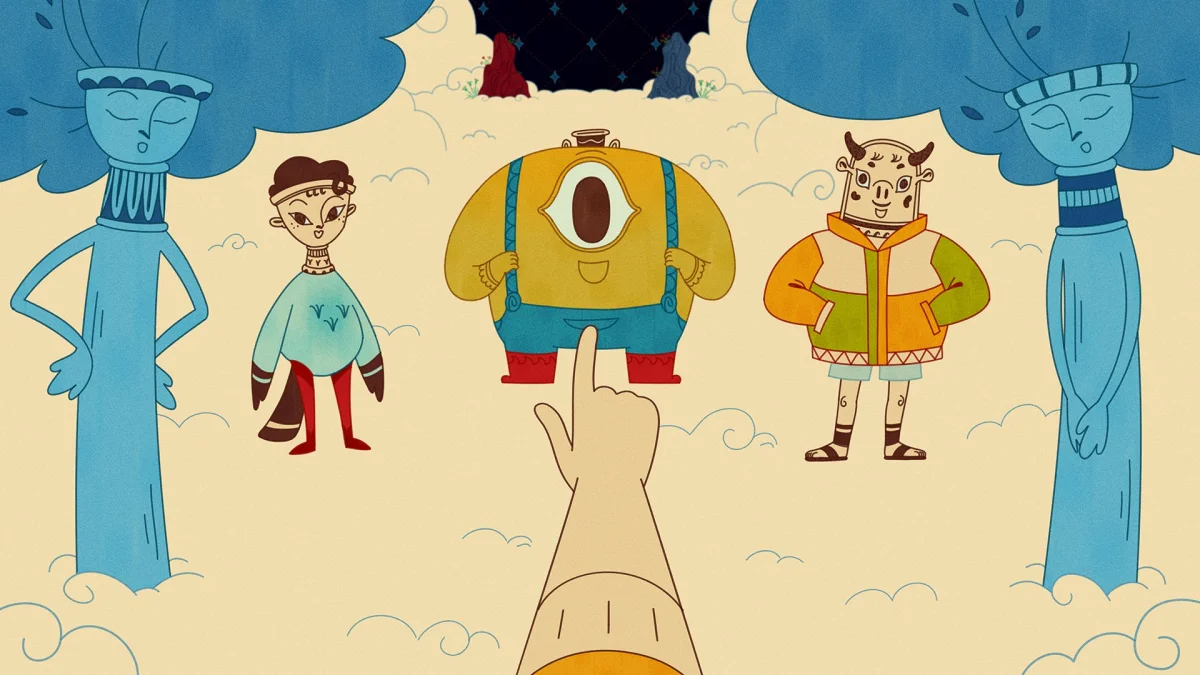
Szelesová uses mythology as a flexible storytelling language rather than an exercise in retelling familiar tales. These are the gods’ children, carrying problems recognizable to contemporary children. Giving those concerns to characters with fantastical bodies lets the film approach sensitivity and social distance through allegory. The children are all strange in their own ways, but Yios’s difference has a consequence: his rays can hurt the people he wants to join.
“Mythology is very human. It’s part of us. It’s the way we have always told stories throughout our history.”
Husová describes the project in the pitch room as “the new myth you have never heard about.” The idea gives the film room to invent characters while drawing on a shared visual and narrative vocabulary. Viewers don’t need to recognize a specific legend to understand the desire to belong, or the discomfort of being singled out.
Minoan references, found in art and ceramics
Szelesová’s visual starting point came from Minoan art, which she encountered while studying art history. Its frescoes felt unusually lively to her, with ornamental patterns that matched her own instinct to build decorative detail into her work. She also looked beyond the most familiar images of ancient Greece, searching for forms that could become characters without leaning on stock references.
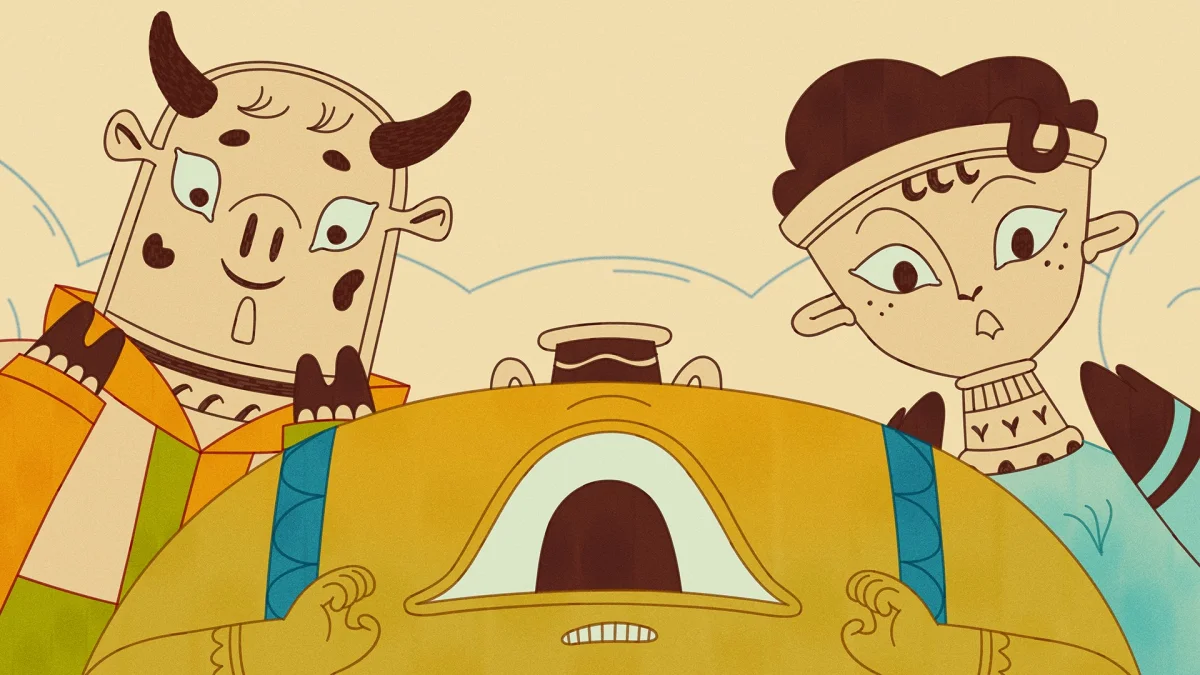
Ceramics provided that route. While researching objects from different periods, Szelesová found vessels shaped as human and animal heads. Their sculptural forms suggested characters almost immediately: an existing object could become a body, face or creature through drawing. Her references tend to come from art and historical images, rather than other animated films.
One of those discoveries became Mino, a bull-horned child inspired by a small ceramic Minotaur head. During a visit to New York for Tribeca, Szelesová and Husová went to the Metropolitan Museum of Art. Szelesová encountered the object without knowing it was there, then recognized the link between the artifact and the character she had made from it.
“I met my character in real life. It was unexpected, and a very touching moment.”
For Szelesová, seeing the ancient object made the process feel circular: a work made by people thousands of years ago had helped shape a character in her film, and the character led her back to the source. That connection also underlines why the film’s decorative language feels specific. The ornament isn’t a generic marker of “myth”; it grows from the forms and patterns that drew the director to Minoan art in the first place.
Making Yios’s intensity visible
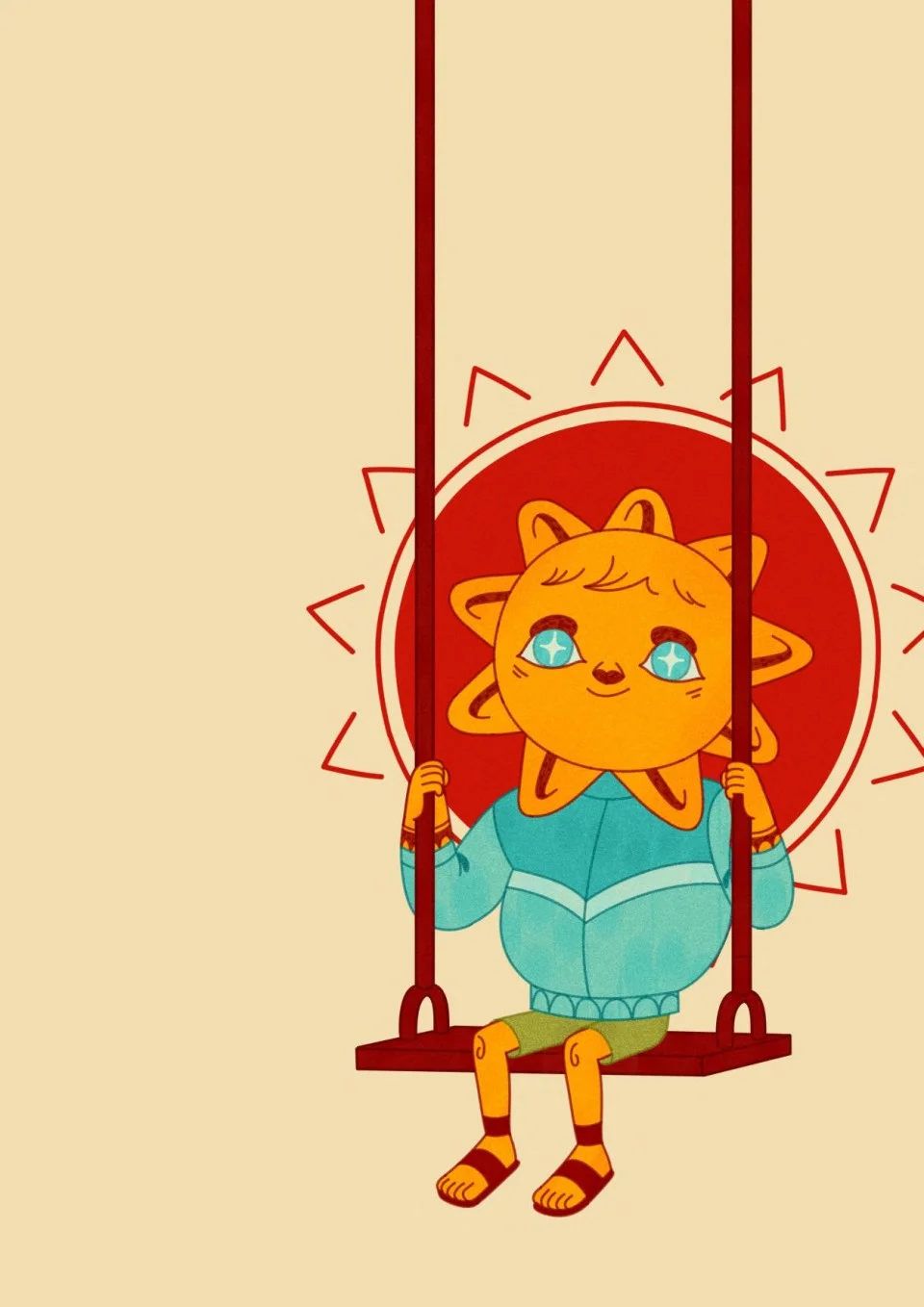
Yios was Szelesová’s first idea for the film, but his role in the story took time to clarify. His sun head offered an immediate image of a child whose feelings can flare beyond his control. At first, though, he was mostly a character to whom things happened. Feedback during the 2024 CEE Animation Workshop pushed the team to make him drive the action.
The change came from identifying what he wants. Yios isn’t simply a child with a condition or a visual metaphor; he is trying to make friends. That motivation gives his journey direction. His energy repeatedly disrupts the games he hopes to join, and his challenge is to understand himself and find ways to live with what Szelesová calls his “much too muchness.”
“He really wants to make friends. That’s his motivation, his drive. Once we found that, everything clicked together.”
Szelesová says the team took inspiration from the behavior of a child with ADHD, while choosing not to make a diagnosis the whole subject. Conversations with families dealing with similar challenges helped the filmmakers look for moments that felt grounded. The result keeps attention on Yios’s relationships: his difference has consequences, but he is more than the difficulties it creates.
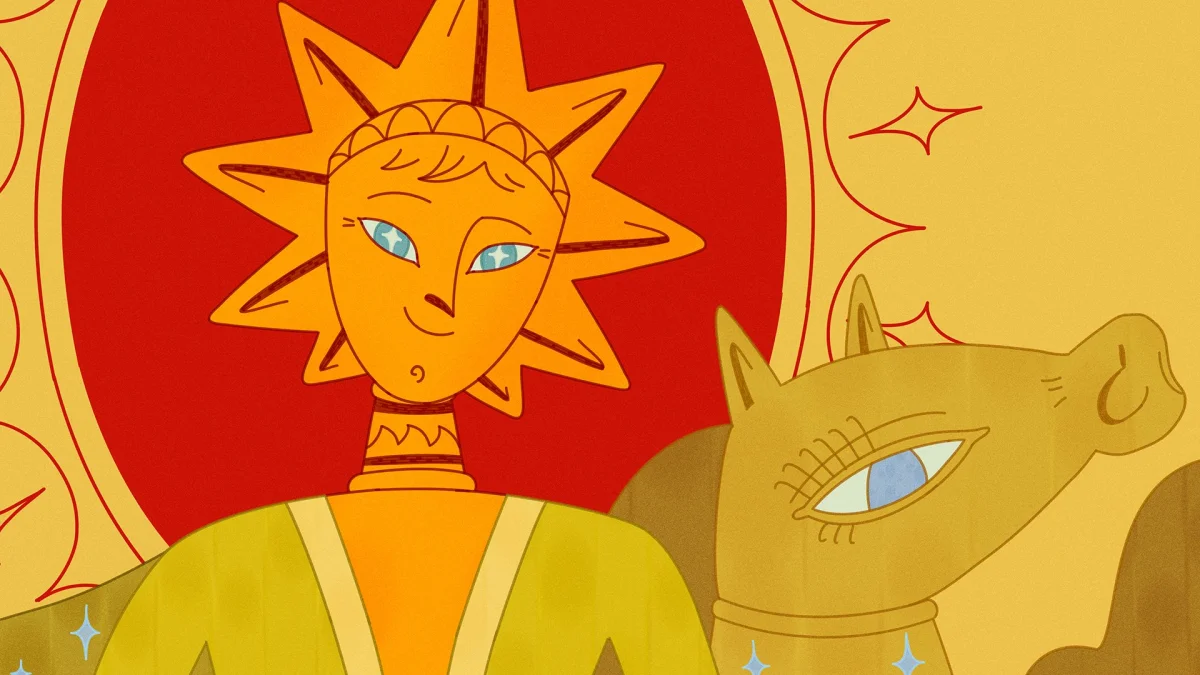
The visual metaphor works because the light behaves like a material force. Szelesová didn’t want Yios to be a character who simply glows in darkness. His rays reach into the world, tearing paper buildings and piercing the viewer’s eyes. The sun becomes an active part of the staging: a ray can interrupt play, alter the space around him and show how good intentions can still cause harm.
Day and night follow a separate rhythm. Yios’s father, Helios, moves the sun across the sky in a chariot, but Yios is too young to take on that role. The sky itself shifts between light and dark, keeping the cosmic setting legible while the boy’s personal light remains a distinct, unruly presence.
Drawing, cut-out movement and paper space
The film’s technique reflects Szelesová’s background as a painter and drawer. She came to animation later and sees drawing as a key part of how she makes creative decisions. A 3D pipeline felt distant from what she values in the medium, while the tactile quality of 2D suited both her hand and the film’s world.
The animation combines cut-out elements with frame-by-frame drawing. Some parts move through key poses in a puppet-like way; other movement is drawn one frame at a time. That combination allows the team to build controlled movement into the characters while retaining the changing line and expressive detail of drawn animation. Husová, who also studied at Prague’s FAMU film school, wanted the production approach to support Szelesová’s existing style.
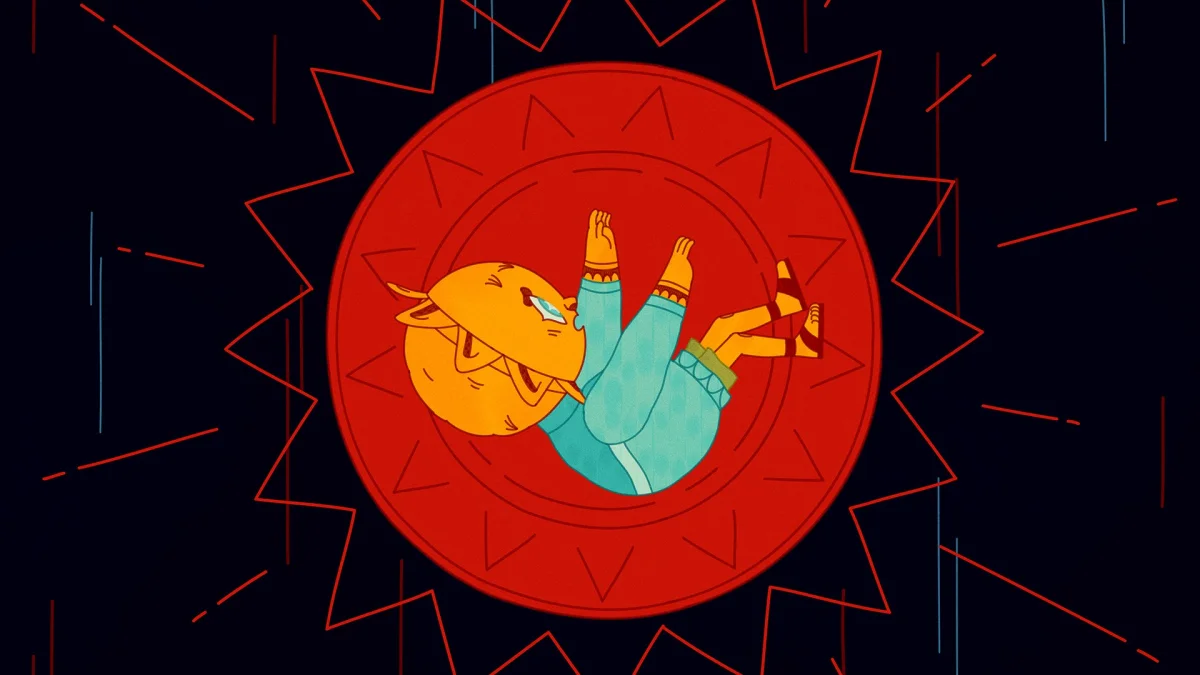
“There was no need or question for me to ask Andrea to make it 3D, because I wanted her style to pop, and her style is 2D.”
The distinction matters most when the film’s materials start to carry meaning. Paper buildings aren’t just a backdrop for a colorful mythological playground; they’re vulnerable surfaces that Yios’s light can rip apart. His rays become something the audience can imagine touching. The image gives a physical consequence to a social problem that might otherwise remain abstract.
The film also compresses a full day and night into a few seconds. Such shifts let the animation move between cosmic scale and a child’s immediate experience without dialogue. The world can race through its cycles while Yios stays caught in a more personal struggle: wanting to join the others, and not yet knowing how to approach them safely.
Editing a maximalist world into a clear arc
Szelesová describes herself as a maximalist. The first animatic included parents, extra characters and more small storylines. Development meant deciding which elements supported Yios’s journey and which distracted from it. The team cut material, compacted the story and then reconsidered some of those cuts when the reduced version began to feel as if it had lost something.
That back-and-forth helped the film find its rhythm. The upper-world playground moves quickly and can feel chaotic, matching Yios’s overstimulating surroundings. When he falls to Earth and meets a child there, the pace slows. The shift gives the encounter room to register and makes the quieter setting feel like a change in emotional pressure, as well as geography.
A script editor and an editor contributed while the animatic was taking shape, rather than joining only once the film was nearly finished. Husová had hoped for a shorter cut that might be easier to place with distributors, but the structure kept changing as the team tested what the story needed. A workshop discussion first pushed toward cuts; once scenes were gone, participants began to miss them. The final shape came from working through both responses.
Szelesová trusted the form that emerged, even when it resisted a tidy, conventional structure. The movie needed its busy opening and its softer landing, she felt, because that was the most honest way to tell Yios’s story. The shifts in pace are therefore part of the characterization: the film’s world feels like Yios until the story gives him space to meet someone who understands.
A small production with a broad team
The project began at Anifilm in Liberec, Czech Republic, in 2021. Szelesová described a boy with a sun for a head who couldn’t fit in and would fall to Earth. That day, she and Husová sketched out a schedule, budget and production plan. Husová says the film then followed the plan they had made, a rare experience in her producing work.
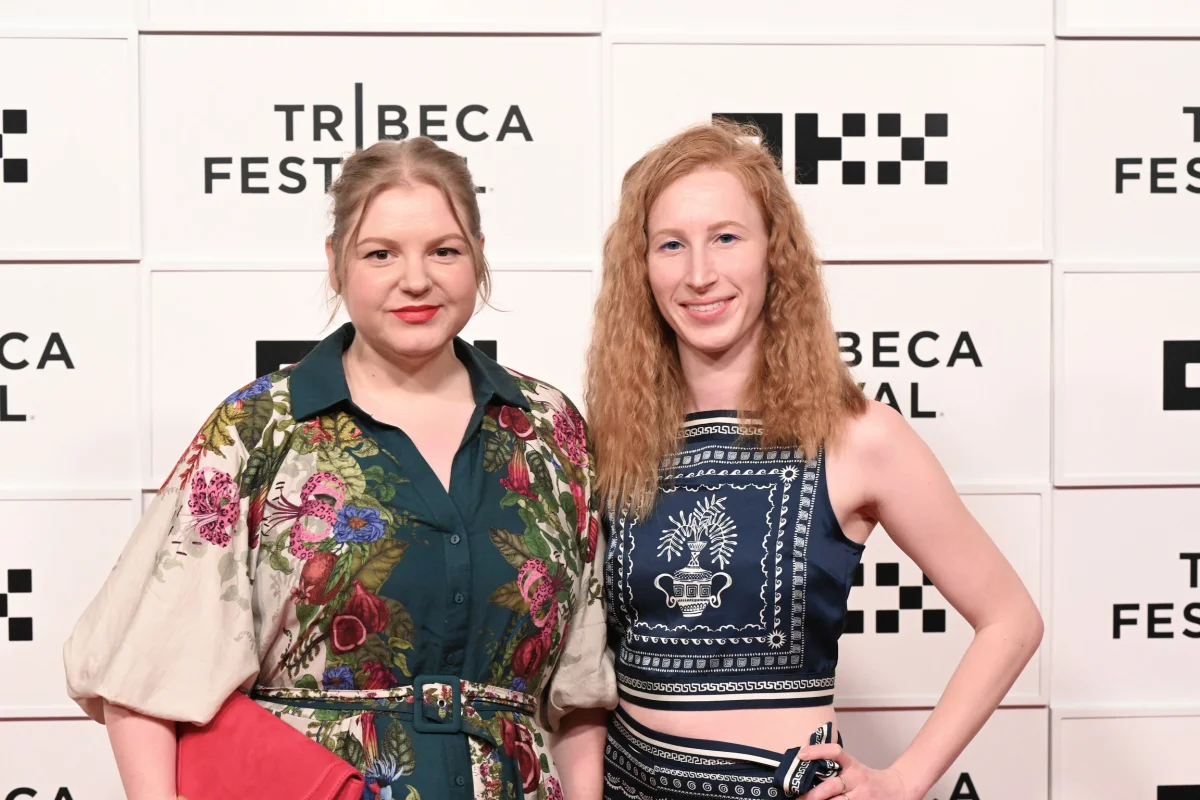
For much of development, the project was led by the two of them on equal footing. Szelesová focused on the budget and financing, while Husová concentrated on dramaturgy. As production grew, they brought in animators and collaborators from school and earlier projects. Husová estimates that around 20 animators worked on the film, some contributing only a few shots; roughly 50 people were involved in total, many working remotely in the years after the pandemic.
Funding came from Czech and Slovak film funds, Creative Europe MEDIA during development, and regional funds and awards. Husová wanted the pitch deck to make the project’s needs and risks clear, so potential funders could see what the team understood about the production. She also points to a structural challenge for short films: filmmakers rarely have a minimum guarantee from distributors or sales agents before they start, which leaves public and regional funds carrying much of the financing burden.
Festival screenings add new readings
The film premiered in Berlin’s Generation Kplus competition before reaching Tribeca for its North American premiere. By the time of the conversation, Husová said it had screened at more than 40 festivals and sold to VOD platforms in several countries. Tribeca’s invitation surprised Szelesová, who was more used to hearing from festivals by email.
Audience reactions have become part of how the filmmakers understand the work. Szelesová says children were especially vocal at screenings in the Czech Republic, while audiences in Germany often held their responses until the end. In the United States, even mostly adult audiences reacted aloud with the immediacy she associates with children’s screenings. At question-and-answer sessions, children ask about what motivates the characters, and many are drawn to Medusa. Szelesová is pleased that the film’s female characters hold that kind of attention.
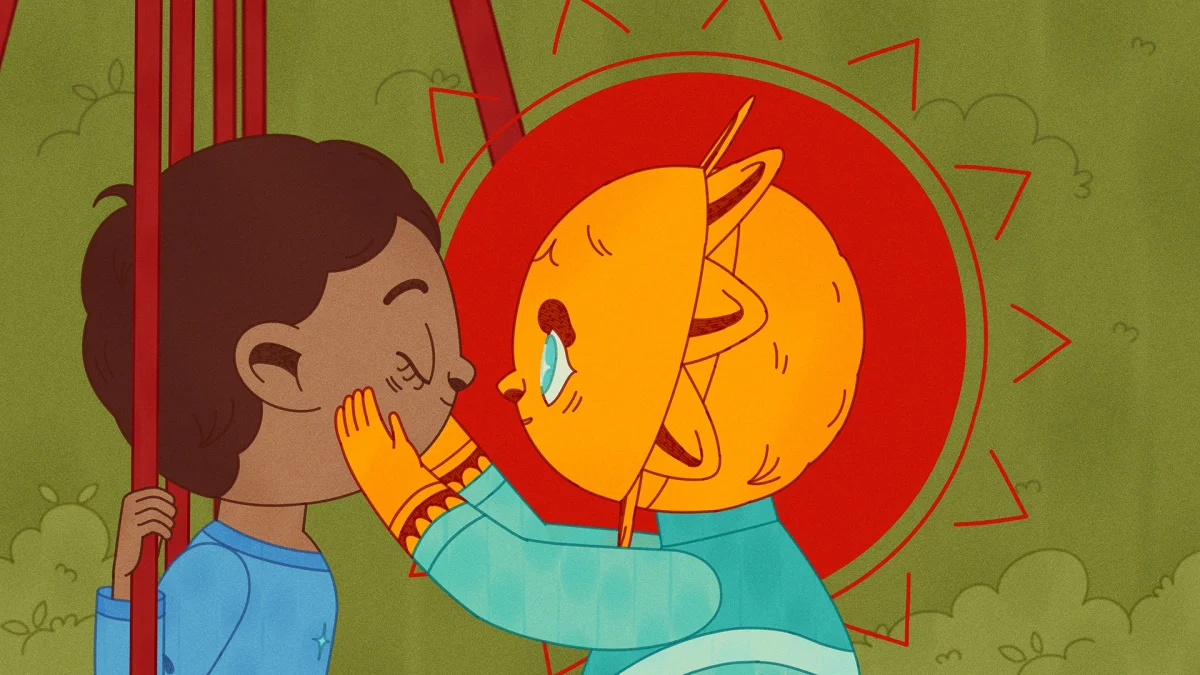
The world is full enough to suggest further stories, and the CEE Animation Workshop encouraged the team to think about a pilot. Szelesová wanted Yios’s short to work as a complete story first. A series remains a possibility now that the film is finished, but no follow-up has been confirmed. Szelesová has two new ideas she has not yet shared with Husová and hopes they will work together again. Husová is producing her first animated feature in 3D, while maintaining her affection for the short-film form and its festival life.
Husová describes producing as creating room for artists to make their own work, then building the financial support around that space. It’s a useful account of how this production held onto a distinct visual voice while growing to include dozens of contributors.
Difference as a shared problem
The following section discusses the film’s ending.
Yios’s encounter on Earth gives the story its emotional hinge. The human boy he meets seems ordinary in the context of Yios’s world of gods and monsters, but he is the remarkable one to Yios. Szelesová describes him as a mirror: he has a similar build and a comparable difference, but he is further along in learning how to live with it.
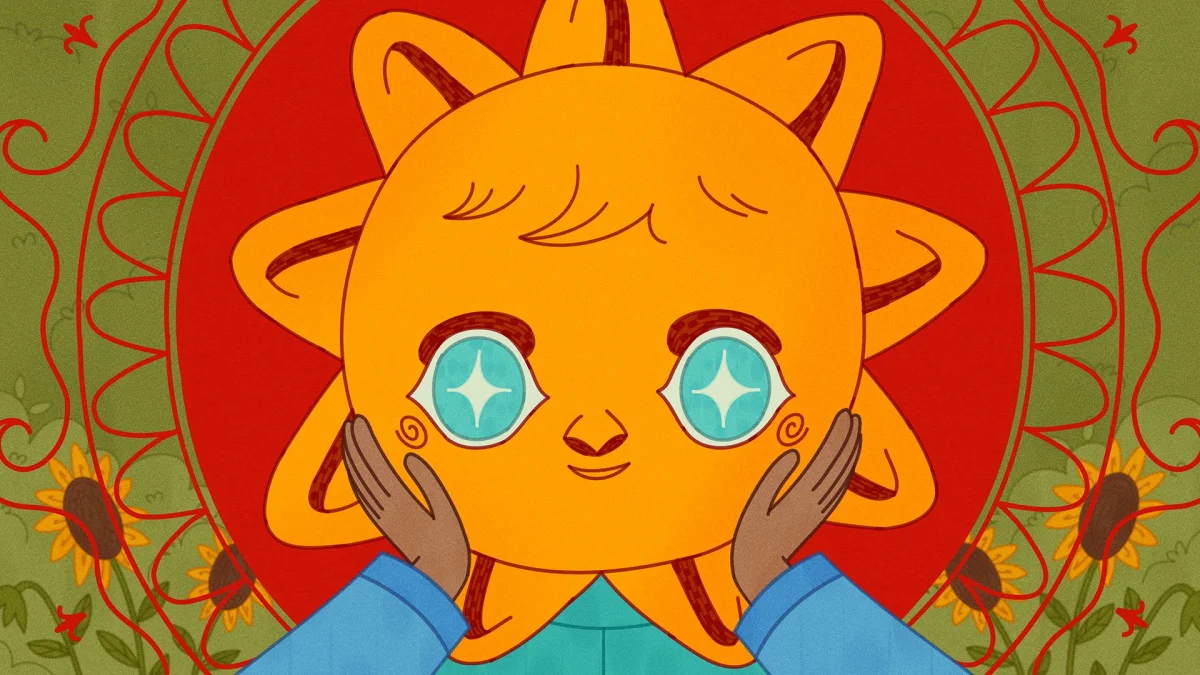
That makes the meeting less about Yios finding someone who will fix him than about recognizing a possible future. The boy offers a perspective Yios hasn’t had before. The filmmakers were reminded of the first encounter in E.T., where meeting someone different opens a view of the world from another angle.
The boy’s closed eyes are left unexplained. Szelesová wanted viewers to have room to wonder whether he is asleep or blind, and to carry those questions into conversations with parents or teachers. Younger viewers can follow the clear emotional story: Yios has a problem, meets someone and discovers a way to respond. Viewers familiar with mythology can notice references such as the story of Icarus. The film keeps several levels of interpretation open without pausing to explain them.
Its approach to difference is similarly direct. The children don’t need to pretend that Yios’s rays are harmless, and the story doesn’t suggest that everyone should simply ignore what makes another person different. Instead, the characters must understand that people have different needs and work out how to be together. The movement toward common ground takes effort from both sides.
The other children decide to apologize before they know that Yios has changed. His new friend gives him a way to soothe himself, but excitement can still make him flare up. A tool helps; it doesn’t erase the challenge. That distinction keeps the ending from treating belonging as a reward for becoming easier to manage.
The circle changes around Yios
Szelesová didn’t set out to make an autobiographical film, but she later recognized something of her own childhood in Yios. She remembers standing a little farther from the circle, unsure whether she would be welcomed. Even after learning to navigate social situations more easily, that feeling stayed with her.
That personal connection shapes the film’s final idea. Yios continues to burn brightly and still has more to learn about his feelings. Friendship doesn’t require him to exchange his nature for a quieter one. The children have to adjust how they meet him, just as he learns how to handle his light.
Eeny, Meeny, Miny, Moe! turns a playground selection rhyme into a design for belonging: a circle can mark who is left out, but it can also change shape. The film’s strongest visual choice is to let Yios remain visibly, physically himself. What changes is the space the others make around him.
Credits
Written and directed by: Andrea Szelesová
Produced by: Kristina Husová, Andrea Szelesová
Art designer and lead animator: Andrea Szelesová
Animators: Marek Pokorný, Wanda Przeworska, Philippe Kastner, Anna Štorková, Veronika Valentová, Eliška Jirásková, Matej Mihályi, Jáchym Štulíř, Klára Kubenková
Background artist: Andrea Arce
Script consultants: Štěpánka Ansorge, Rita Domonyi
Editor: Iva Kraljević
Sound and music: Viera Marinová
Production: Pure Shore (CZ), ANSZE (SK), Cinepoint (CZ)
Distribution and sales: Miyu Distribution
Instagram: @eeny_meeny_miny_moe_film