Wednesday, November 18, 2026 · UX & UI Design
Adobe MAX Sneaks Puts Creative AI’s Promise and Job Fears on the Same Stage
Noted by Katy Cowan · 440 reads
Adobe’s MAX experiments showed how AI could speed up image and video work, while designers questioned what faster production means for craft, careers and style.
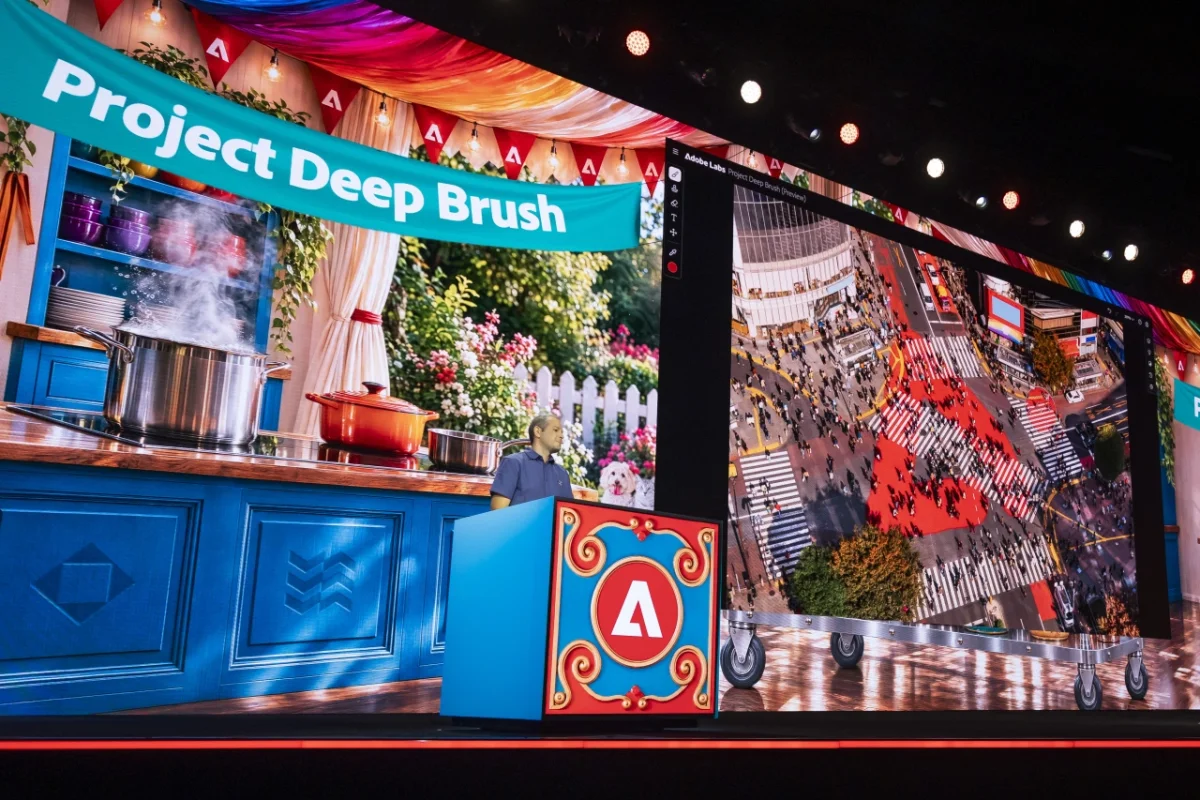
Adobe MAX’s Sneaks showcase made the tension around creative AI hard to ignore: some tools promised more control over image making, while others suggested that whole production tasks could soon be handled differently. The response from designers wasn’t simple excitement or rejection. It was a practical question about what gets easier, what gets lost, and who benefits when the work changes this quickly.
The showcase took place in Miami Beach, with Terry Crews hosting in a bright pink suit, blue shoes and pink socks. Adobe’s Sneaks presentations come from its Labs programme, where teams demonstrate experimental tools that may or may not become products. Ten projects appeared on stage. AI featured throughout, but the room’s reaction felt more subdued than the enthusiastic applause associated with earlier showcases.
That quieter response matters. For years, Sneaks offered a glimpse of software changes that could help designers work faster. Now, many demonstrations touch tasks closely tied to people’s jobs and creative judgment. The question is no longer only whether a tool can produce an impressive result. It’s also whether that result changes the value clients place on the time, skill and exploration behind it.
Tools that extend a designer’s hand
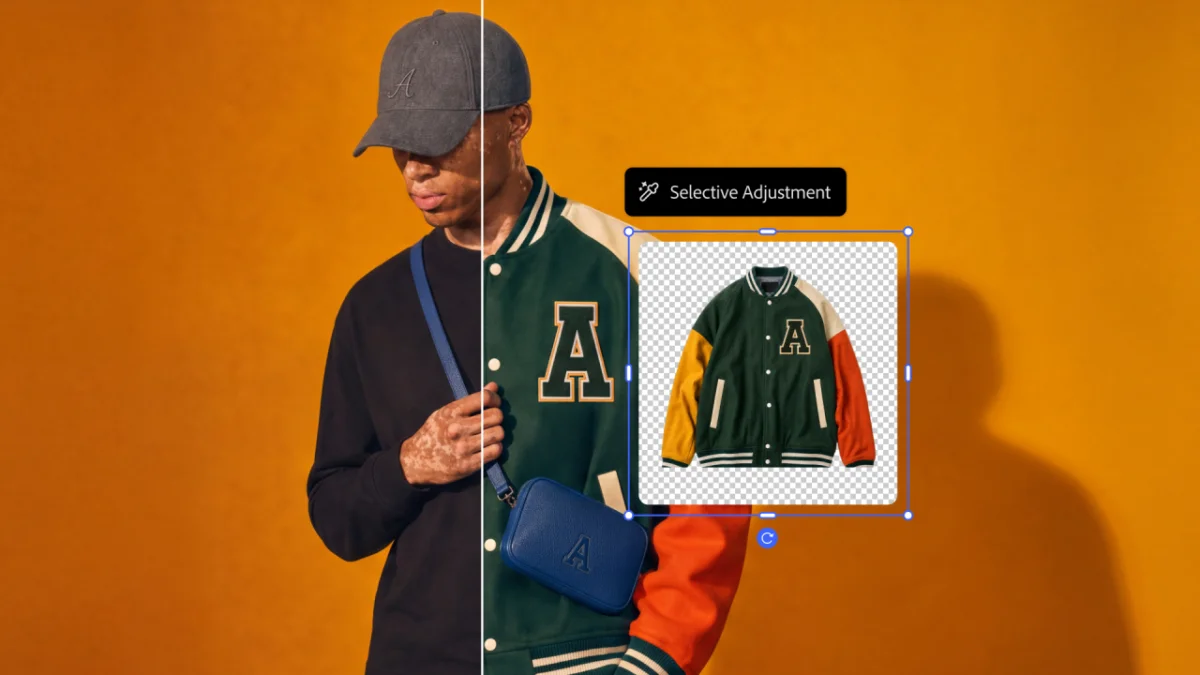
Some of the experiments drew a warmer response because they appeared to give artists more precise ways to work. Project Rinse Repeat copies edits from one area of an image to another while keeping the result editable in Photoshop. That emphasis on editable work is significant: a useful shortcut can remove repetitive steps without locking the designer out of the final image.
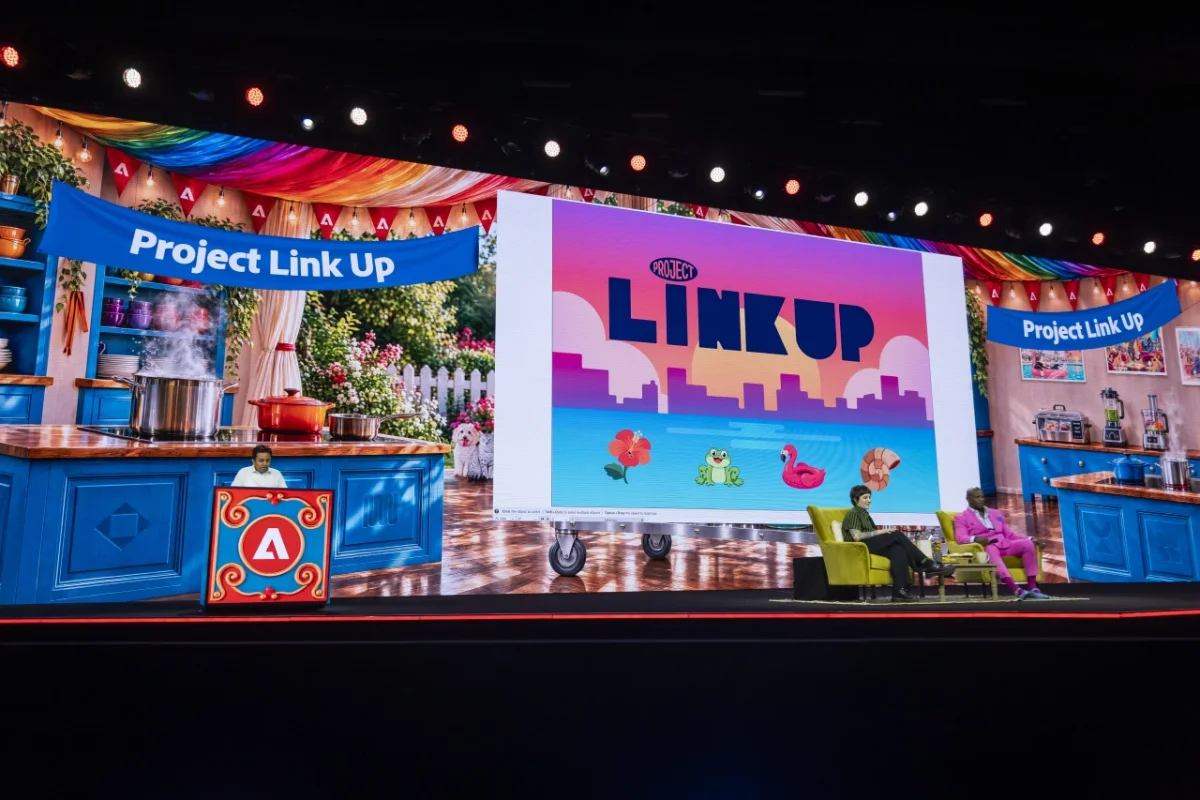
Project Link Up takes a different route. A designer drags elements into a scene, and the tool adjusts their perspective, scale and style to fit, producing editable vector artwork. The pitch is less about replacing a composition with a finished image than about adapting supplied pieces to a new setting.
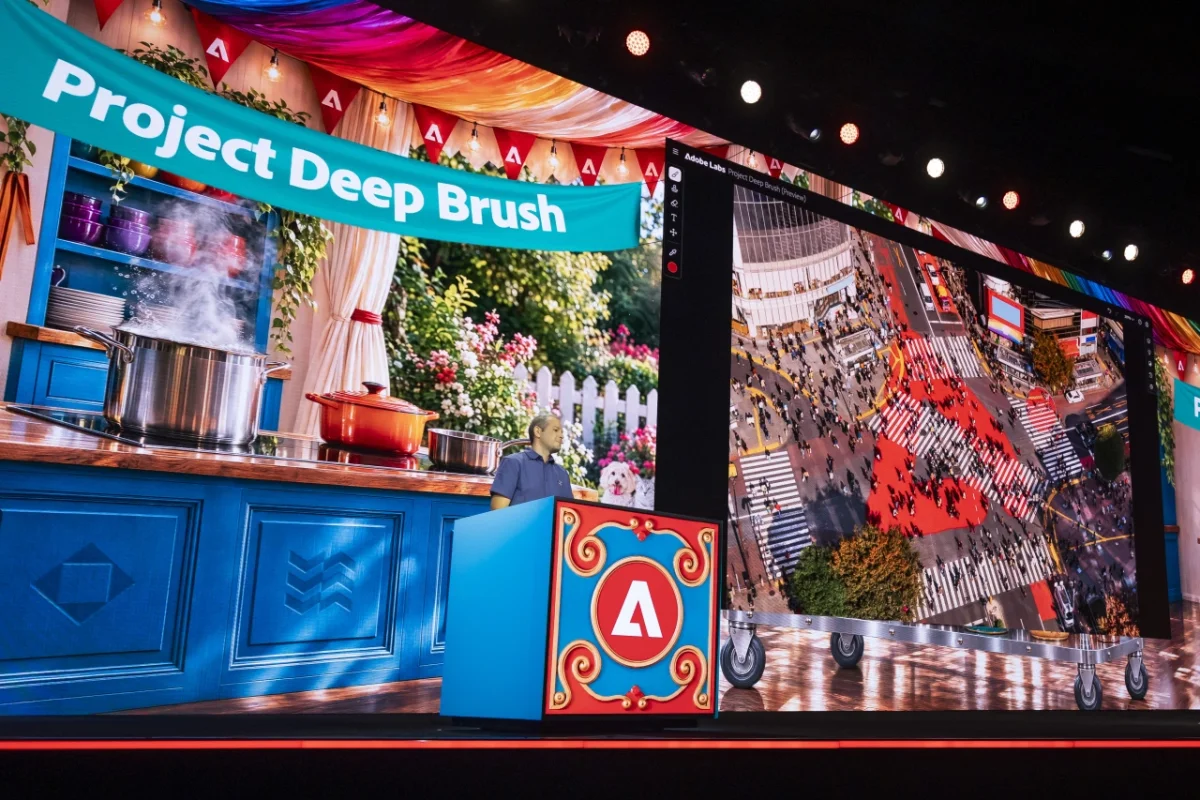
Project Deep Brush was the standout for the presenter. It reads an image’s shape, colour and lighting, then lets the user paint light into the scene. Each of these ideas targets a distinct kind of friction: transferring edits, fitting objects into a composition, or shaping illumination. The creative question is whether the time saved gives artists more room to refine the result.
Other demonstrations pushed into more consequential territory. Project Screen Test builds a fictional character’s appearance, voice and personality, then lets the user talk with that character. Project Live Set changes a video’s subject, set or camera movement while playback continues. Project Sight Span turns a still image into a three-dimensional space that viewers can explore, allowing them to frame views that weren’t captured by a camera.
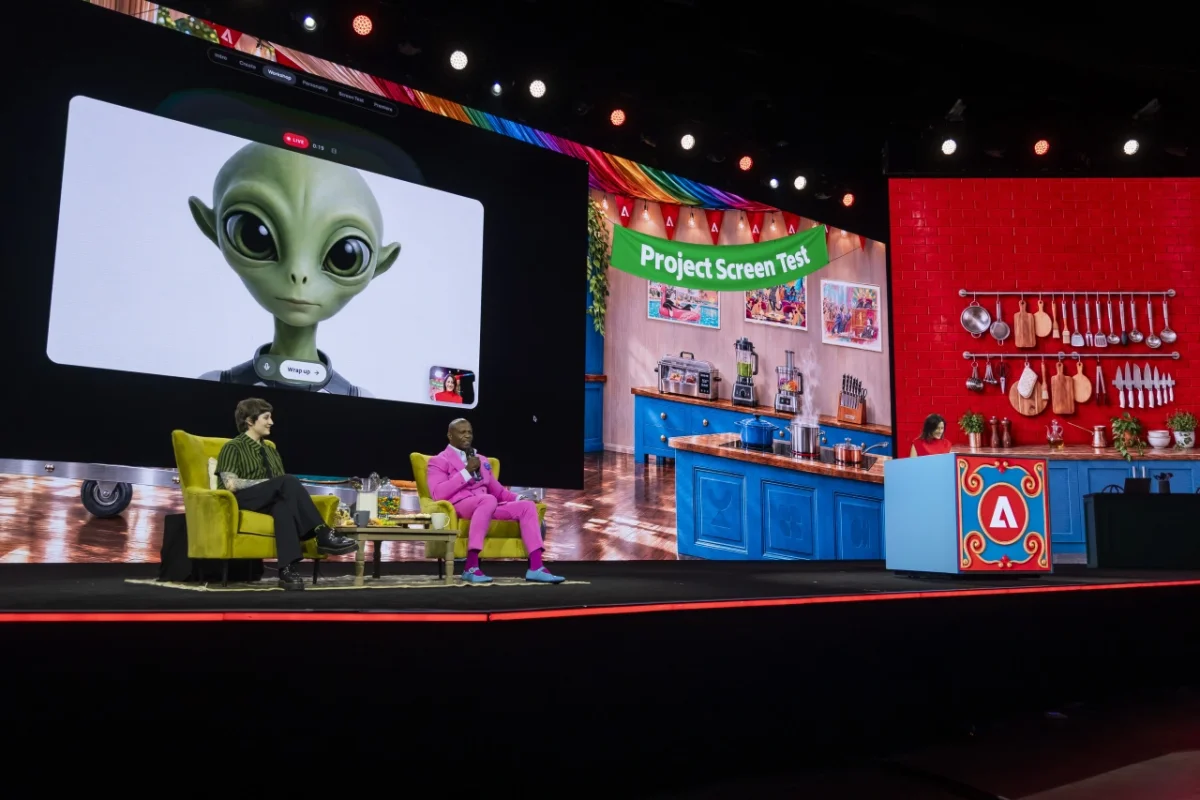
Project Sound Bender separates a requested sound from a finished mix. Taken together, the projects reach into character creation, set design, location work, camera movement and sound editing. That breadth helps explain why the demonstrations could feel startling even to a creative who has used AI tools for three or four years. The concern isn’t just the quality of an output; it’s how quickly familiar job boundaries might shift.
Speed can change what clients expect
Responses from designers and creative leads centred on consequences they’re already seeing or anticipating. Illustrator and lettering artist Ana Moreno Chávez described a sharp decline in commissions: where she once had three to five projects in a month, this year she had three to five across the year. Tom Grattan, managing director and co-owner of EXP, said graduates he meets see a bleak future amid celebrations of tools that seem to accelerate change across the industry.
Motion designer Oleksandr Merkulov drew a distinction between the software and the expectations built around it. He isn’t afraid of the tools, he said; he’s worried that clients may get used to “fast and fine” and lose patience for the extra round that can take work from good to great. Designers Kieron Lewis and Bijesh Amatya also described people reaching for AI because it’s quicker and more convenient. When speed becomes the default measure, clients may begin to treat time spent exploring and refining as unnecessary.
That pressure can also change how ideas develop. Isabella Wordsworth, a designer at D&P in London, said a first attempt that looks finished can remove the friction that helps turn a good idea into a great one. She described experimentation as becoming a luxury, even though it sits at the centre of creative work. Francesca Oddenino, co-founder of Vicine, said her best work comes from discomfort. Web developer Tom Harrison put the unease plainly: he feels little pride in making things this way.
The effect on early-career designers came up repeatedly. Brand designer Sophie O’Connor asked who will train juniors into senior roles if AI takes over entry-level work. A senior creative at a fast-growing start-up, who asked not to be named, said everyone at her company uses AI, yet she misses the less glamorous tasks that gave her the chance to learn. She worries that newcomers may not get that grounding and feels ashamed of using the tools so much.
For UX and UI designer Andrew Areoff, either choice can feel professionally risky: adopting AI may help undermine his own role, while refusing it may do the same. Bart Fish raised a related concern about creatives embracing tools trained on their work, then helping build systems that could displace them. The difficulty is that participation may feel necessary for an individual’s work today while contributing to a wider change that worries the profession.
Adobe’s view of control, craft and trust
Two senior Adobe leaders discussed these concerns at MAX before the Sneaks presentation. Karen Robinson, Adobe’s vice president and associate general counsel, said she understands why creatives worried about proposals for AI training raised in 2024. People were concerned about their livelihoods, she said. Two years on, Robinson argued there was some reason for confidence: artists were still earning a living, and “the sky did not fall.” Moreno Chávez’s account shows why that reassurance won’t settle the question for everyone.
Robinson said the discussion she hears from creatives has shifted from training data towards generated results. Her concern is that those results can compete directly with artists, including by imitating a recognisable style. “If I am an artist and I have a demonstrable style, I should be able to protect that,” she said, adding that such protection doesn’t currently exist.
She also questioned whether licensing payments could resolve that conflict. In her example, an illustrator asked how much licensing income would make it acceptable for AI copies of her style to push her out of the market. Her answer was that no amount would. The issue was control over how her work and distinctive visual approach are used, including on products such as aprons and oven mitts. Robinson said safeguards aimed at generated output are still missing.
Robinson offered the history of photography as a reminder that new creative tools can unsettle assumptions about authorship. Early disputes questioned whether photographs qualified for protection when cameras did much of the mechanical work. Over time, legal cases recognised the photographer’s choices about subjects, lighting and angle. She also acknowledged that some painters never adopted cameras; artists will continue to choose whether AI belongs in their practice.
Trust is another part of the discussion. Robinson said the dispute around Adobe’s terms of use in 2024 taught the company to explain its actions more clearly. In a period of uncertainty, she said, companies shouldn’t expect people to give them the benefit of the doubt; they need to say plainly what they’re doing.
Eric Snowden, Adobe’s senior vice president of design and a retoucher for 20 years, argued that image generation hasn’t removed the need for detailed editing. He said he still edits every generated image in Photoshop, using high-end retouching and frequency separation. An image can look convincing to an untrained eye, he explained, yet fail to meet the detail standards Adobe’s customers care about.
Snowden didn’t promise an easy transition. “Things are going to change. It’s going to be scary,” he said, while pointing to new things creative teams may be able to do. His advice was to lean into that potential.
Keep the questions visible
The reactions at MAX point to a period of adjustment, but there’s no guarantee that more work will eventually emerge from these tools, or that it will reach the people whose roles are changing. Optimism can coexist with a real fear for junior designers, working artists and the value clients place on careful development. The people interviewed weren’t asking whether every experiment should be rejected; they were asking who gets control, credit and room to learn as the tools spread.
For designers assessing the next wave, the concrete details matter: whether outputs stay editable, how much creative direction remains in human hands, and whether a workflow leaves time for a second idea and a better final pass. Adobe’s Sneaks showed that these tools are approaching more stages of production. The work ahead is to judge each one by what it enables and by what it asks the people making images, sounds and experiences to give up.