Tuesday, November 10, 2026 · Illustration & Art
Maria Zilli's Animations Find Romance in Plastic Gloves and Passing Cars
Noted by Ayla Angelos · 801 reads
Italian illustrator Maria Zilli turns overlooked details into absurd, funny scenes, using coloured pencils for frozen moments and 2D animation for movement.
Picture a supermarket aisle where two plastic gloves are floating in mid-air, swaying to music from the ceiling speakers. A middle-aged shopper stops with her trolley and watches, clearly a little jealous. It's a ridiculous image, and it's exactly the kind of thing Italian illustrator and animator Maria Zilli wants you to see. Her work starts with the small stuff most of us walk past and pushes it until it turns strange, and the humour lands because the starting point is so ordinary.
Litter with a storyline
The glove romance grew out of Zilli's fascination with wind and the way it gives discarded objects a kind of personality. "I could follow for hours an abandoned plastic glove dancing with the wind along the streets," she says. "One day I imagined a possible secret glove story." That single image is a good example of how her process works. She watches something mundane move in a way that looks deliberate, then asks what it would mean if it were.
Once the supermarket setting arrived, the scene came together quickly. "When the idea of a pair of gloves making out in a supermarket came into my mind, I immediately felt I needed animation to tell their story," she explains. The woman with the trolley, who realises the gloves have a more exciting love life than she does, gives the piece its punchline. Zilli added a background track playing through the store's speakers, which ties the sound of the setting into the joke rather than leaving it as decoration.
Watching people closely, then bending what they do
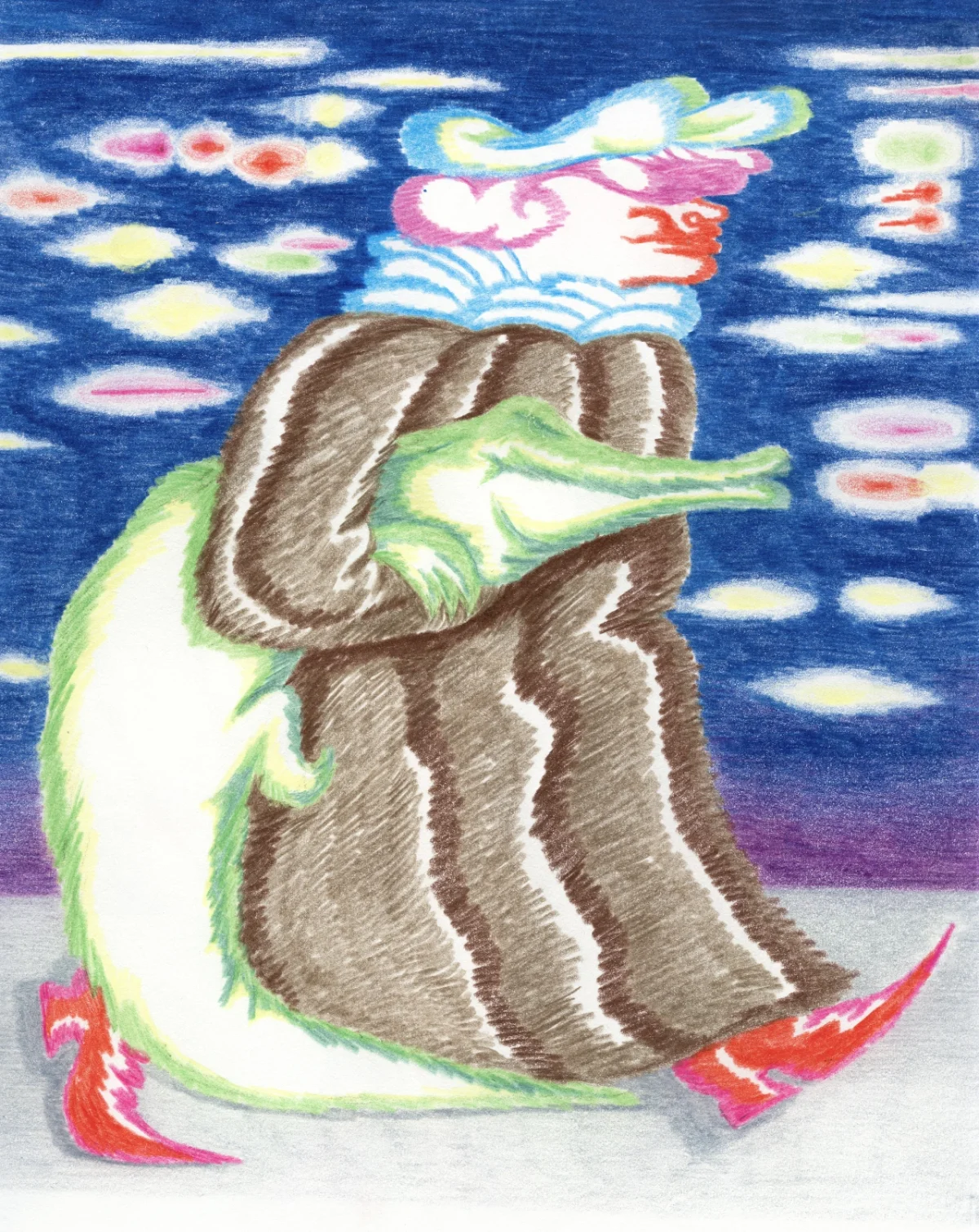
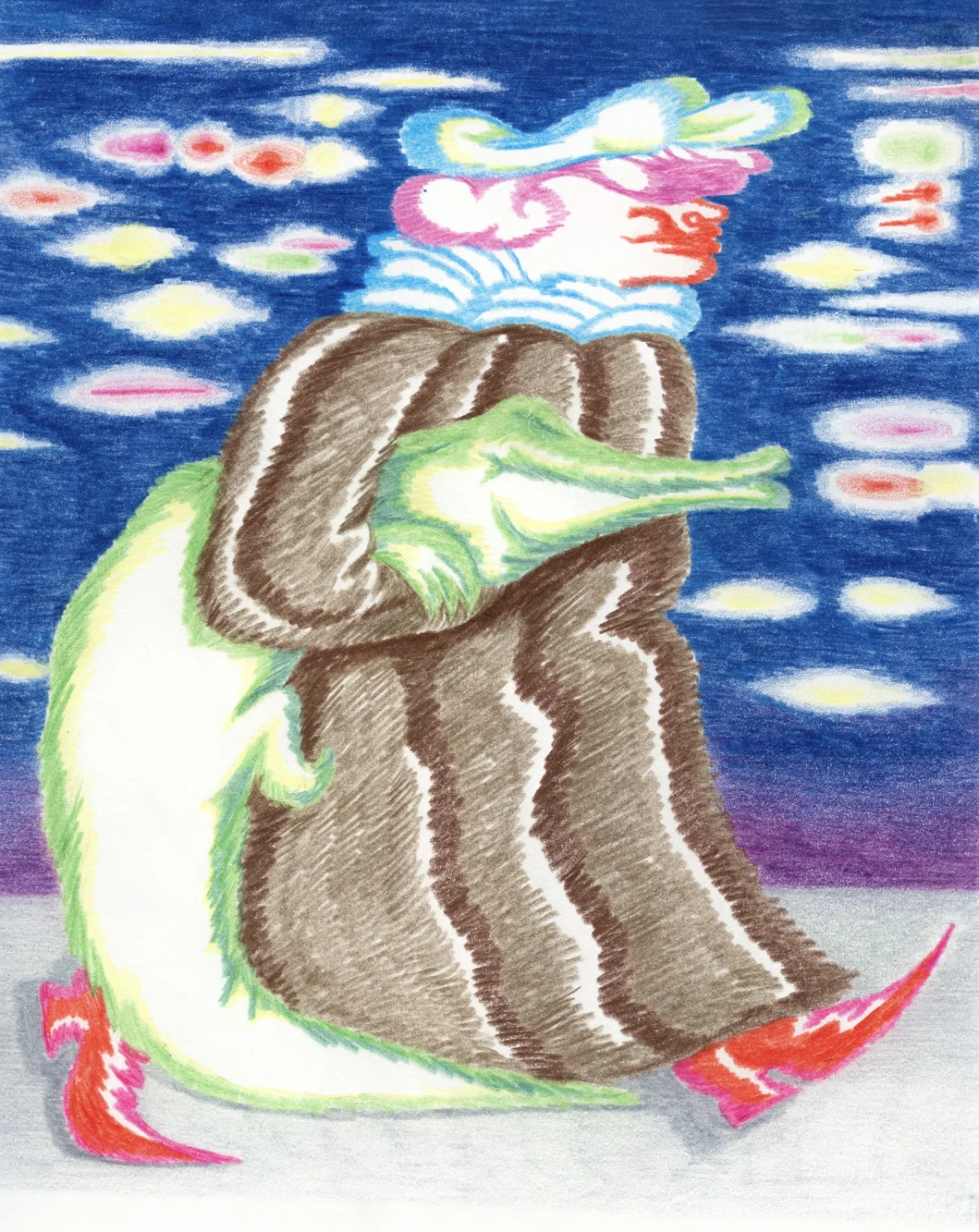
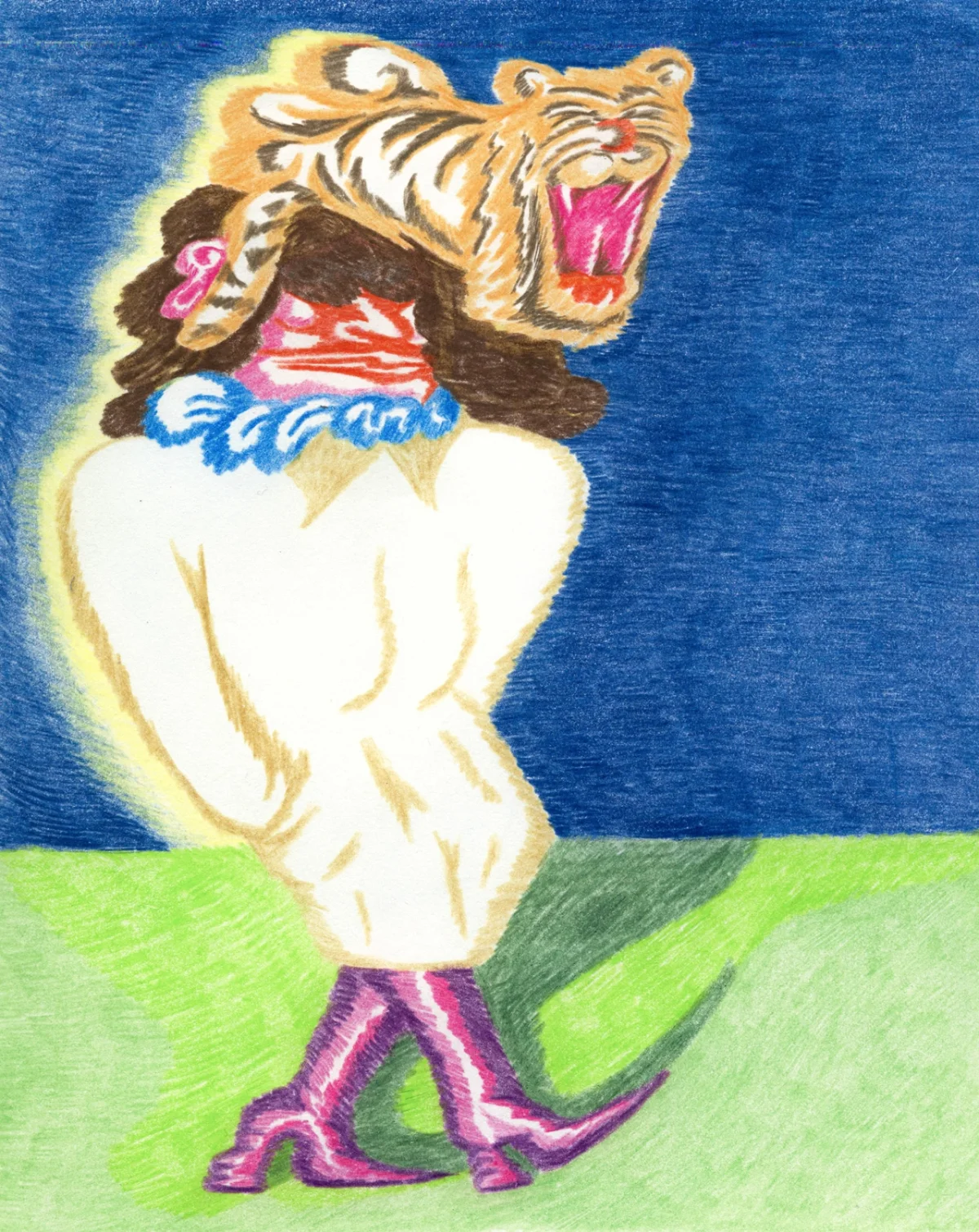
Zilli's raw material is people. She notices hairstyles on the bus, an unusual tattoo, or the way someone moves in a pair of very particular shoes. These encounters become the seeds for her illustrations and films, and she develops them by exaggerating whatever seems meaningful. "I like to play with aspects of everyday life, picking out small details that seem meaningful to me and exaggerating them to the point of absurdity," she says. Her rule of thumb is simple: "If I start drawing a subject or a situation and it makes me laugh, I keep going."
That rule matters for designers who work with character and narrative. The funny version of a scene is usually the one where the drawing commits to its own logic. Zilli's gloves don't wink at the audience. They simply behave as though romance is normal for them, and the viewer does the rest.
Pencils for a frozen moment, animation for everything else
Her practice runs on two tracks. Coloured pencil handles single images, and 2D digital animation handles anything that needs motion or sound. The choice comes down to what the idea asks for. "I used coloured pencils when I picture a moment in my mind that can be frozen in time, like a photograph," she explains. "I feel that my drawings tend to be more absurd and surreal, while my animations are more closely connected to reality."
That split is worth paying attention to if you're deciding how to build a series. Still images tend to be where the surreal jumps happen, because a viewer can linger on one impossible detail. Animation carries the logic of cause and effect, so the strangeness has to feel like it follows from something physical.
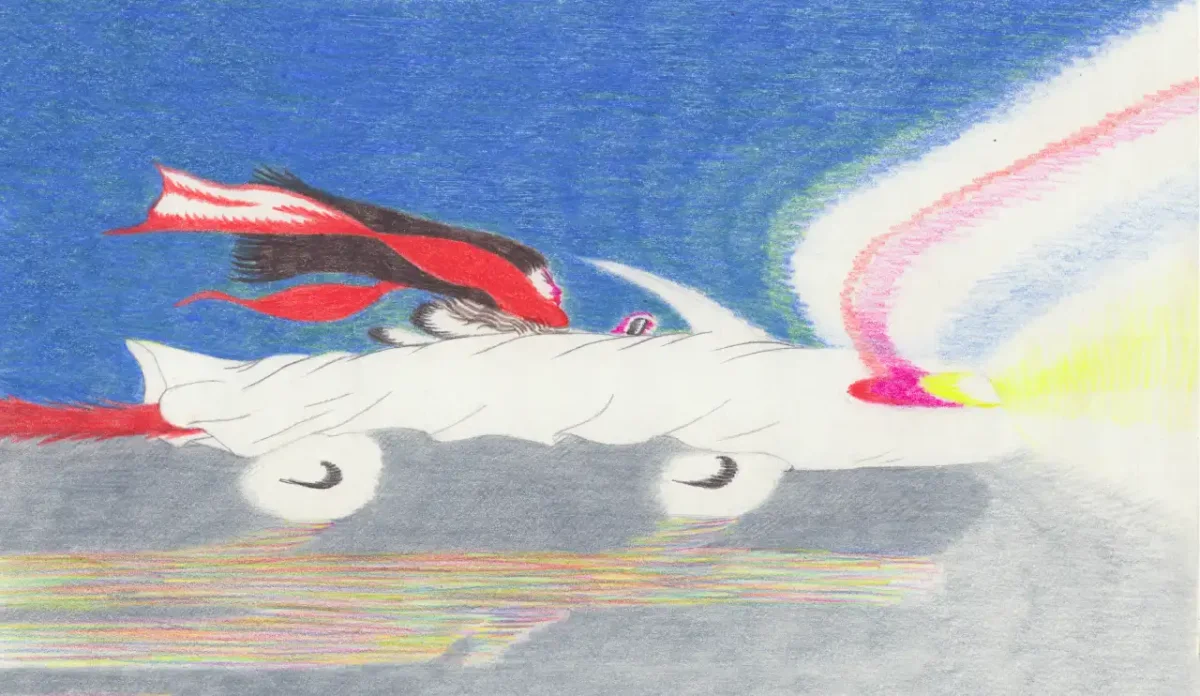
Take Make Him Bite the Stardust, a coloured-pencil drawing of a car speeding through the night. Zilli set out to show forces we can't see, such as movement, light and wind, by showing what they do to the world around them. "It fascinates me that we can only see the effects and consequences of these forces, rather than the forces themselves," she says. "In this drawing, I tried to capture their invisible presence and their effects on a car speeding through the night. I chose coloured pencils because I wanted to create a dreamy atmosphere."
The technique does a lot of the work there. Pencil texture softens edges and gives the night sky a grain that feels hand-made, which suits an image about something intangible. Anyone who has tried to suggest wind in a still picture will recognise the problem she's solving: you can't draw a breeze, so you draw the things it moves.
A nomadic path into animation
Zilli was born in Rome and left the capital after high school to study in Urbino, a small town in central Italy. She wanted to learn animation, but the New Technologies of Art programme at the Academy of Fine Arts offered little of it. She stayed in Urbino for a master's in illustration at ISIA Urbino, where animation again took up a small share of the curriculum. The turning point came in Paris, during an Erasmus exchange at ENSAD, where she studied Cinéma d'animation and finally had sustained time to make films.
Since then she has kept moving. "As I haven't found the city that feels like home yet," she says, "but also because I've discovered that I can actually make animation wherever I am, since all I need is my laptop." For illustrators and motion designers, that's a useful reminder that a digital workflow can travel with you. The tools are portable even when the studio isn't.
Comedy as a way to connect
For all the odd characters, Zilli takes humour seriously. She's interested in how comedy helps people understand one another, and she often catches herself smiling at her own work while she makes it. She's hoping for the same reaction from strangers. "I love the language of comedy. I think irony is a fundamental means of understanding one another and communicating with each other," she says. "Laughing together is a beautiful way to bond, and that's something I always aim for, both in my daily life and in my work."
That attitude shapes how her pieces read. Irony here isn't a sneer at the people she draws. The woman watching the gloves is funny because she's relatable, and the joke only works if the viewer sees a bit of themselves in her.
What's next: a tour that probably goes wrong
Zilli is co-directing an animated short called Volcano with fellow animators Adina Oana Enache and Sarah Priorelli. The three of them founded the creative studio Foolworks. The film follows a group of tourists on a guided tour through Iceland. Given how often Zilli turns routine situations on their heads, a trip that looks like a standard sightseeing outing is likely to hold a few surprises.
If you're following her work, watch how she handles group animation and shared authorship. A co-directed short brings different visual instincts into one frame, and the way those instincts are balanced will show whether her pencil-and-animation approach scales beyond a single absurd moment.