Tuesday, October 20, 2026 · Graphic Design
UnitedUs Rebrands Twinnin Around a Holographic Verified Human Mark
Noted by Katy Cowan · 718 reads
UnitedUs gives Twinnin a people-first identity built around a holographic trust mark and two clear choices: license a likeness or defend it.
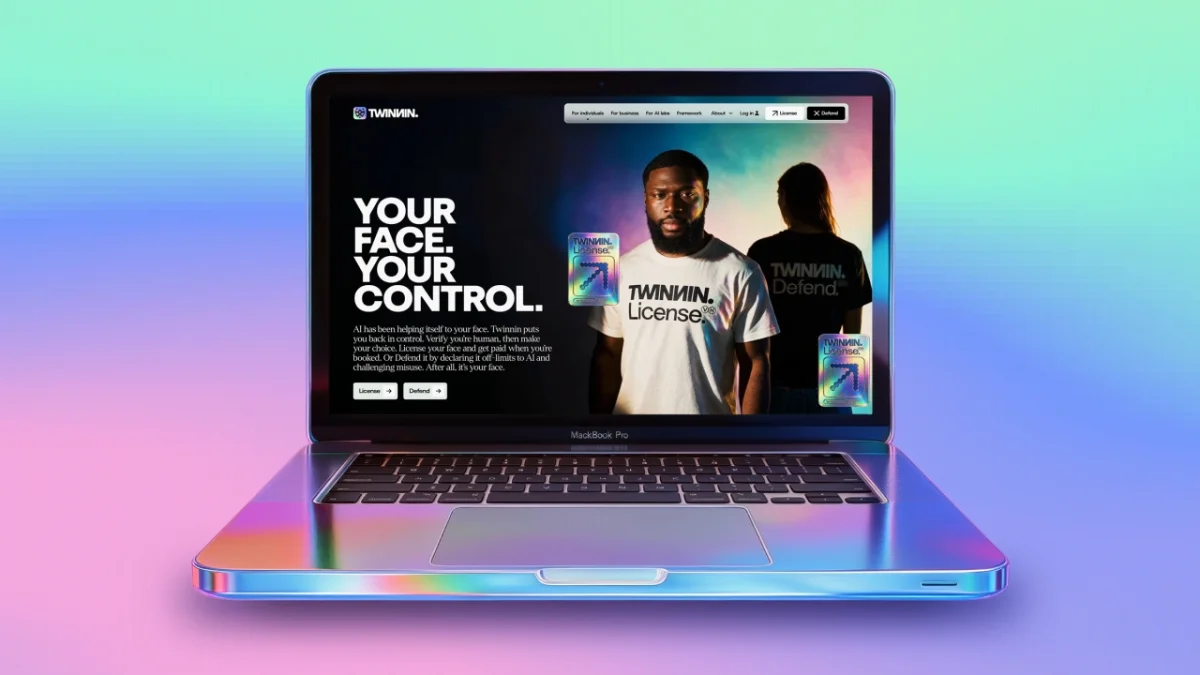
A holographic face mark gives Twinnin’s new identity a job beyond recognition: make consent visible. The Brighton studio UnitedUs built the rebrand around a “Verified Human” symbol and the idea that people should be able to choose how their likeness is used by AI. The visual language leans on the look of a security hologram, translating a complicated question of identity and permission into a signal people can spot.
Twinnin, co-founded by Katrien Grobler and William Haakon Berg, is a registry for consent, licensing and provenance relating to the human face. People verify their identity, then choose whether to license their likeness for uses by brands, broadcasters and AI labs, or register an objection and seek to keep it out of those uses. The service had already been operating, but its founders wanted the brand to reach beyond its early focus on actors and celebrities to speak to anyone concerned about their image being copied or used without consent.
Two choices, made visible
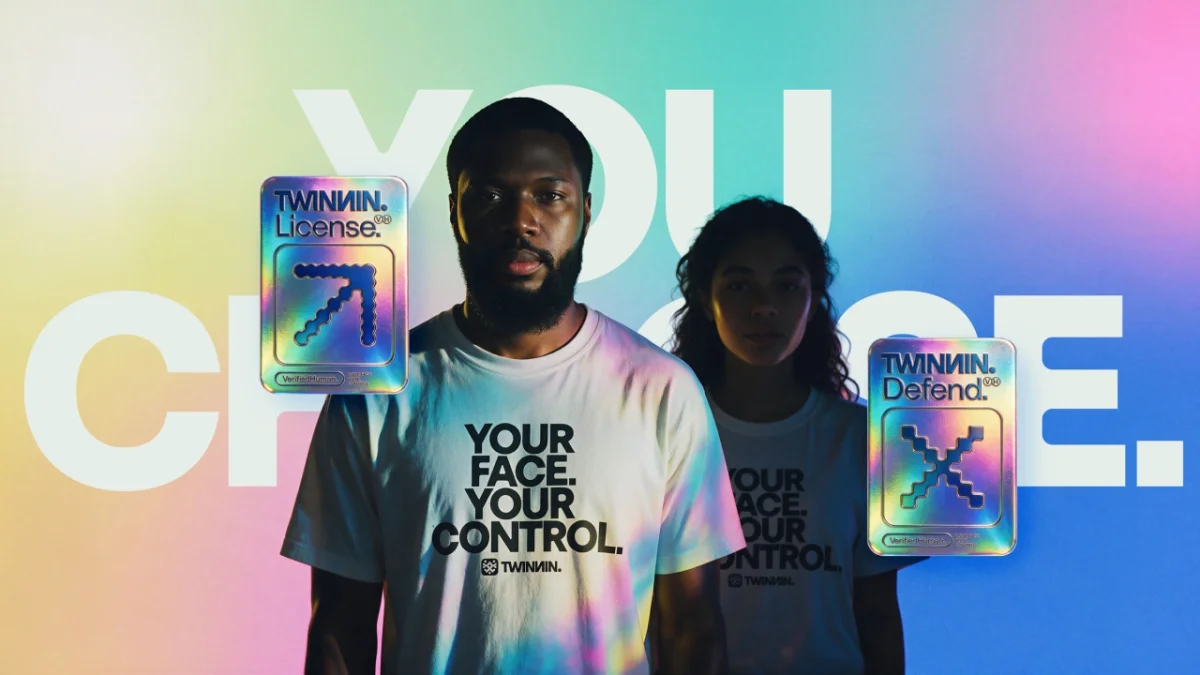
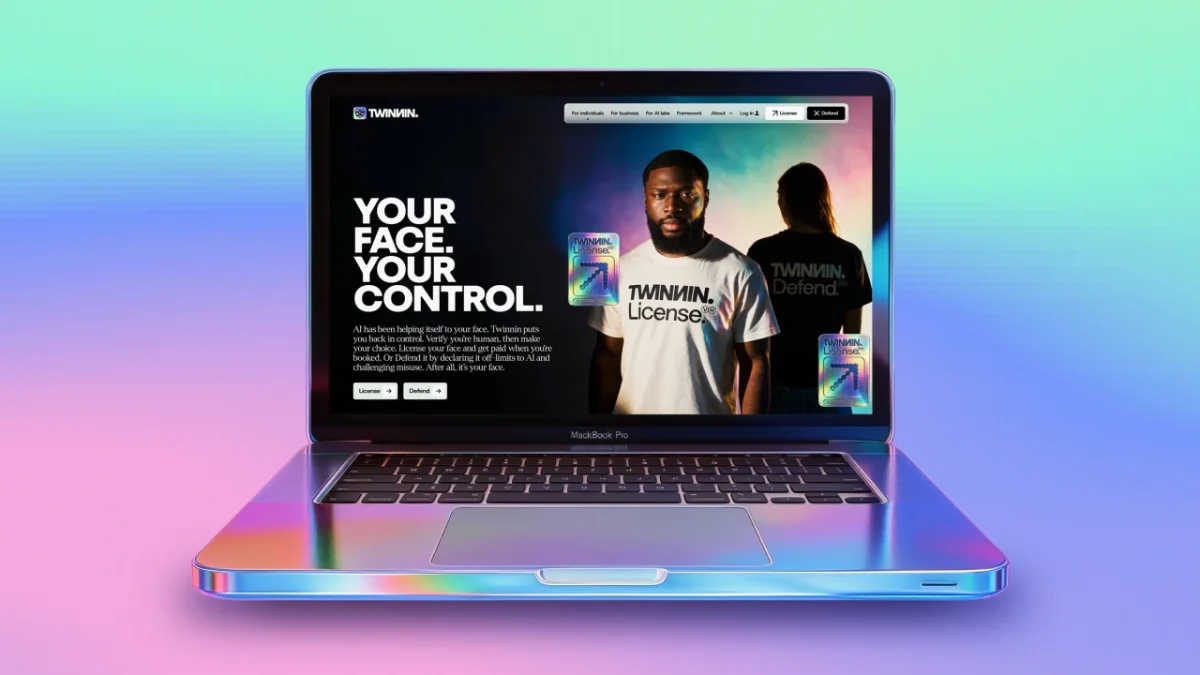
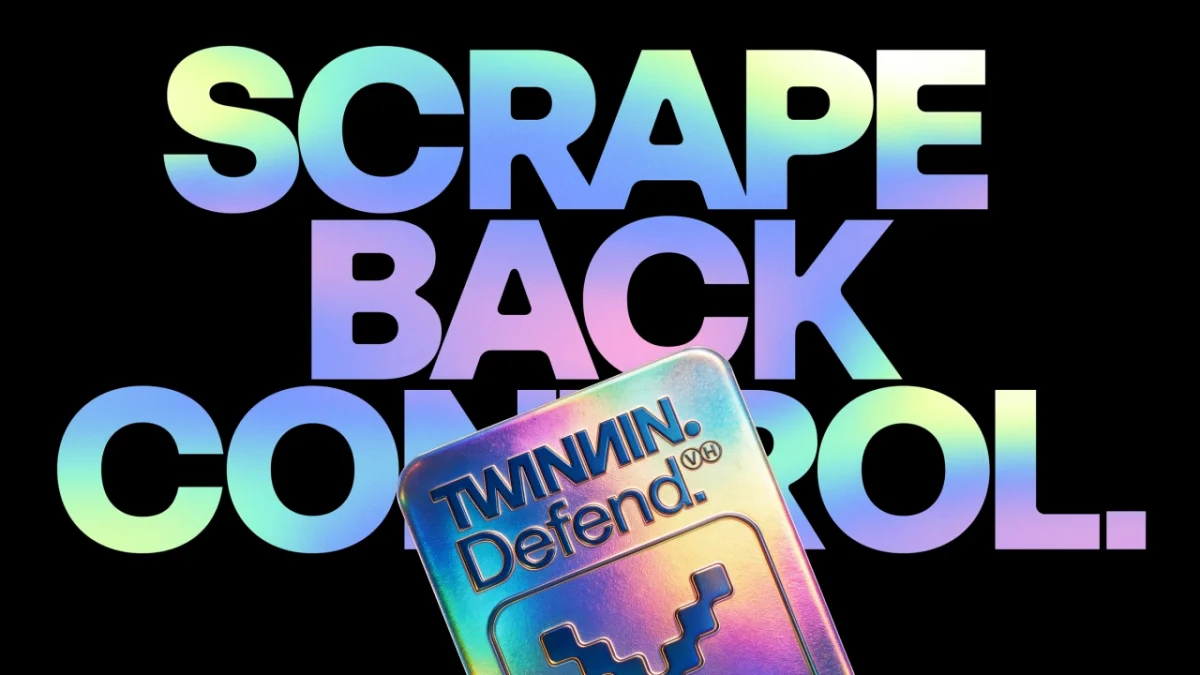
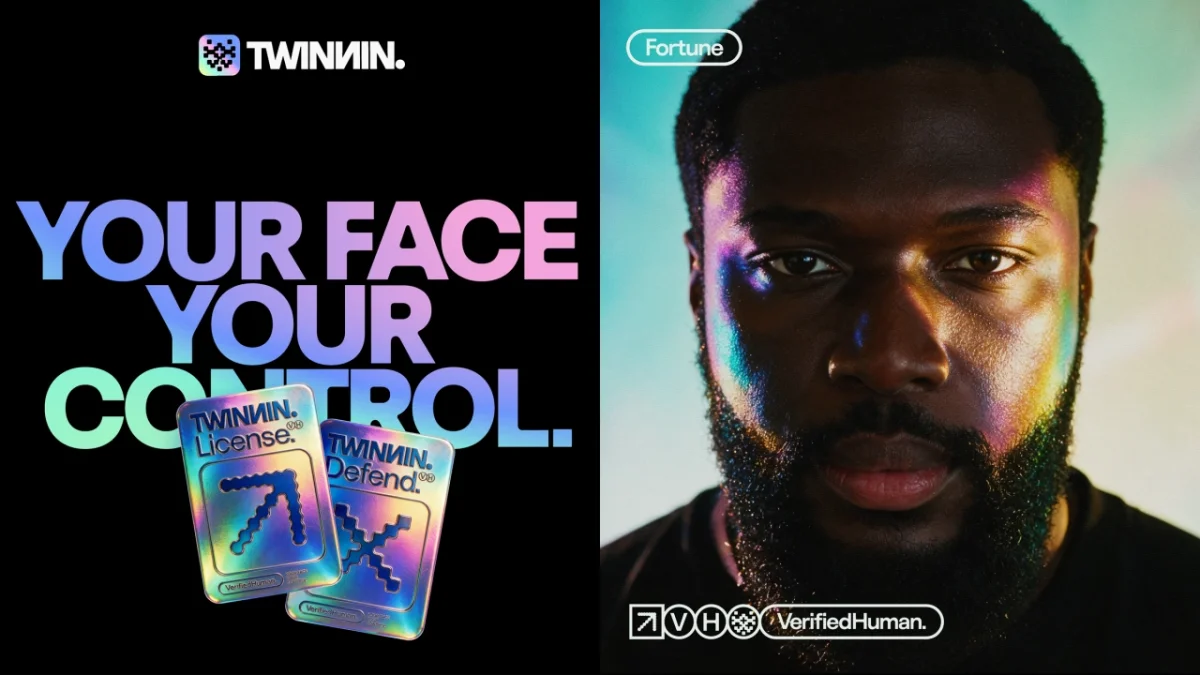
UnitedUs distilled the proposition into the line “Your face. Your control.” It puts personal choice at the front of the identity and gives the platform a straightforward organising idea. After verification, a person can select Licence and receive payment when their likeness is used, or choose Defend and register their objection. These paths become a pair of distinct trust markers, rendered as dimensional badges in shifting colours.
The approach matters because the service asks people to make a decision about a subject that can feel technical and unsettling. The identity presents that choice in plain language and gives both routes a visible form. Rather than making the system feel like a warning, the badges offer a practical cue for what a person has chosen.
The central logo draws on the coordinates used to map points across a human face, similar to the reference points associated with facial recognition systems. UnitedUs finishes the mark in holographic tones that recall the reflective labels once used on DVDs and game cartridges. That material reference links the symbol to verification and tamper resistance. On screen, the colour shifts also give the mark enough presence to work as a digital badge.
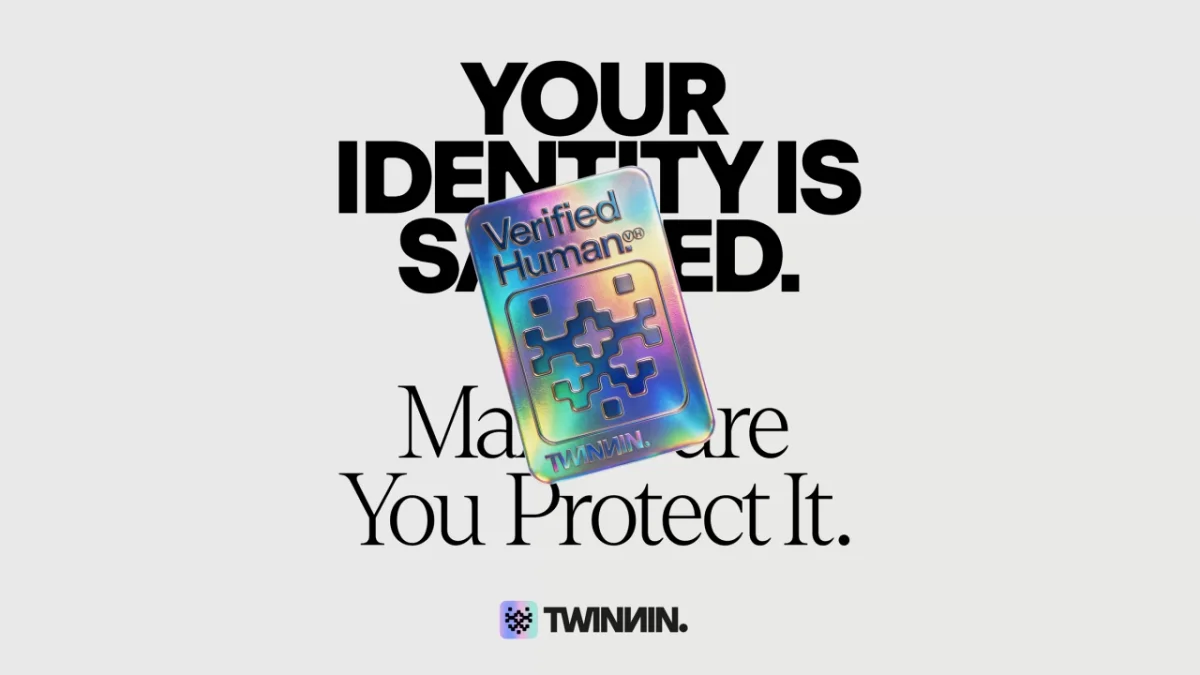
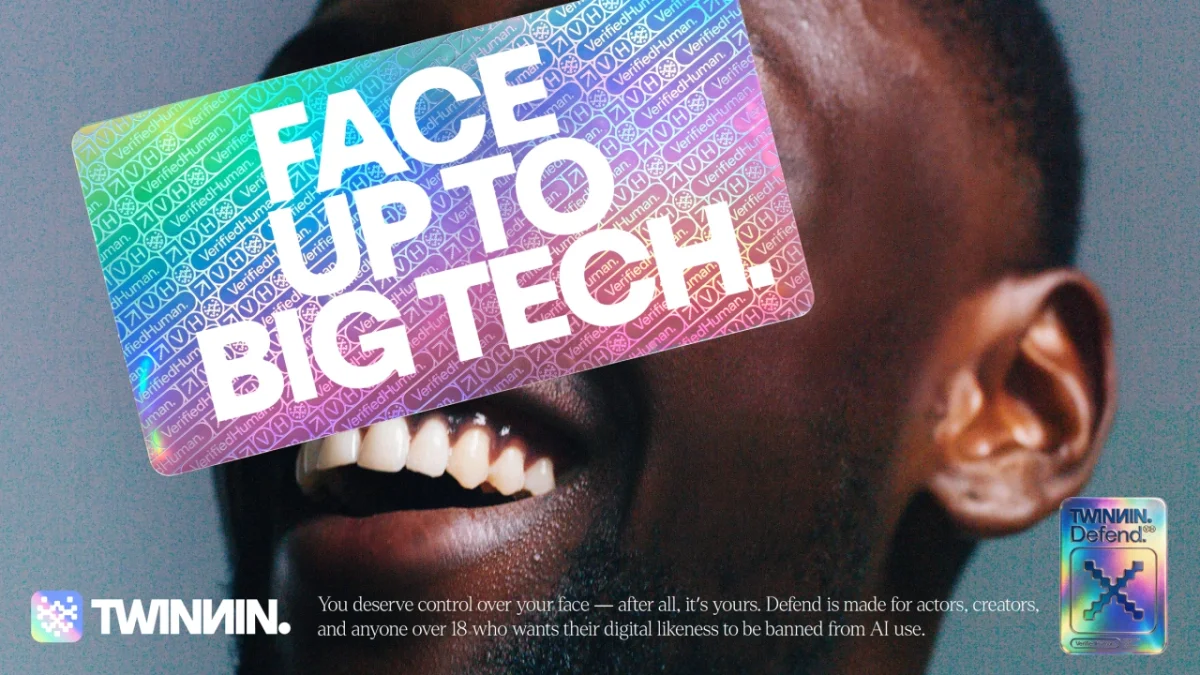
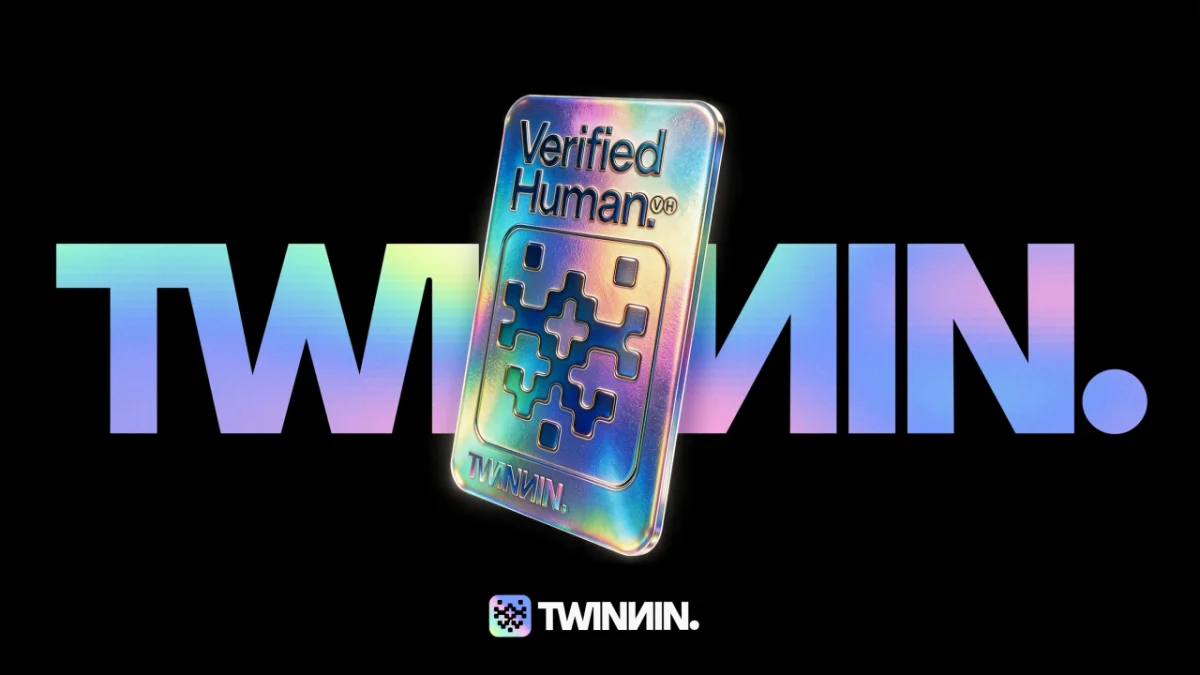
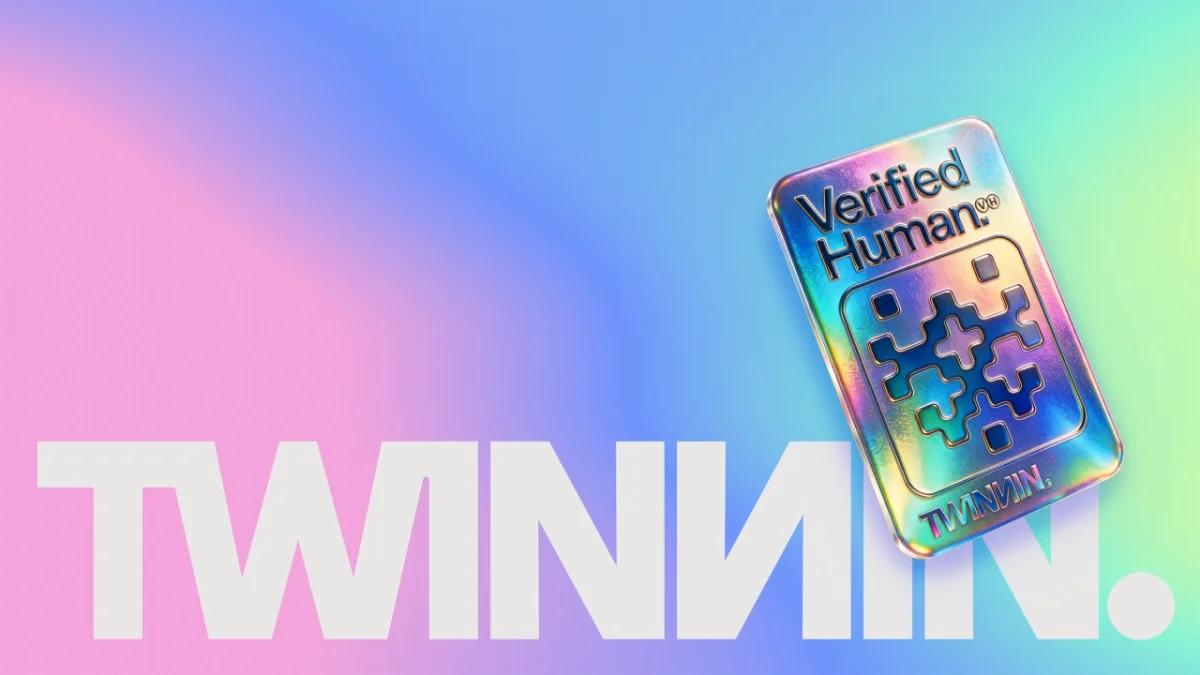
People registered with Twinnin appear throughout the imagery, tying the brand’s visual evidence back to its central promise. The voice speaks directly to “you,” with a confident, sometimes playful edge. That balance keeps the subject from being framed solely through fear: the identity treats people as decision makers with options, rather than as helpless targets.
A badge designed to travel
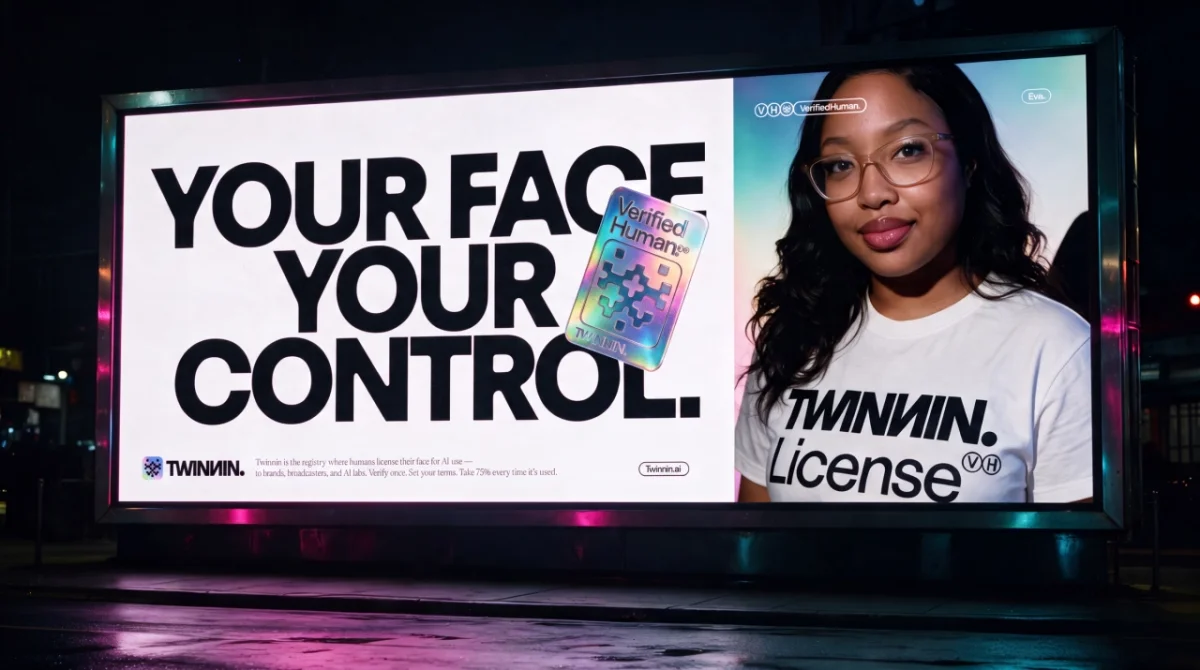
Verified Human is intended to appear wherever someone needs to signal that a real person is behind AI content and gave permission for its creation. Individuals can display the mark on a website or profile, and businesses using likenesses with consent can use it too. Model Management is the first named company to do so. Through an exclusive agreement, it has made Twinnin available to its network of more than three million models.
The badge’s usefulness will depend on whether people can understand what its presence means when it appears in different places. Twinnin’s identity ties that signal to a person’s recorded choice, while the Licence and Defend badges distinguish the two paths. For designers working on identity systems, that is a useful structural decision: the mark is part of a wider set of cues, rather than a standalone emblem expected to explain everything.
Defend came after the founders heard a different question from the one that shaped Twinnin at first: what if someone wants their face kept out of AI altogether? A person using Defend verifies their identity and social accounts, then signs a dated declaration objecting to a list of uses, including AI training, synthetic media and automated profiling. The declaration is time-stamped on a public blockchain. Twinnin provides a shareable verification link and badge, and lets people report suspected misuse and track the response through a dashboard.
Making permission legible
Twinnin points to the sharp rise in deepfake attempts recorded by identity firm Entrust: a 3,000% increase between 2022 and 2023. Grobler, who previously led brand at Vodafone, says performers outside the screen industry’s established systems still face the prospect of scraped images and unclear terms. Her view is that performers should have a clear way to ask for consent and payment when their likeness is used.
Luke Taylor, UnitedUs co-founder and creative partner, is also an executive advisor on Twinnin’s board. He describes the identity as a meaningful design challenge because a person’s likeness is intimate. The team wanted to make the decision between licensing and defending a likeness clear, while creating a brand that could develop with the people using it.
The visual system’s strength is its translation of an abstract promise into repeatable parts: a face-derived mark, reflective colour, and two badges that express different decisions. Its next test is practical. As the symbol appears across profiles, services and content, people will need to recognise what it verifies and understand the choice behind it. The design gives Twinnin a consistent way to make that choice visible.