Tuesday, October 20, 2026 · Graphic Design
Casey Roarty Turns Facebook Marketplace Finds into Unexpected Art
Noted by Ayla Angelos · 703 reads
Casey Roarty recasts awkward, blurred Marketplace photos as expressive images, finding human detail in the clutter of second-hand listings.
Casey Roarty’s Is This Still Available? starts with a familiar design problem: how to see an image differently once its original purpose has faded. The freelance graphic designer searches second-hand listings for photos shaped by domestic light, hurried framing and low resolution, then reworks their overlooked details into independent images. The results trade polish for a quality that feels specific, imperfect and human.
The project began after Roarty moved house and spent what he describes as a “silly” amount of time browsing Facebook Marketplace. Beyond the listings themselves, he noticed the pictures: awkward crops, harsh flash, blurred faces, reflections and compression. Sellers take these photographs to show an object clearly enough to sell it. Yet the practical images can hold accidental compositions and colour relationships that weren’t planned as art.
Looking past the object
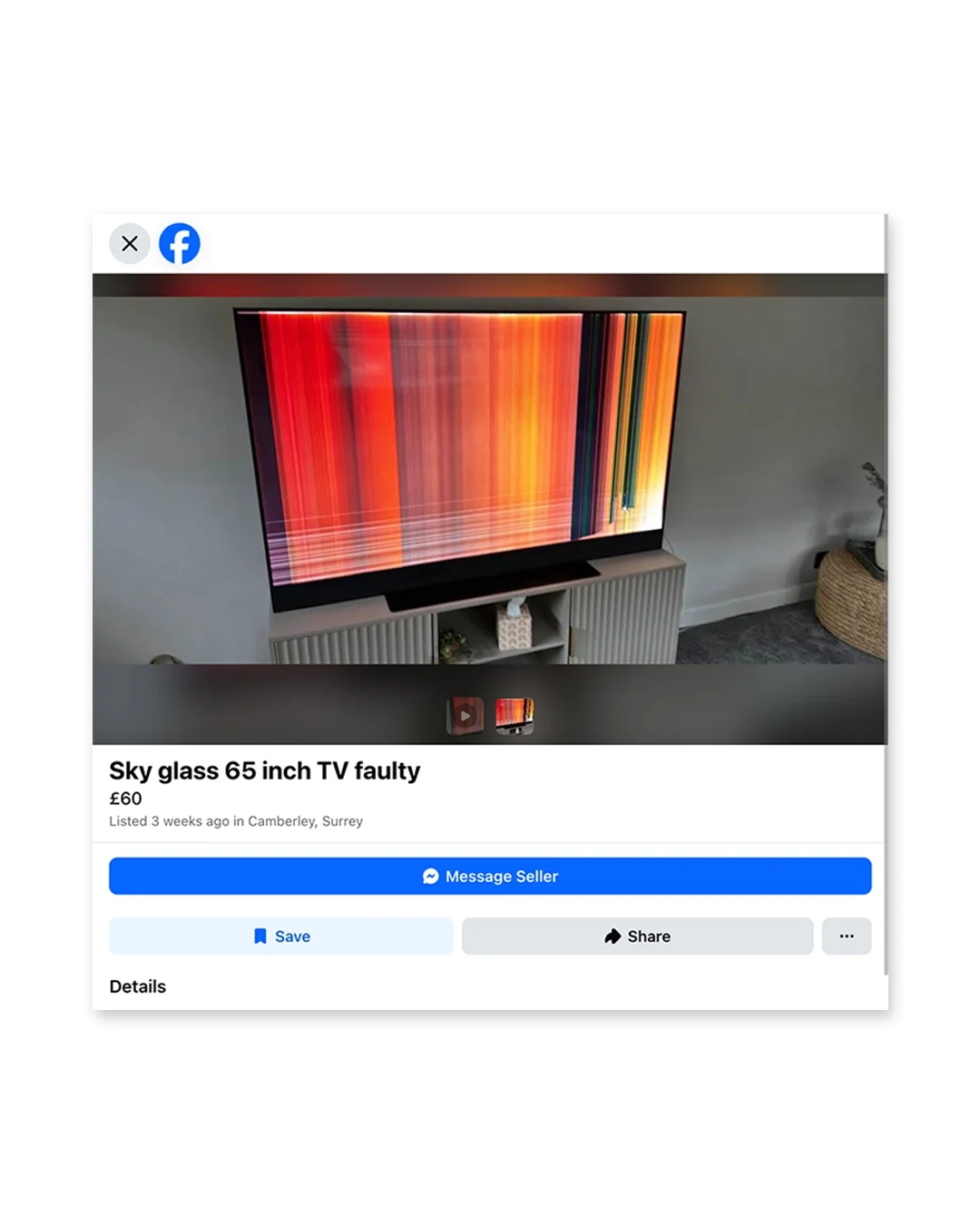
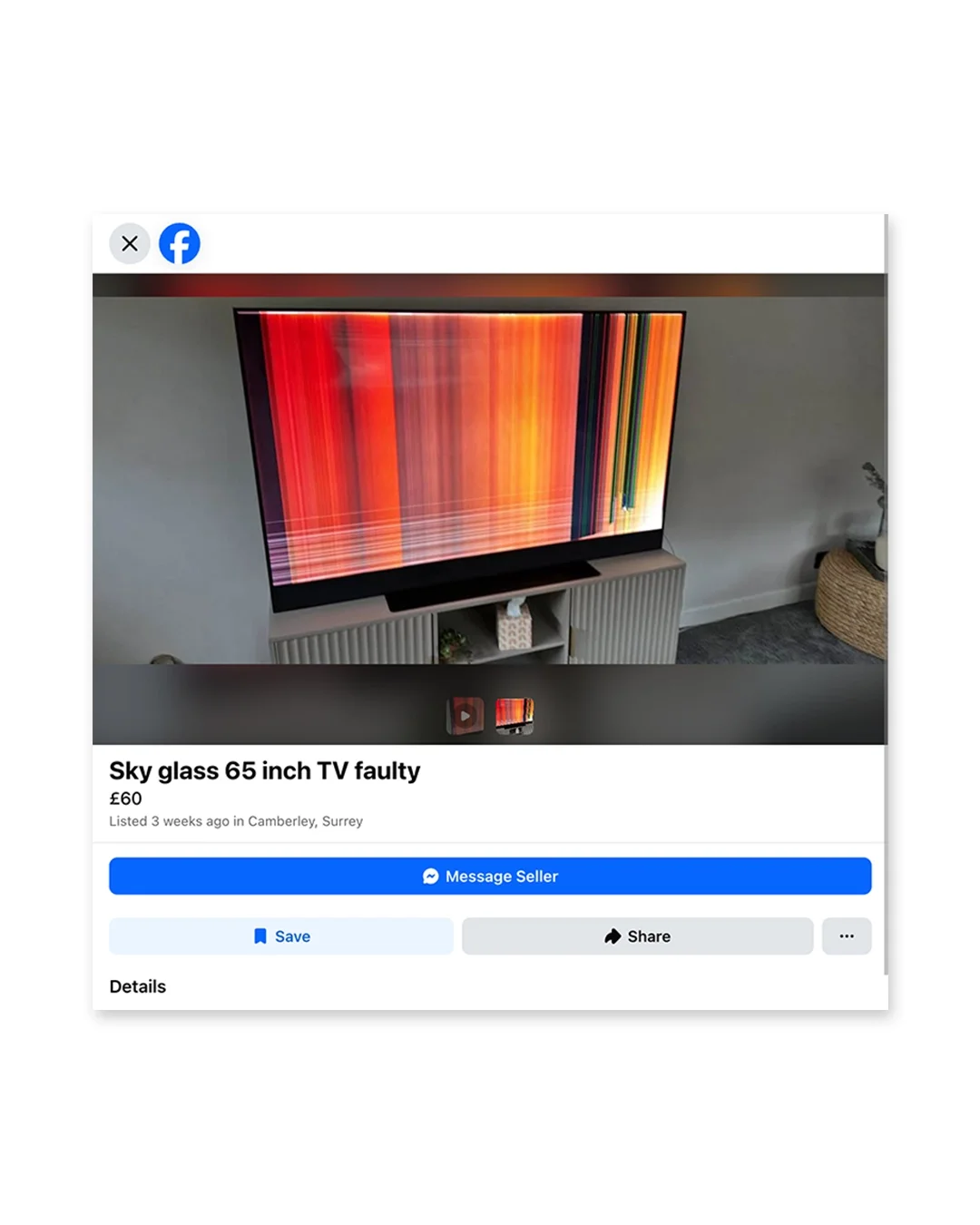
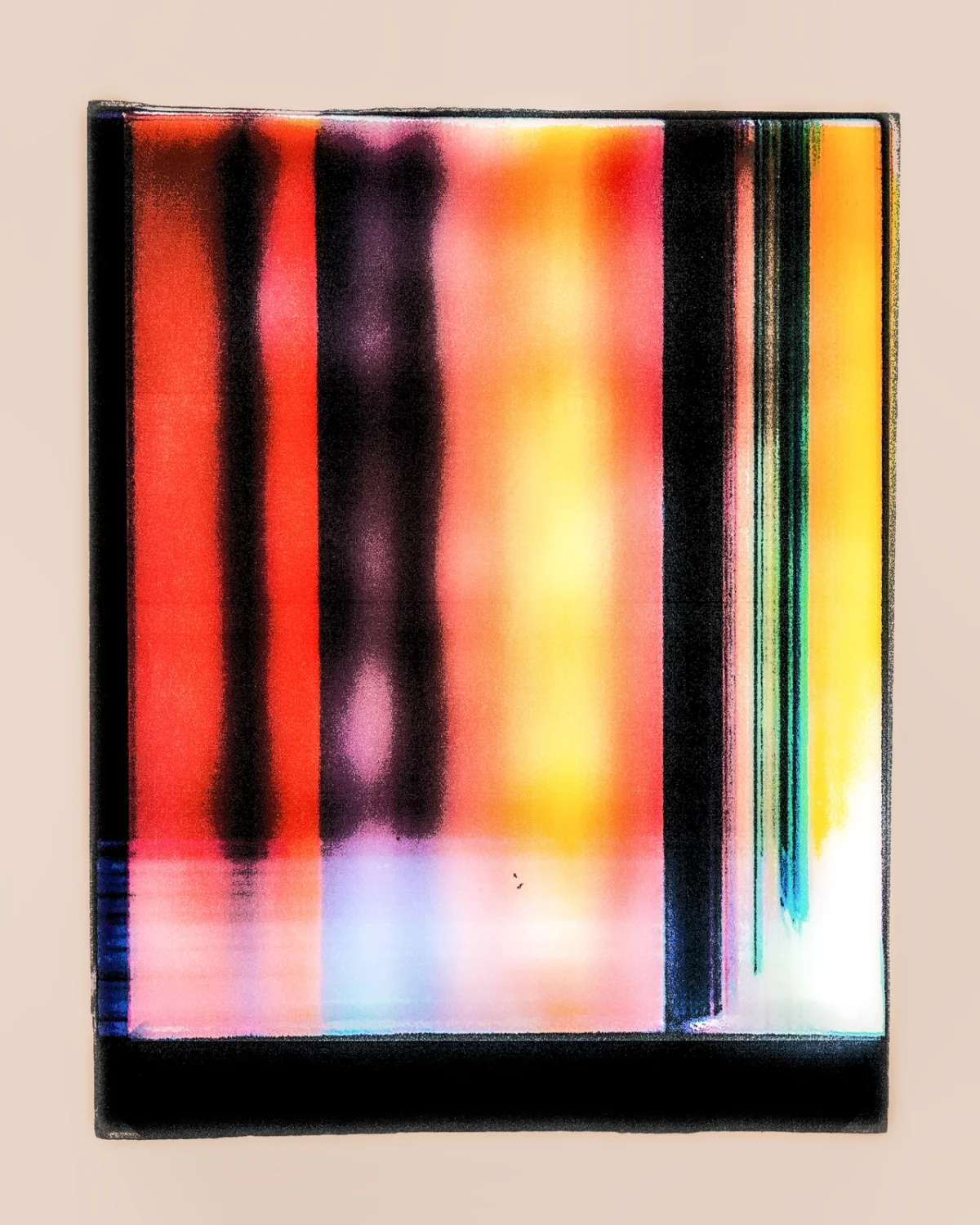
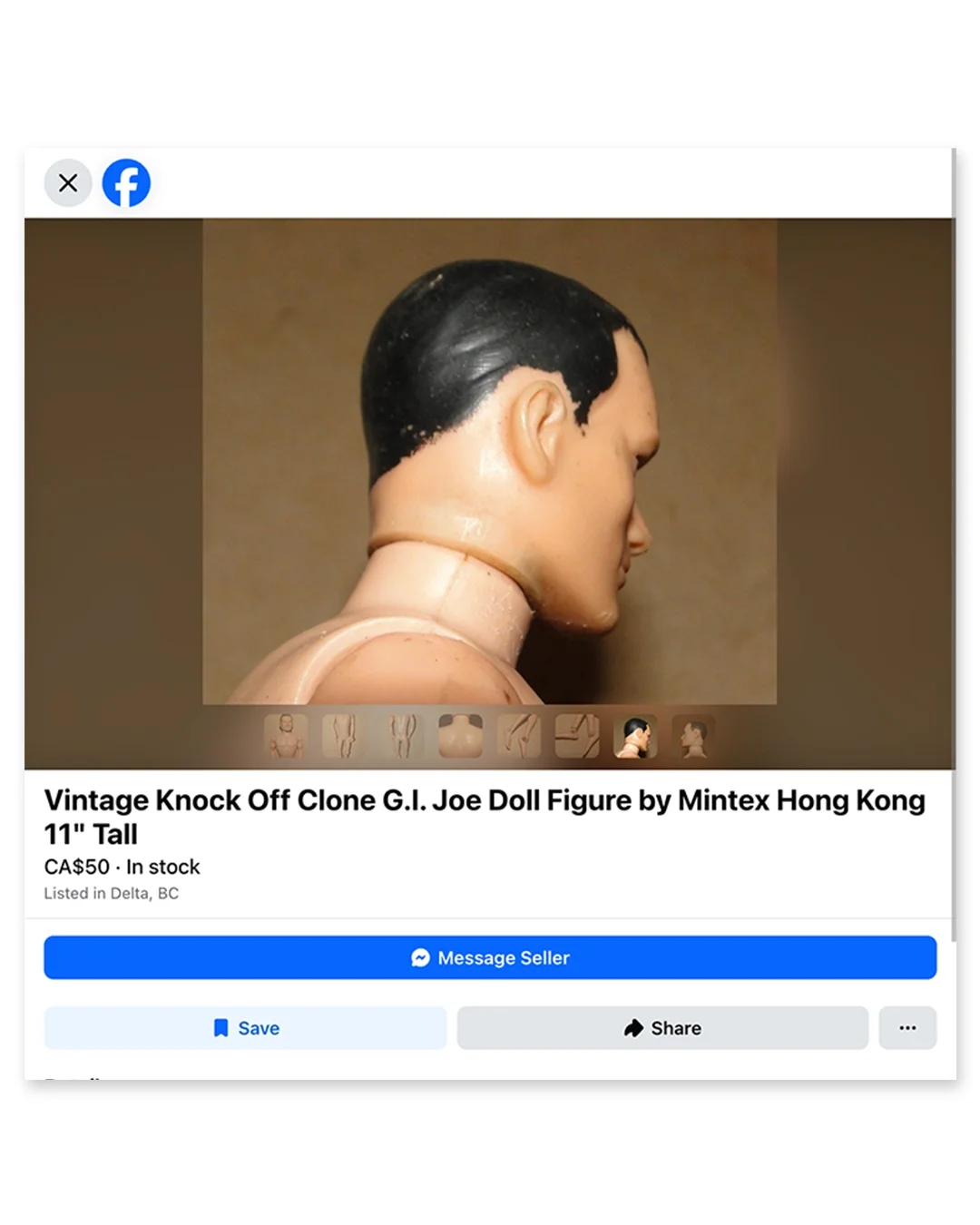
Roarty’s source images range from an ordinary television and wooden toy trains to a life-sized Marilyn Monroe statue, a knock-off G.I. Joe figure, climbing holds and vintage lawn decorations. The variety matters less than the moment when a photograph stops reading as a straightforward record of an item. In a listing for a faulty 65-inch TV, coloured vertical lines on the screen become a strong graphic arrangement. In other cases, a strange angle or a seller’s hand shifts attention away from the object for sale.
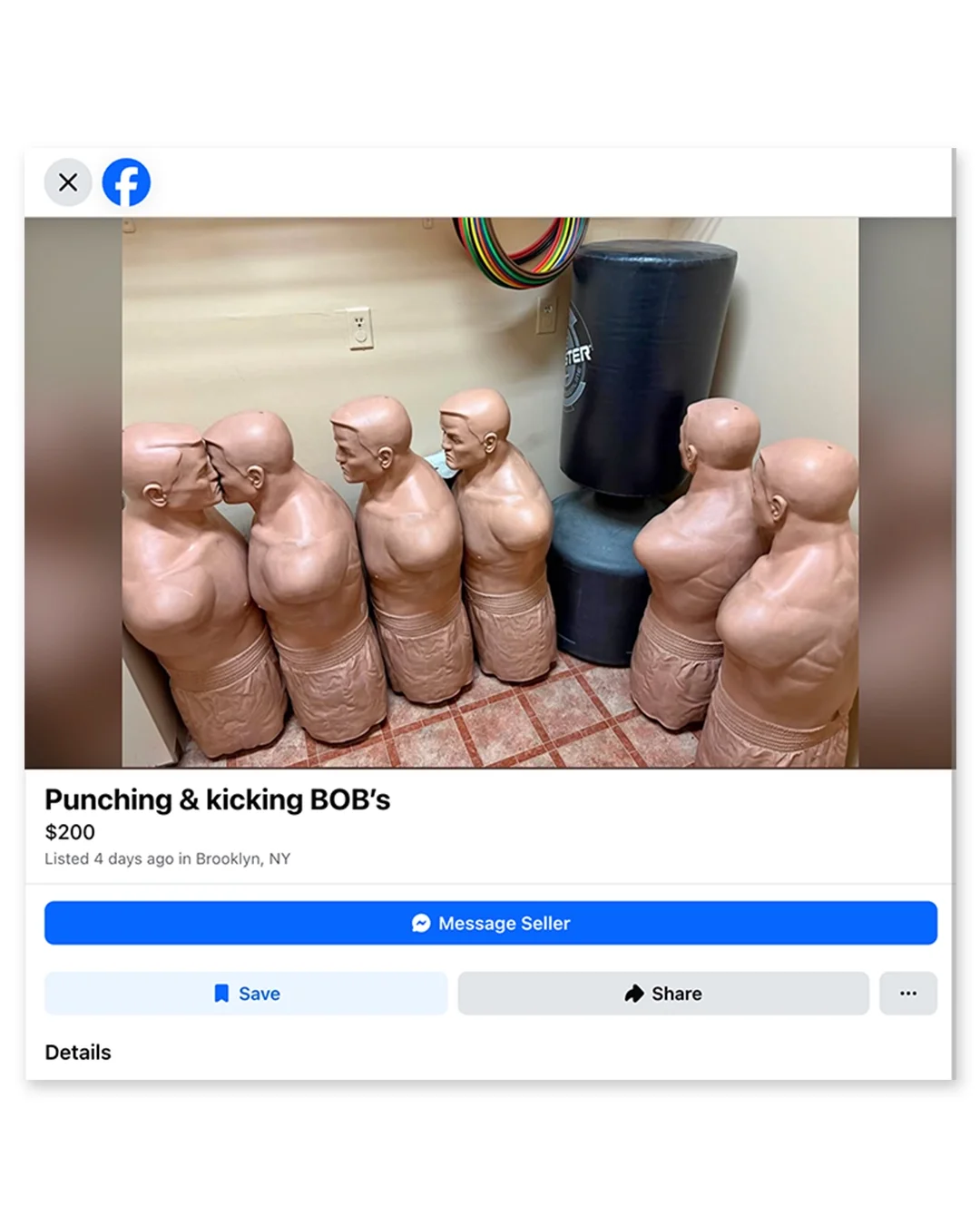
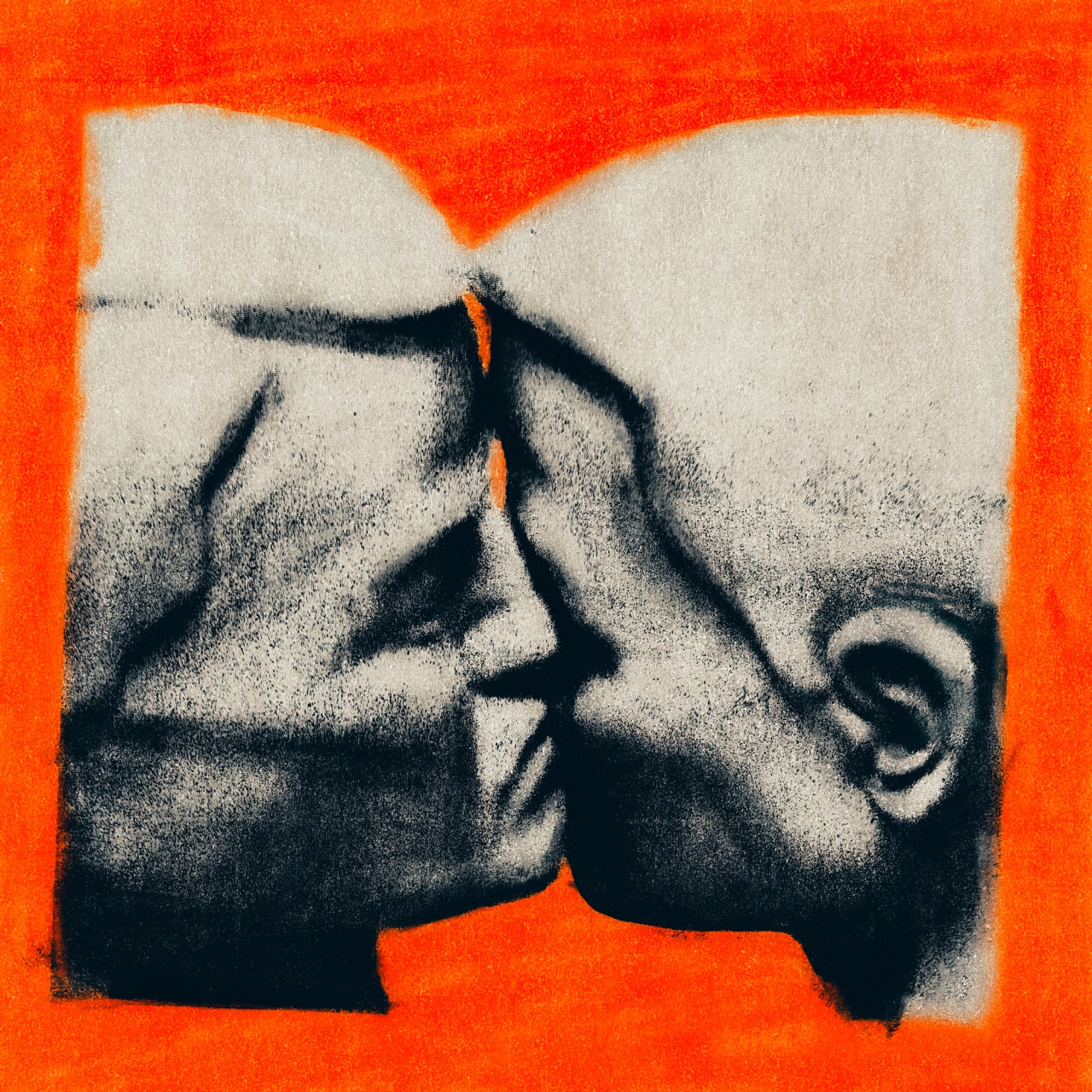
That change in meaning is especially clear in a listing for martial arts training dummies. Roarty spotted two figures pushed together at the far left of one photograph. Cropped close, the pair appeared to be kissing. Their bulky forms still recall the objects’ original purpose, but the tighter framing turns an image associated with force into one that suggests intimacy. The seller’s photograph supplies the detail; Roarty’s crop changes what it can say.
Finding that detail takes time. Roarty says the strongest image may be buried in the third or fourth photo, where a different view reveals something the seller didn’t intend to feature. That’s a useful way to browse the series: look beyond the lead image and treat the full listing as a set of visual evidence. A misplaced object, an odd reflection or an accidental overlap can become the starting point for a new composition.

From listing photo to composition
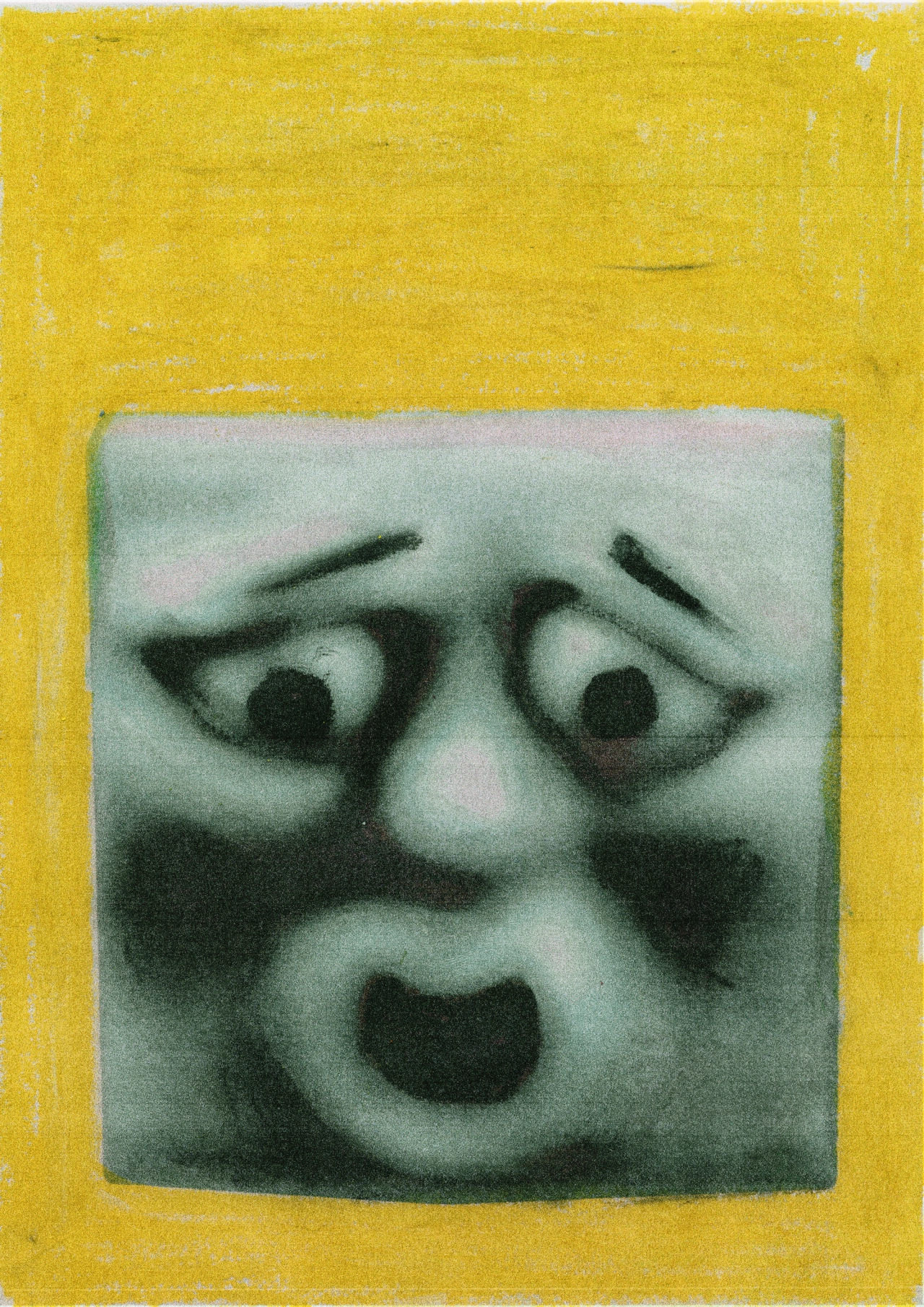
Once Roarty finds an image with potential, his graphic design background guides the transformation. He crops into an unusual feature, isolates or simplifies parts of the picture, and can add marks made with pencil or pastel. The process isn’t a fixed recipe: each source image offers different material, and the outcome emerges through experimentation. A blurry face might become a field of colour and texture; an object’s silhouette might matter more than its identity.
For designers, the project offers a compact exercise in visual attention. Start with an image made for a practical purpose, then question its hierarchy: What sits at the edge? Which colour carries the most weight? Does a crop expose a pattern that the full image hides? Simplifying the scene can help separate its strongest shapes from its original context. Hand-drawn marks, as Roarty uses them, can then introduce a more tactile counterpoint to the source’s digital blur and compression.
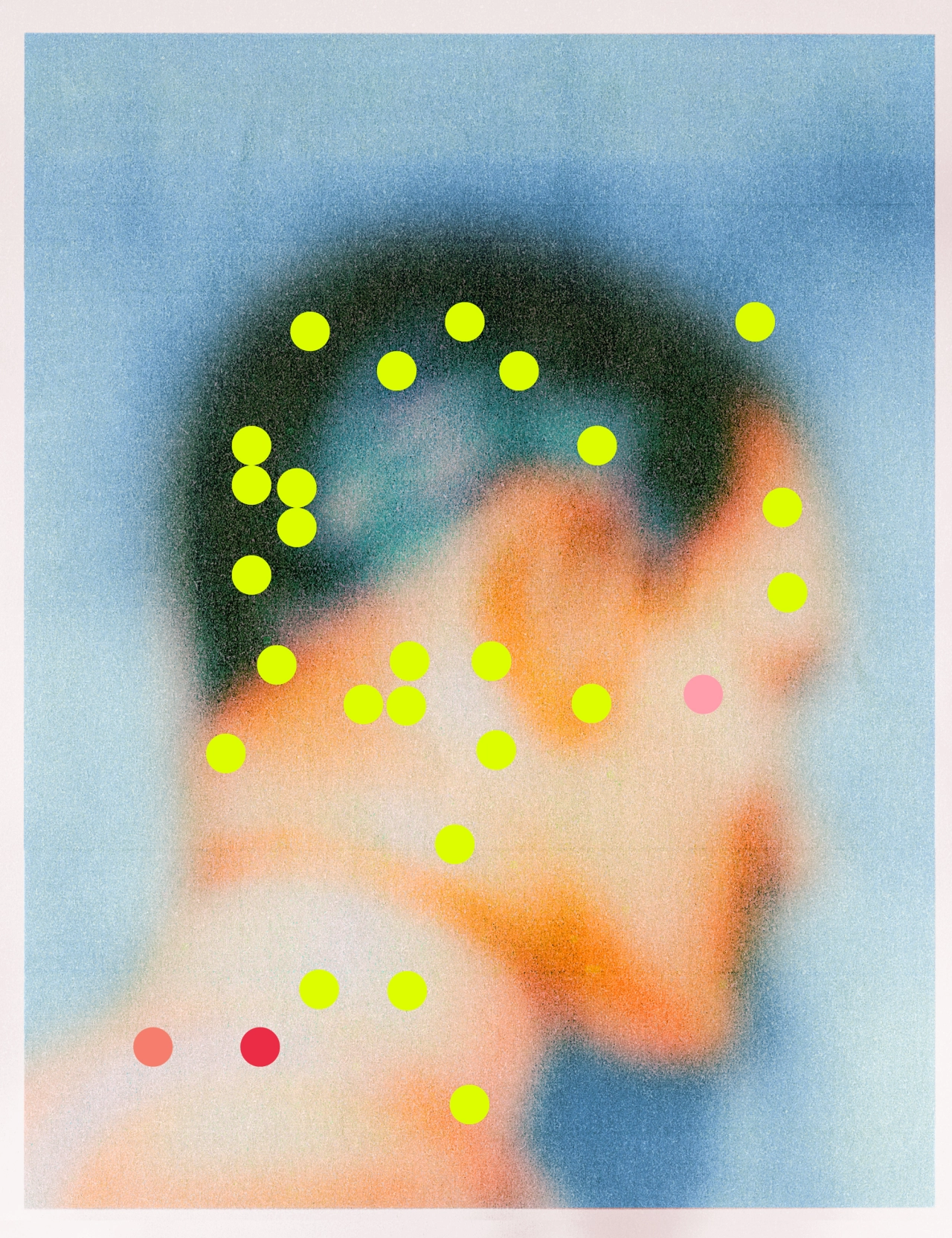
Roarty’s own path into freelance graphic design ran through music. He made artwork for bands and worked at Warner Music before going independent. He describes Is This Still Available? as a personal space without a predetermined outcome, where he can keep testing how far the idea can stretch. That open brief suits the source material: Marketplace is messy and uncurated, and its visual surprises don’t arrive in a planned sequence.
Imperfection as a point of view
There’s also a broader reason the project’s rough source images resonate. Roarty has been thinking about how easily polished imagery can now be generated, and what that means for making pictures. His response isn’t to claim that every imperfect photograph has artistic value. Instead, he looks at the story and process behind an image: who made it, what they were trying to show, and what slipped into the frame along the way.
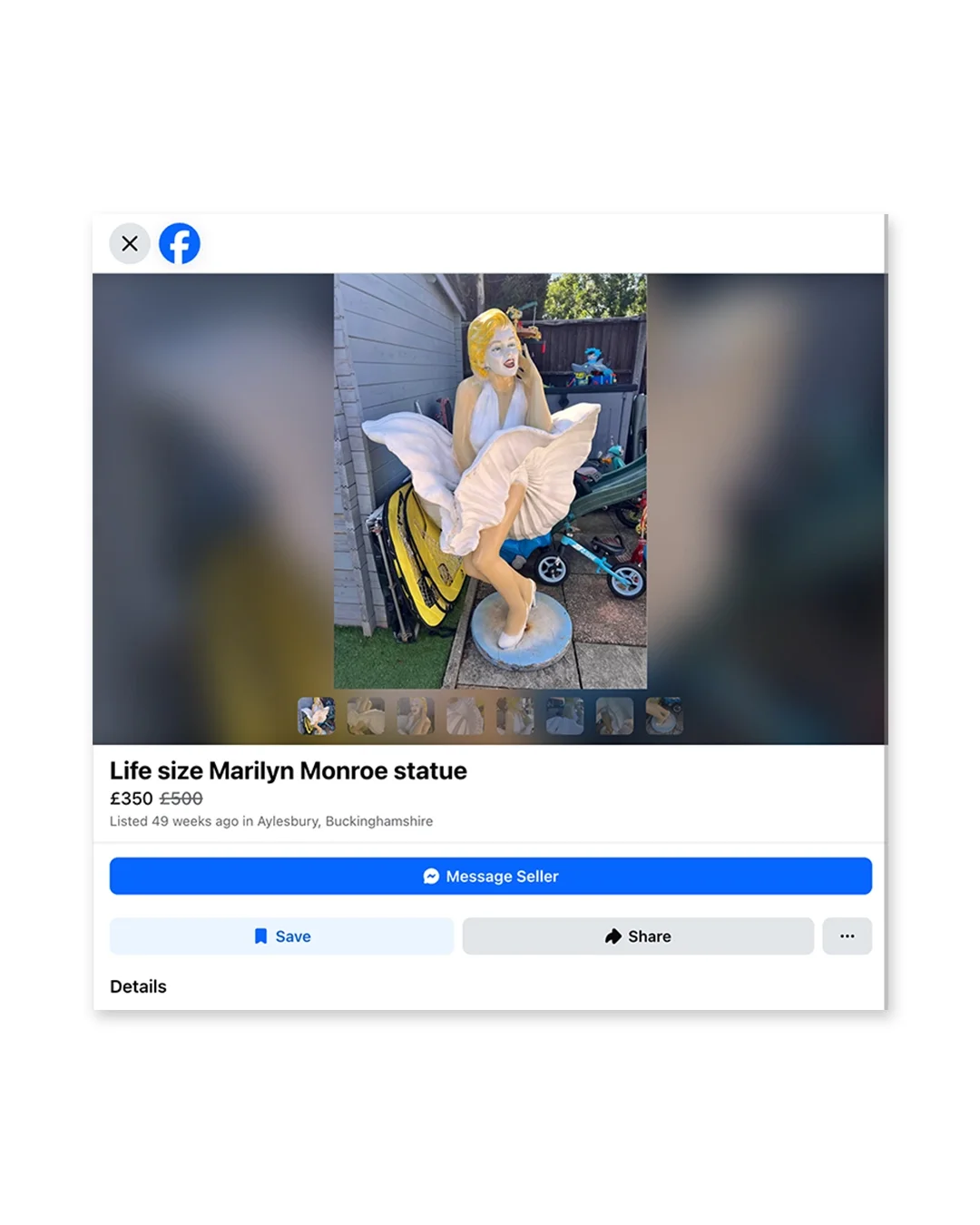
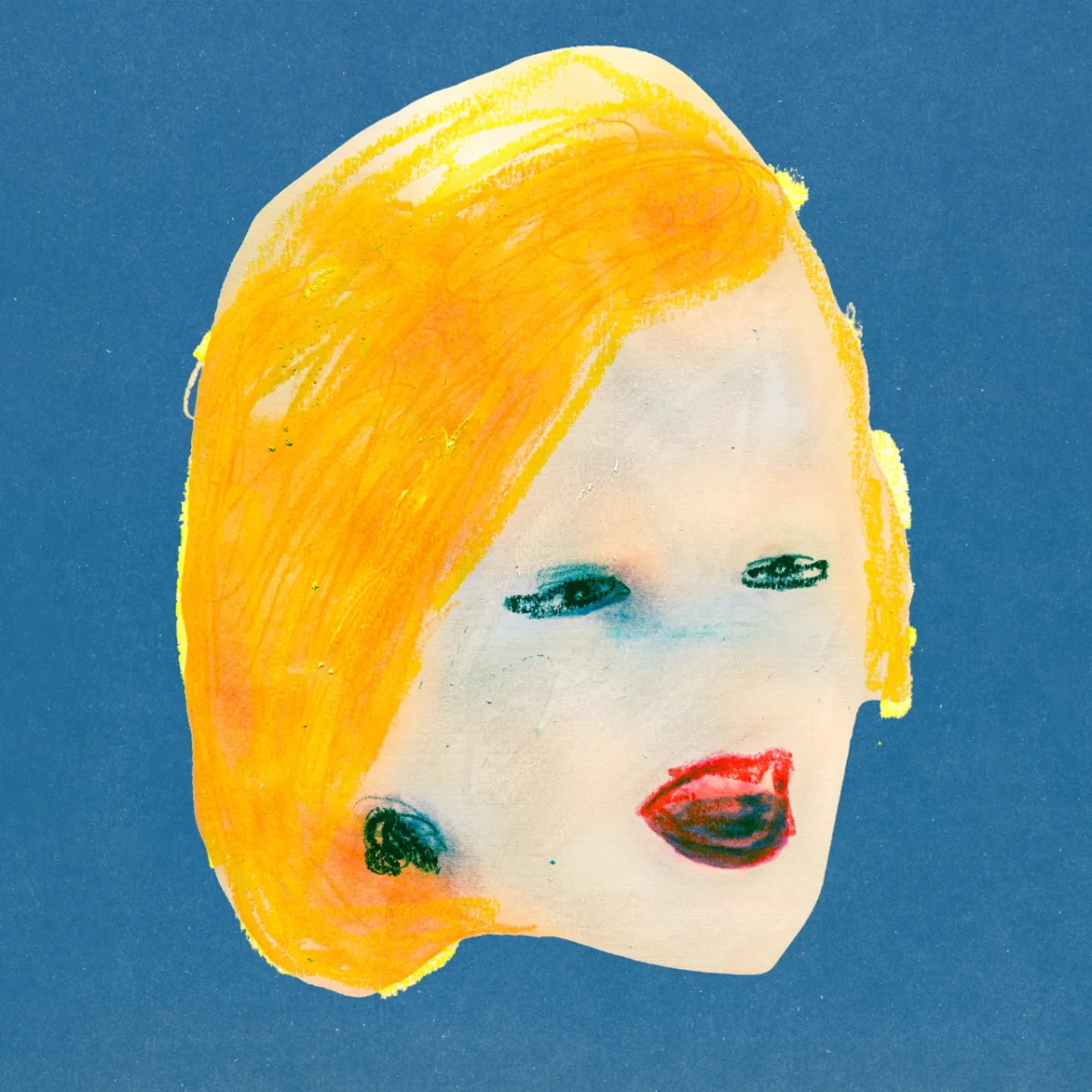
Some listings offer an immediate visual hook; others ask for patience. A fancy-dress costume photographed flat may distort its character, while a vintage toy can bring back a personal memory. The work grows from that gap between what a seller meant to document and what another viewer can discover. Roarty compares the shift to staring at a word until it becomes strange and begins to suggest something else. Here, repeated looking makes an ordinary listing photograph feel newly open to interpretation.
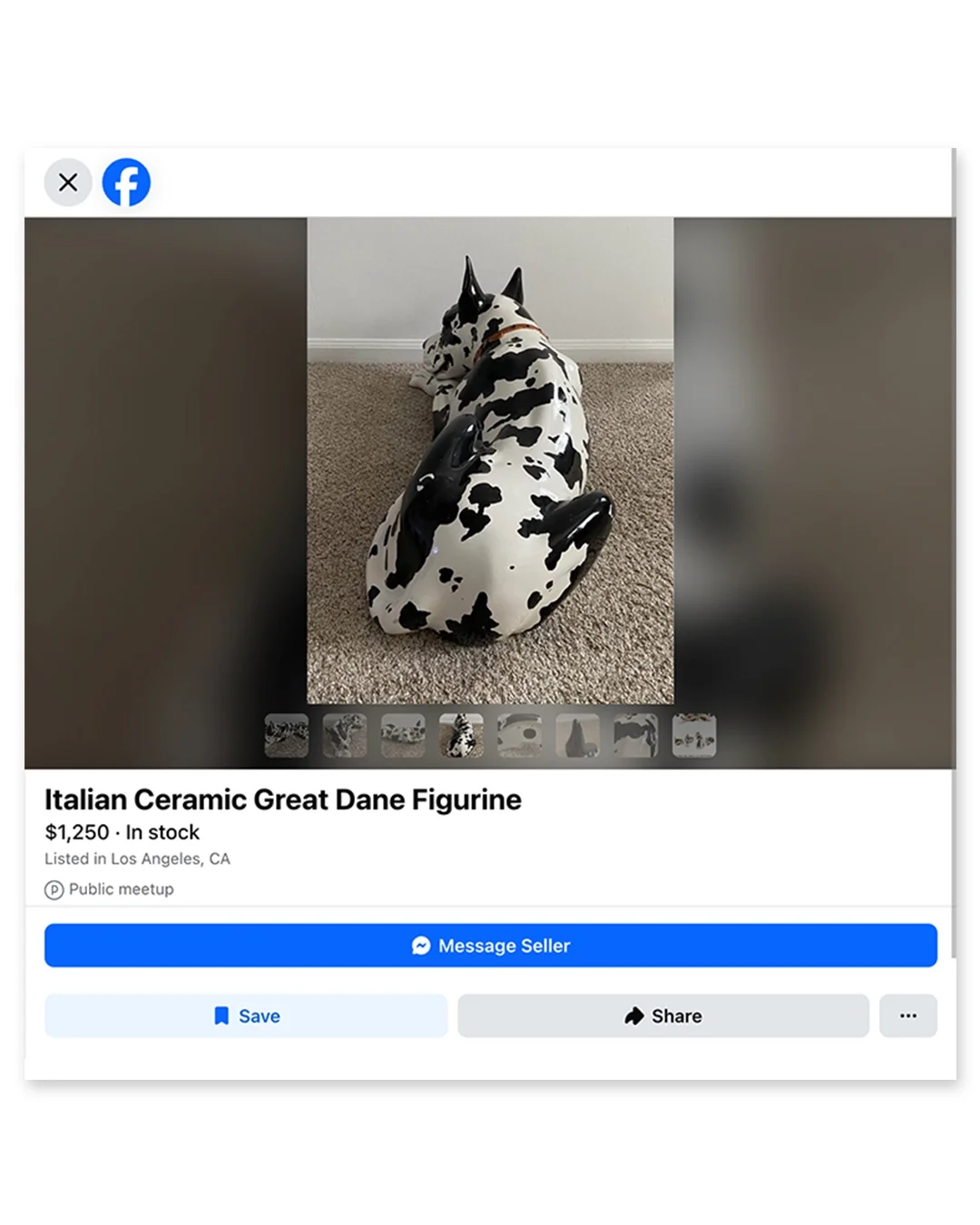
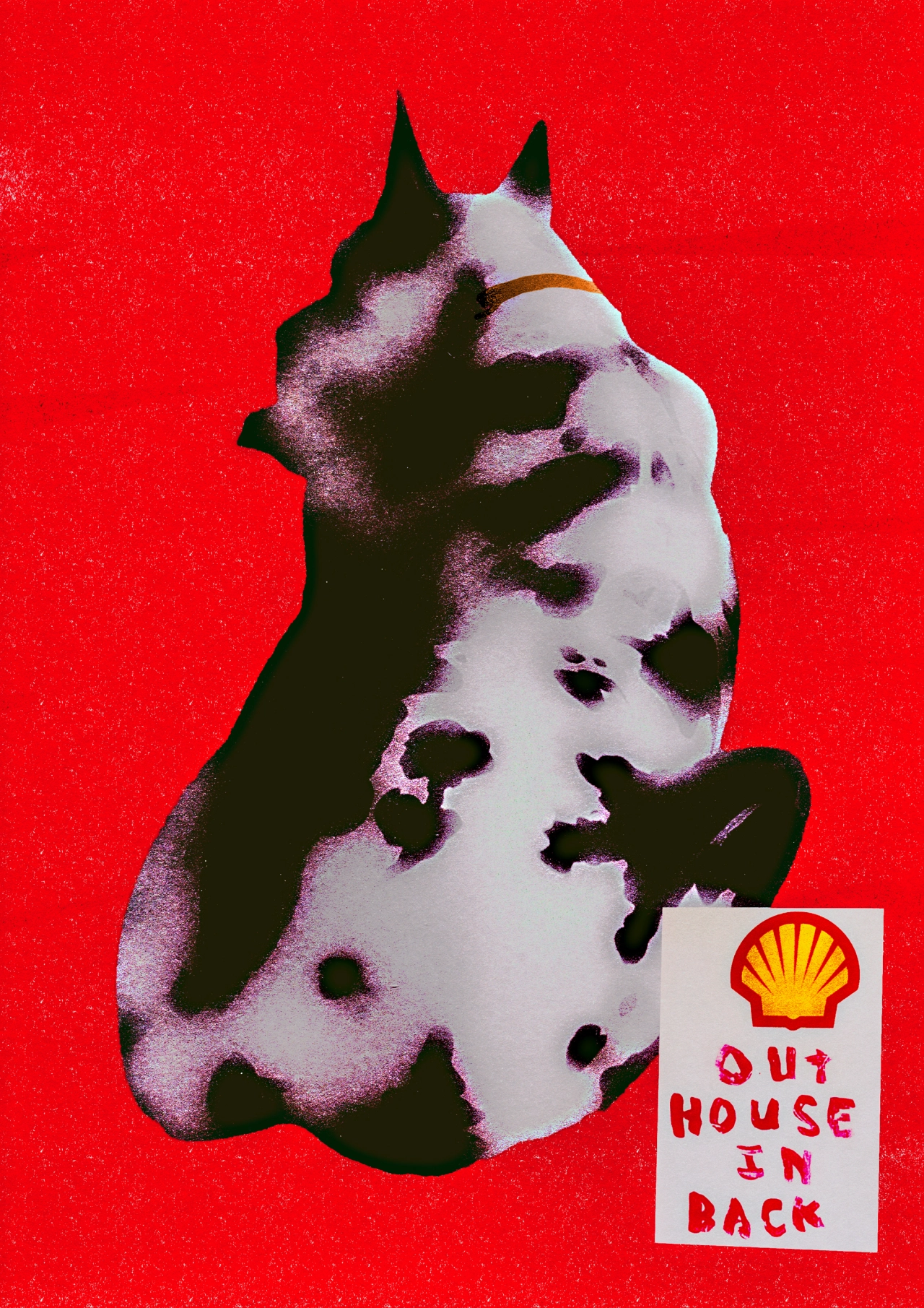
The series makes that shift visible through the contrast between source and remake. A spotted ceramic dog becomes a bold portrait against red; a garden statue with Monroe’s bright hair inspires a simplified, colourful face. The paired images let viewers trace what changed: the crop, palette or texture that carries the designer’s interpretation. Roarty’s images don’t erase their humble origins. Their interest comes from keeping a trace of the listing while giving its accidental details a second life.
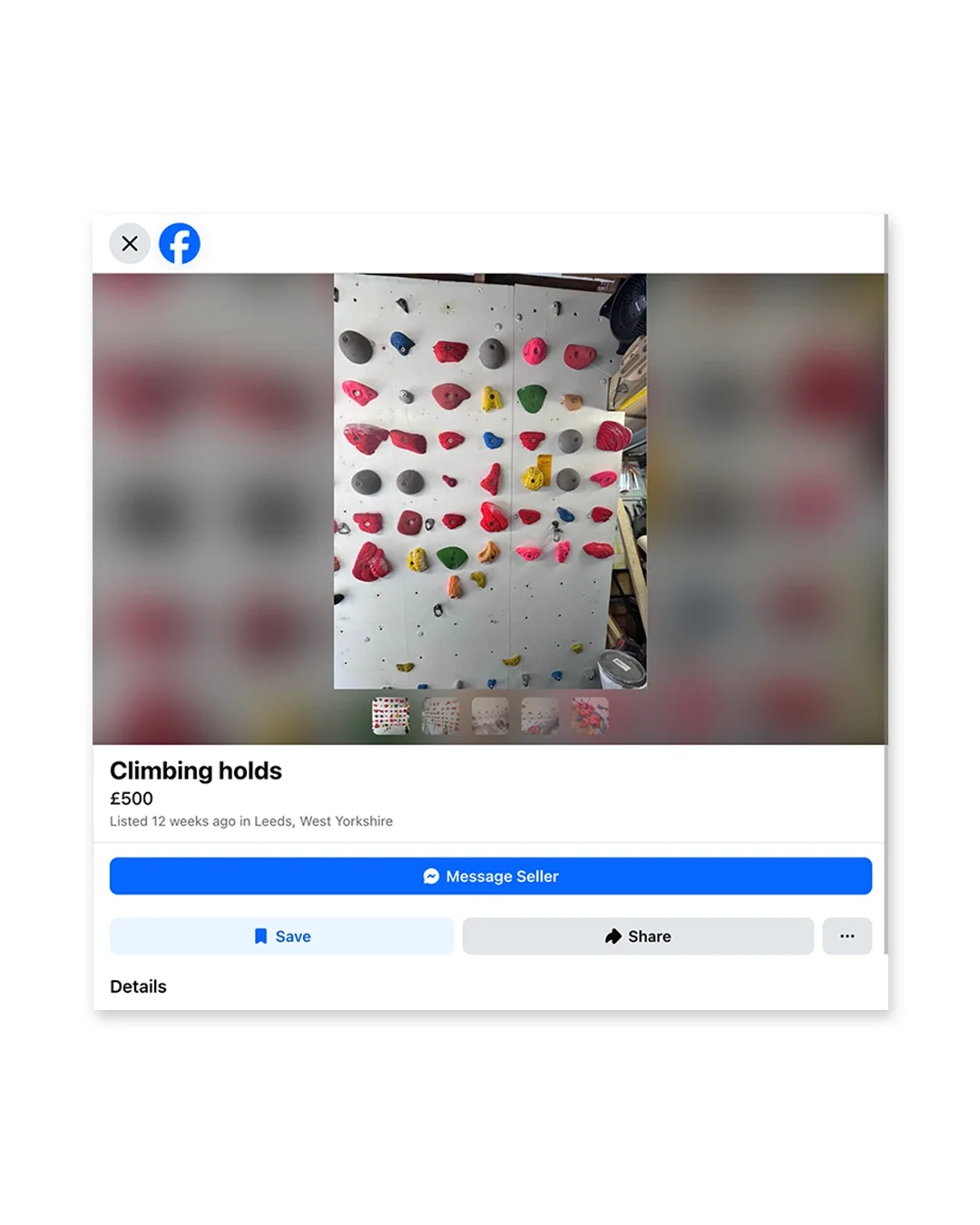
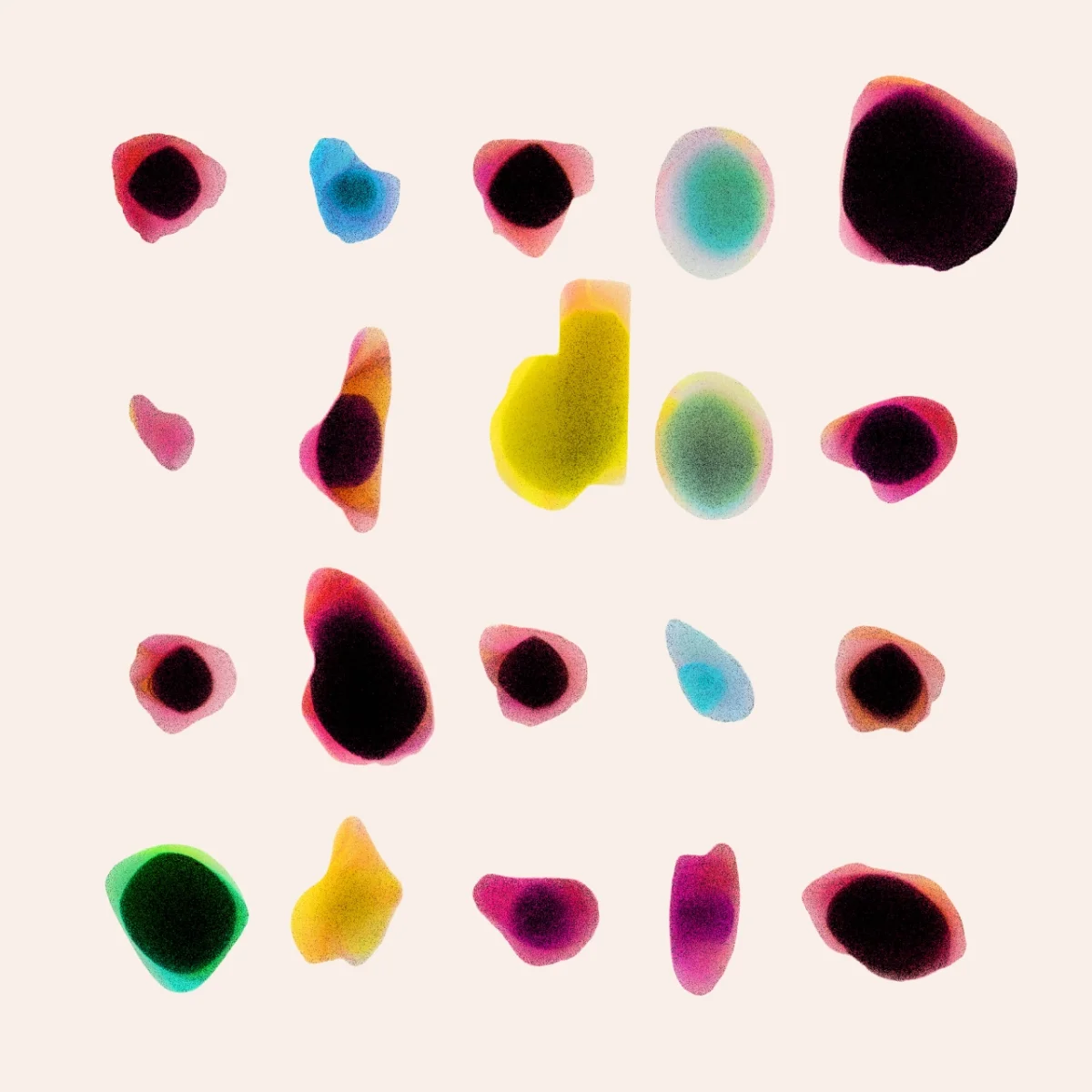
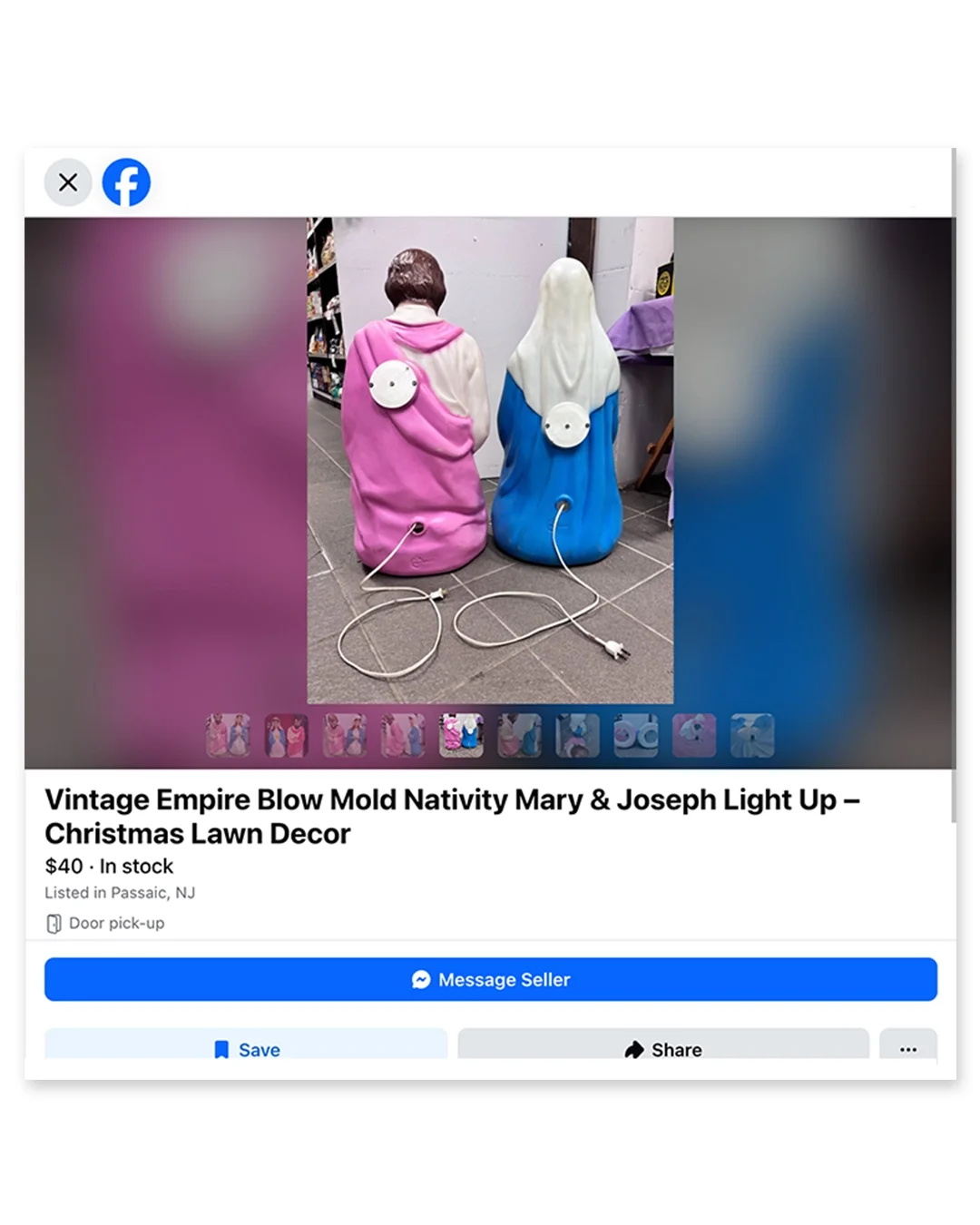
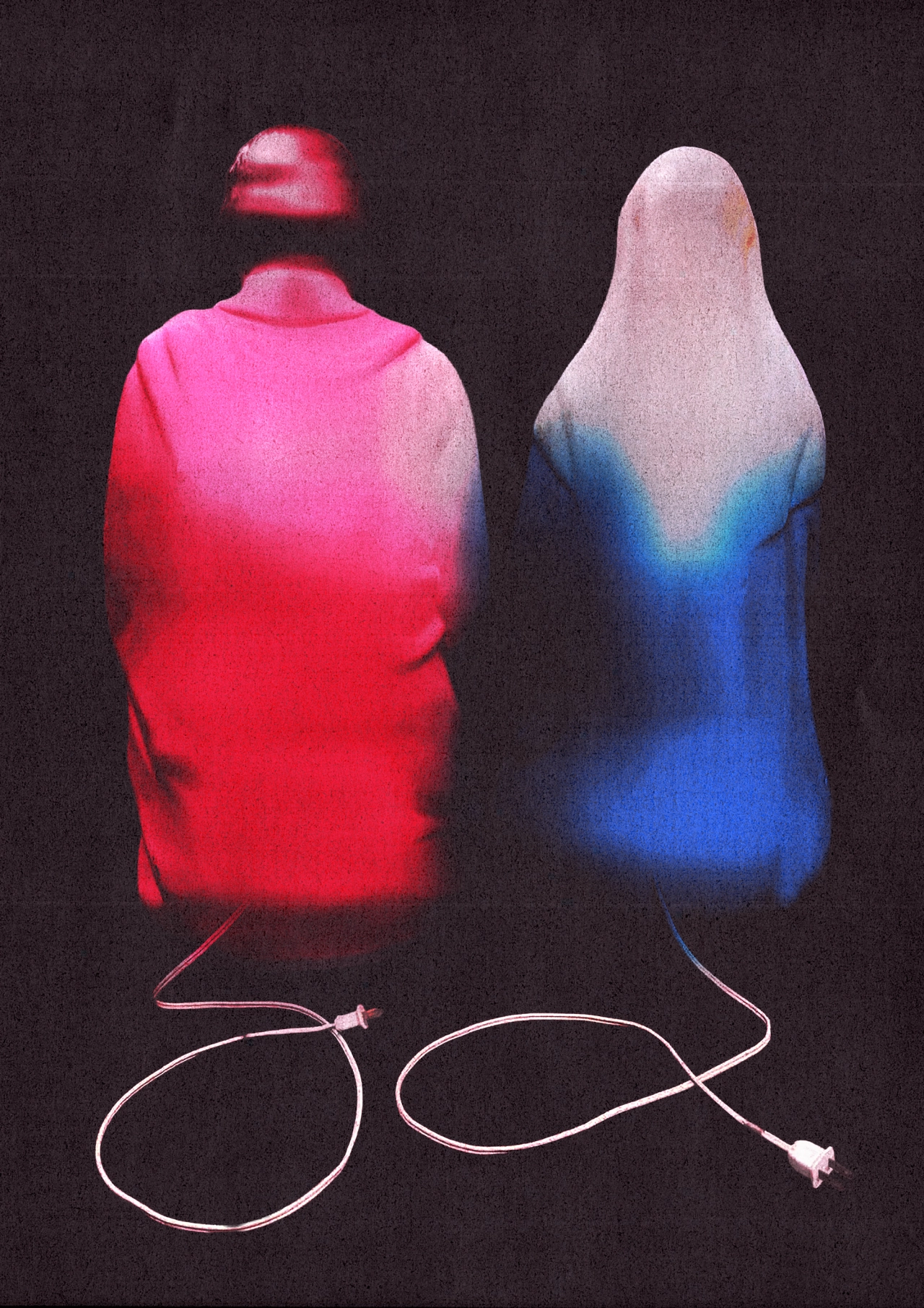
For Roarty, the appeal lies in searching somewhere untidy for images that feel odd, particular and made by people. Casey Roarty leaves the project open to further experiments, so its next direction depends on what catches his eye in the listings. The practical takeaway is simple: when an image seems awkward or poorly made, spend a little longer with the edges. That’s often where its most expressive detail is hiding.