Monday, October 26, 2026 · Graphic Design
Michelle Gruppetta’s Misophonia Uses Riso Animation to Make Sound Sensitivity Felt
Noted by Tom May · 655 reads
Michelle Gruppetta’s debut short pairs trigger sounds with grainy, high-contrast riso animation to convey the daily pressure of misophonia.
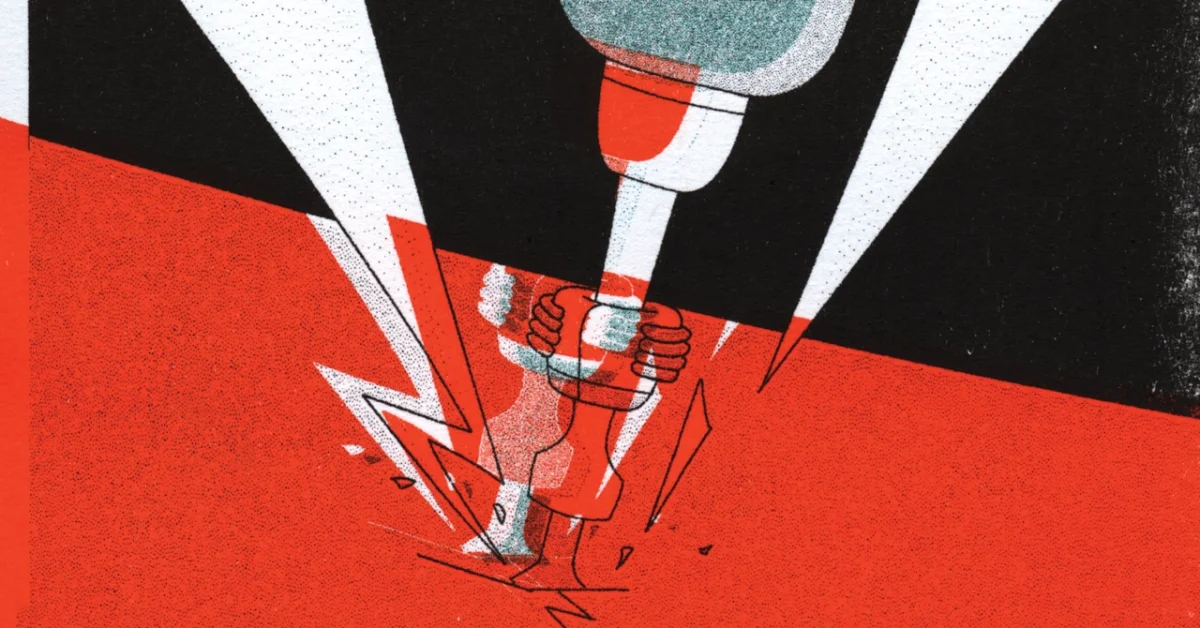
Michelle Gruppetta’s Misophonia asks its audience to experience sound sensitivity through the senses it affects: sound and sight. In her debut short, close, unsettling noises meet grainy risograph-printed animation. The result gives everyday sounds a visual weight, bringing viewers closer to the discomfort and urge to escape that people with misophonia describe.
Misophonia is a neurobehavioral condition in which particular sounds can provoke intense emotional and physical responses. Chewing, breathing and sniffing are among the triggers Gruppetta names. Sounds that many people barely register can lead to discomfort or rage for someone with the condition, and may set off a fight-or-flight response.
Rather than rely on a clinical explanation, Gruppetta builds the short around that sensory experience. She worked with people who have misophonia, holding focus groups and incorporating their feedback. Her stated aim was to show that seemingly innocuous noises can affect people more than others might realise, while connecting the subject to wider discussion about the noise of everyday life.
Images that close in
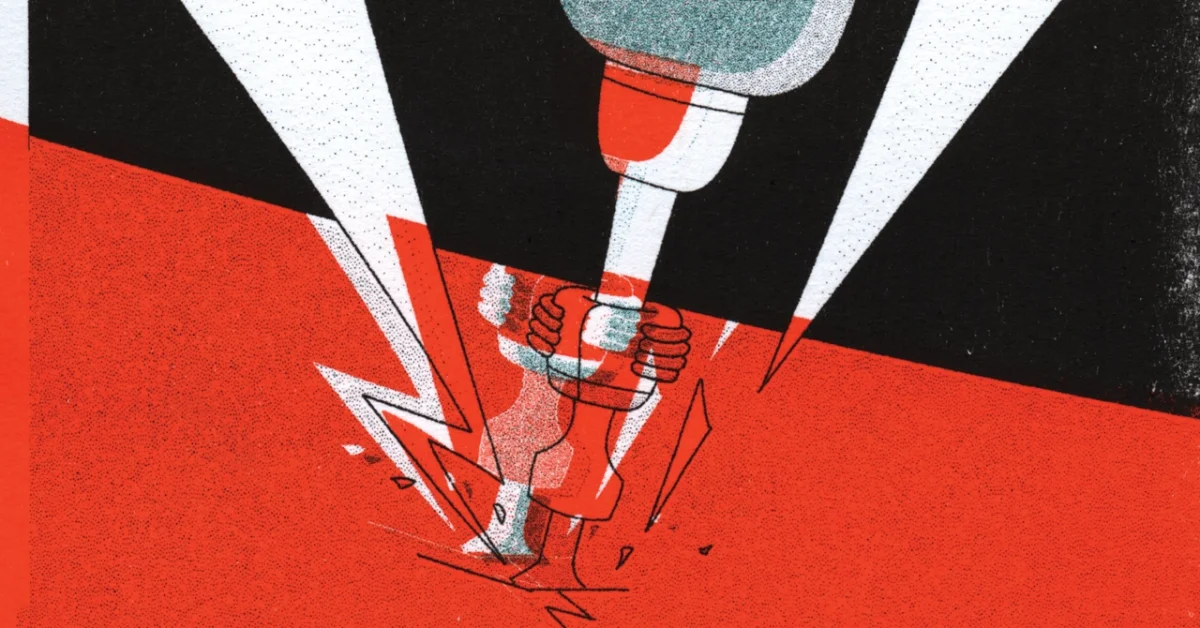
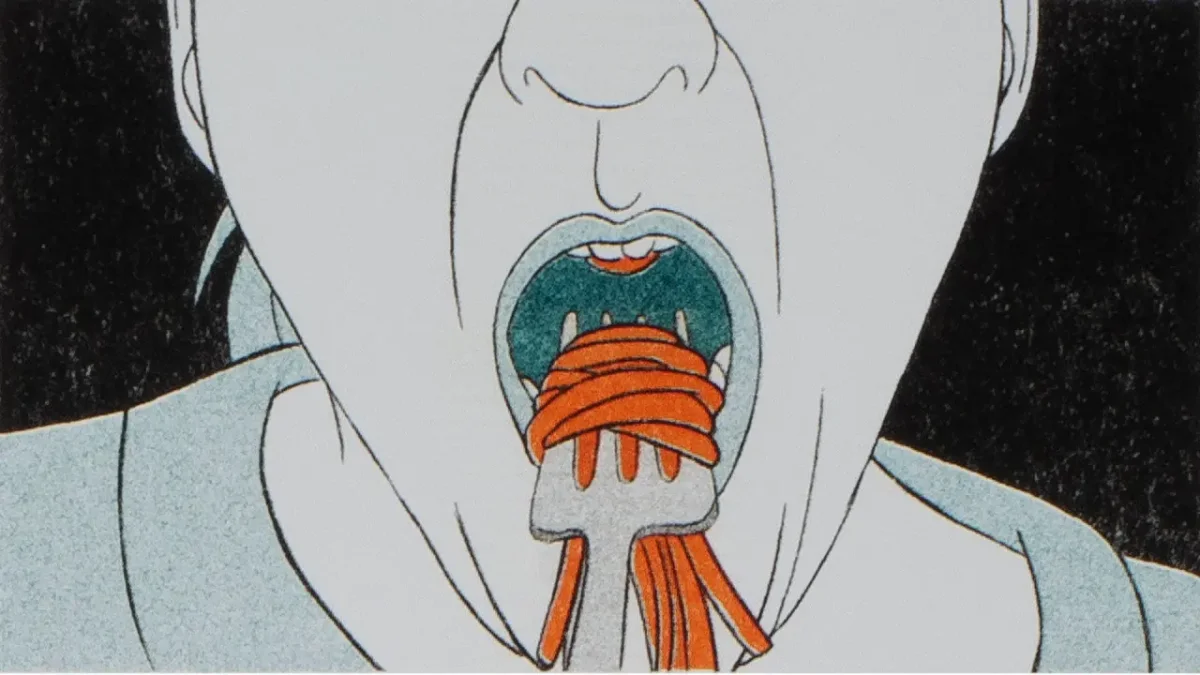
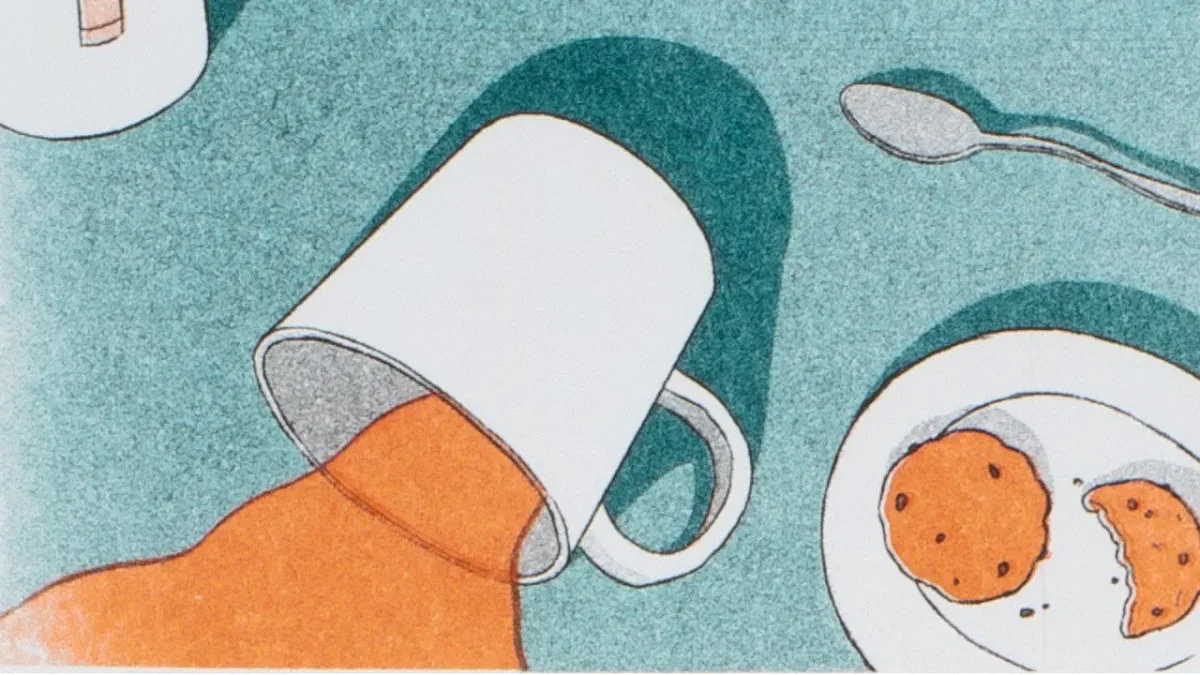
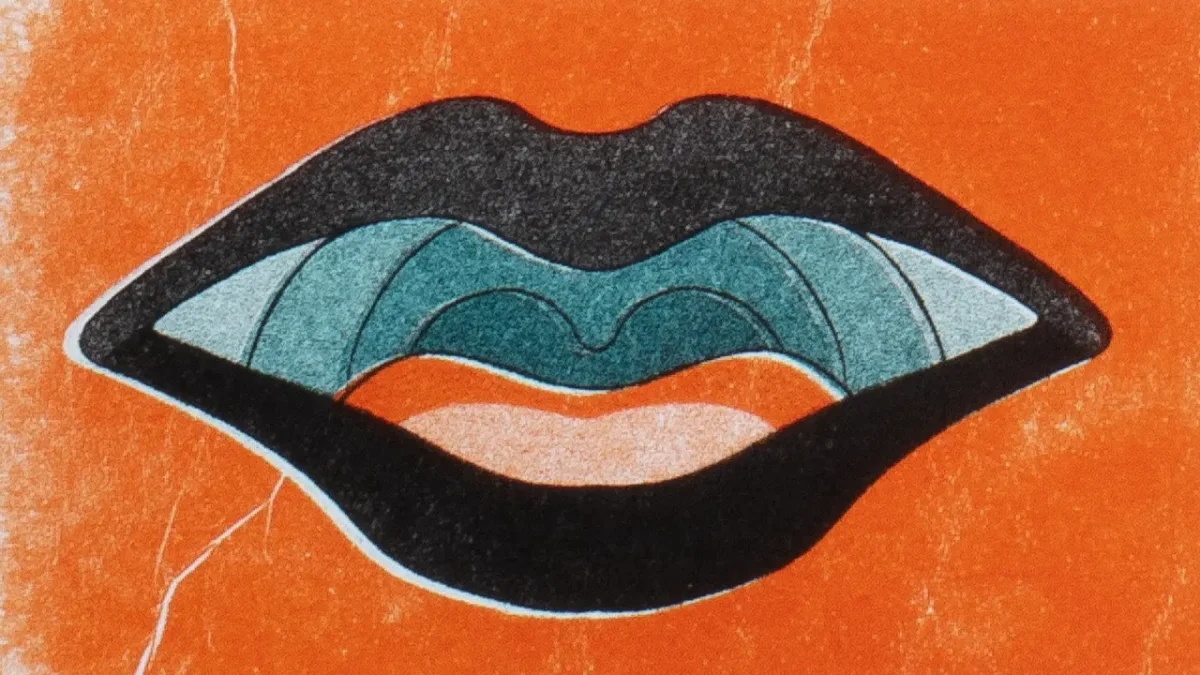
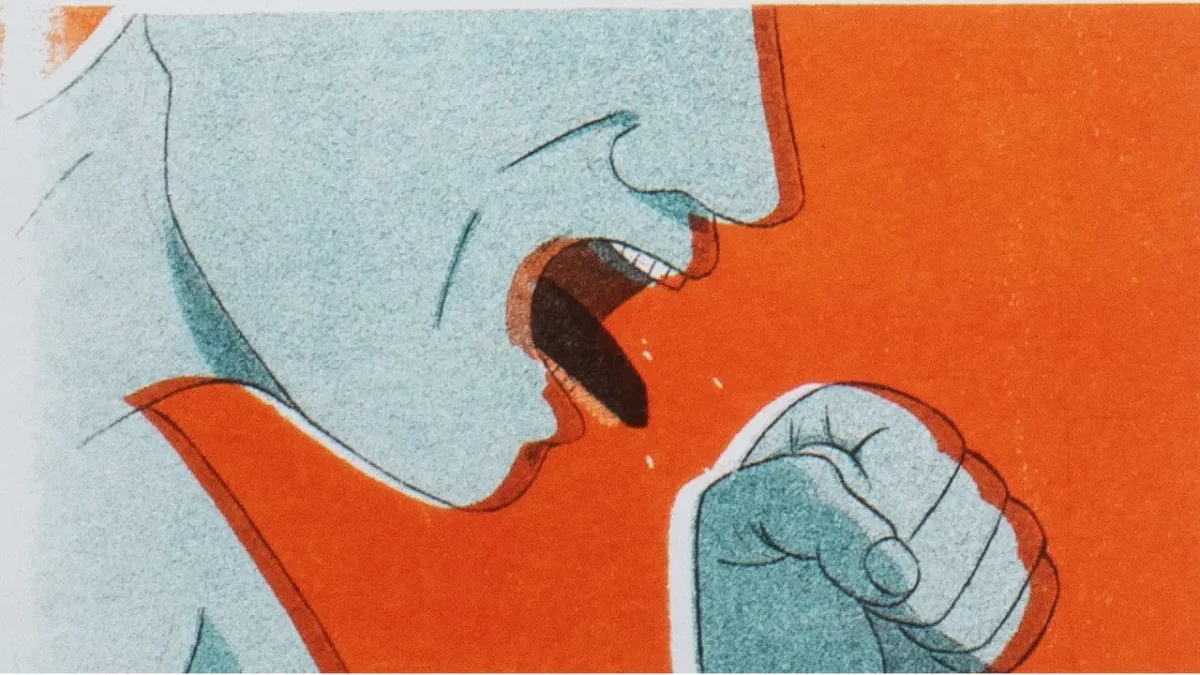
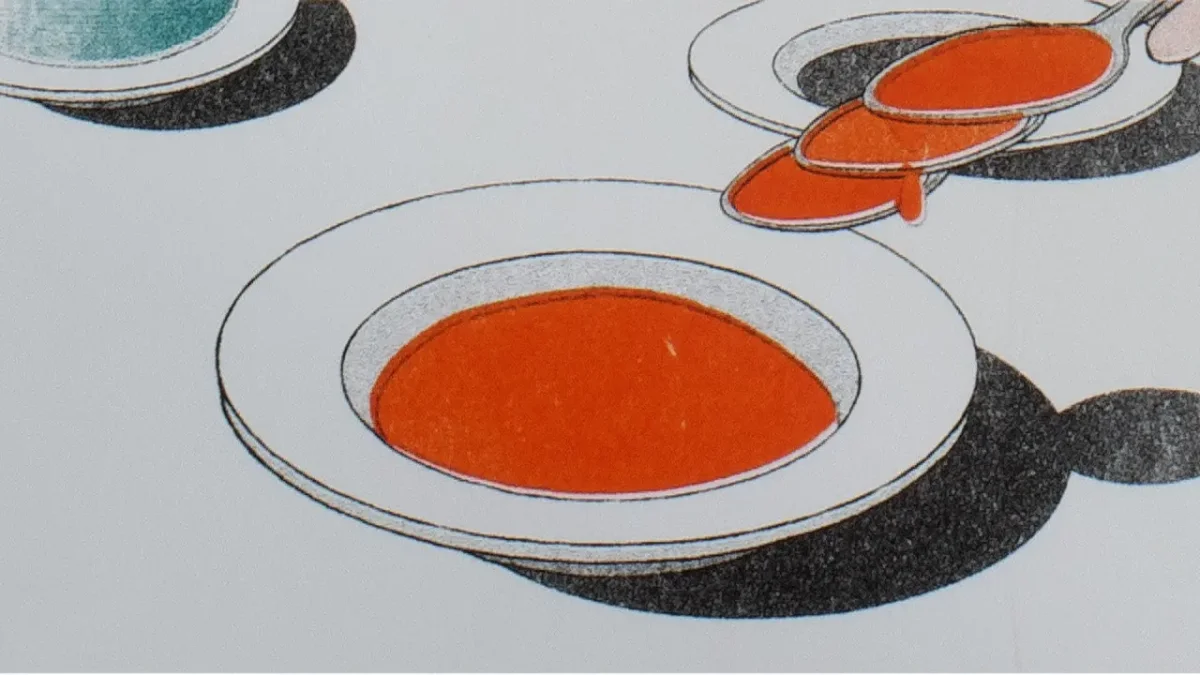
The short doesn’t use a conventional three-act structure. Its intense soundscape instead carries the viewer through a sequence shaped by the experience of living with the condition. The images work in concert with the audio: mouths slurp spaghetti, spoons seem to multiply as they approach lips, a mug tips over beside a partly eaten biscuit, and a man yells into his fist.
These ordinary actions become confrontational through framing and repetition. A spoon moving towards a mouth is no longer just a small domestic gesture when the soundtrack makes each moment feel hard to ignore. The imagery gives the sounds a physical presence, turning them into patterns, close-ups and uneasy interruptions. That approach makes the film’s sensory subject legible without asking it to behave like an explanatory presentation.
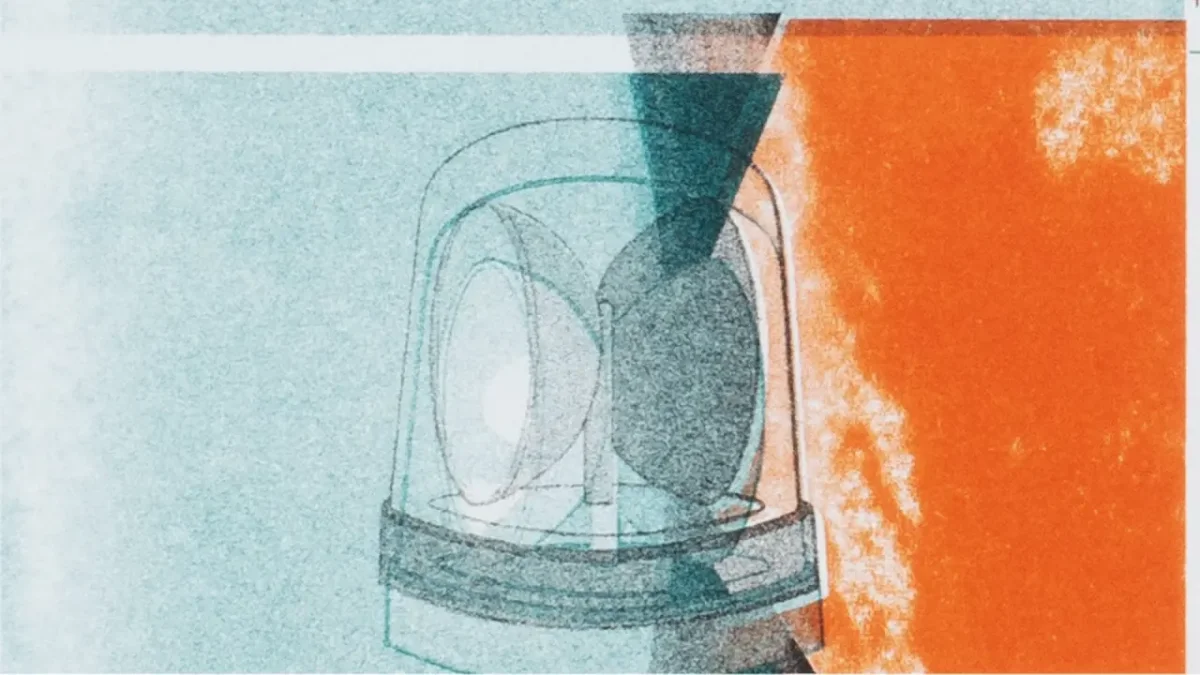
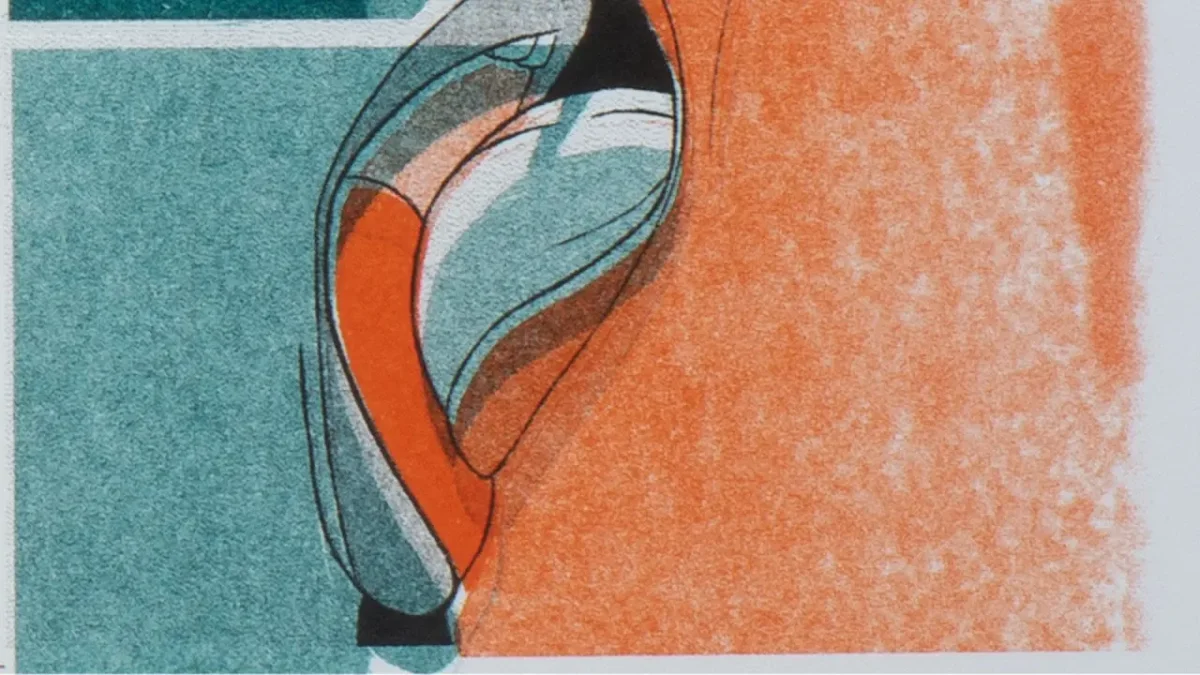
Gruppetta’s palette stays tight: orange, teal and black carry much of the visual work. Riso printing adds visible grain and slight misregistration, so colour and texture feel active rather than polished away. The printing method gives the images a tactile surface, while the sharp contrasts suit a film built around heightened perception. It’s a practical visual system, too: a limited set of colours can hold a sequence together as its subjects and compositions change.
A personal route to the subject
For Gruppetta, the subject is close to home. Eight years ago, she moved from Malta to Denmark to study character animation at The Animation Workshop. She describes Malta as one of Europe’s most densely populated and noisy countries, and Denmark as one of its quietest. The change, she says, removed a daily pressure she hadn’t recognised until it was gone.
Near the end of her time in Denmark, Gruppetta was diagnosed with ADHD. She says that helped make sense of her sensitivity to flavours, textures and sounds. That experience informs the short’s point of view, while her work with focus groups brings other people’s responses into the process. The combination matters: the film draws on personal understanding but also tests its portrayal with people who live with misophonia.
Gruppetta graduated in 2021 and has since freelanced in animation. Her recent work with Blue Zoo includes 3D layout and previs for shows such as LEGO City: No Limits. She has described those roles as offering limited room for a freelancer’s creative decisions, which led her to pursue personal projects alongside client work. Misophonia grew out of that effort to make space for her own ideas.
Released in 2025, the short has screened at Pictoplasma and the Annecy International Animation Festival. Its festival run places a tactile print-based approach in conversation with animation audiences, while the work itself keeps its focus on an intimate sensory experience.
Print as a working practice
Gruppetta runs Purċinella Press, her risograph printing studio in Malta. Printmaking is part of a wider creative practice, not simply a look applied to the film. In Copenhagen, she founded and organised PrintFest CPH in 2023 and 2024, a one-day market for printmakers, zine makers and small press publishers. Since returning to Malta, she has run Marka+Stampa during the National Book Festival.
Her interest in print began with a visit to the MC Escher Museum in The Hague when she was around 19. She continues to cite Escher as an influence, alongside printmakers and animators including Will Mower, Yana Yun Lin of riso.yyl, DTAN Studio, Zinehug and Ellis Tolsma, whom she met at Pictoplasma this year. Those references sit within a practice that moves between print, animation and event-making.
Next, Gruppetta’s work is set to appear in Urban Wildlife, a group exhibition at the Malta Society of Arts this autumn. She says her personal style is only beginning to take shape, with texture, graphic forms and vivid colour already in the mix. Misophonia shows how those elements can do more than establish an identity: they can guide attention, intensify a sound and give a hard-to-see experience a form. For designers working with sensory subjects, the film offers a clear takeaway: let material, colour and rhythm carry meaning alongside the words.