Monday, October 5, 2026 · Graphic Design
Matt Griffin Uses Orbital Simulations to Shape The Folio Society’s Three-Body Problem Set
Noted by Marika Lind · 865 reads
Matt Griffin grounds his artwork for Liu Cixin’s trilogy in simulated orbital motion, linking the books’ chaotic physics to their presentation.
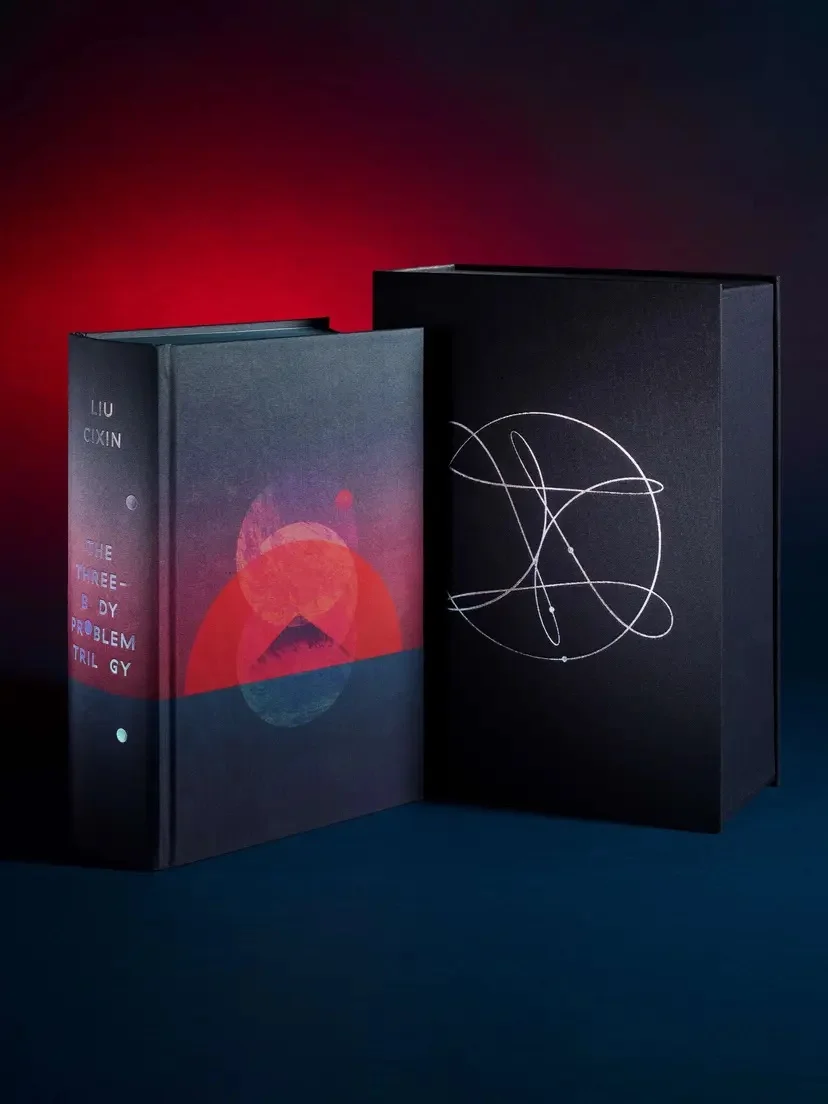
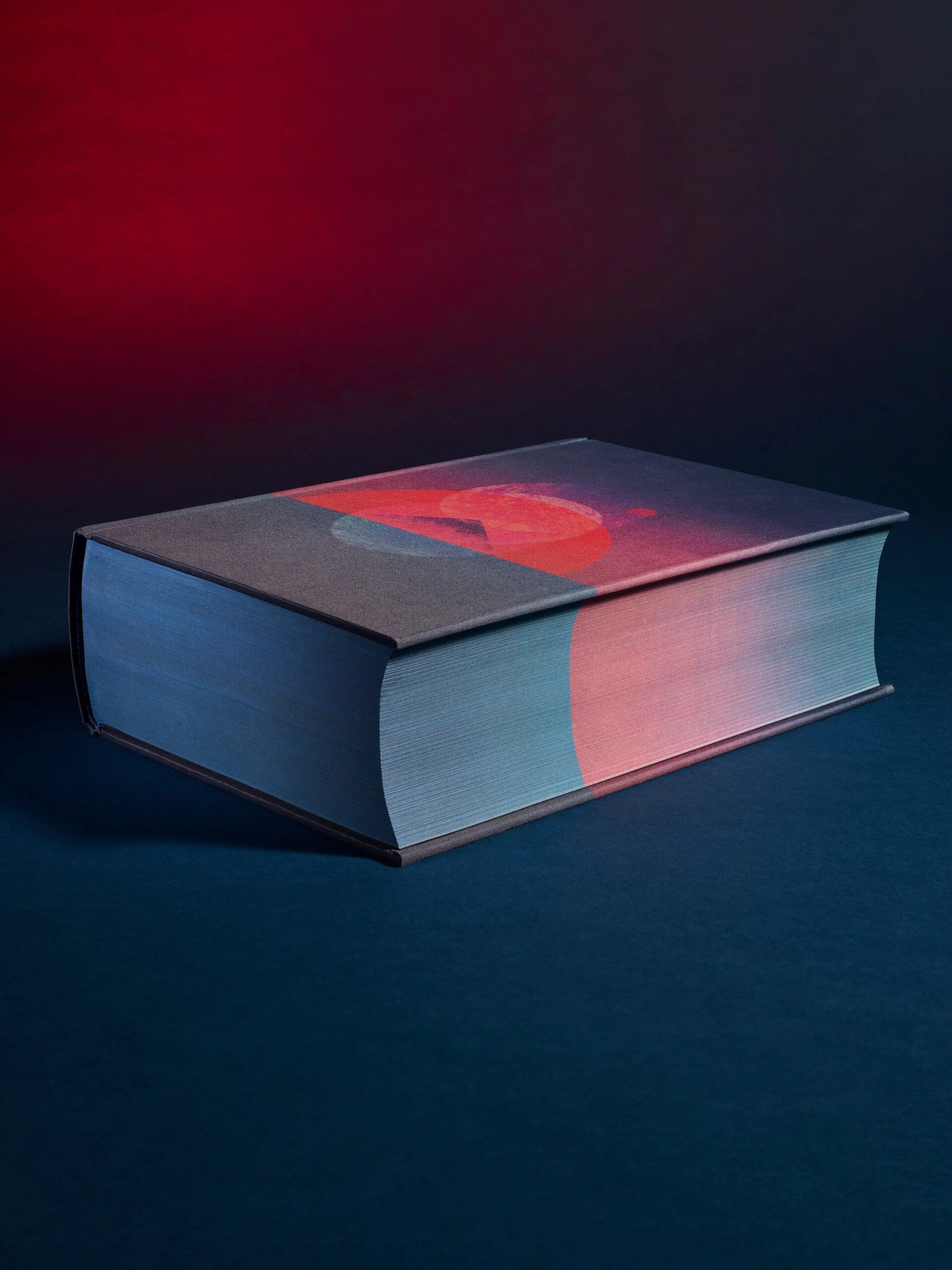
Matt Griffin’s illustrations for The Folio Society’s edition of Liu Cixin’s The Three-Body Problem trilogy begin with a design choice rooted in the story’s science: the presentation box lining draws on computational simulations of the three-body problem. The moving paths of three gravitational bodies give the set a visual foundation connected to the instability at the heart of the novels.
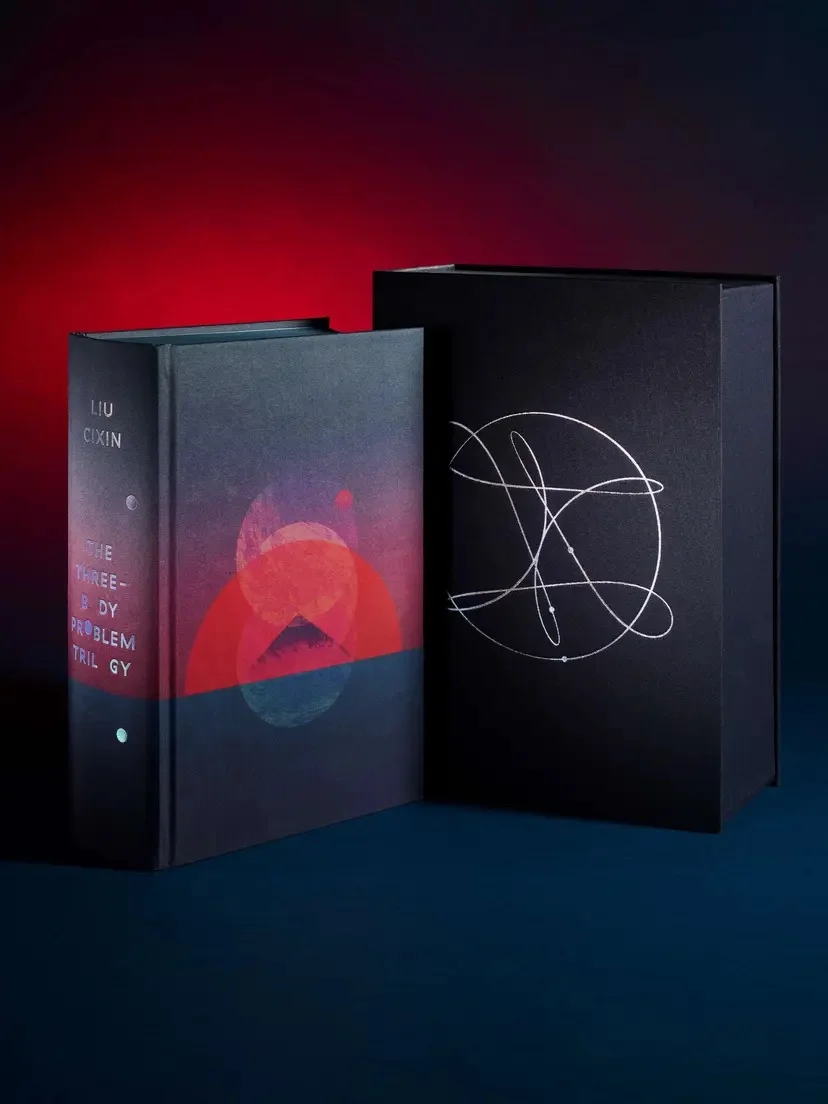
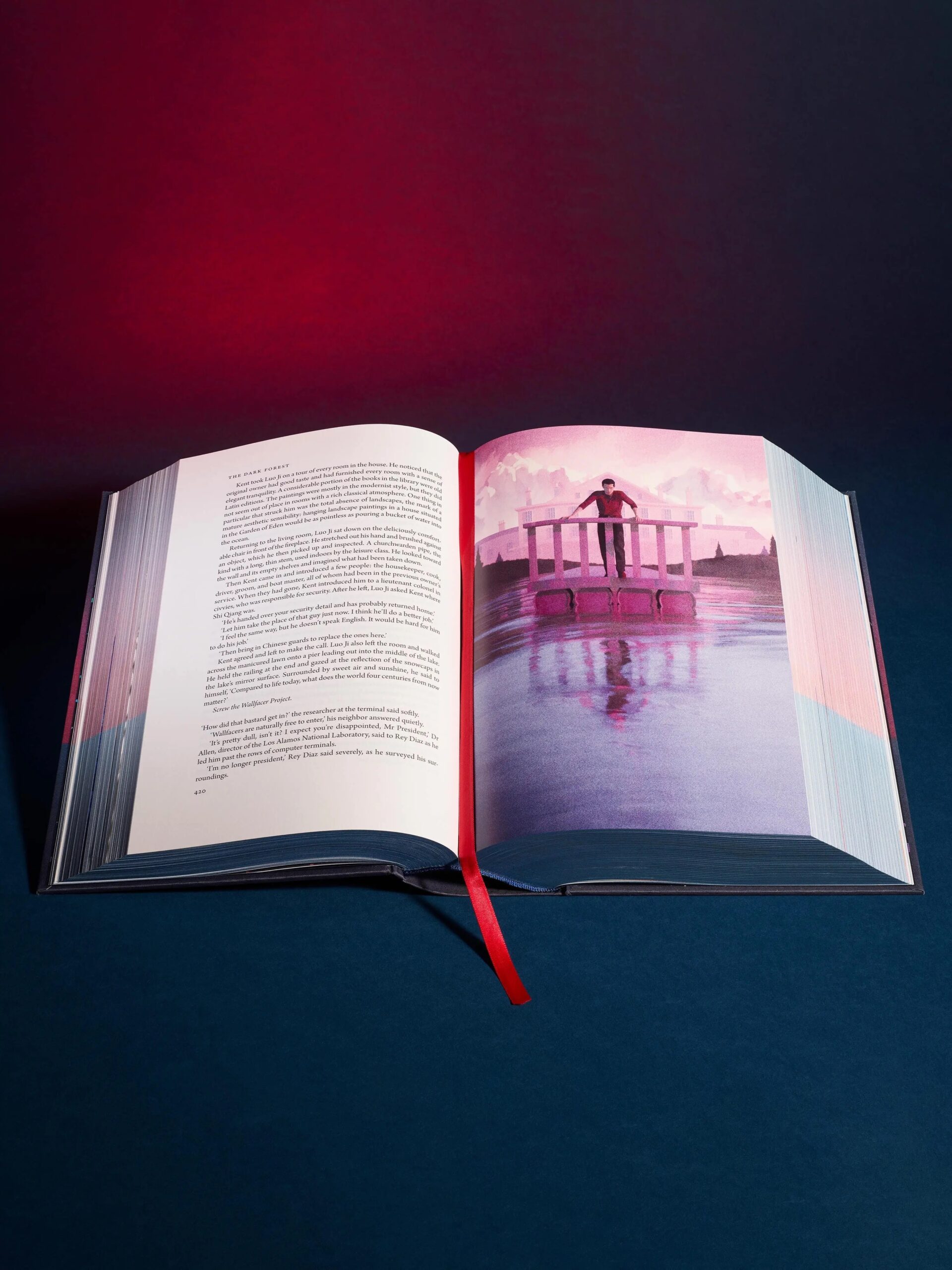
The resulting edition brings together The Three-Body Problem, The Dark Forest and Death’s End, the three books in Cixin’s science fiction series. It is a signed limited edition, with signatures from both Cixin and Griffin. The set also includes a new introduction by Cixin that had not previously appeared in English. The novels are translated by Ken Liu and Joel Martinsen.
Turning a mathematical problem into a visual system
The three-body problem asks how three objects moving under one another’s gravitational pull will behave over time. Unlike a simple two-body system, its motion can become difficult to predict. Griffin used real computational simulations of this problem to generate the lining for the presentation box, bringing the books’ central scientific idea into the object that houses them.
That choice gives the design a clear point of connection between form and subject. Rather than treating science as a decorative reference, the artwork draws on the behavior of the system itself. The simulated paths offer a way to evoke motion, instability and vast spans of time without reducing the trilogy’s scale to a single scene or symbol.
The source doesn’t specify the simulation software, the physical production process, or the exact colours and typefaces used in the set. What it does describe is a method: use the novels’ scientific premise as material for the visual design. For designers working with research-heavy or speculative subjects, that approach can help an image feel tied to a story’s ideas. The subject can shape the making of the artwork, as well as what the finished image depicts.
A trilogy built around time and scale
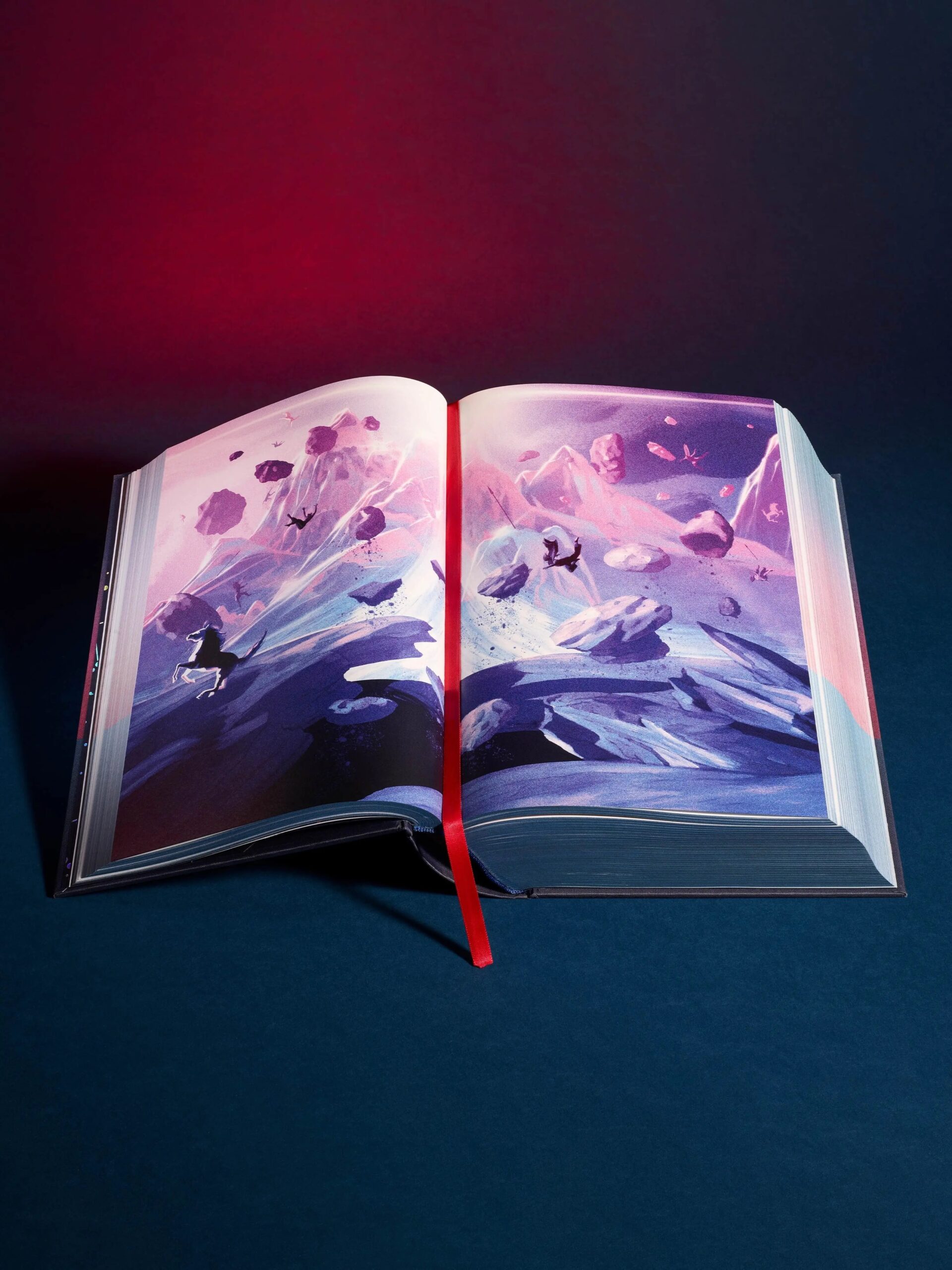
Cixin’s series follows humanity’s first contact with an alien civilization and the struggle for survival that unfolds across time and space. Its story spans 18 million years, a scale that puts pressure on the usual conventions of book illustration. Griffin’s brief, as described by The Folio Society feature, reaches beyond depicting individual characters or moments: the artwork must suggest a universe in which human history is only one part of a much longer sequence.
The presentation box gives the visual system a surface that sits alongside the three novels, while the simulations connect its appearance to the trilogy’s title and underlying physics. That relationship can make a boxed set read as one designed object, even as it contains three distinct books. Here, the shared scientific reference offers a thread across the collection.

Griffin’s experience with speculative worlds
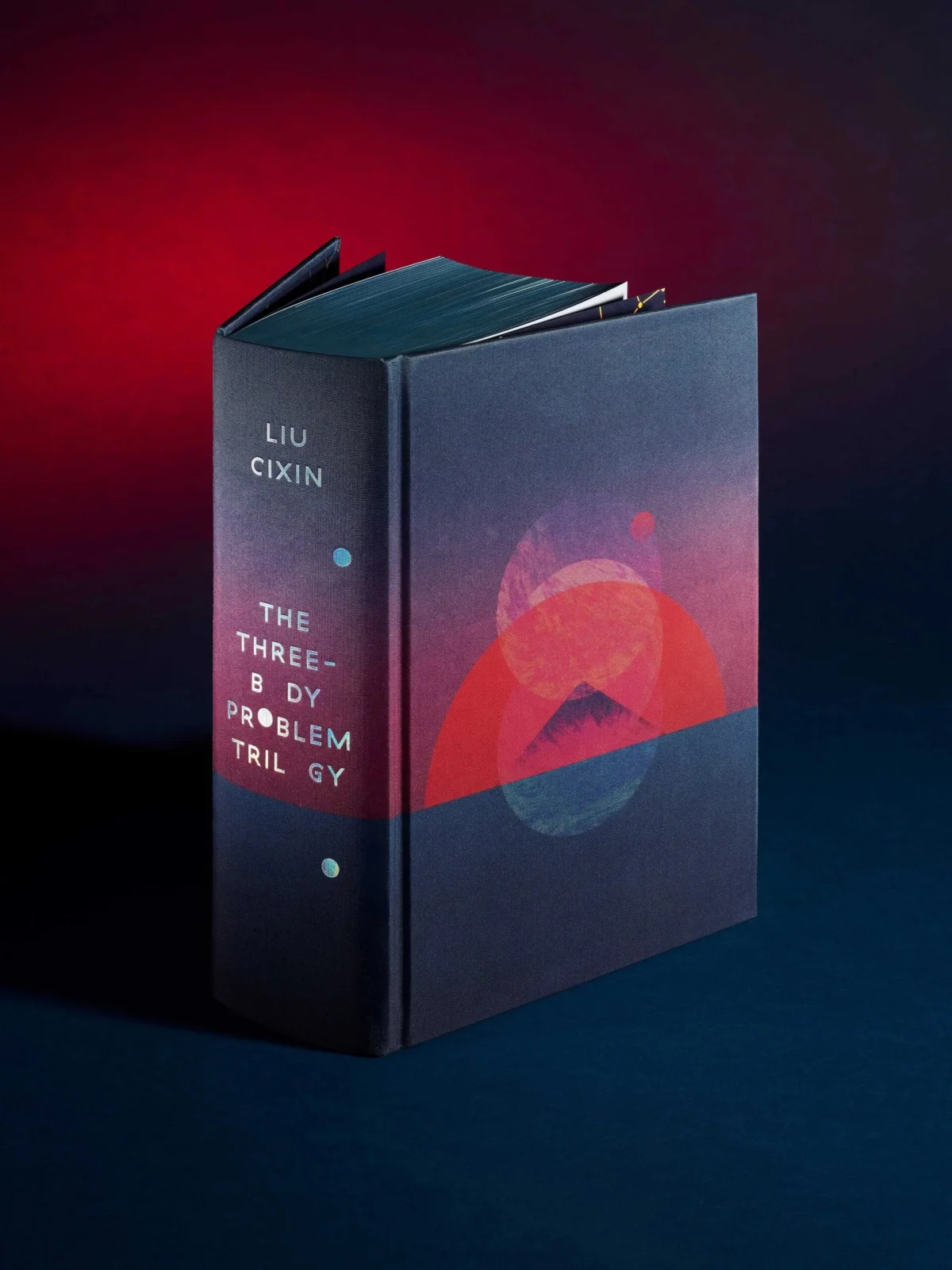
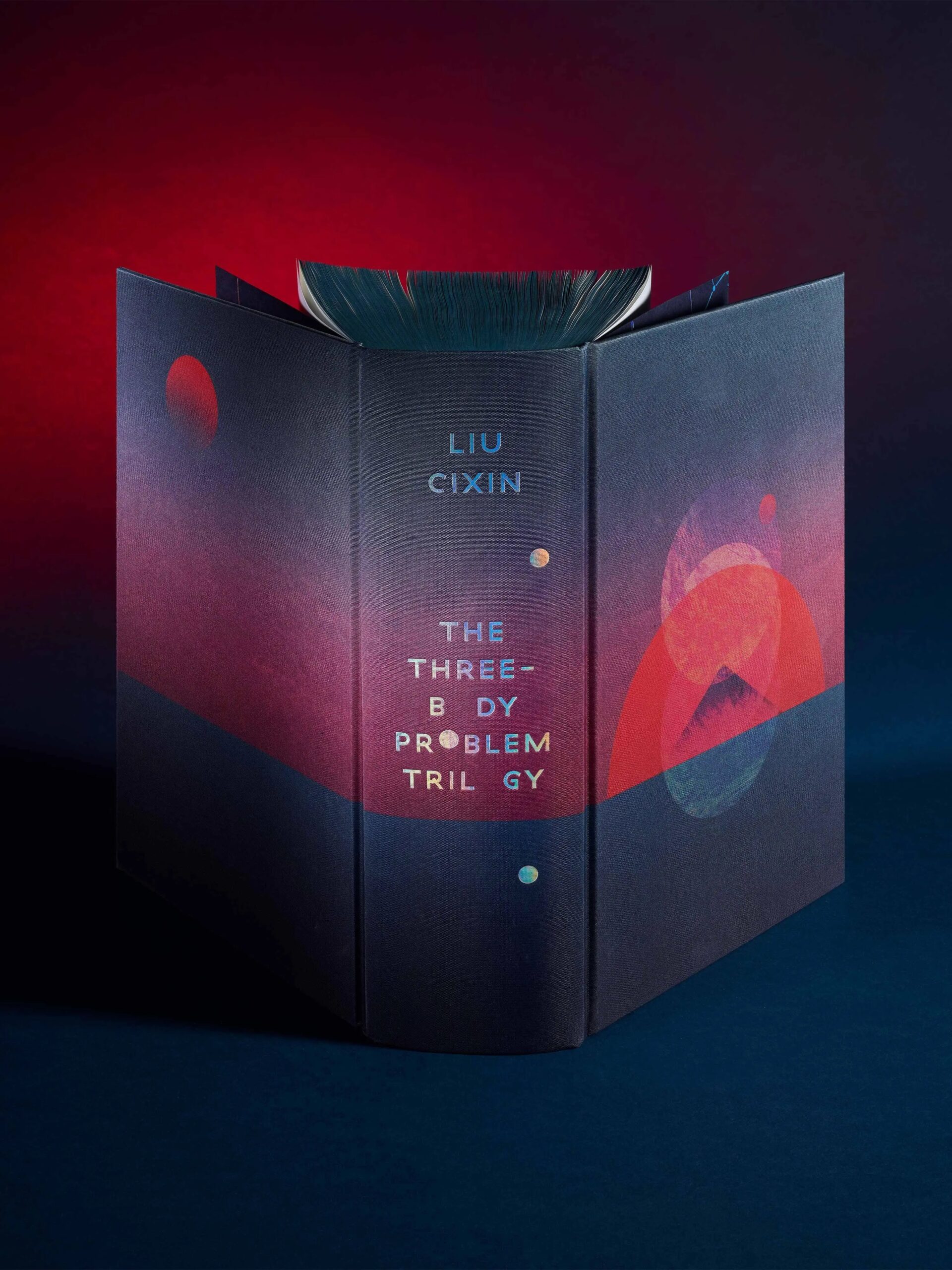
Griffin is an Irish artist, author and illustrator based in County Clare. His previous book work includes the covers for all six of Frank Herbert’s Dune novels in Penguin/Ace deluxe editions, as well as Arthur C. Clarke’s Rendezvous With Rama for The Folio Society. Those projects place his Three-Body work within a practice that has repeatedly engaged with fiction built around unfamiliar worlds and large-scale ideas.
His wider work spans illustration, literature, animation and digital media. Griffin created and illustrated The Ayla Trilogy, which won the Literacy Association of Ireland’s Children’s Book of the Year Award, and is developing The Endling Saga, a multimedia project combining narrative, visual art, sound and interactive technology to explore consciousness and digital reality. The source also credits work for Disney, Lucasfilm, Warner Bros, National Geographic, Penguin Random House and HarperCollins.

More of Matt Griffin’s work
For designers, the useful lesson in this edition is the route from subject to method: Griffin used the trilogy’s underlying physics to generate part of its visual language. That process gives the presentation box a specific relationship to the books’ ideas, while the signed volumes and new introduction make the set a distinct edition.
- View Matt Griffin’s portfolio on the Directory of Illustration.
- View Griffin’s profile at Shannon Associates.
- Visit Matt Griffin’s website.