Monday, October 26, 2026 · Graphic Design
Lego and Daft Punk Turn Fan Participation Into a Shared Visual Identity
Noted by Tom May · 317 reads
A fan-built stage model, a cryptic teaser and a joined-up visual language give Lego and Daft Punk’s collaboration room to grow.
The design story behind Lego and Daft Punk’s new collaboration starts with a fan-built model, not a product brief. That choice shapes everything that follows: the first set grows from an idea made by a father and son, while the launch film gives the two brands a shared visual world. For teams planning a collaboration, the useful question is how to make audiences part of the work, rather than simply asking them to admire the finished result.
Brand tie-ins have become common, but a pair of familiar names and matching logos can make for a thin creative proposition. Lego and Daft Punk offer a more considered sequence: a community idea develops into a potential product, a short teaser gives fans a puzzle to solve, and the film brings both visual identities together. The set is still in development, so the collaboration’s design can be judged through its concept and launch material rather than a finished object.
A product idea with a fan-made starting point
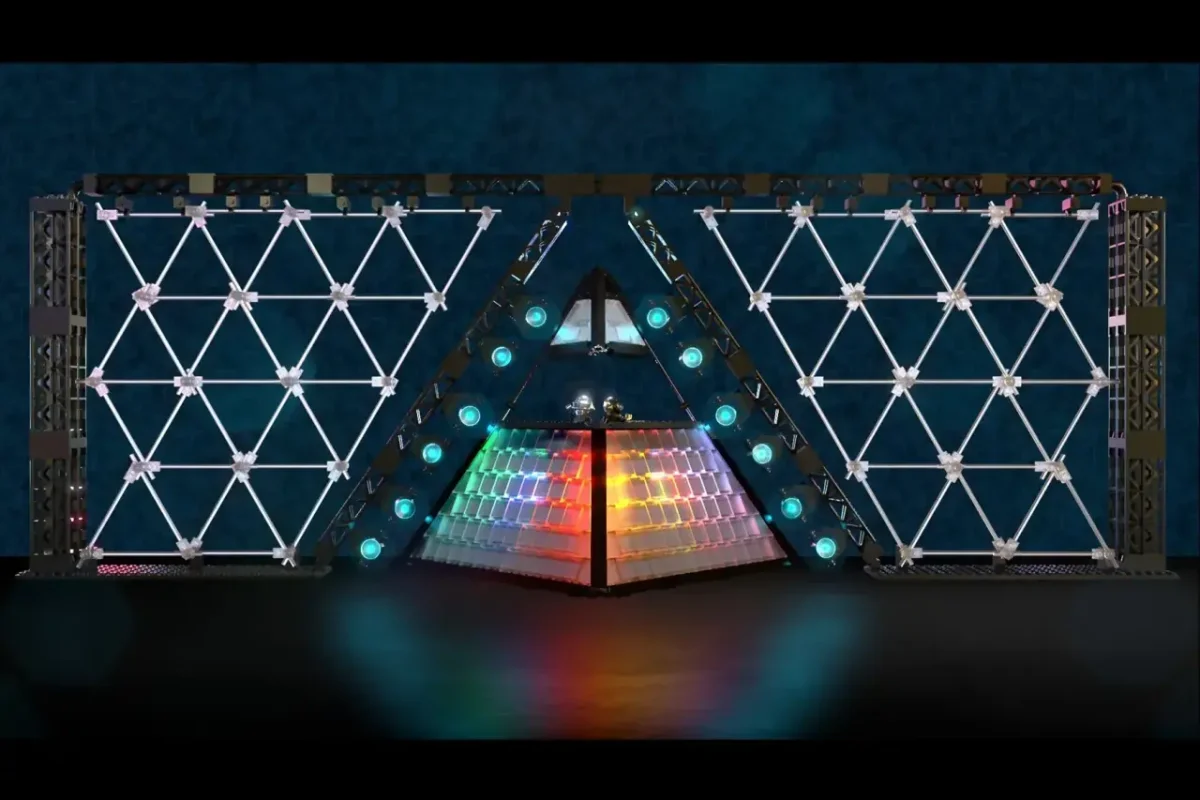
The planned Lego set takes its cue from the pyramid stage used on Daft Punk’s 2007 Alive tour. Its starting point was a model designed by Luxembourg-based Patrick Harboun and his son during lockdown. The father-and-son project won the grand prize in Lego Ideas’ Music to Our Ears challenge in 2020, then attracted 10,000 supporters on the platform.
“This all started as a creative escape during lockdown between my son and me because of our shared love of Daft Punk and Lego building,” Harboun says. “We never dared imagine it would take off in this way.”
That path gives the product a specific connection to the audience it hopes to reach. People who supported the design have already shown interest in the premise; their participation helped move it from a personal build toward a possible retail set. It’s a useful model for creative teams: make it straightforward for people to contribute, then give a promising idea a visible route to develop. The designer’s original model supplies the concept, while the eventual product will represent a later stage of that process.
A teaser designed for decoding
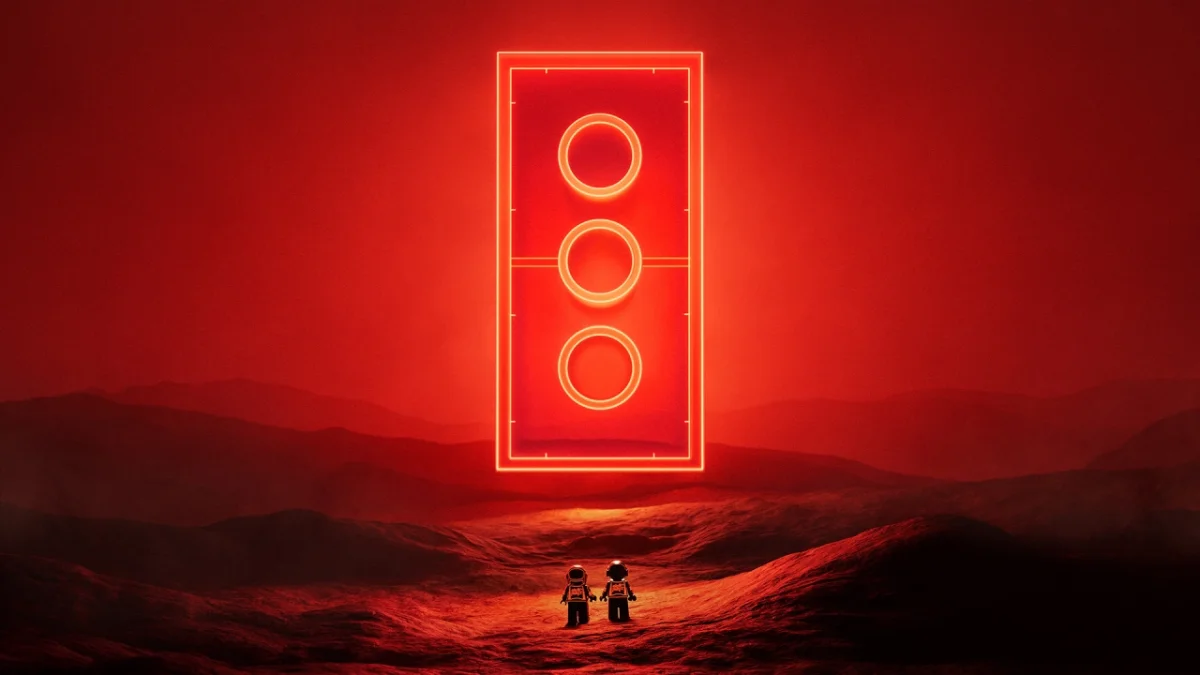
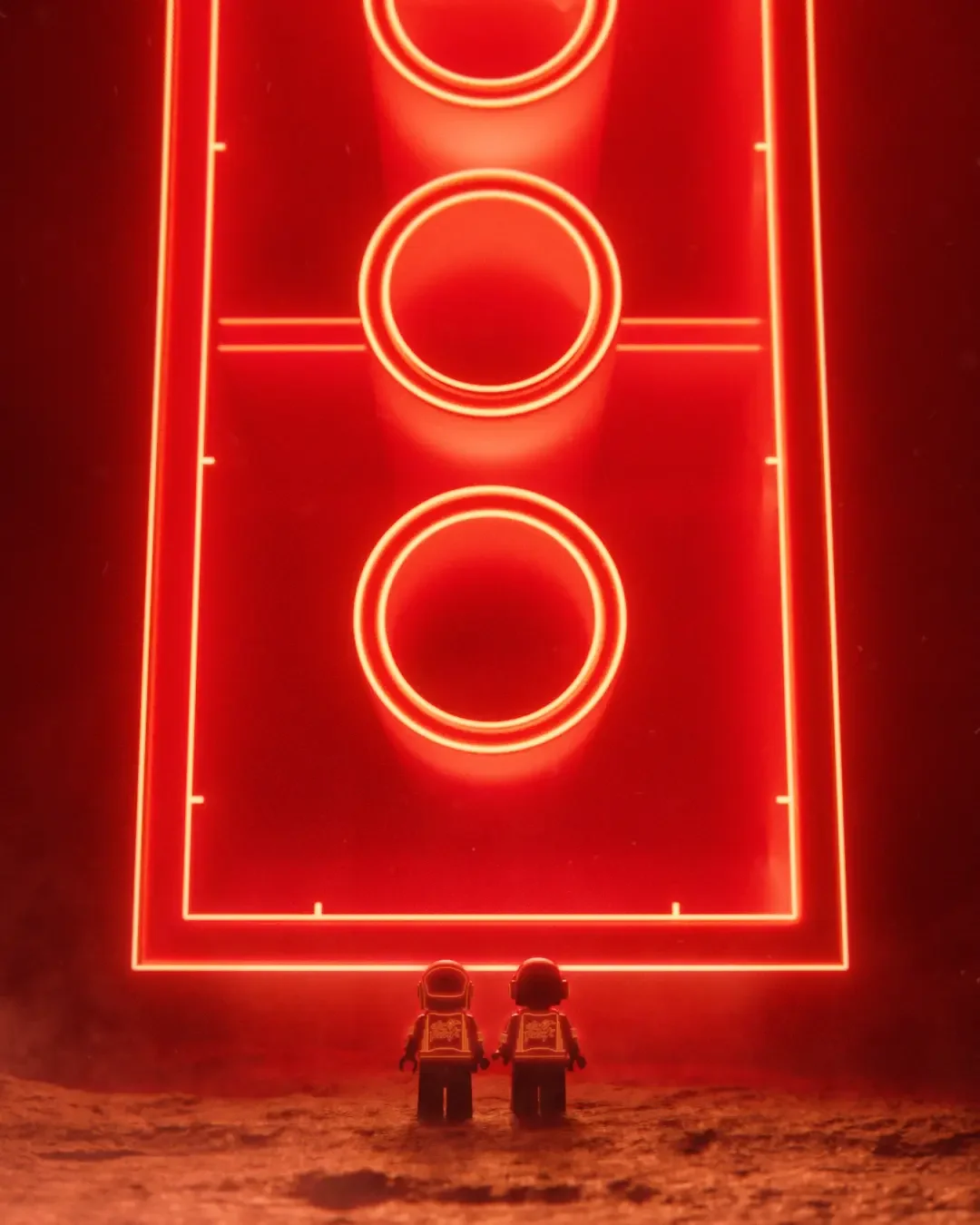
Lego first signalled the collaboration with a cryptic teaser, rather than explaining the project at once. On 21 October, viewers saw a 30-second clip featuring a red 2x4 Lego brick and no accompanying text. From below, the brick’s three internal tubes suggested the woofers of a speaker.
The clue was small enough to invite interpretation, but concrete enough to reward a close look. That balance matters: a teaser needs a visual detail audiences can discuss, not just missing information. Here, the brick itself becomes the connection between the two subjects. Fans who recognised the speaker reference could speculate and share their reading before the collaboration’s full creative treatment appeared.
For a design team, the practical lesson is to build the puzzle around an asset or visual cue that belongs to the work. A cryptic reveal is most effective when curiosity leads back to the project’s underlying idea.
Two identities in one animated world
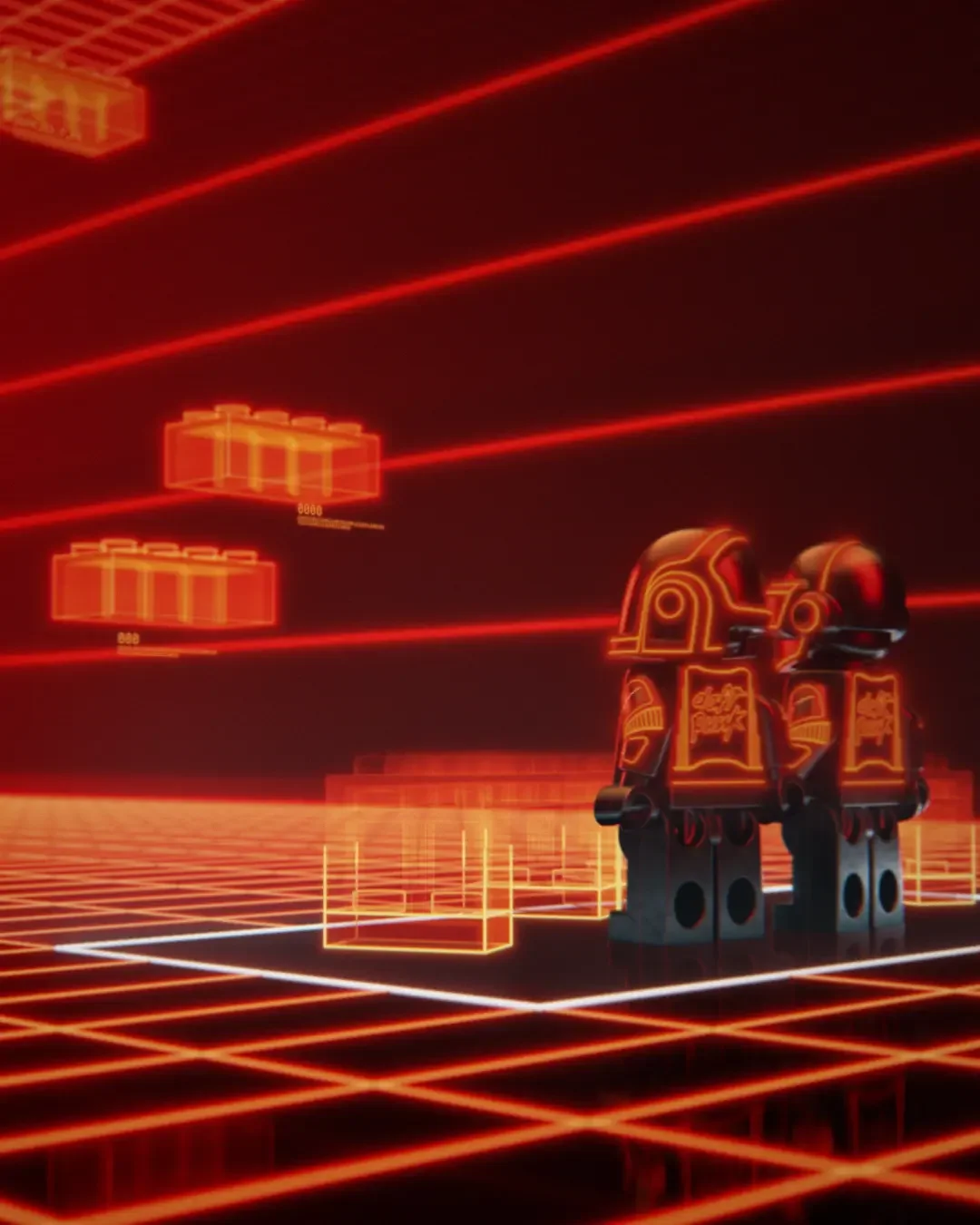
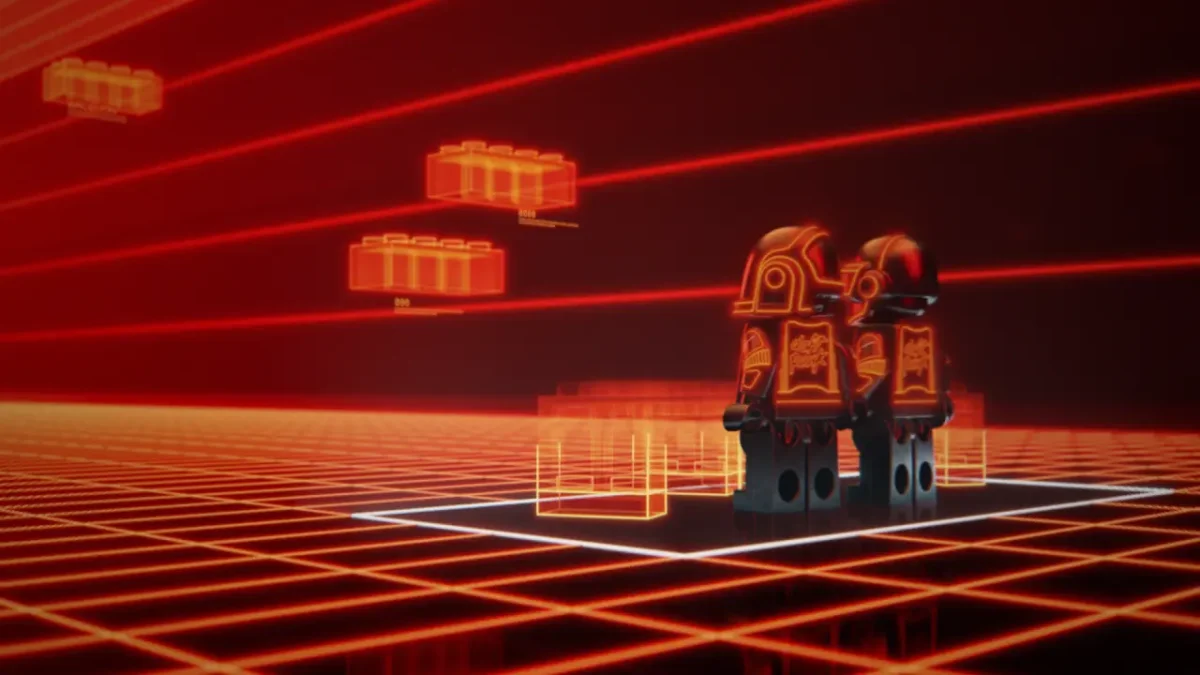
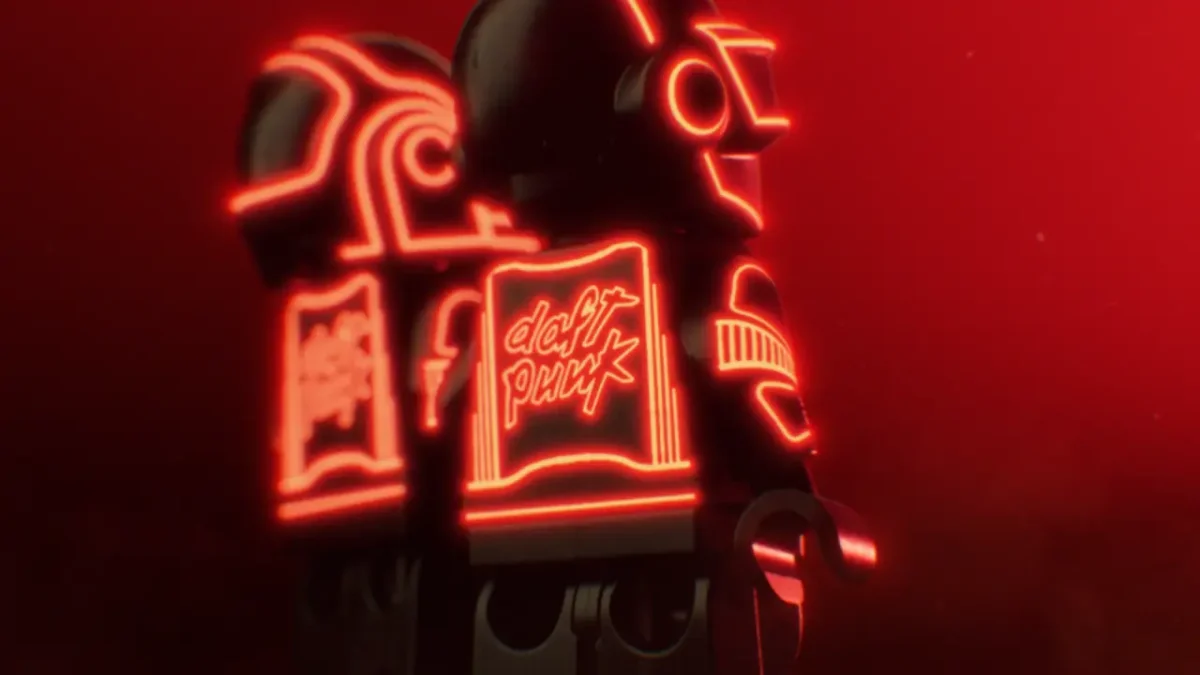
The launch film, animated by I Love Dust for Our Lego Agency, translates the collaboration into a sequence of recognizable design elements. Minifigures follow a giant glowing red brick across a Martian landscape, pass through holographic architecture and arrive at a DJ console built from bricks. Neon outlines, wireframe grids and floating forms reference Daft Punk’s retro-futurist imagery; the brick-built figures and console keep Lego’s material language in view.
The soundtrack also joins the two worlds, pairing ‘Voyager’ with ‘Human After All’. Alongside the film, the tagline “Builders After All” turns that connection into a compact verbal idea. These elements work together: the music signals the duo, the building blocks anchor the setting, and the animated journey gives the collaboration room to move beyond a static logo pairing.
That’s the central visual challenge in a two-brand project. If one identity supplies every cue, the other can feel like a guest. Here, the film finds overlap in rhythm, geometry and construction, then gives each name distinct details to contribute. Teams can apply the same thinking by identifying shared themes before choosing colours, type, motion or materials. A common visual system feels more convincing when it grows from an actual connection between the participants.
Let the project develop at its own pace
The product’s unfinished status is part of the story. Lego and Daft Punk haven’t disclosed a price, release date or final set design, and the fan model shown isn’t the finished product. The announcement also describes a wider creative effort spanning products, content and brand experiences, suggesting that the film and set are opening moves rather than the entire plan.
Julia Goldin, chief product and marketing officer at the Lego Group, describes the collaboration as “just the beginning of a bigger journey.” That approach makes sense for a project built around an existing fan community. A single product can create a moment of attention; an ongoing exchange gives people more ways to stay involved and see their ideas reflected in the work.
Build the relationship into the design
Lego has worked with properties and brands including Star Wars, Harry Potter, Nintendo, Ikea, Adidas and Vincent van Gogh. The Daft Punk project has a distinct point of departure: its first proposed set traces directly to a fan design that found an audience through Lego Ideas. The teaser and film then extend that connection through visual clues and a shared aesthetic.
For designers, the takeaway is practical. Give audiences a clear way to submit ideas, make the route from contribution to consideration understandable, and acknowledge the person whose work shapes the result. Then make the collaboration visible in the design itself, through choices that let both identities contribute. The pyramid set’s final form and release details are still to come; the creative framework is already taking shape around participation, recognition and a visual language fans can read.