Tuesday, October 27, 2026 · Graphic Design
Simon Wright’s Drawing on the Future revisits Perth’s rave design archives
Noted by Dom Carter · 454 reads
Two volumes gather Simon Wright’s flyers, sketches and experiments from Perth’s underground music scene, showing how design and DIY print culture met.
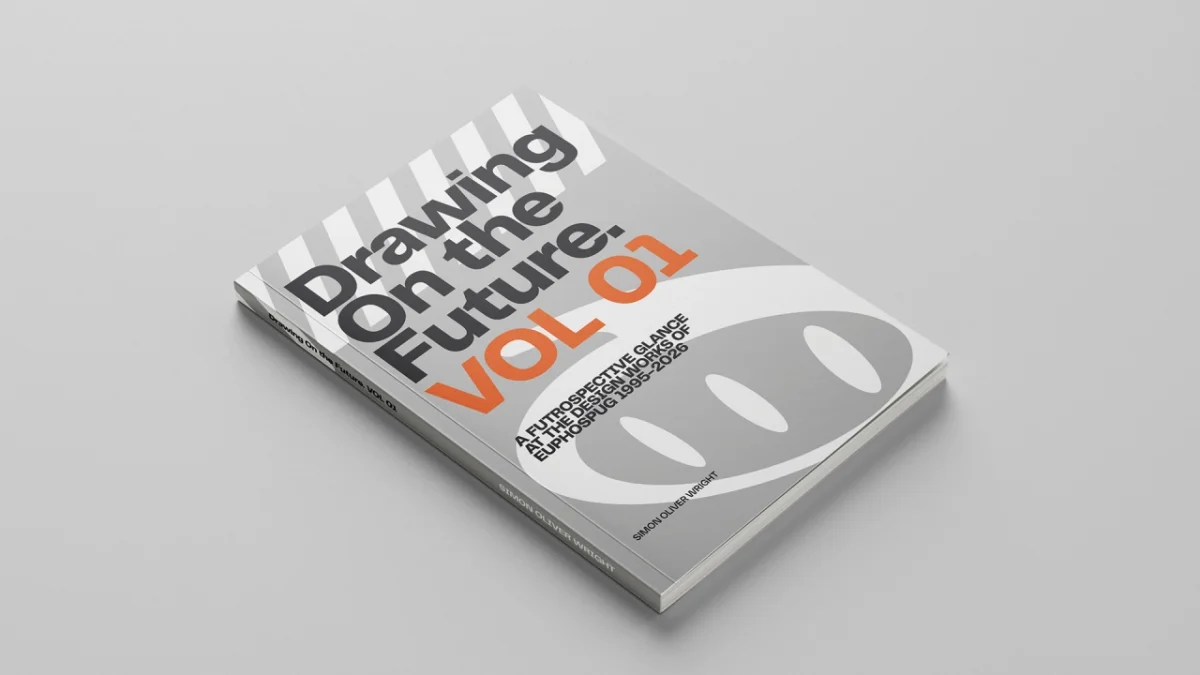
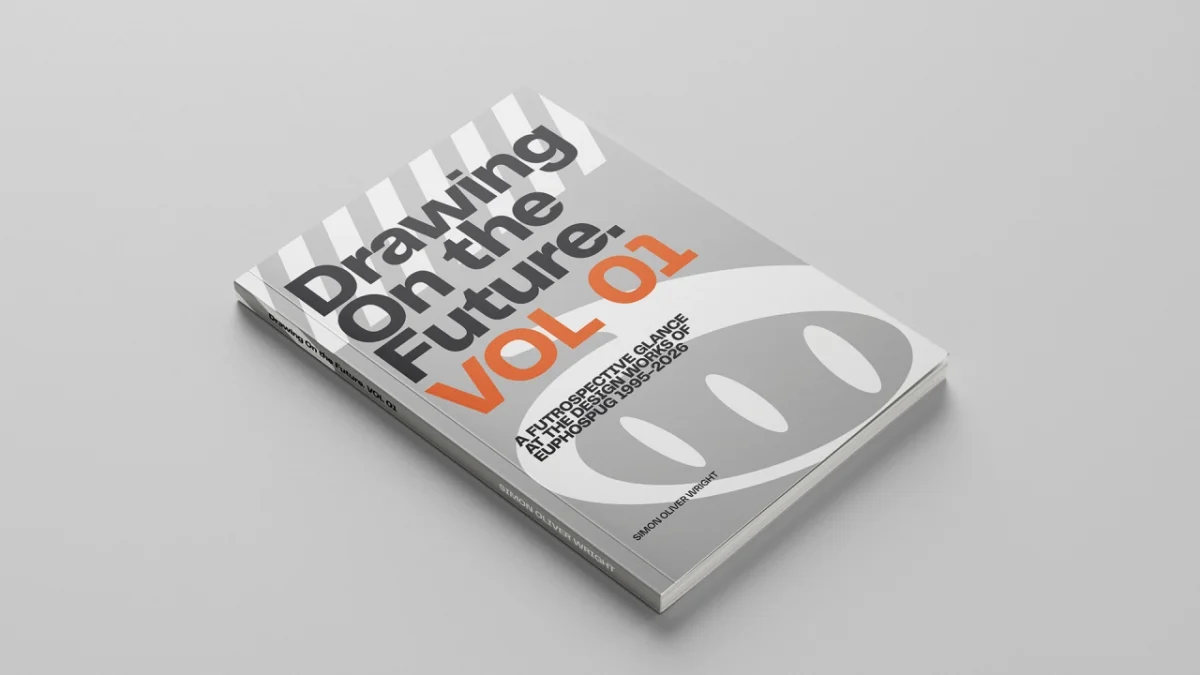
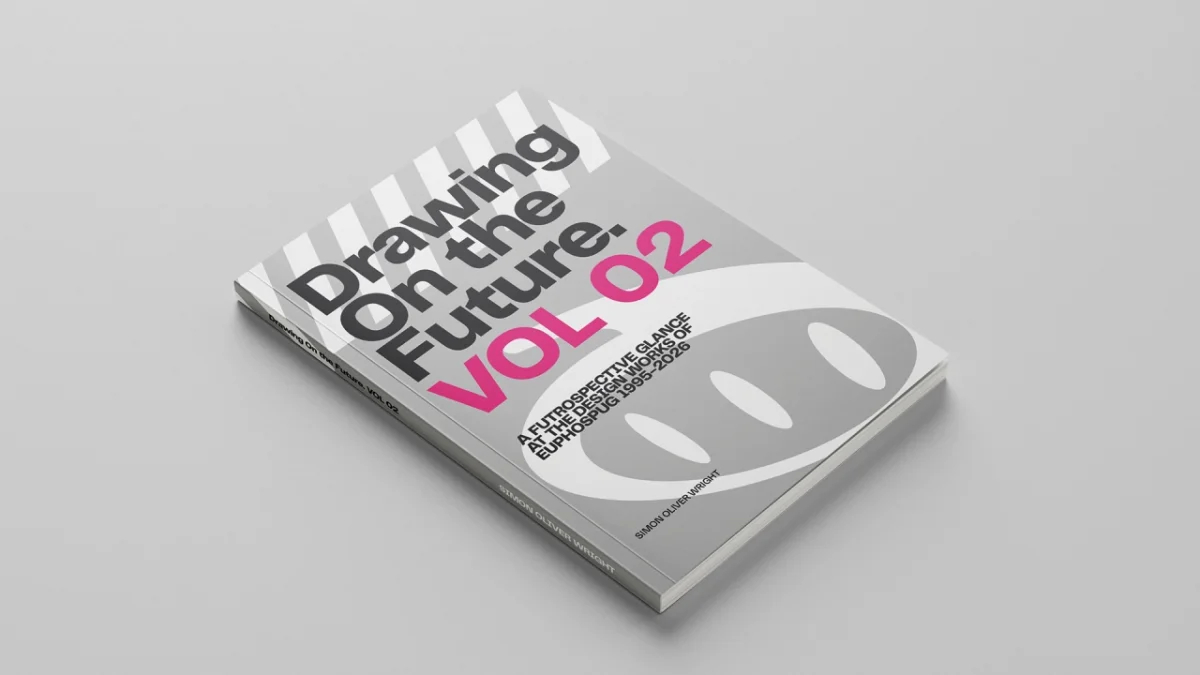
Simon Wright’s Drawing on the Future makes a case for treating rave flyers as design records, not disposable invitations. Across two volumes, the branding specialist and multidisciplinary designer brings together more than a decade of work for Perth’s underground electronic music scene around the turn of the millennium. The result connects the look of the printed pieces to the tools, music and working habits that shaped them.
Wright’s archive covers an era when design moved between digital and analogue processes, and when scene information circulated before social media. Flyers and posters had to catch attention in physical spaces and carry a visual identity from one event to the next. Their typography, image making and print choices did practical work: they signalled a night’s character while giving artists room to test ideas.
Drawing on the Future is split across two books, with material drawn from Wright’s personal files and contributions from the rave community. The project took around a year to assemble. That preparation involved locating old source files, scanning printed work and collecting stories about how individual artworks came together. The archive’s breadth matters because work made for short-lived events is particularly easy to lose once the flyers are taken down or thrown away.
Flyers as a record of design in motion
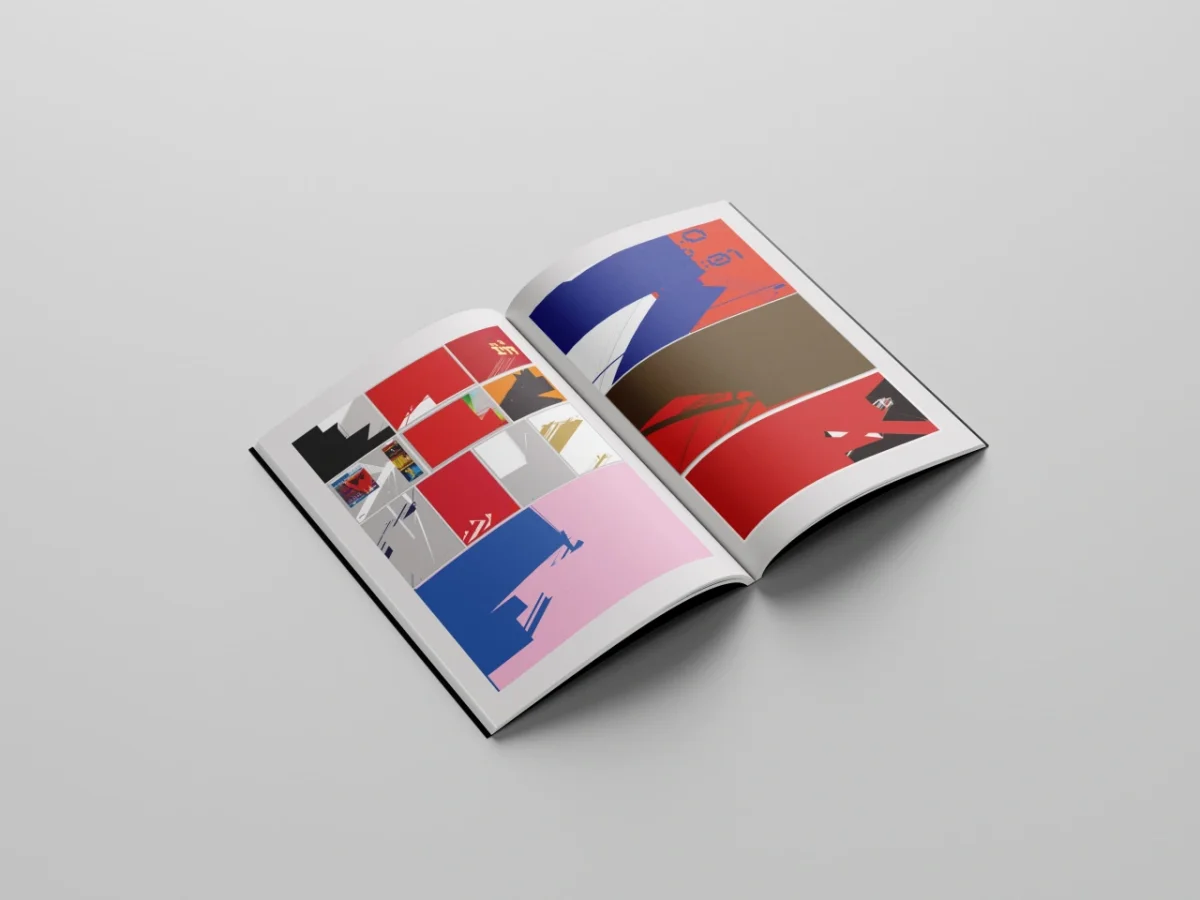
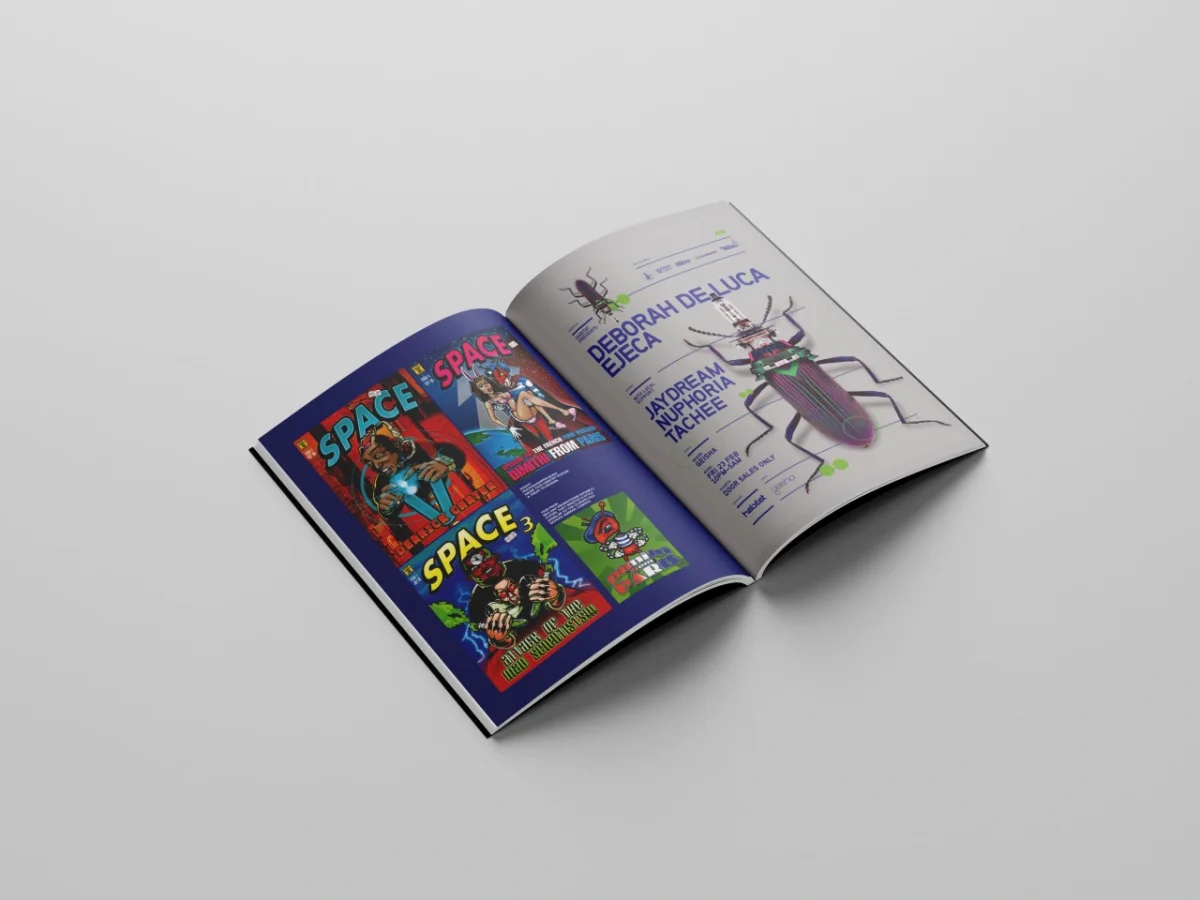
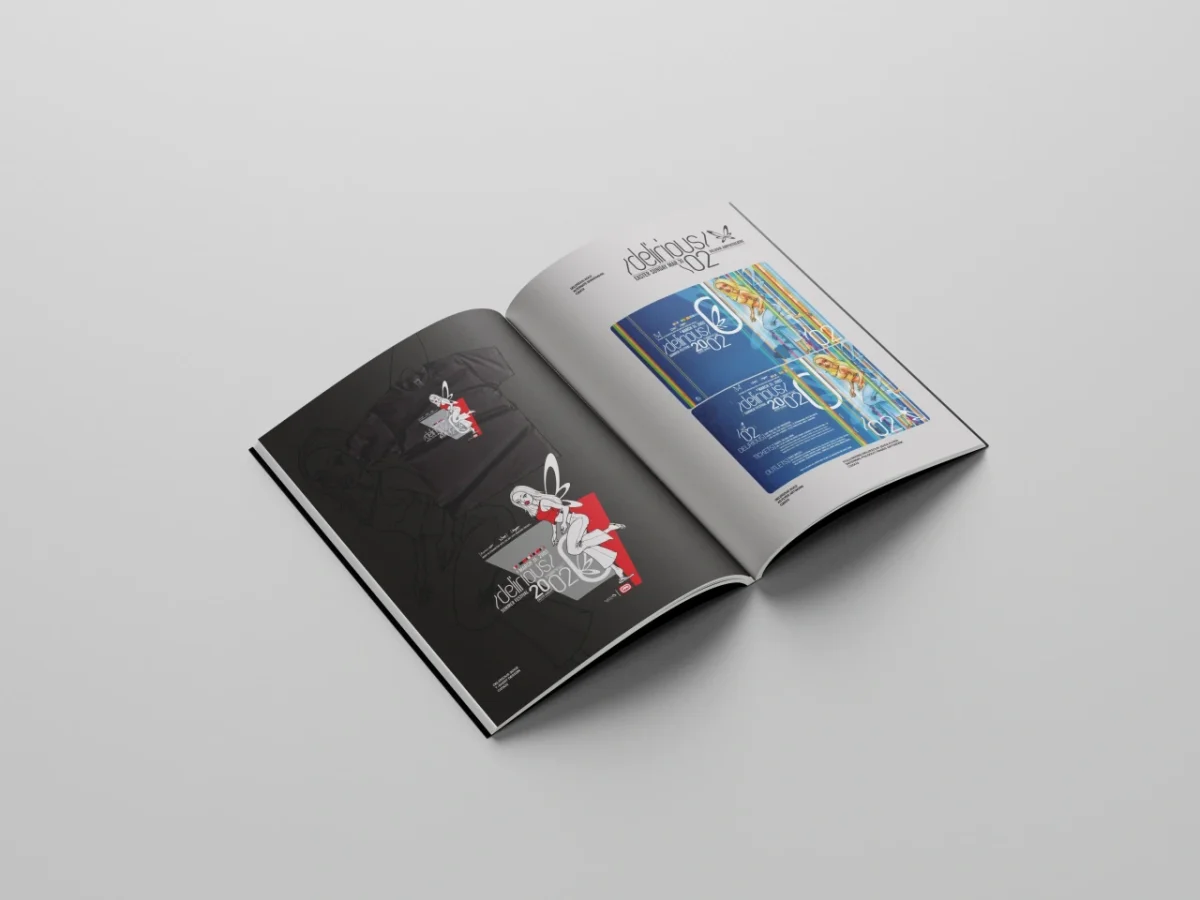
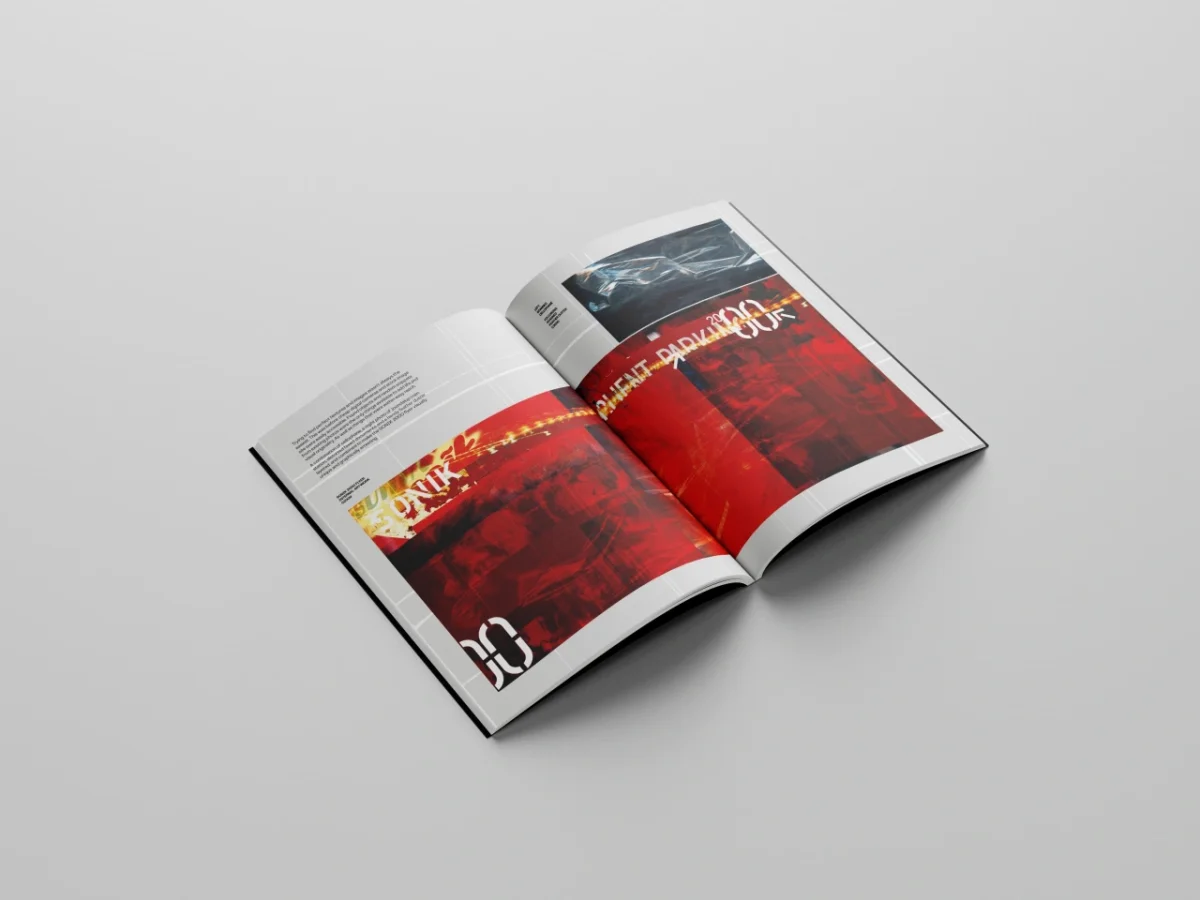
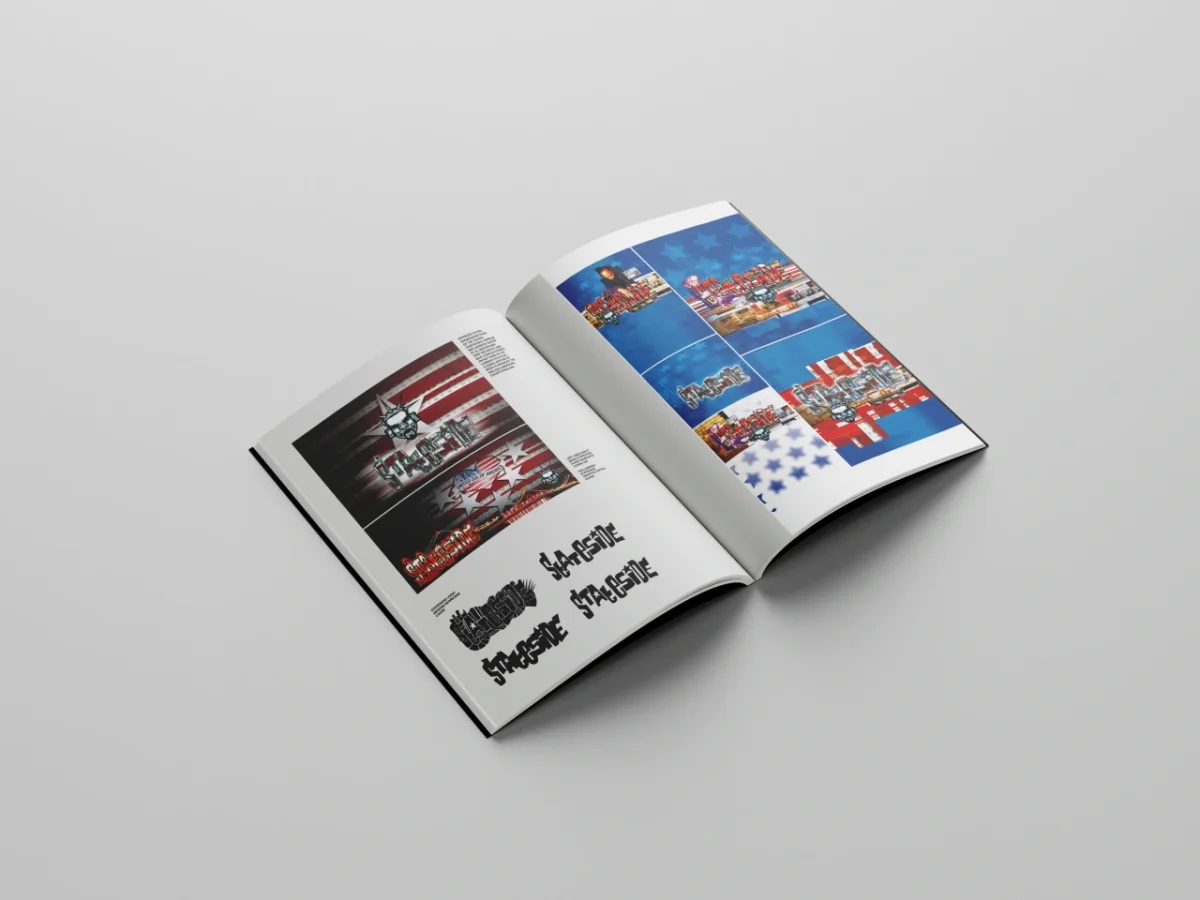
The books’ visual language keeps the rough energy of the source material in view. Pulpy comic-book illustration sits beside glossy, colour-shifting type, while layered compositions recall the image treatments associated with Photoshop at the time. These elements aren’t presented as a fixed recipe. Together, they show how designers could combine available digital effects, drawn imagery and print production to make work that felt tied to a particular sound and crowd.
That relationship between graphics and music is central to Wright’s account. He describes the collection as a record of how the scene worked, and of how flyers both responded to and influenced the music and its subgenres. Seen this way, a flyer does more than announce an event. Its visual decisions offer clues about the scene’s sensibility: what felt urgent, playful, futuristic or deliberately handmade.
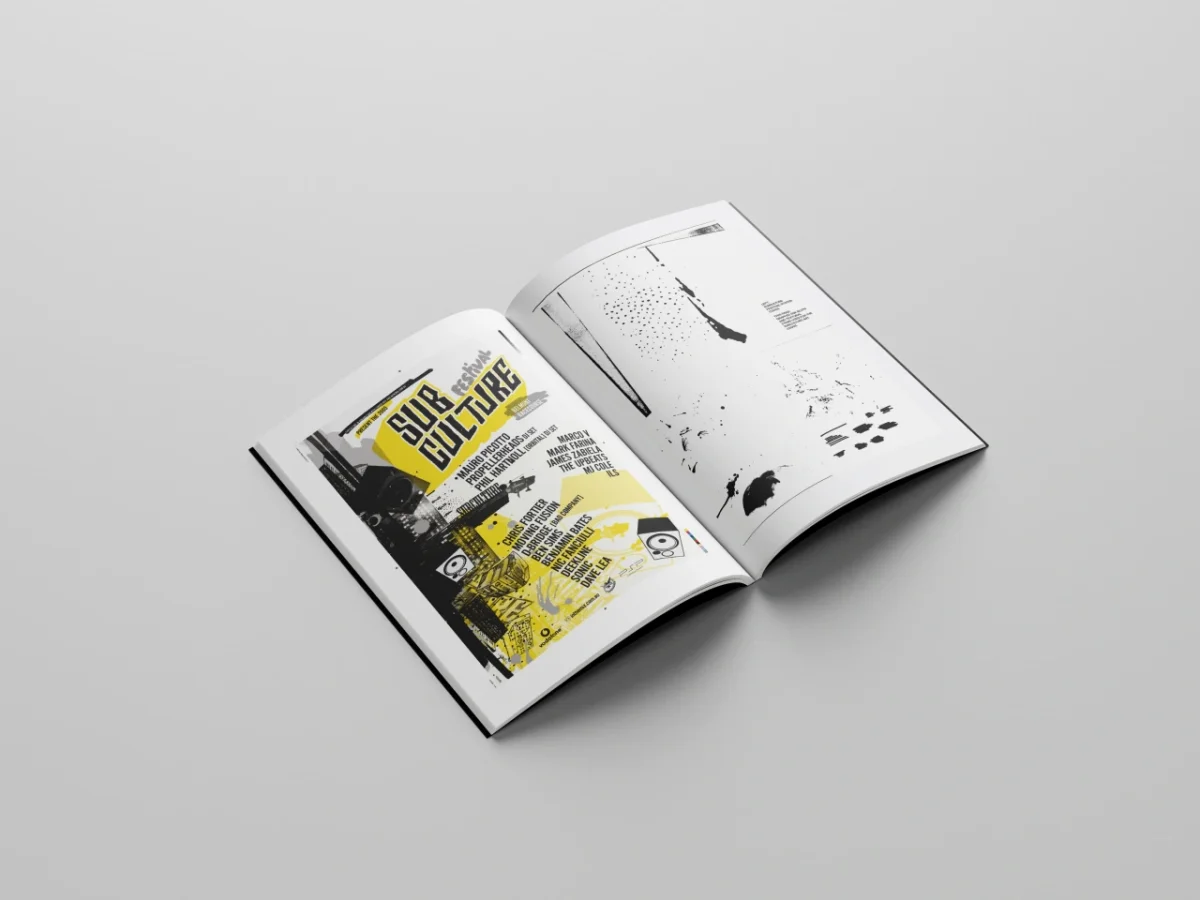
For working designers, the value is in seeing variations and decisions alongside finished pieces. Wright includes brandmark iterations, flyer designs, sketches and unused concepts. That makes the books useful as a study of development: readers can trace how a mark or composition changed, rather than encountering only a polished final image. The documented methods also put period-specific visual effects back into the context of the tools and constraints that produced them.
The material is also a reminder that graphic design doesn’t always survive in the places where it first appeared. Wright says computer storage was limited, and preserving digital work could be precarious. Some pieces might easily have disappeared from personal archives or been discarded after use. Bringing community material together with his own files gives the project a wider view than a single designer’s portfolio, while keeping Wright’s experience at its centre.
Process, memory and the finished books
Wright gives the archive a personal dimension through making-of anecdotes and recollections, including some stories he describes as misremembered. He also follows his path from university into designing promotional material for the dance scene. That movement gives the work a useful frame: the books document not only a set of images, but also a designer learning through commissions, experiments and repeated encounters with a changing visual culture.
His stated aim was to build something beyond a catalogue of flyers: a collection with historical context and a view into what he was thinking as he made the work. The combination of finished designs, exploratory material and commentary lets readers consider questions that are relevant to any archive: what led to a particular choice, what alternatives were tested, and how did the tools available shape the final result?
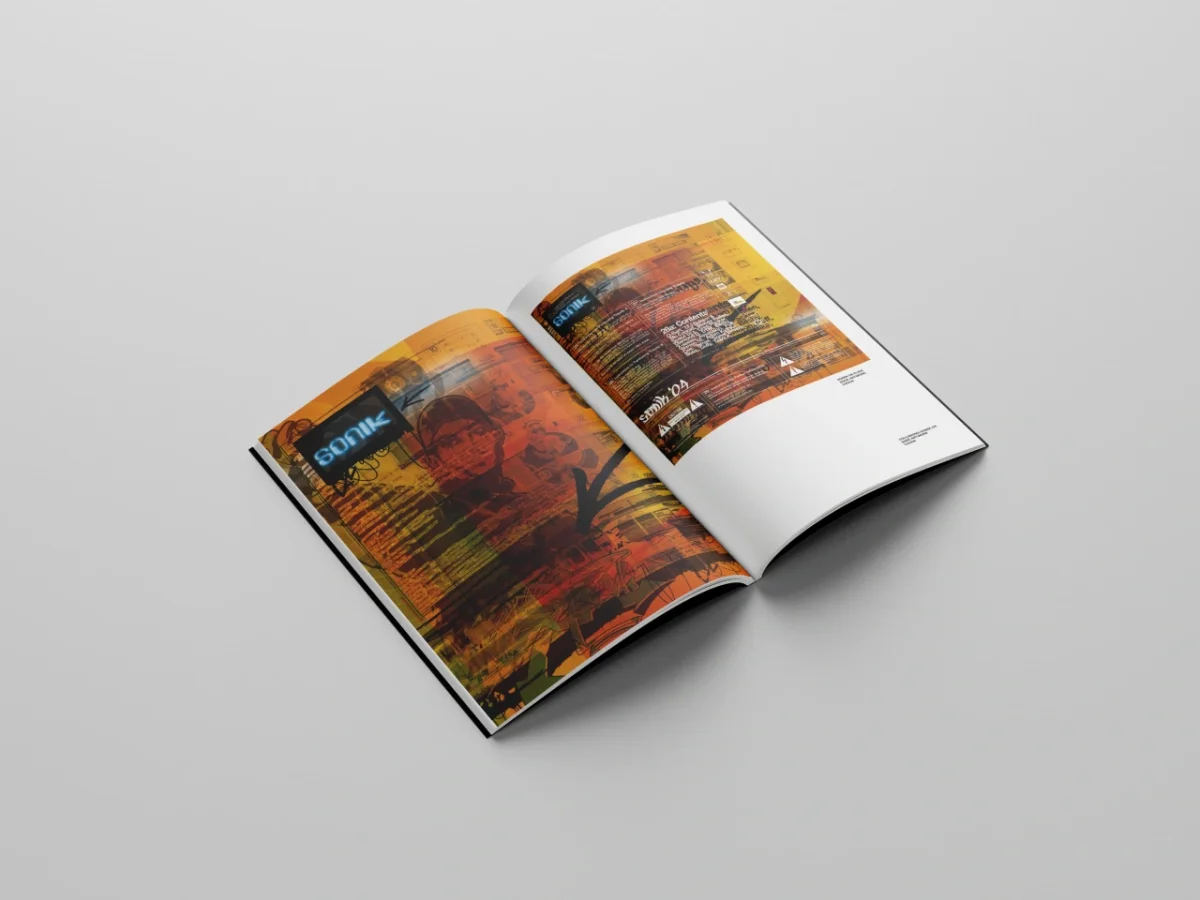
Readers don’t need to have experienced Perth’s rave scene firsthand to follow the design story. The books make a strong case for preserving ephemera with its working context attached. For designers building their own archives, Wright’s approach offers a concrete takeaway: keep the sketches, unused routes and production notes with the finished work. Those details are often what turn a set of old graphics into a record of how design actually happened.
Wright’s retrospective ultimately presents this work as both a visual snapshot and a trail of decisions. Its layered typography, energetic illustration and accumulated process material show how a scene’s printed identity can be read as part of its culture—and why documenting that work before the files and memories fade is a design practice in its own right.