Wednesday, November 25, 2026 · UX & UI Design
Camille Walala’s Alley-Oop Brings 30,000 Hand-Crafted Tiles to a Lyon Metro Station
Noted by Tom May · 439 reads
Camille Walala’s first permanent artwork transforms Flachet–Alain Gilles station with basketball rhythms, bold geometry and more than 30,000 ceramic tiles.
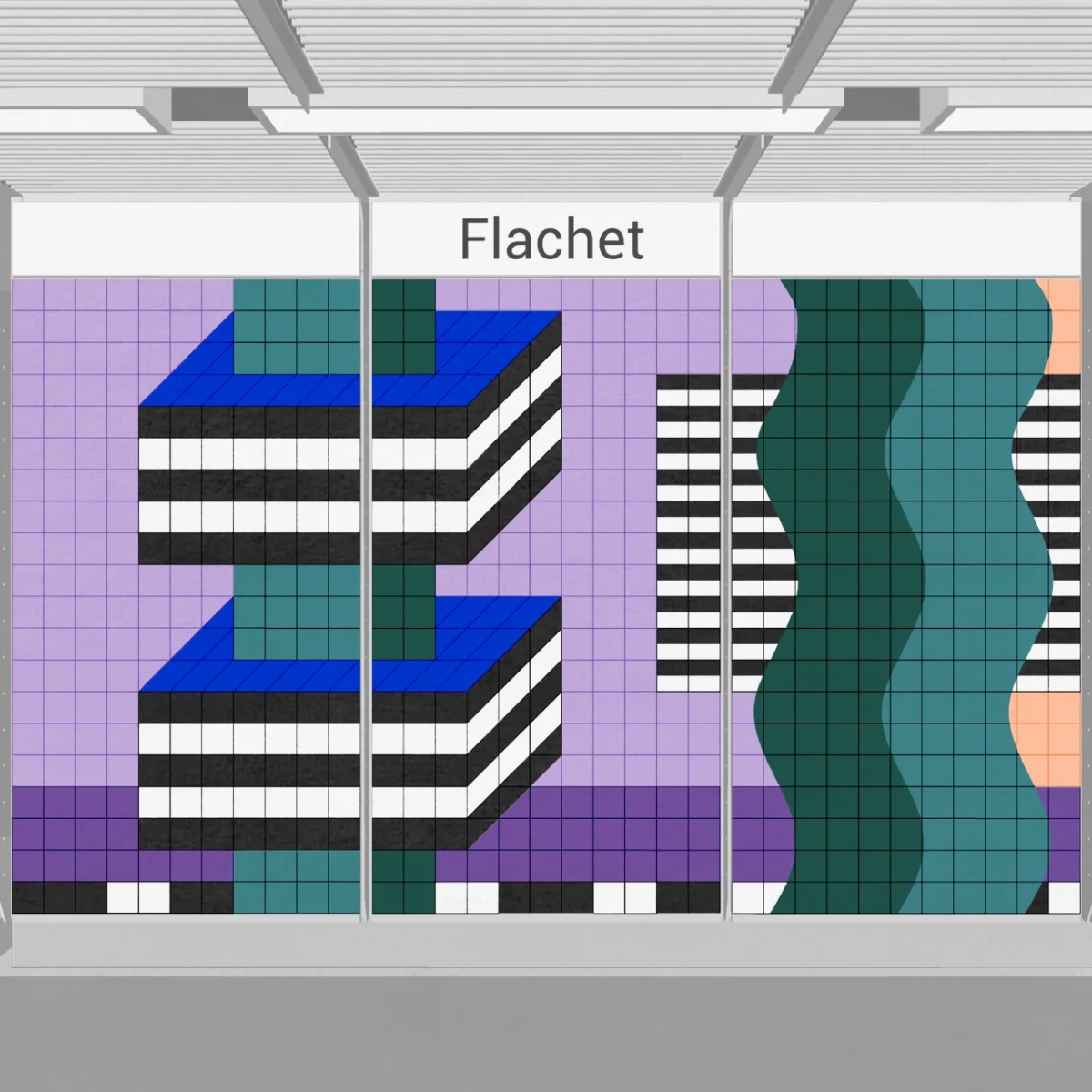
More than 30,000 hand-crafted ceramic tiles will turn Flachet–Alain Gilles metro station into a work people encounter as part of their daily journey. Camille Walala’s Alley-Oop brings her bright, Memphis-influenced geometry into a working station in Villeurbanne, near Lyon. It’s the French-born, London-based artist’s first permanent public artwork, her first major project in France and her largest project to date.
Scheduled for completion next spring, the installation also marks Walala’s first large-scale use of ceramic tile. The change in material matters: rather than a painted surface intended to be temporary, the patterns will be fired into tiles and built into the station itself. The project gives a familiar transit space a visual identity that passengers can experience repeatedly.
Basketball translated into pattern
The project’s title refers to an alley-oop: a basketball move in which one player sends the ball toward the hoop for a teammate to catch in mid-air and score. It also points to Alain Gilles, the basketball player for whom the station is named and a celebrated figure in French basketball.
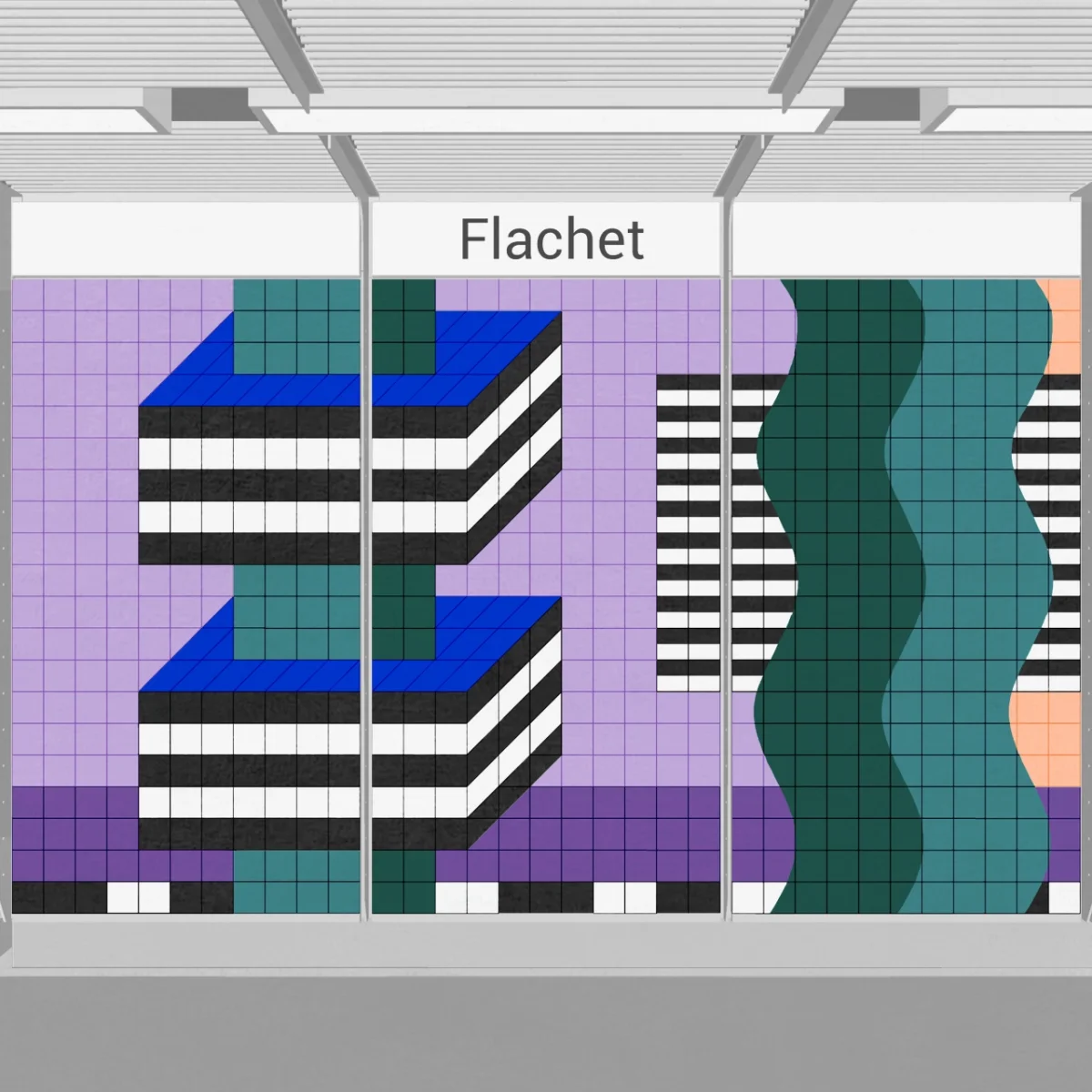
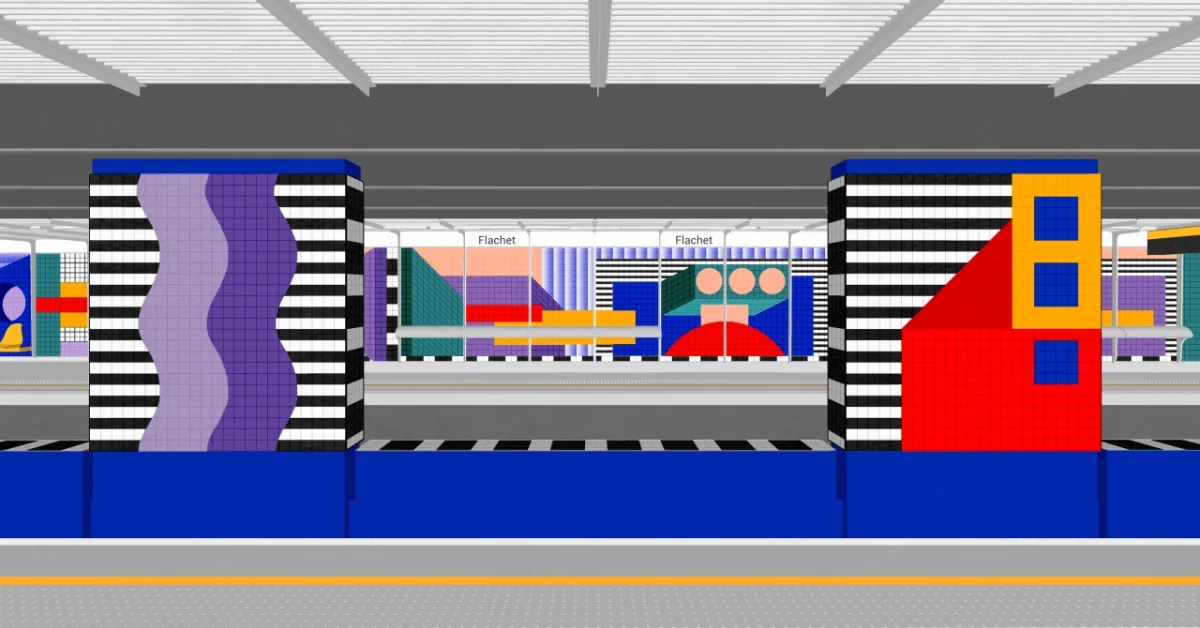
Walala translates that sporting reference into the movement and repetition of the tile designs. Rebounding shapes, stacked blocks, stripes and wavy lines create a rhythm across walls and columns. The composition suggests forms passing and answering one another, giving the platform a sense of motion even when the architecture is still.
That visual pacing suits the setting. Passengers move along the platform rather than viewing it from one fixed position, so the pattern unfolds as they walk or wait. Repeated shapes can help tie separate surfaces together, while changes in colour and direction keep the eye moving. Here, the basketball idea gives those choices a clear starting point without turning the station into a literal court.
A dialogue with Villeurbanne’s architecture
A second reference comes from the surrounding city. Villeurbanne is home to the MLIS, or Maison du Livre, de l’Image et du Son, a 1980s building by Swiss postmodern architect Mario Botta. Its strong geometry, horizontal bands and dramatic central lightwell provide an architectural vocabulary for Walala’s design.
In Alley-Oop, that vocabulary appears through tile patterns with a three-dimensional effect. Horizontal stripes and emphatic blocks echo the building’s banding, while the colour palette looks to the energy and confidence associated with the decade. The result connects the station to its local setting through form and colour, rather than relying on a separate explanatory display.
Design for a space in motion
Walala has described the project as a chance to rethink what a metro station communicates. In her view, these environments are often blank and colourless, even though their appearance can affect how people feel and behave. She wants Alley-Oop to make the station a place for visual discovery, contemplation and interaction, despite the fact that many passengers will pass through quickly.
That aim puts the work in the everyday realm associated with the Memphis Group, the Italian design and architecture group active from 1980 to 1987 that informs much of Walala’s practice. The principle is that art and daily life need not be kept apart. Applied to a station, it shifts the design question from how to decorate a transit space to how its colours and shapes can become part of the experience of moving through it.
Four years of work, built around the station’s schedule
The project has been in development for more than four years and is described as the most complex and ambitious in Walala’s studio history. She won the commission in 2022 through an international competition run by Sytral Mobilités, Lyon’s public transport authority. Around 300 artists entered to work on Flachet–Alain Gilles and three other stations: Foch, République Villeurbanne and Gratte-Ciel.
Walala has worked with architects Atelier Martel, Paris-based art production studio Poïèma and engineering consultancy Betrec. Installation work has taken place at night so the station can stay open throughout the project. By completion, the teams will have spent more than nine months on site.
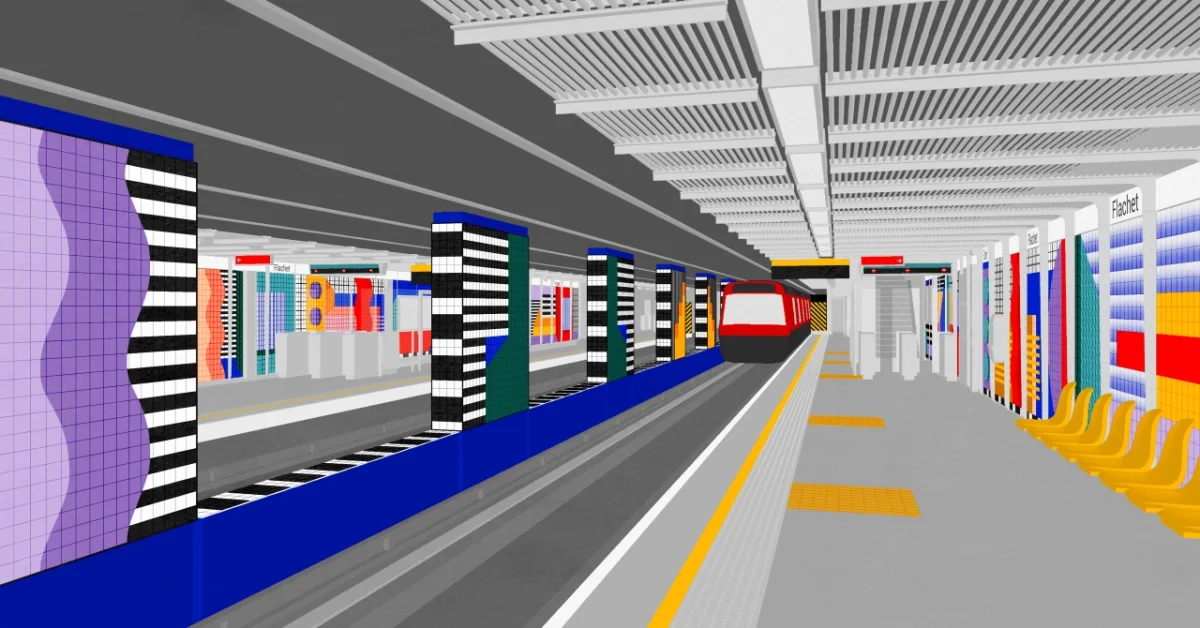
For Walala, whose best-known projects have often been temporary, Alley-Oop starts a different chapter. Ceramic tiles make the work part of the station’s fabric, where commuters can meet the colours and patterns as they travel. The useful design question for other teams is how a place’s existing character—its movement, architecture and daily use—can shape a visual system that feels specific to that place.