Wednesday, November 25, 2026 · UX & UI Design
Gigi Borgese Draws the Distance Between Human Touch and Digital Copies
Noted by Ayla Angelos · 374 reads
Gigi Borgese pairs hand-drawn birds, flowers and apples with early internet graphics to question what happens to intimacy when images are copied.
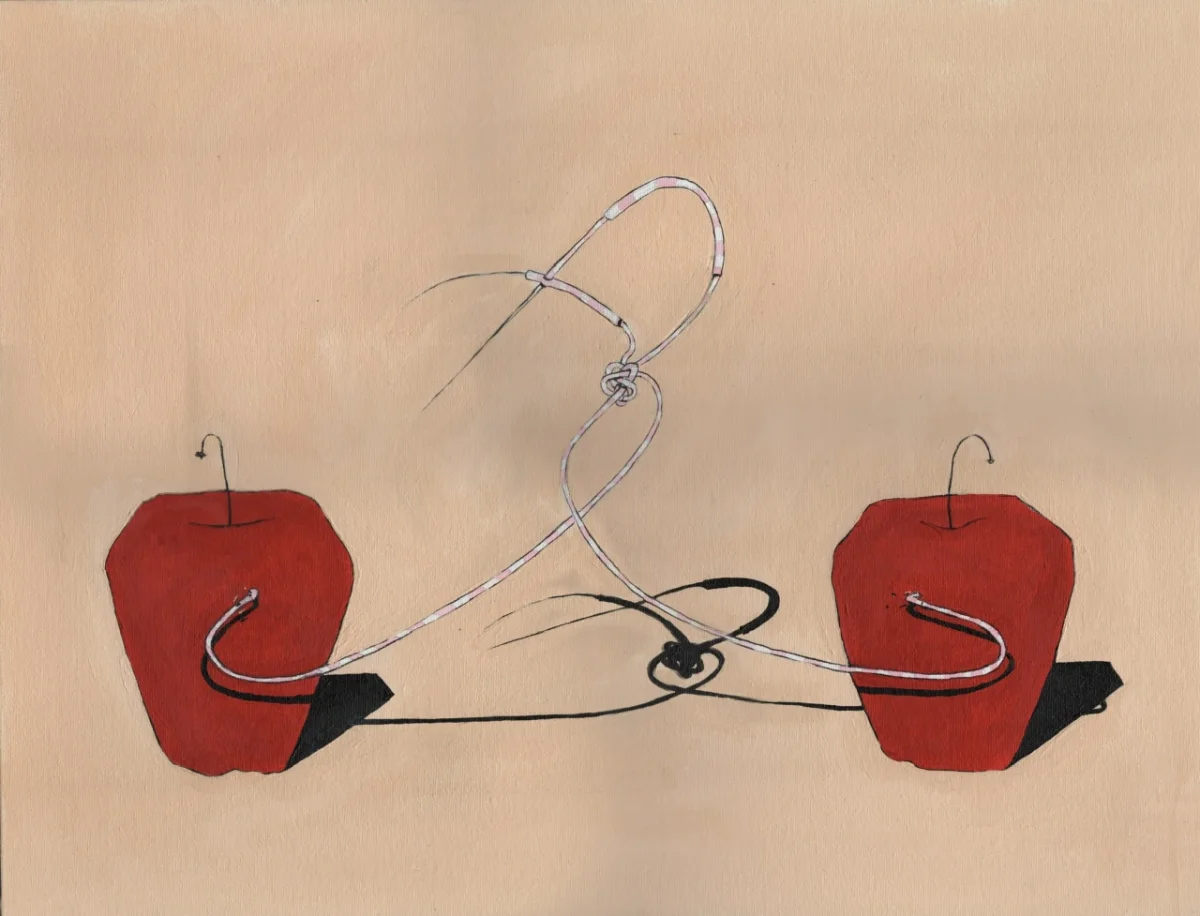
Gigi Borgese’s drawings make digital copying feel physical. Birds blur into repeated outlines, flowers acquire pixelated doubles, and apples become symbols of desire and refusal. The New York-based artist draws these elements by hand, then sets them against the rigid grids and familiar interface graphics of the early internet. The tension gives her work its focus: what happens to intimacy when a person or image becomes something that can be copied?
A handmade image meets the screen
In one drawing, a swallow waits beside a column of blue folder icons, as if a download might soon finish. Elsewhere, a bird appears inside a desktop-like sky, circled in red above the prompt “Enter the following”; the answer field reads “birds :-)”. The visual jokes are gentle, but their mix of natural forms and computer interface details points to a deeper unease about how digital spaces represent living things.
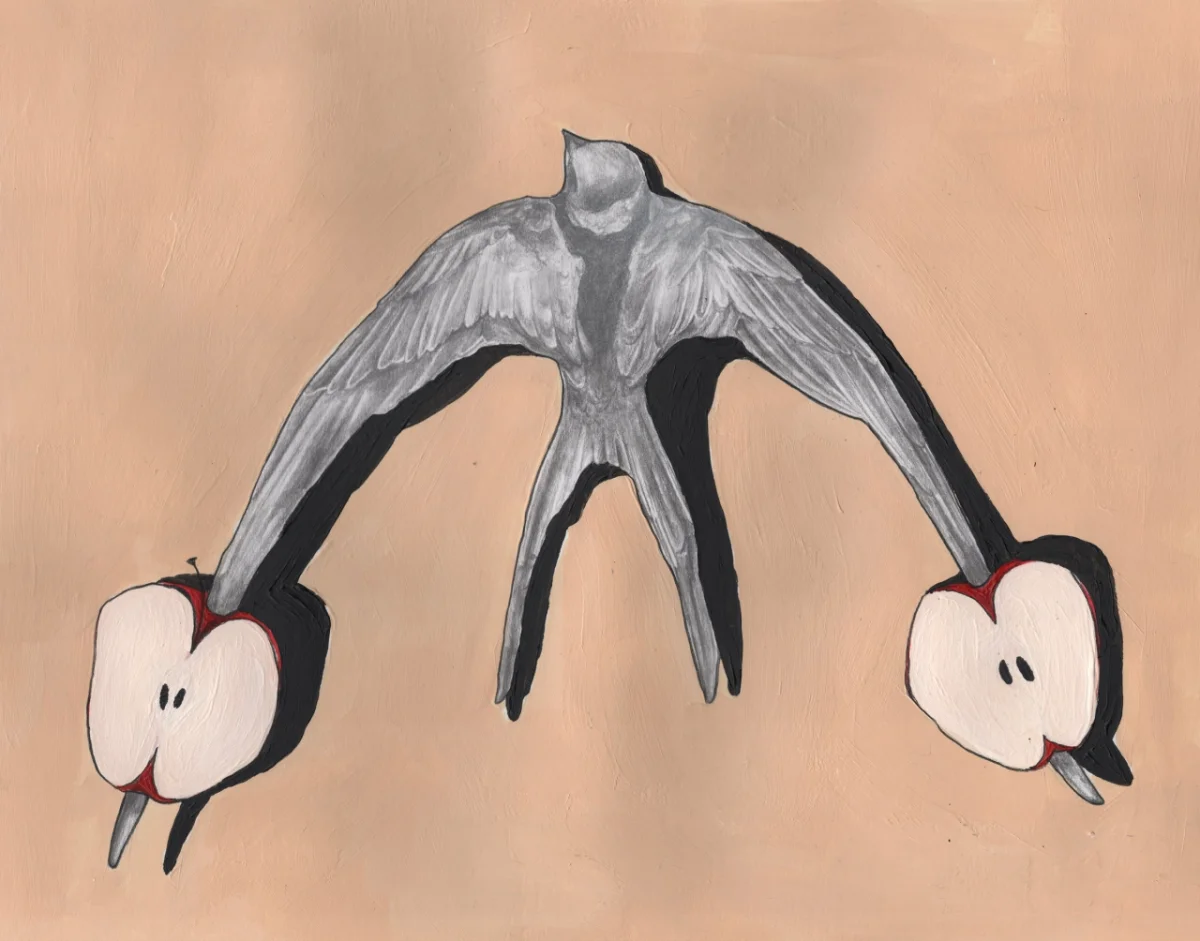
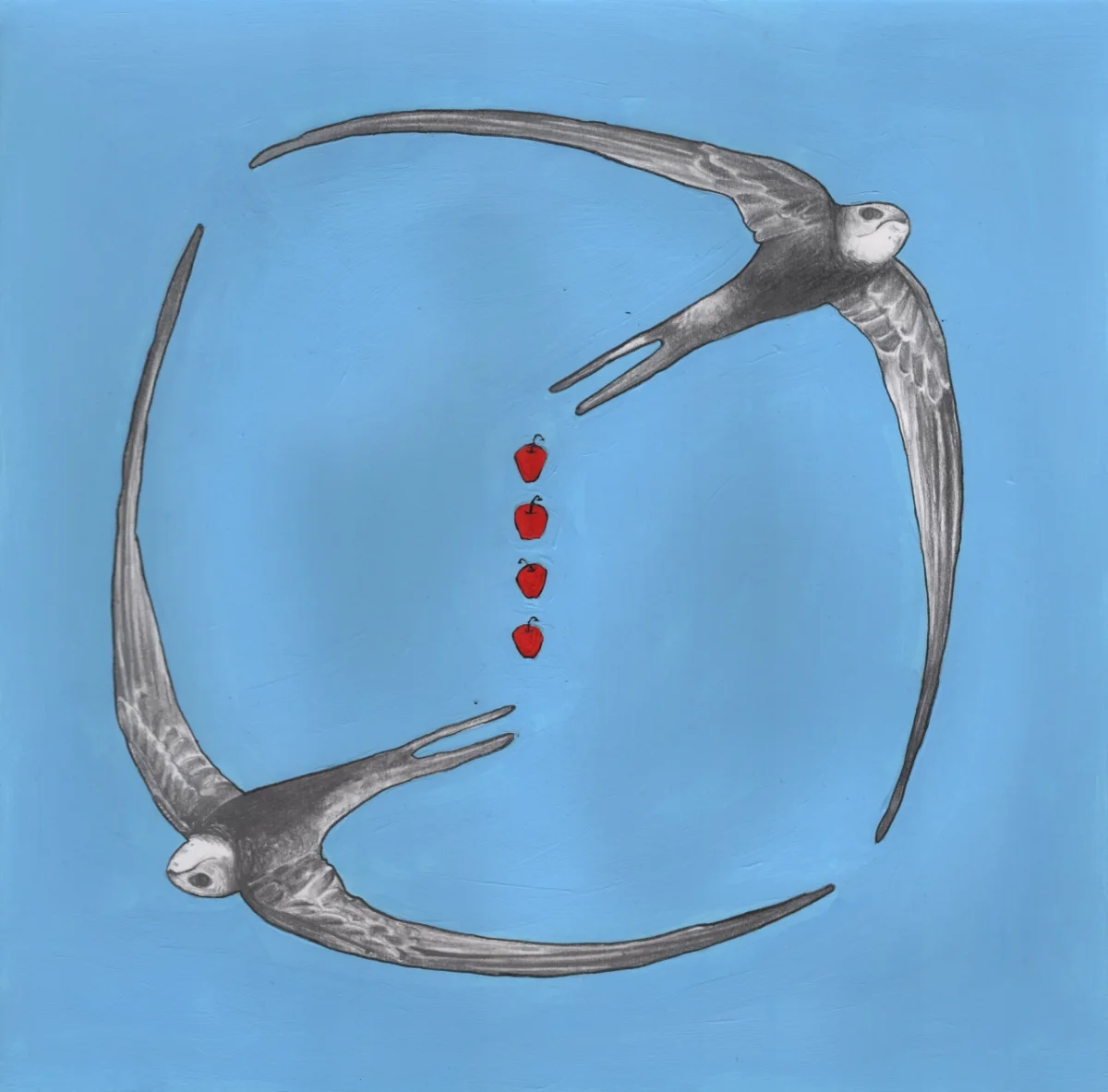
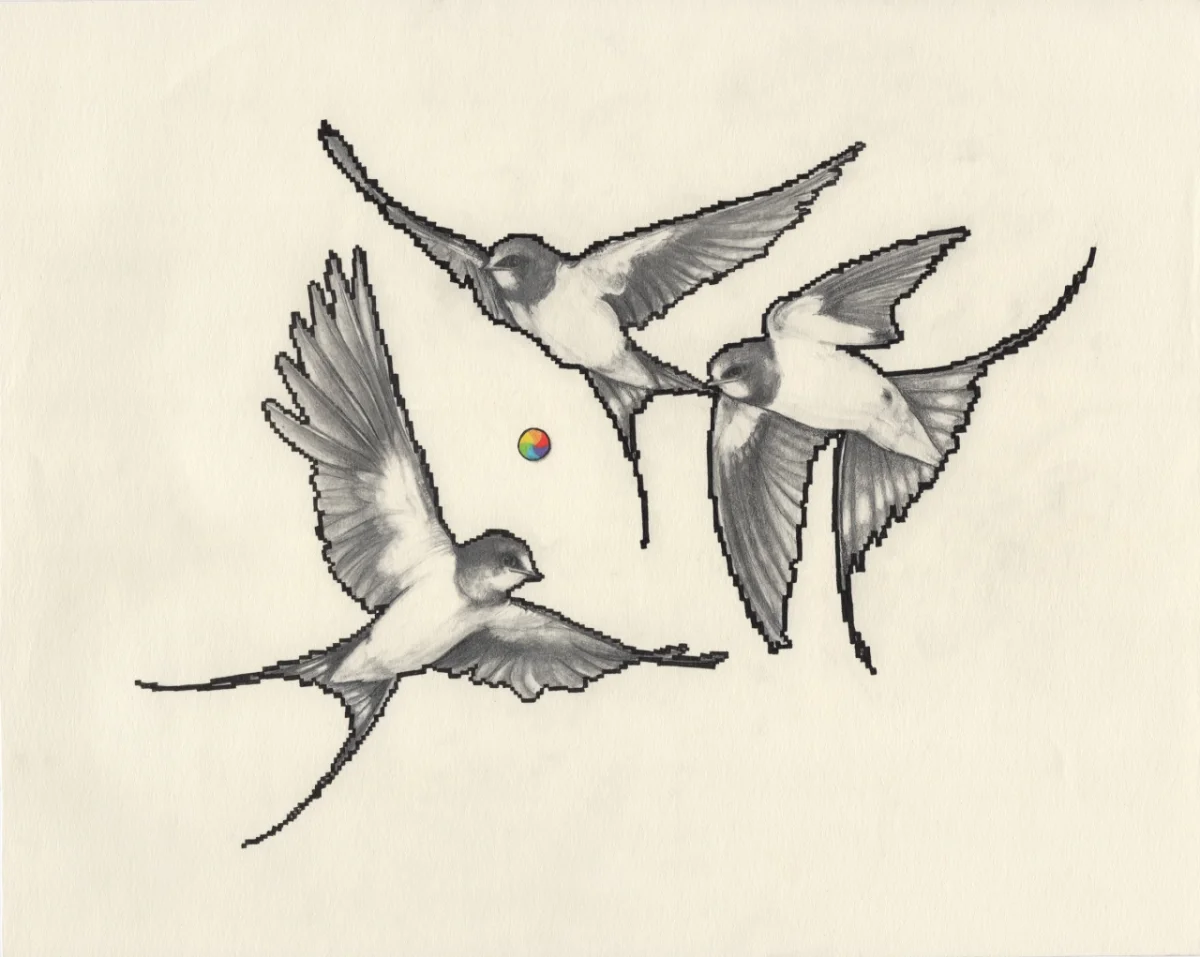
Borgese’s imagery draws on birds, apples and flowers, forms she connects with fragility and femininity. She deliberately disrupts their associations by placing them in the language of the web: grids, icons, pixelation and repetition. The result lets the materials carry the argument. A carefully observed bird can sit beside a crude digital version, making the difference between attention and reproduction visible without spelling it out.
From online visibility to a subject
Borgese grew up in San Jose, California, and describes herself as largely self-taught. Between 14 and 17, she was an influencer on early TikTok. The experience left her thinking about objectification and what she calls “the feelings of emptiness/futility in that content”. She deleted her accounts and turned her attention to making art.
She spent a year at West Valley Community College before moving to New York in 2023, aged 19. She is now studying for a BFA in Studio Art at the City College of New York and minoring in Classics. Her awards include the Adelaide Jablonsky Award (2025) and Connor Merritt Award (2026); she was also a finalist in the 2026 Astor Place student art competition. Alongside her studies, she works at the Morris Jumel Mansion on public programming, prop recreation and research.
The themes in her current practice sharpened in 2025, when she was 20. Unknown numbers began sending her doctored and AI-generated images of herself, often depicting her as a minor. She says she discovered a Discord group of more than 100 men who had been making the images for five years. The experience connected the harassment to her earlier time online and pushed her to clarify what she wanted her work to say.
Copies, representations and the human hand
An encounter with Sonya Rapoport’s exhibition Force fields at the Minnesota Street Project in San Francisco gave Borgese another way to think about the web’s visual history. Rapoport’s continuous-feed computer paper and early ASCII art, which Borgese saw when she was 18, resonated with her before she had fully processed the internet’s effects on her own life.
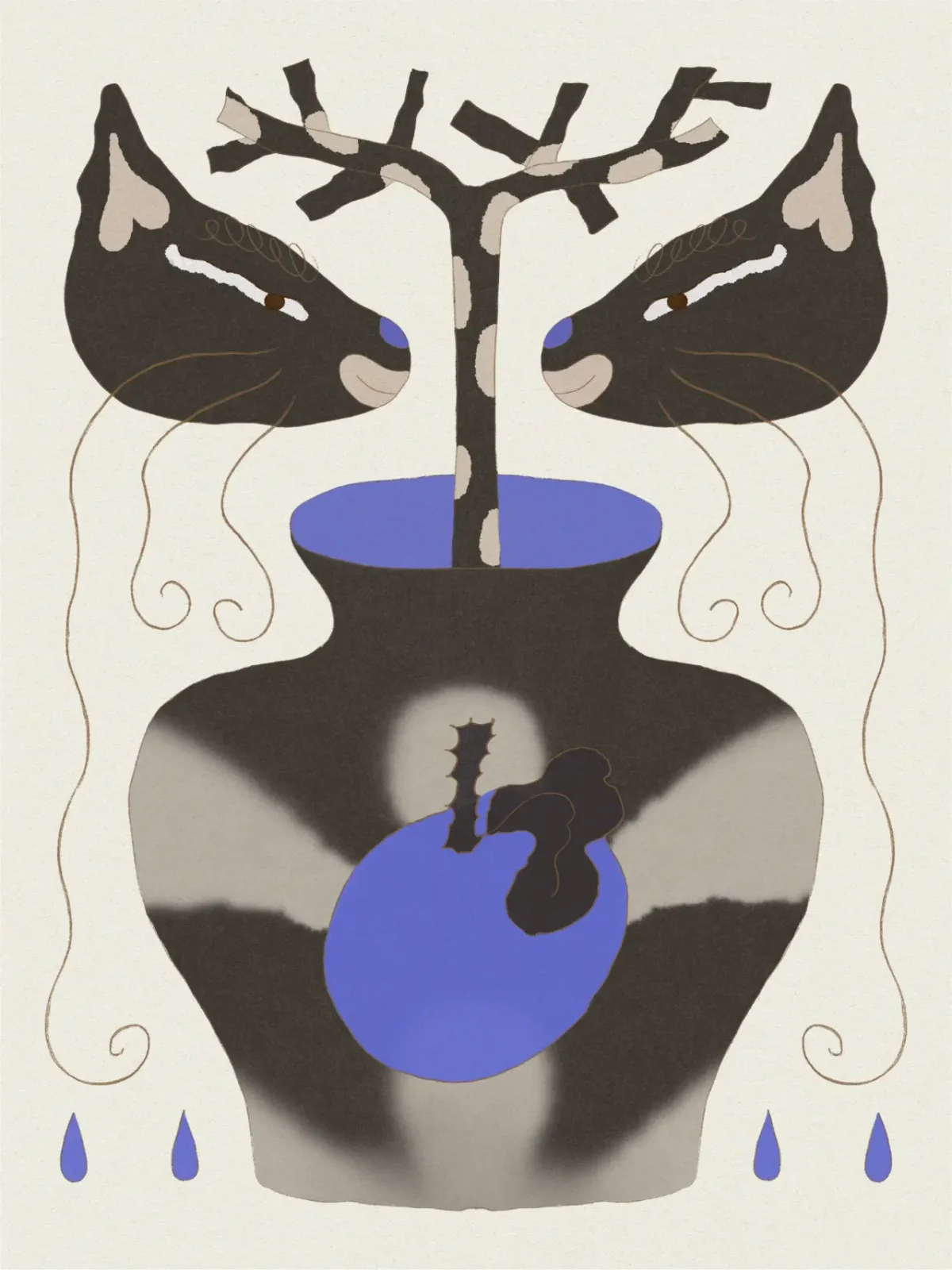
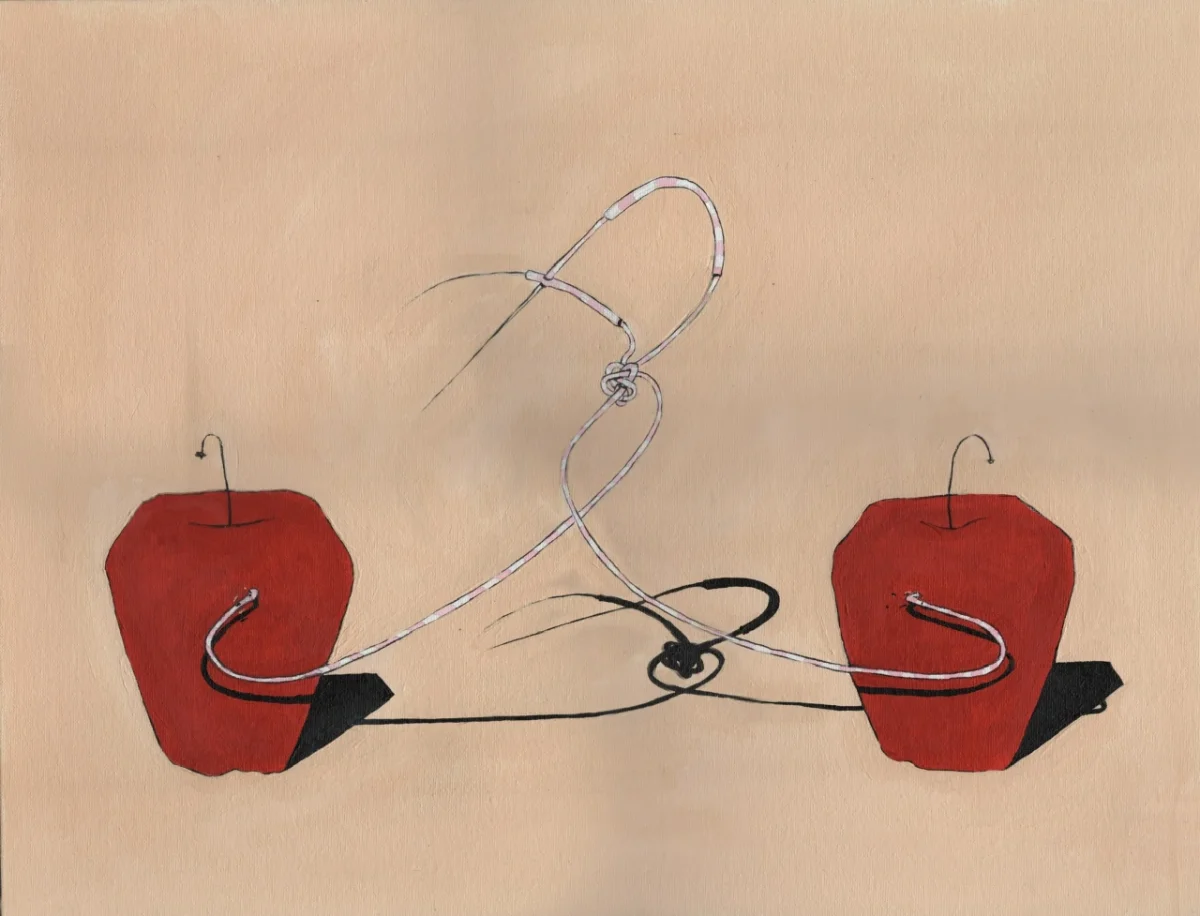
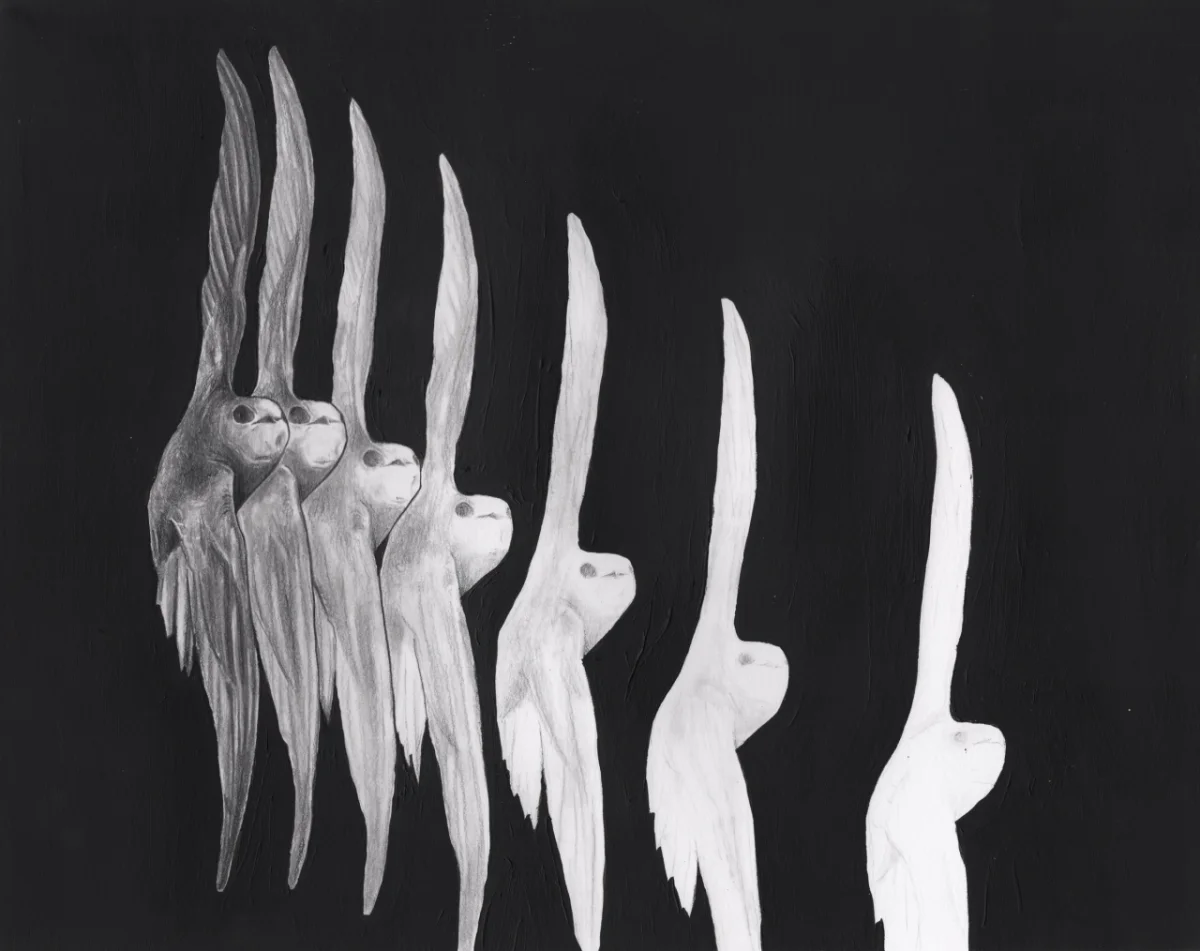
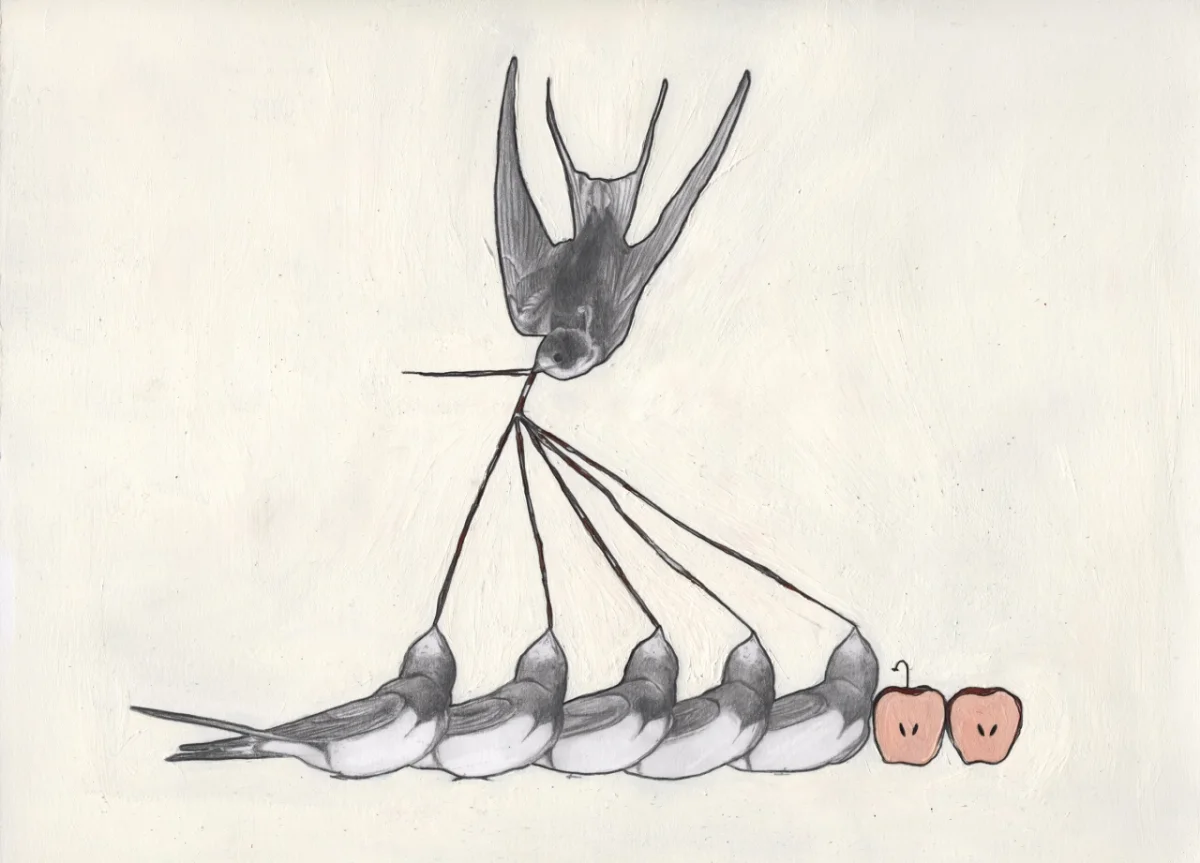
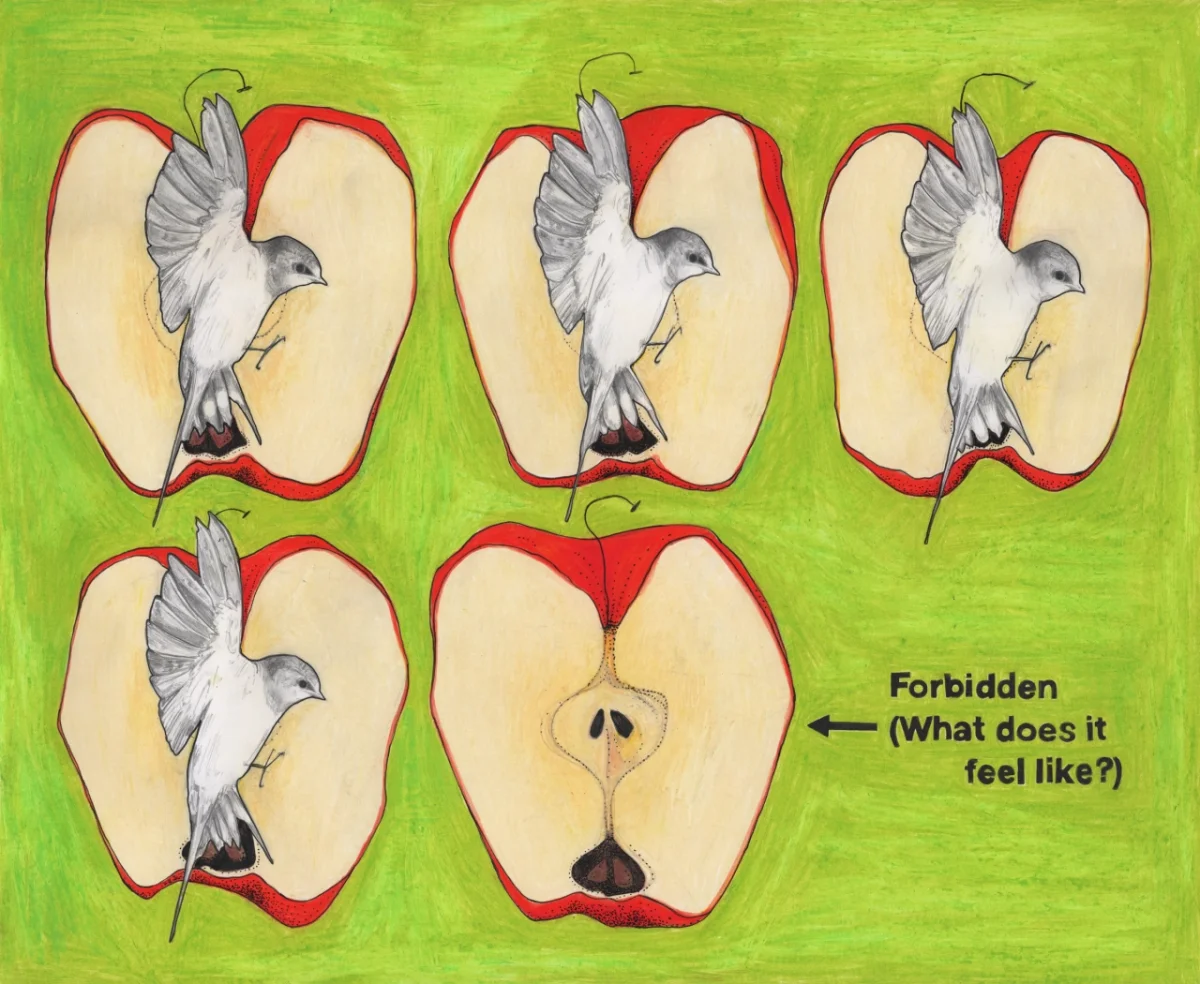
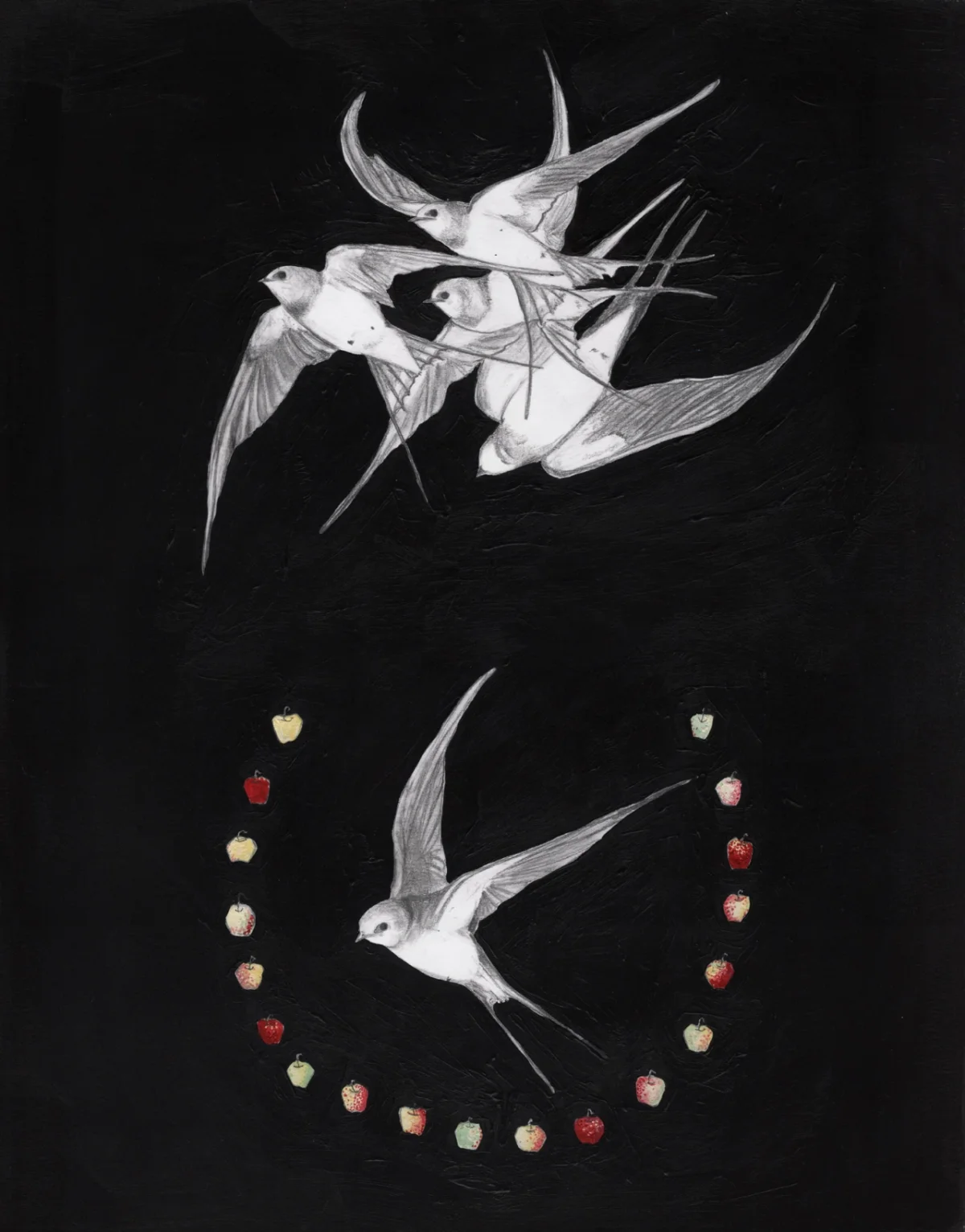
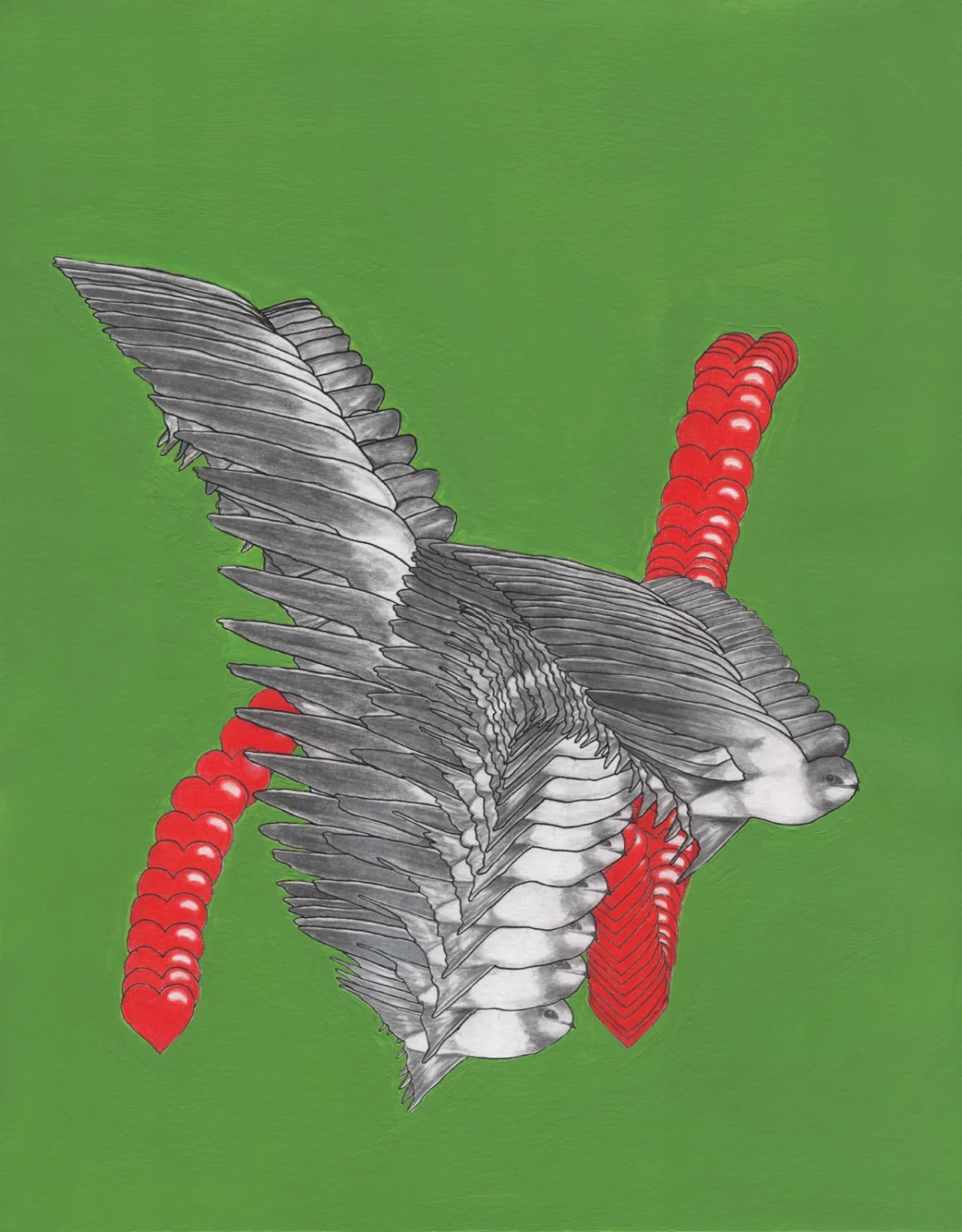
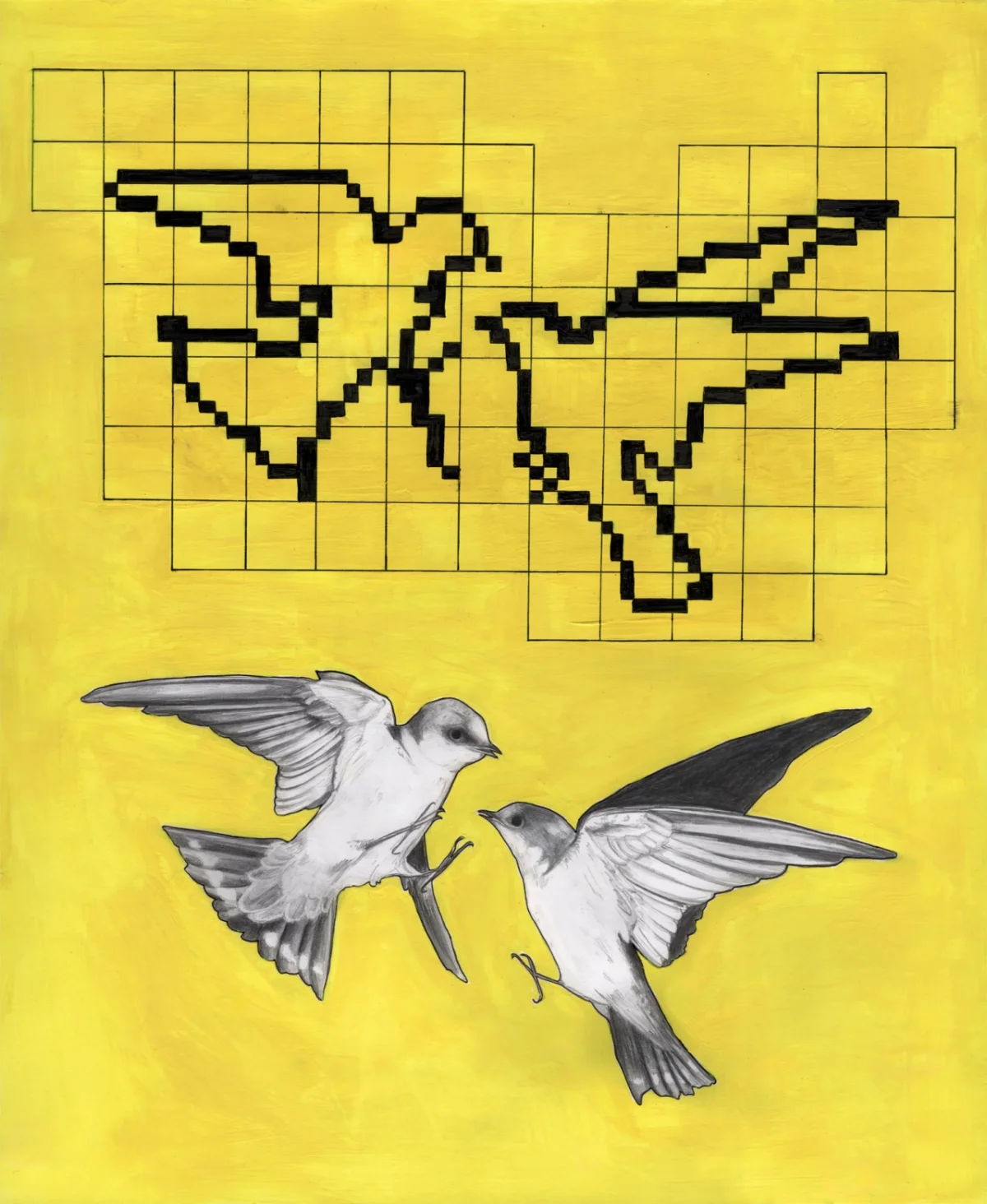
Classics also informs her thinking. Borgese is drawn to Plato’s ideas about reality and representation, and describes the internet as another flawed copy layered onto an already imperfect physical world. In her drawings, that chain of representation takes form: a swallow repeats in progressively fading outlines, like an image copied and pasted; a pixelated bird hovers above two more naturalistic swallows on a yellow grid; halved green apples sit beneath the question “Forbidden (What does it feel like?)”.
Her research moves between dead websites, old interfaces and 19th-century scientific illustrations of birds and flowers. She sees a shared impulse in those materials: an attempt to capture something real through an artificial system. Borgese adapts the look of scientific illustration, then brings it into contact with digital graphics. The process is pointed. She says it echoes the way the men copied her image, but gives her control over how that act is pictured and interpreted.
Where the grid takes over
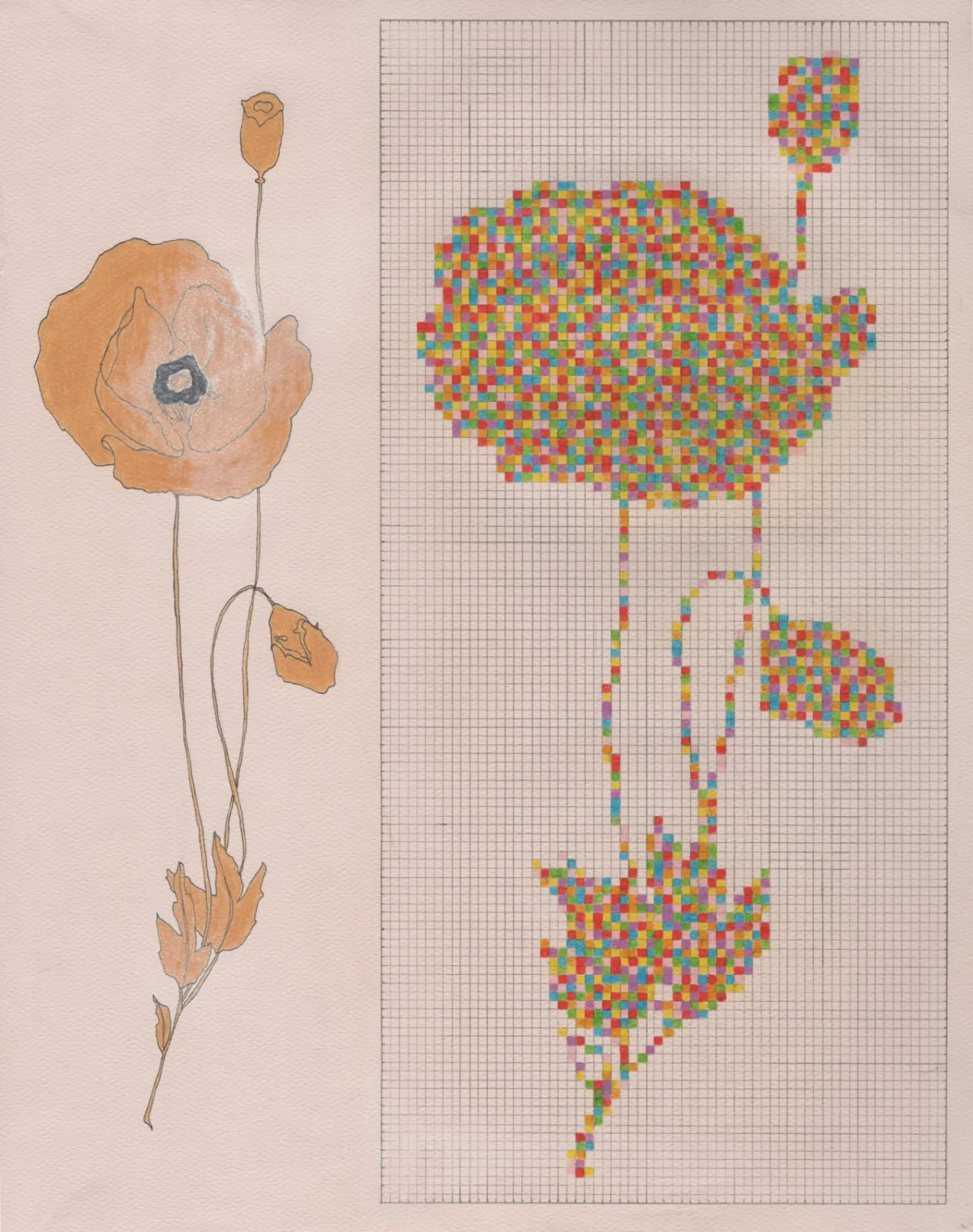
Beautiful Bastard (2026), the work Borgese says she is proudest of, began after she felt stuck with earlier pieces. Made with coloured pencil, graphite and Micron pen on pastel paper, it places a plainly drawn poppy beside a larger, saturated, pixelated version of the same flower. The imitation is distorted but held within a strict grid. Its orderly structure sharpens the difference between the quiet specificity of the hand-drawn form and the synthetic repetition beside it.
Borgese describes the repeated copies as losing their distinction, changing how viewers experience the original object. That idea gives the grid more than a decorative role: it becomes a system that organizes the imitation while making its limits clear. The mismatch between the flower’s organic shape and its squared-off counterpart is the work’s central visual decision.
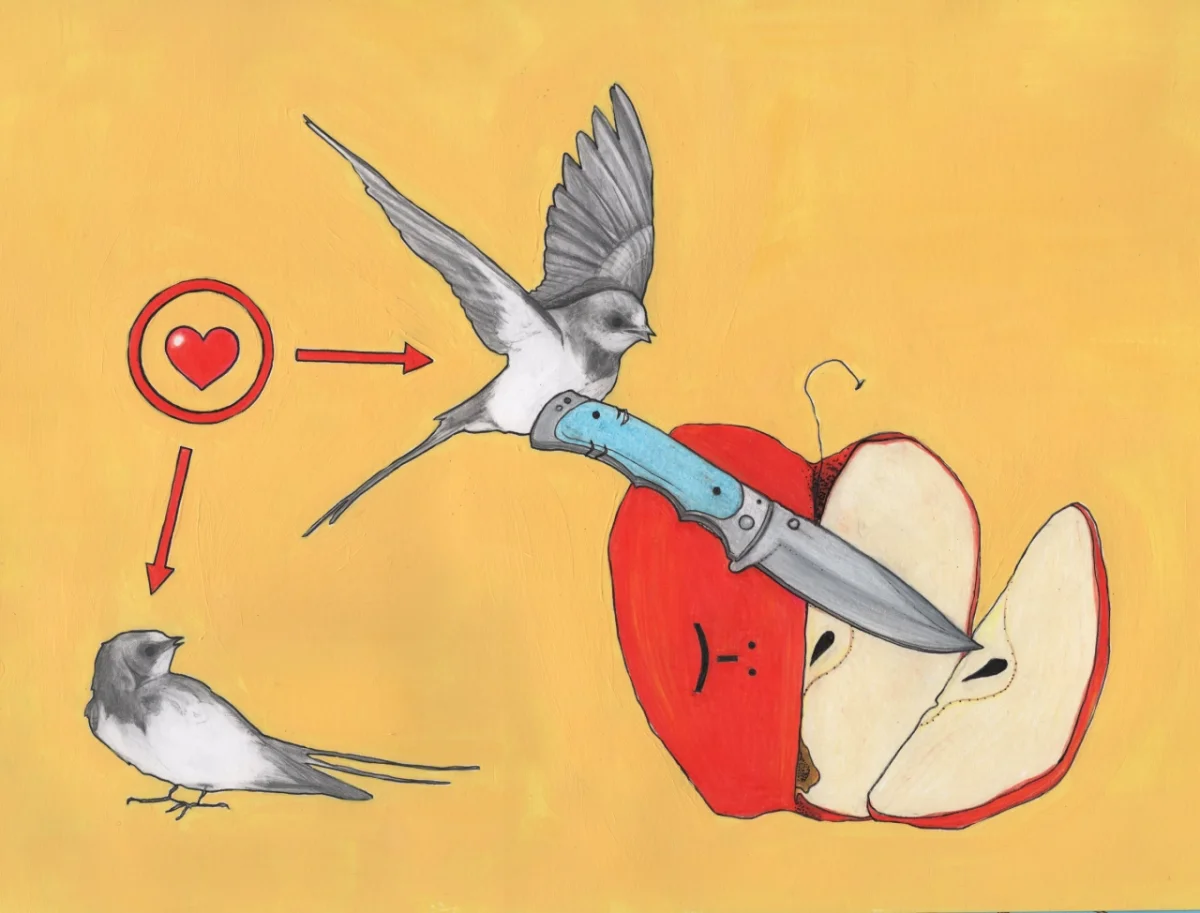
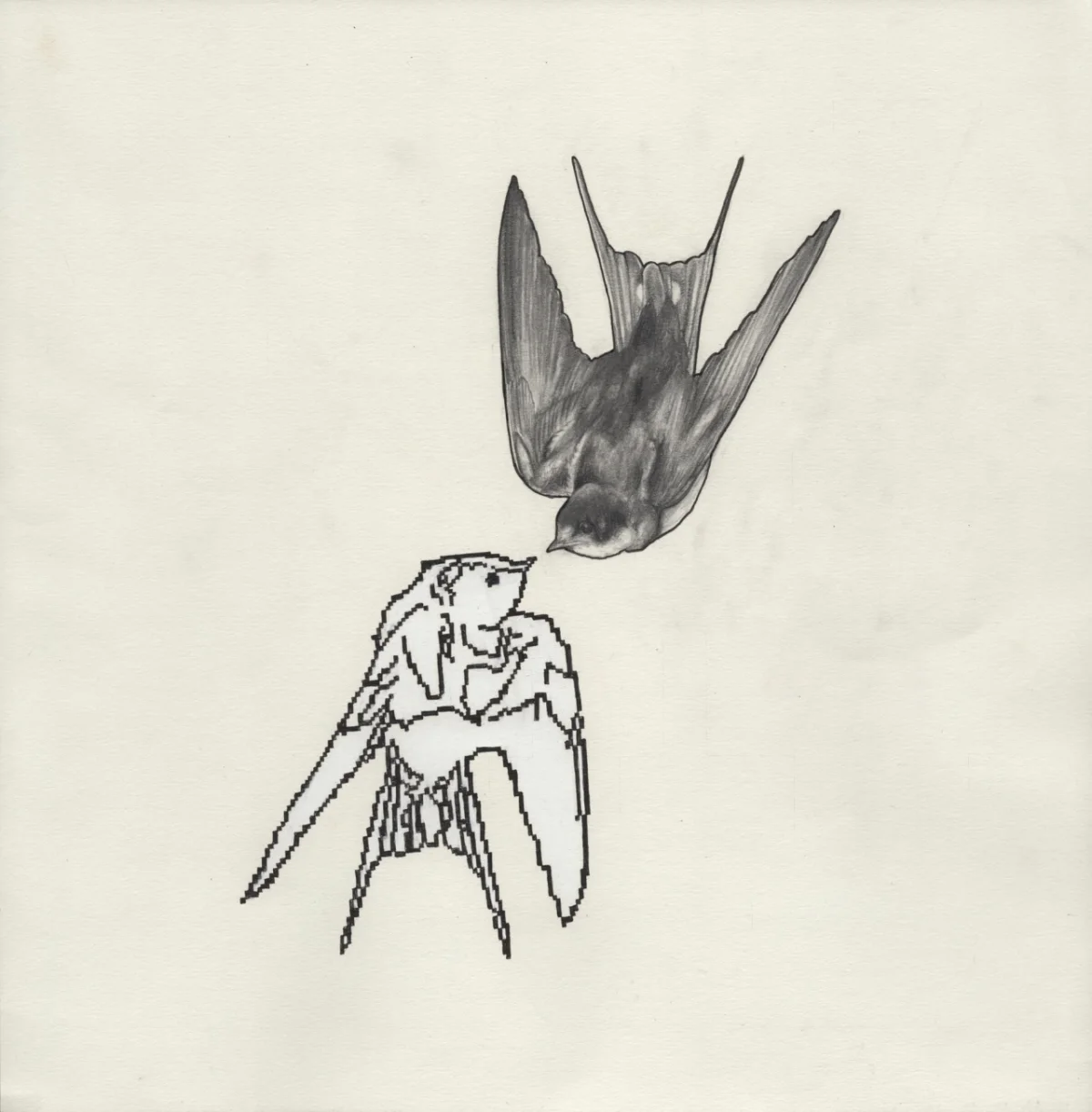
A Kiss for the Love of my Life (2026) approaches the same subject through a spare, unsettling encounter. Made with coloured pencil, graphite and Micron pen on Strathmore drawing pad paper, it shows a swallow kissing a blank, expressionless figure that remains still. Borgese wondered whether the men who copied her felt a connection to the image they had made. Her answer is embodied in the bird’s indifference: “The swallow in this painting does not care.”
Keeping the mark visible
Borgese’s materials matter because they keep the act of drawing in view. Coloured pencil, graphite and Micron pen leave a visible human trace, while pixel grids and copied outlines point toward images that can be generated or repeated without the same kind of attention. Her work doesn’t offer a technical guide to making digital images; instead, it makes viewers compare two kinds of looking: close observation of a bird or flower, and the fast recognition of its screen-based sign.
Her stated aim is to show how the internet damages genuine connection and intimacy. She also wants viewers to value the human touch and feel wary of AI image generation. The drawings hold that position in their construction: the handmade image remains specific, while the copy grows more distorted the further it moves from its source. For artists working with familiar digital references, Borgese’s approach offers a clear visual question to carry into their own practice: what does a reproduction lose when the hand and the original subject disappear?