Monday, November 23, 2026 · UX & UI Design
How Football Clubs Turned Christmas Campaigns Into Fan Experiences
Noted by Tom May · 647 reads
Chelsea built a festive TV network, Liverpool thanked supporters and Arsenal and Manchester City brought community stories into their Christmas work.

Football clubs have a built-in Christmas advertising advantage: their audience already feels part of a story. This season, Chelsea, Liverpool, Arsenal and Manchester City used that connection in distinct ways, from a multi-platform festive broadcast to cards co-designed with local children. Each campaign also links its public message to merchandise, community work or both.
Chelsea turns its campaign into a TV network
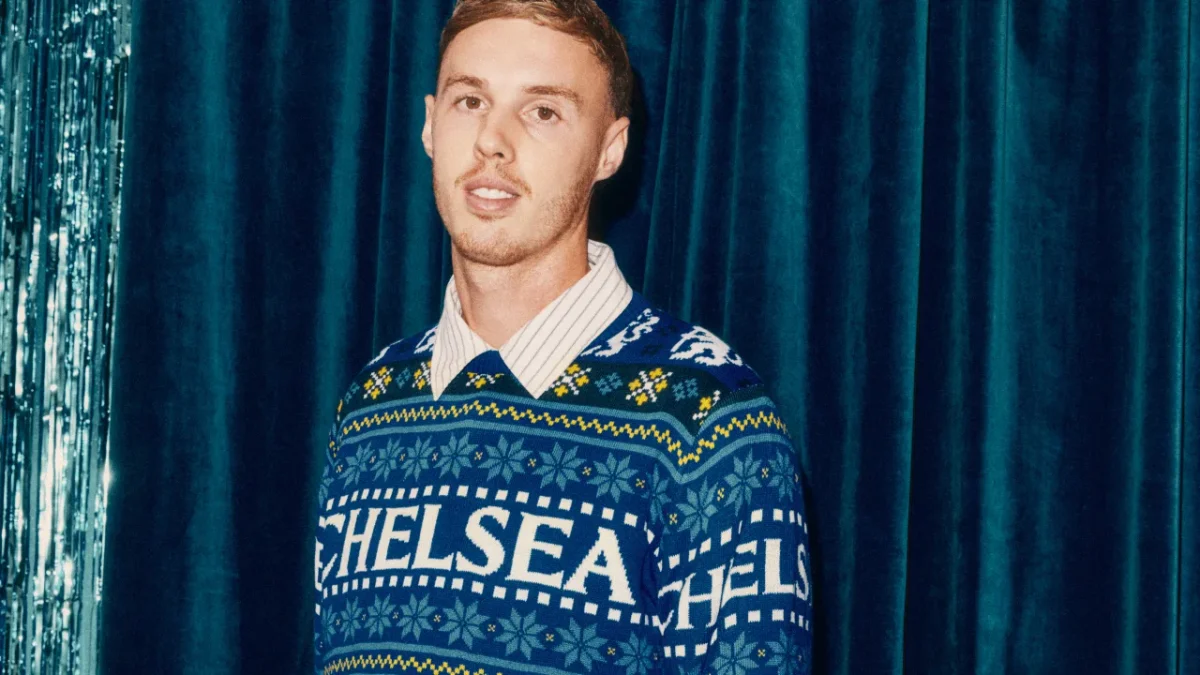
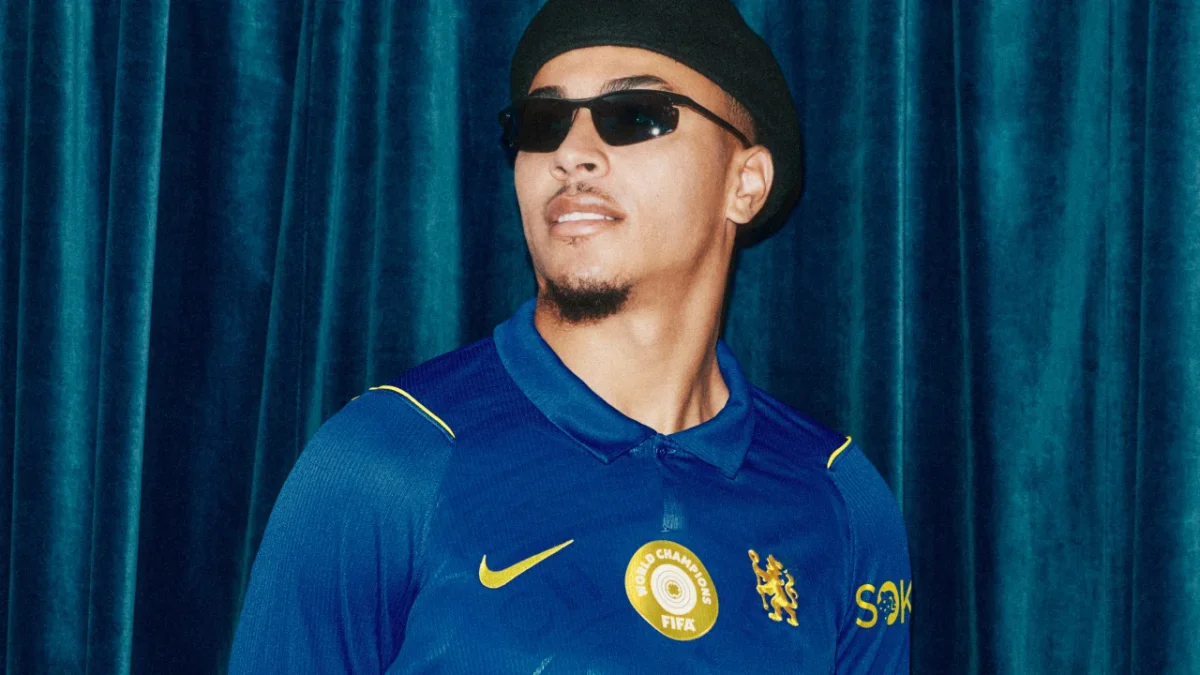
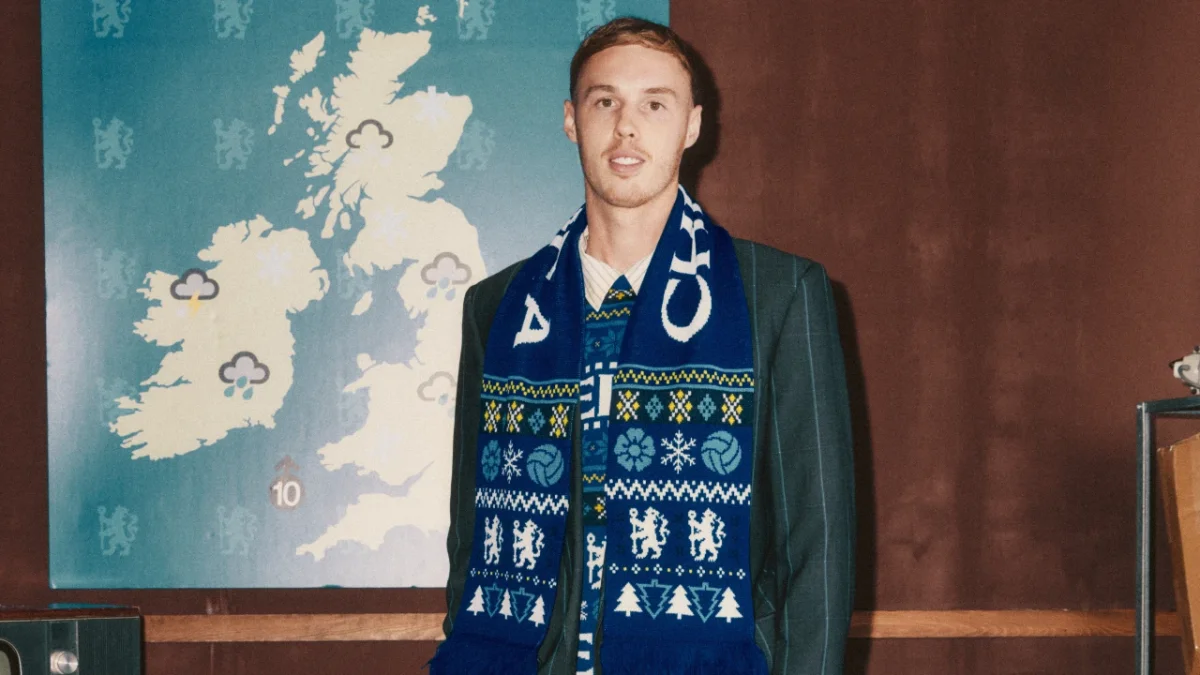
Chelsea’s “That’s Proper Chels” takes the club’s festive merchandise campaign and gives it the shape of a television schedule. Instead of a single advert, the club created a fictional network with a weather forecast, phone-in, shopping channel and ad breaks, all built around its Christmas range.
Sports broadcaster Jolie Sharpe presents the shopping segment in the style of QVC. TalkSport presenter Jason Cundy hosts the phone-in, while striker João Pedro answers supporter questions in “Ask João”. Cole Palmer delivers a forecast that describes the weather as “as cold as ever”. Players from the men’s and women’s squads, including Levi Colwill, Katie McCabe, Ellie Carpenter and Alyssa Thompson, also appear.
Till Dawn created the campaign, with strategy from consultancy Iconic. Its release was staged to resemble channel surfing: outtakes and players breaking character appeared first, followed by clips distributed across platforms, before the full programme arrived. The behind-the-scenes moments are part of the format. Till Dawn founder Craig Stronach says the production ran as if it were a live network, with the corpsing, camera asides and glances towards the assistant director kept in the finished show.
Iconic founder James Kirkham connects that structure to how supporters watch football across clips, streams, reactions and live shopping on their phones. The campaign’s scattered format invites fans to find each part and move between them, echoing the anticipation of browsing a Christmas catalogue. A percentage of festive-range sales goes to Chelsea Foundation and its charity partners, supporting work on loneliness and social isolation across London.


Liverpool makes gratitude the message
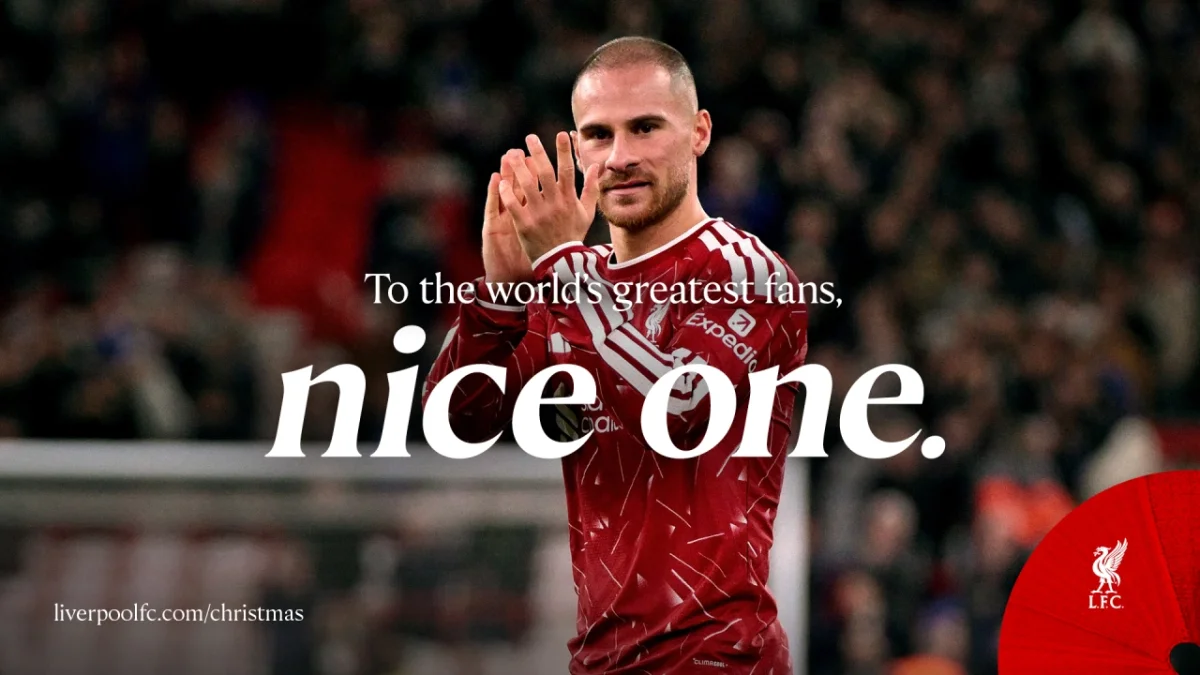
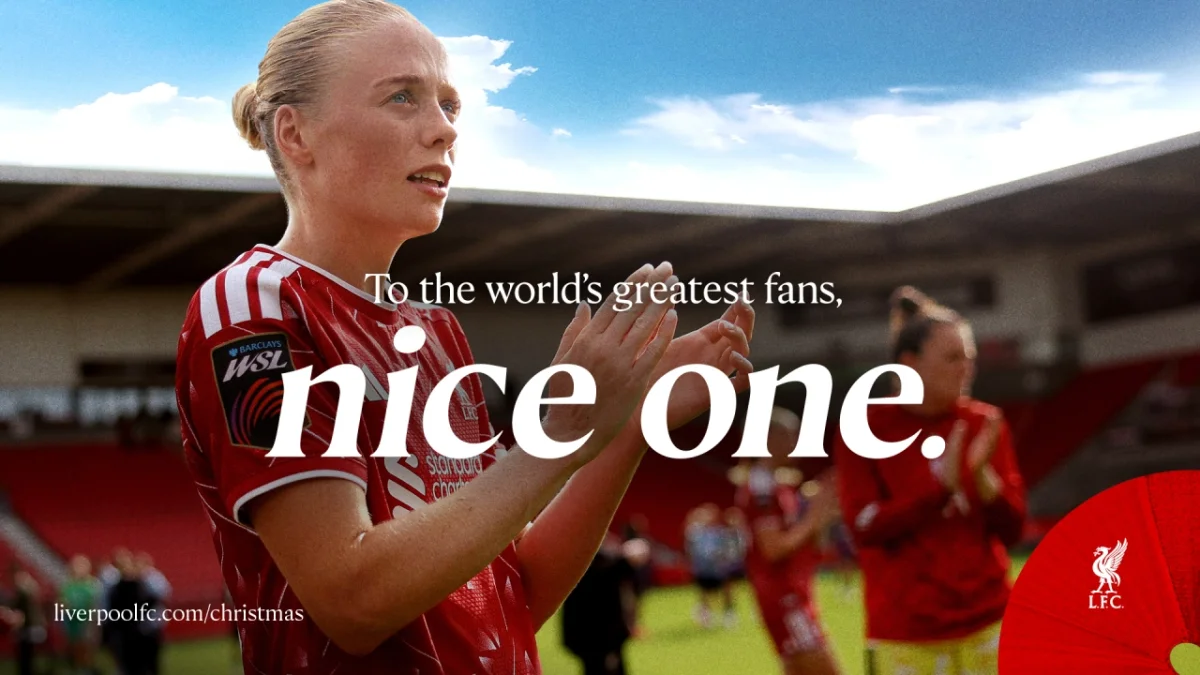
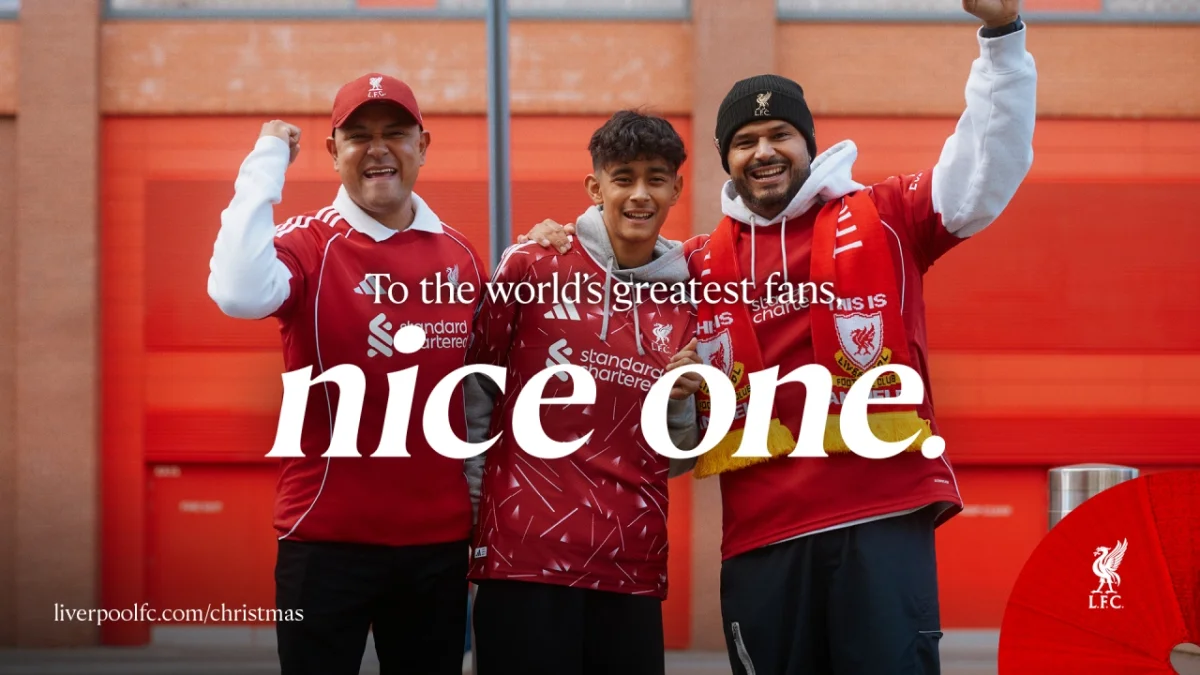
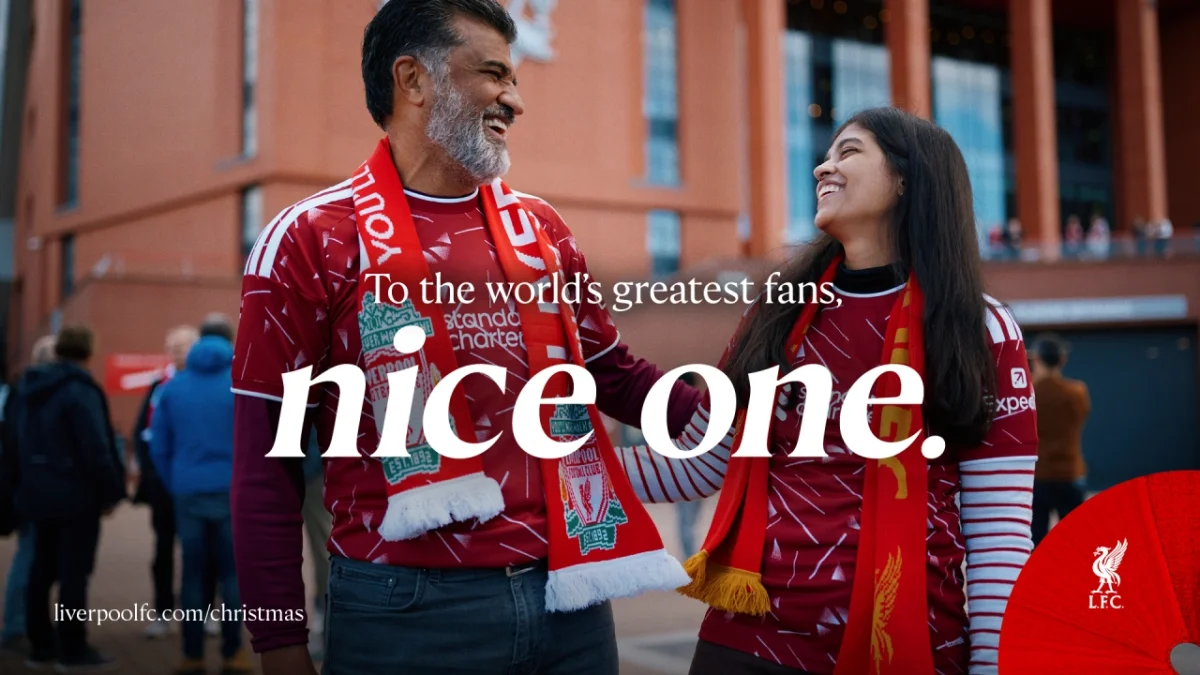
Liverpool’s “Dear Reds” film keeps its focus on supporters. Players from the men’s and women’s teams, among them Virgil van Dijk, Alexis Mac Allister, Alisson Becker, Florian Wirtz and Grace Fisk, address fans directly. Their thanks are set against photographs and footage of supporters in Merseyside and around the world, including material made by fans themselves.
The film closes with a clear statement of the relationship between the team and its audience: “This club doesn’t belong to us. But we’re honoured to represent it. And it’s an honour to play for you. To the world’s greatest fans, nice one.” The short sign-off gives the campaign its title and its distinctly local voice.
The idea extends beyond the film through outdoor advertising placed near Official Liverpool Supporters Club locations in 24 cities across 16 countries and five continents, including Dublin, Oslo, Bangkok, Jakarta and Cape Town. Hannah Pym, Liverpool FC’s senior vice president of marketing and digital, describes the campaign as a thank-you to the fans who help make the club what it is. Its commercial offers include PayPal-backed discounts, Black Friday deals and free museum tours with the code “Nice One”.

Arsenal builds on a year of shared celebrations
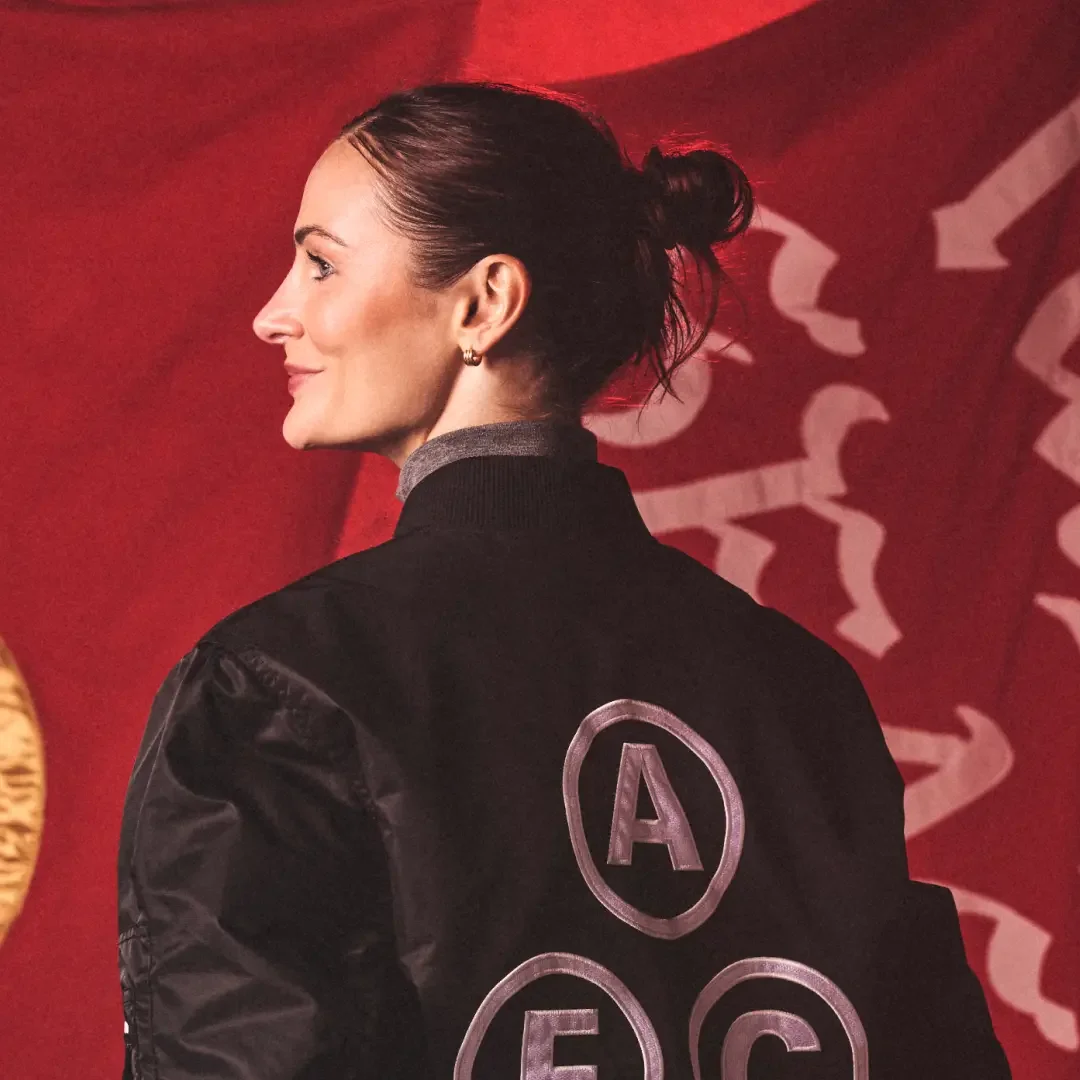
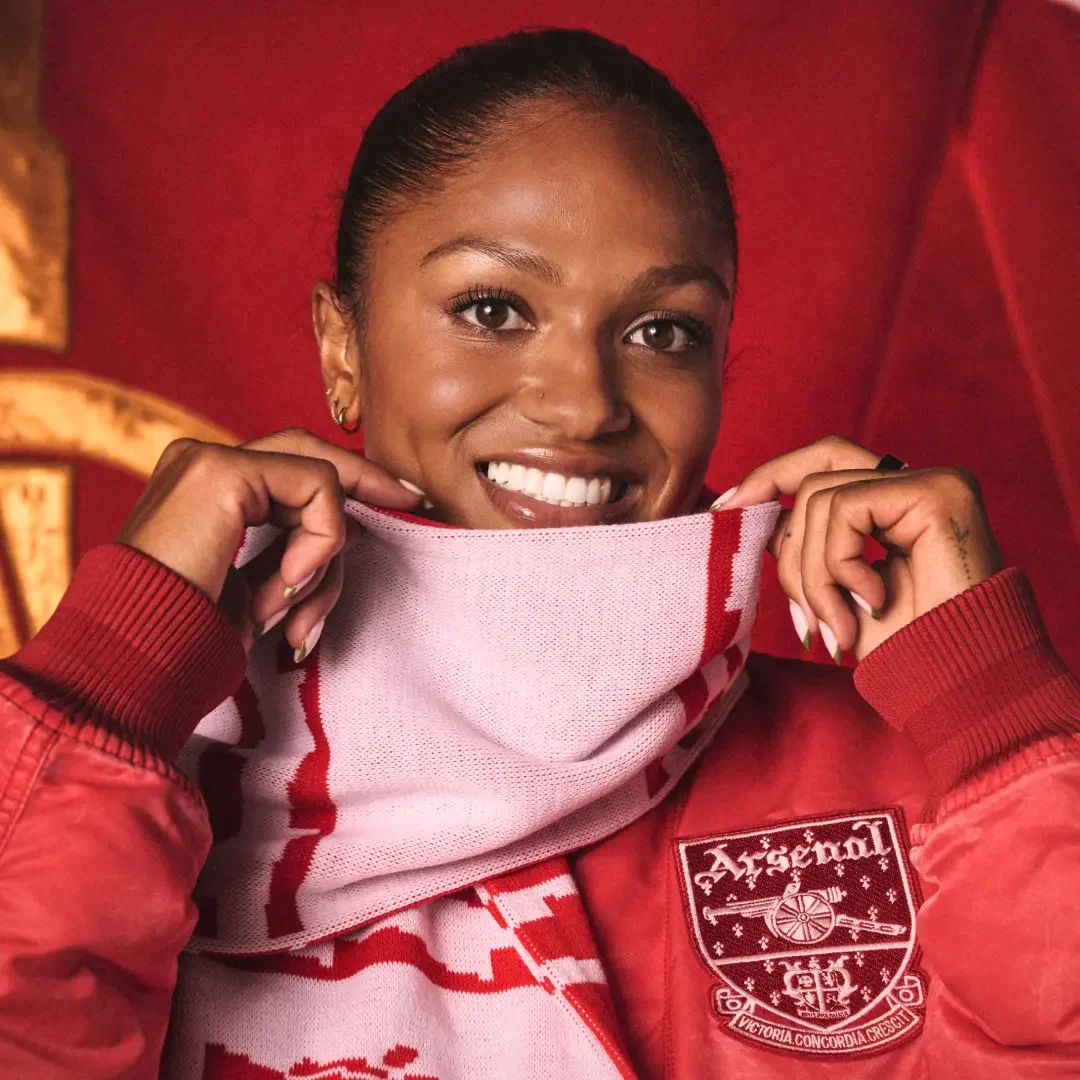
Arsenal’s “’Twas the Season” frames Christmas as an extension of a year marked by sporting success: the club won the Premier League in May for the first time in 22 years, and its women’s team won the inaugural FIFA Women’s Champions Cup. The campaign turns supporters’ excitement about those events into a festive story about belonging.
Arsenal’s in-house Creative Studio created the film, directed by Si&Ad through Academy Films. It stars Colin Firth, an Oscar-winning actor and lifelong Arsenal supporter, who played the lead in the 1997 film adaptation of Nick Hornby’s Fever Pitch, about Arsenal’s 1988–89 title-winning season.
Firth walks through Islington narrating what initially sounds like a familiar Christmas tale of anticipation and togetherness. As supporters gradually fill the streets, the story reveals itself as a portrait of Arsenal’s 2025/26 season. The gathering ends outside The Armoury, the club store, with fans of different ages alongside Arsenal staff and community figures.
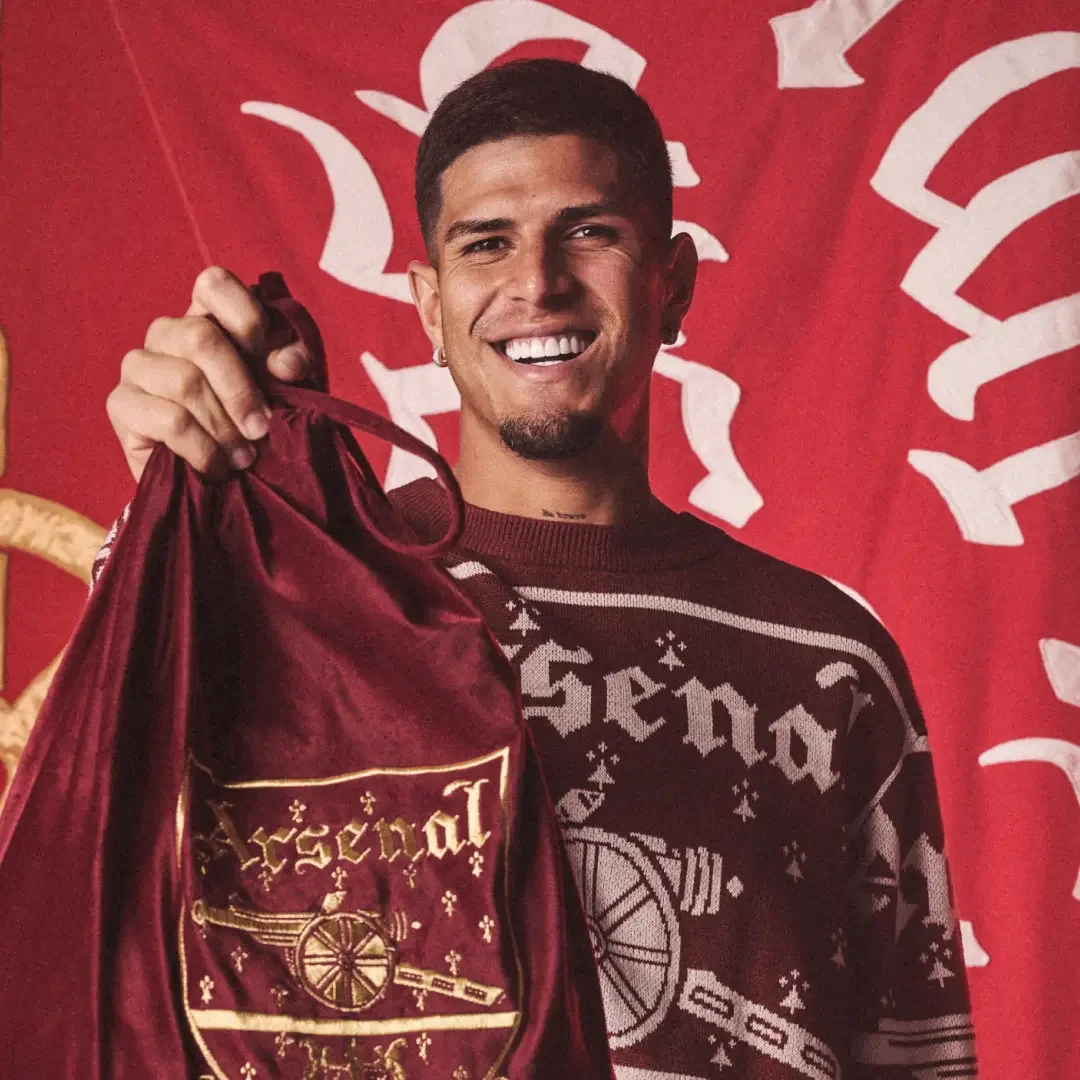
Jodie Sayer, Arsenal’s head of brand and marketing, says the film was intended to carry the joy and sense of belonging supporters experienced during May’s celebrations into Christmas. The club has paired the campaign with hospital visits, a Christmas Day lunch for care leavers and a special Christmas card, with proceeds going to The Arsenal Foundation.


Manchester City puts children in the design process
Manchester City’s “Christmas, Together” is built around making rather than performance. Players from the men’s and women’s teams sat with local schoolchildren to co-design Christmas cards. Graduates of Manchester School of Art at Manchester Metropolitan University then developed the children’s ideas into finished, physical designs.
The cards are sold online and in the club’s UK stores for £6 per pack of six. All proceeds go to City in the Community, which marks its 40th year. A launch film shows the players and children working on the designs. Michael Geary, chief executive of City in the Community, says connection is the central idea behind the campaign.
Football’s advantage is the audience it already has
These campaigns sell club merchandise and offers, but they also give clubs a way to show their connection to supporters and local communities. Chelsea ties a percentage of festive-range sales to charitable work; Liverpool puts fans at the centre of its message; Arsenal links its film to community activities; and City directs card proceeds to its community organisation. Commerce and giving back sit side by side.
That mix helps explain why football clubs are now making Christmas work on the same seasonal timetable as supermarkets and department stores, with campaigns launching in early November. Retail brands often need to invent a character or family and build an emotional connection around them. Clubs already have an audience with shared memories, familiar faces and stories that span cities and countries.
That audience also gives clubs room to experiment. Chelsea can spread its campaign across an imagined TV schedule; City can make the design process itself the subject; Arsenal can draw on a season supporters have just lived through. These approaches compete for attention across the same screens and public spaces as retail advertising. For designers, the useful distinction is how each club turns its existing relationship with fans into a format: a network to explore, a thank-you to share, a celebration to join, or a set of cards made together.