Tuesday, November 24, 2026 · UX & UI Design
Tiny Brutalism Turns Concrete Architecture Into a Calm, Open-Ended Building Game
Noted by Dom Carter · 856 reads
Jimjum Studios’ Tiny Brutalism pairs stark concrete forms, rain and first-person exploration in a freeform building game with a Steam demo.
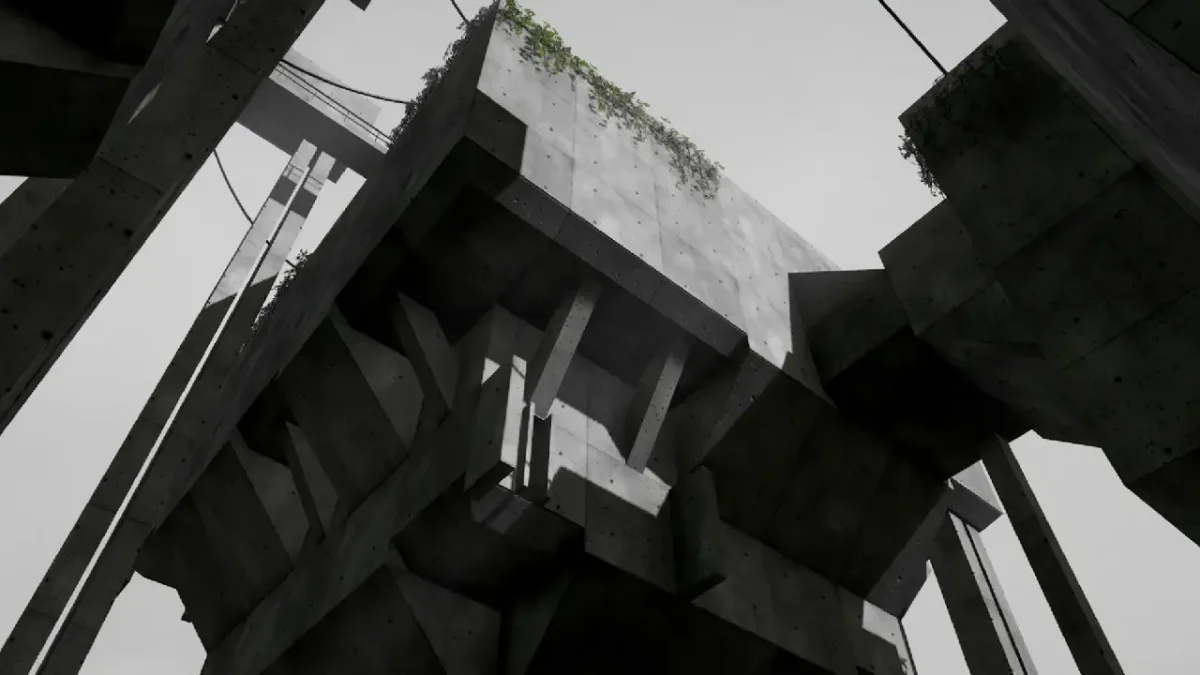
Tiny Brutalism makes a compelling case for treating concrete as a material for play. The in-progress game from Mati Ernst of Jimjum Studios takes the gentle, miniature scale of a diorama builder and applies it to the heavy geometry of Brutalist architecture. Its appeal lies in that unlikely pairing: buildings that look monumental, built in a space that asks very little of the player.
Ernst describes the project as a reworking of the cottagecore feel of Tiny Glade, the 2024 city-building game, with Brutalism as its visual language. The idea was teased in a post by Ernst. The game is still in demo form, and there’s no release date for the finished version. Its Steam page presents a simple premise: make concrete towers, strange monuments, impossible structures or a very large wall, then walk around inside what you’ve built.
Monumental forms, miniature scale
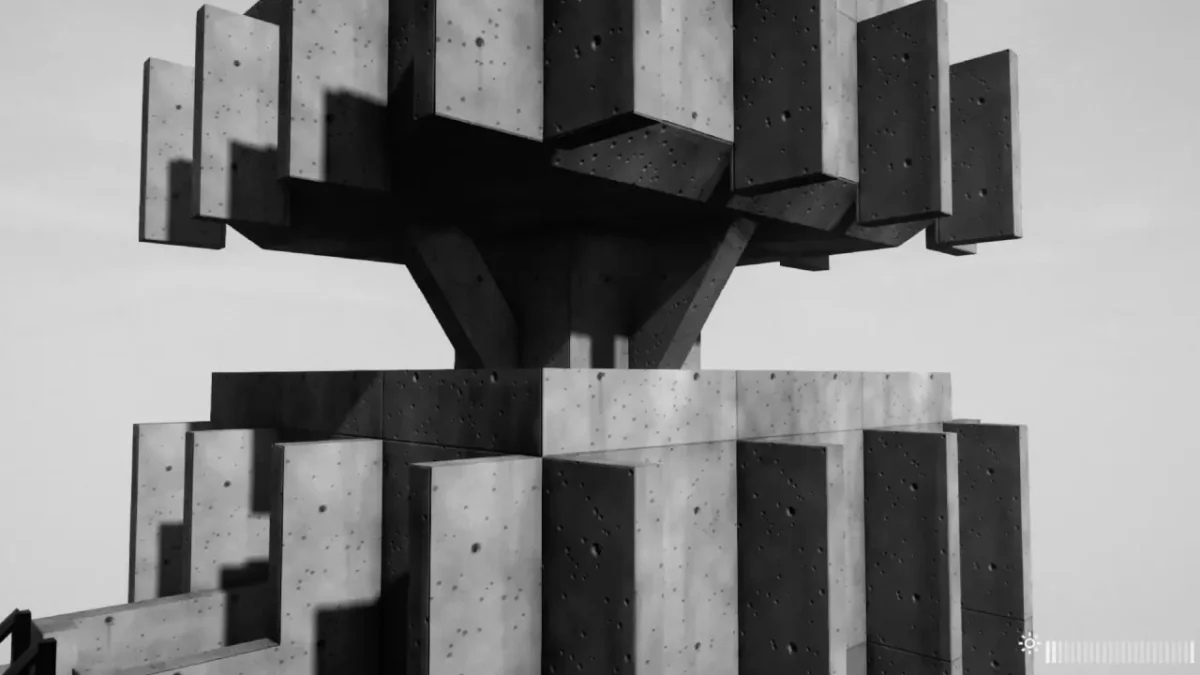
Brutalism often reads through mass, repetition and a direct display of materials. Tiny Brutalism makes those qualities available as building blocks rather than treating them as fixed architecture to admire from a distance. Players can arrange angular volumes into towers and other structures, with room to experiment with proportion and silhouette. The result can feel imposing in the frame while remaining small enough to shape at an unhurried pace.
That change in scale matters. A builder focused on massive concrete forms could easily become a puzzle about fitting pieces together or managing a growing city. Here, the Steam description says there’s no goal and no single correct way to build. The player can pursue an impossible monument, a plain slab or whatever form takes shape. With no resource management or deadlines described, the focus stays on composition: what the blocks look like together, how they cast shadows, and what kind of space they create.
Atmosphere built from restraint
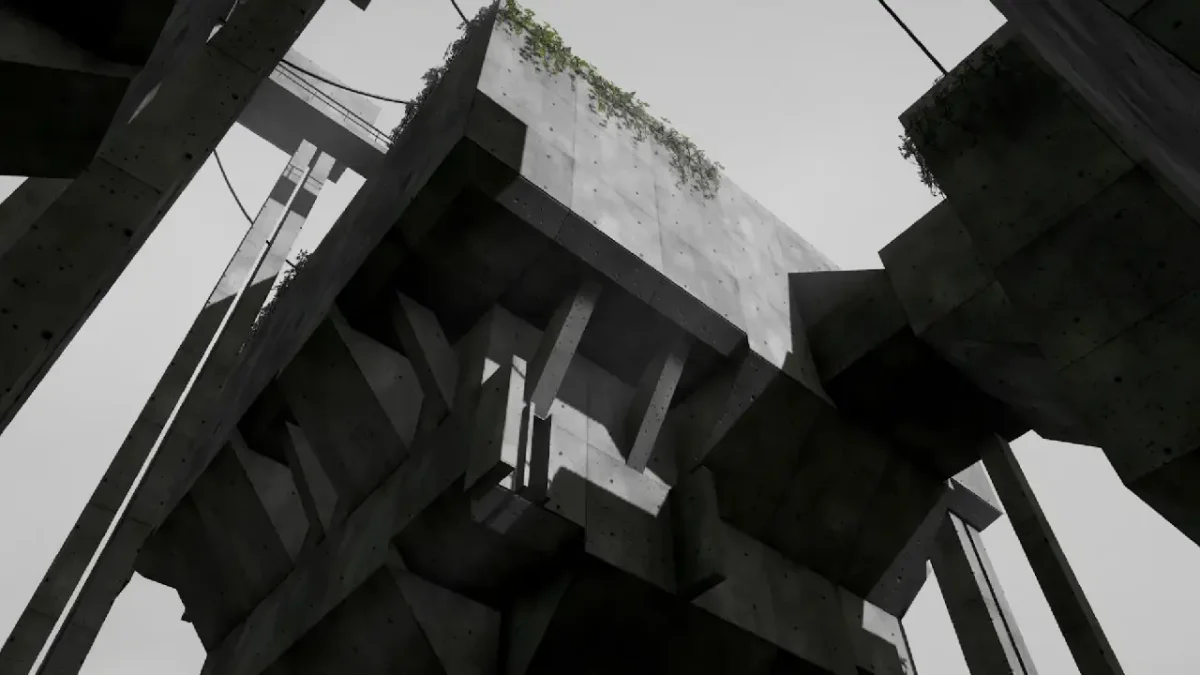
The game’s visual and audio choices support that slower pace. Its black-and-white graphics keep attention on shape, light and shadow, while rain sounds and a quiet soundtrack give the scenes a subdued mood. There’s no reliance on a busy palette or a constant stream of visual effects in the footage described for the demo. For designers, the useful point is how a narrow set of sensory cues can give a small building space a strong identity: concrete geometry establishes the subject, and weather and lighting add texture without competing with it.
That restraint also reframes Brutalism’s familiar severity. A rain-darkened monument can look lonely or imposing, but in a freeform builder those same qualities become material for experimentation. The player can make a structure that feels solemn, odd or playful, then decide how its spaces work by moving through them. The mood doesn’t prescribe a single reading of the architecture; it gives the forms room to carry different interpretations.
Building is only half the experience
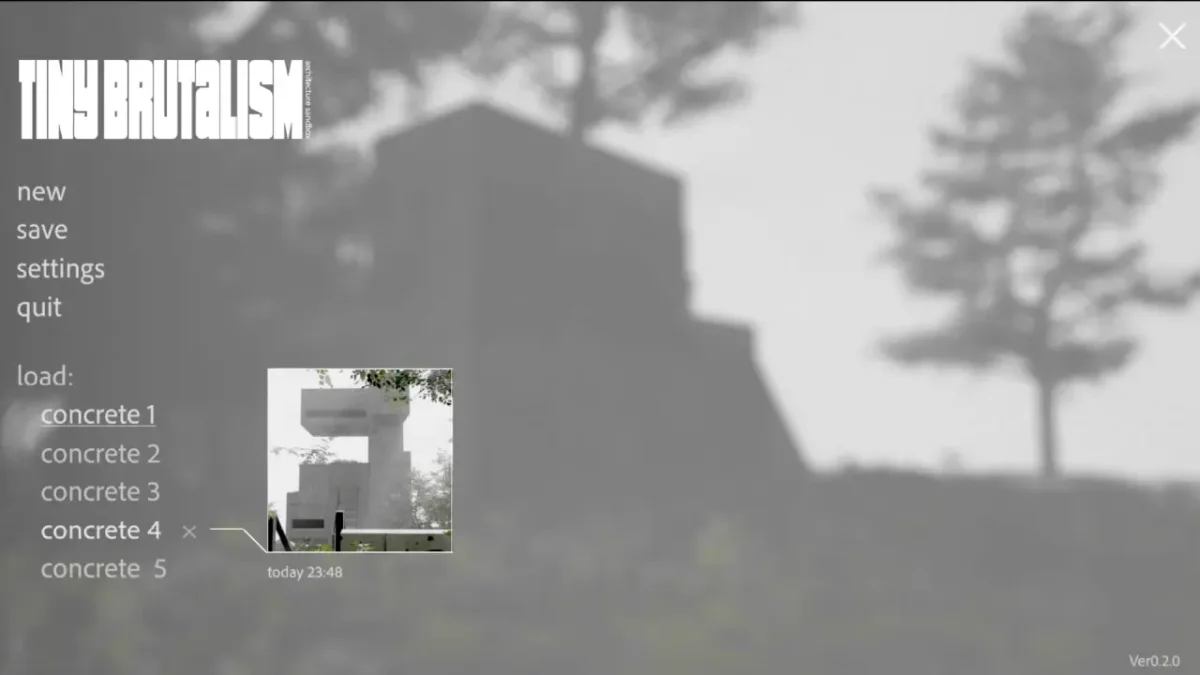
Once a construction is finished, players can explore it in first person. That shift from arranging a model to inhabiting it gives scale a second role: a tower that looks compact in the building view may feel different from ground level, where corridors, overhangs and stacked blocks shape the route. It also makes the act of building more exploratory. Players aren’t only composing a view; they can enter the spaces they’ve made and see how the structure reads from within.
The interface shown in the demo includes options to start a new build, save, adjust settings and quit, alongside a list of concrete levels with a preview image. That menu suggests a straightforward path between making, revisiting and exploring structures. The available details don’t describe a full set of building controls, so the most interesting question for a finished release will be how much control players get over the placement and scale of individual forms.
A builder without a score to chase
Jimjum Studios has made games centered on kindness and cooperation. Its previous release, Community: Build Together, was credited with facilitating more than one million acts of kindness. Tiny Brutalism shifts the setting toward stark concrete forms, while keeping an open, low-pressure approach to play. There’s no stated score to improve or task list to clear; making something and spending time with it are the point.
Responses to Ernst’s post have focused on the contrast with Tiny Glade, the moody lighting and the range of possible constructions. One commenter called the mix of Tiny Glade and Brutalist proportions a strong mismatch, describing the hard edges as a miniature architectural toy. Another pointed to the difficulty of making convincing Brutalist structures and welcomed the chance to build them. Those reactions get at the project’s central design opportunity: a style associated with weight and permanence becomes approachable when it’s reduced to movable forms in a personal diorama.
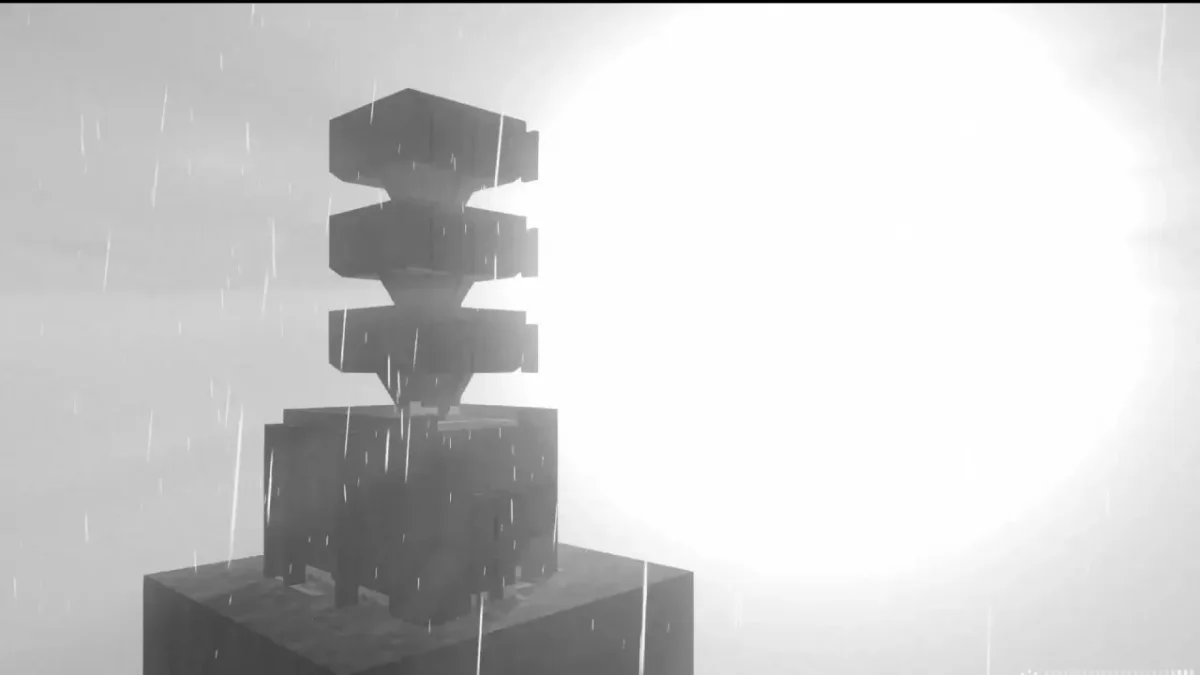
The demo is playable on Steam. For now, it offers a focused proposition rather than a detailed promise about the finished game: build without pressure, let light and rain set the mood, then walk through the concrete spaces you’ve made. Its strongest next step will be giving that freedom enough building control to make every monument feel personal.